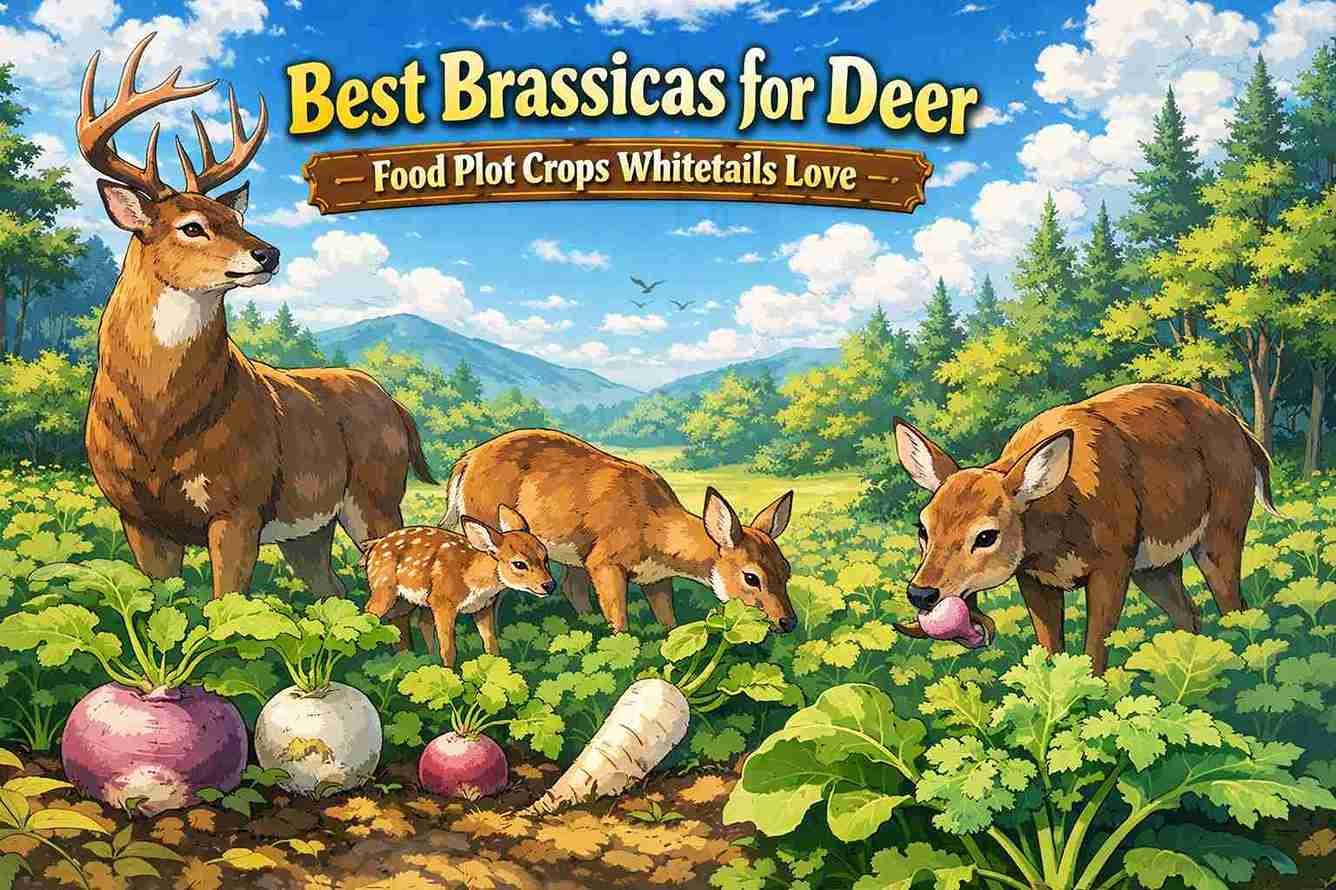
The best brassicas for deer, including turnips, radishes, forage-rape, and kale, are ideal for late-season food plots. These fast-growing, frost-tolerant crops provide nutrient-rich, high-energy forage that attracts whitetails during fall and winter.
Planting brassicas supports healthy deer populations, improves soil quality, and keeps food plots productive through the season.
Using a mix of leafy tops and roots gives deer a dual source of nutrition, encouraging consistent grazing. For hunters and wildlife enthusiasts, brassicas for deer food plots are one of the most effective ways to maintain a thriving, attractive habitat.
Best Brassicas for Deer (Quick Answer)
- Purple Top Turnips: leaves + bulbs, deer love them after the first frost
- Daikon Radish: sweet, deep roots, highly attractive early season
- Dwarf Essex Rape: fast-growing, high protein, cold-hardy
- Kale: survives multiple frosts, sweetens over time
- Rutabaga: great turnip alternative, lasts deep into winter
What Are the Best Brassicas for Deer?
The best brassicas for deer food plots are turnips, radishes, rape, kale, and rutabaga. These crops grow fast, survive frost, and give whitetails high-energy forage from early fall through late winter. Turnips and radishes are the most attractive, while rape and kale last longest into the cold season.
| Brassica | Protein % | Best Planting Time | Deer Appeal |
|---|---|---|---|
| Purple Top Turnip | 15-20% | July – August | Very High |
| Daikon Radish | 12-18% | August – September | Very High |
| Dwarf Essex Rape | 20-30% | July – August | High |
| Kale | 18-25% | July – August | Moderate |
| Rutabaga | 12-15% | July – August | High |
Note: Protein estimates are based on general agronomic data. For detailed variety specs, visit the Noble Research Institute or Penn State Extension.
Why Brassicas Are Perfect for Deer Food Plots
Brassicas are among the most popular choices for deer food plots because they deliver:
- High-energy forage: Deer need extra nutrition in fall and winter. Brassicas provide carbohydrates and protein.
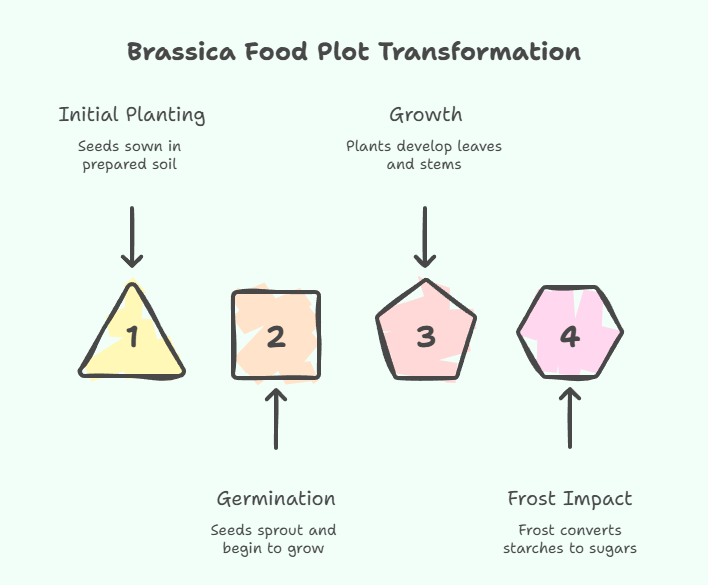
- Sweetness after frost: Frost converts plant starches into sugars, making leaves more appealing.
- Fast growth and high yield: Even small plots can produce significant forage in a short time.
- Adaptability: They grow well in a variety of soil types with proper preparation.
When to Plant Brassicas for Deer?
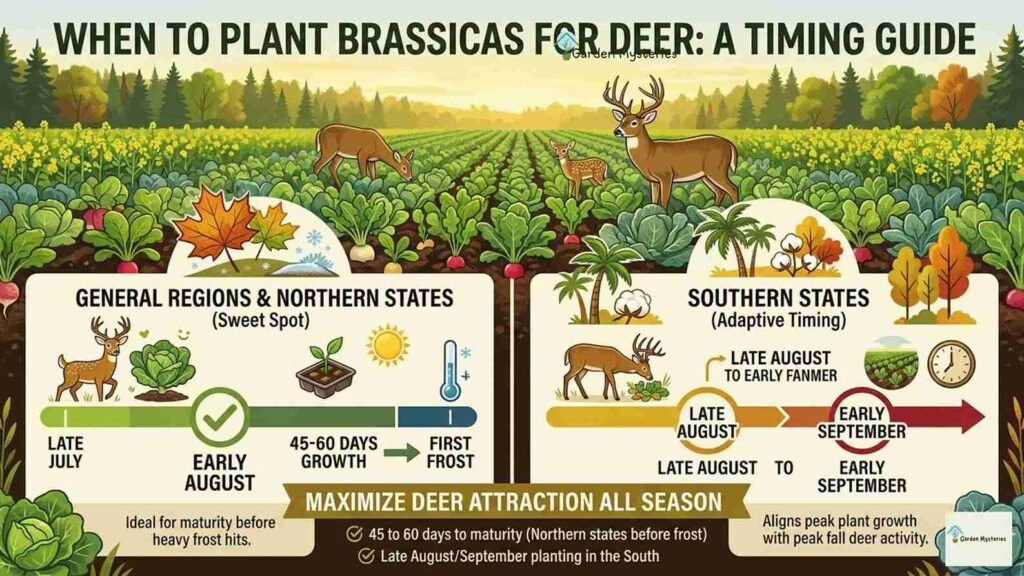
Timing your planting right makes the difference between a plot deer ignore and one they return to all season. In most regions, late July to early August is the sweet spot. It gives brassicas 45 to 60 days to mature before the first frost hits. In southern states, pushing to late August or early September still works well and aligns growth with peak deer activity in fall.
A quick planting calendar:
|
Region |
Plant By |
First Frost |
Peak Deer Activity |
|
Northern States |
Late July – Aug 1 |
Sept – Oct |
October – November |
|
Central States |
Aug 1 – Aug 20 |
Oct – Nov |
November – December |
|
Southern States |
Late Aug – Sept |
Nov – Dec |
December – January |
Timing varies by elevation and local climate. Check your county’s average first frost date before planting.
Quick tip: Brassicas planted too early bolt in heat and lose appeal. Too late, and they won’t mature before frost. The 45-60 day window before your first frost is the sweet spot every time.
Best Brassicas for Deer Food Plots
If you want to attract deer to your property during fall and winter, planting brassicas is one of the most effective strategies. Brassicas are nutrient-rich, high-energy crops that grow quickly and thrive in cooler temperatures.
They provide deer with sweet, leafy forage after frost, which makes them irresistible for whitetails. By including a variety of brassicas in your food plot, you can keep deer coming back throughout the late season while supporting healthy wildlife populations.
The best options combine both leafy tops and roots, giving deer a dual food source. Let’s take a closer look at the top brassicas that make the perfect deer food plot:
Turnips
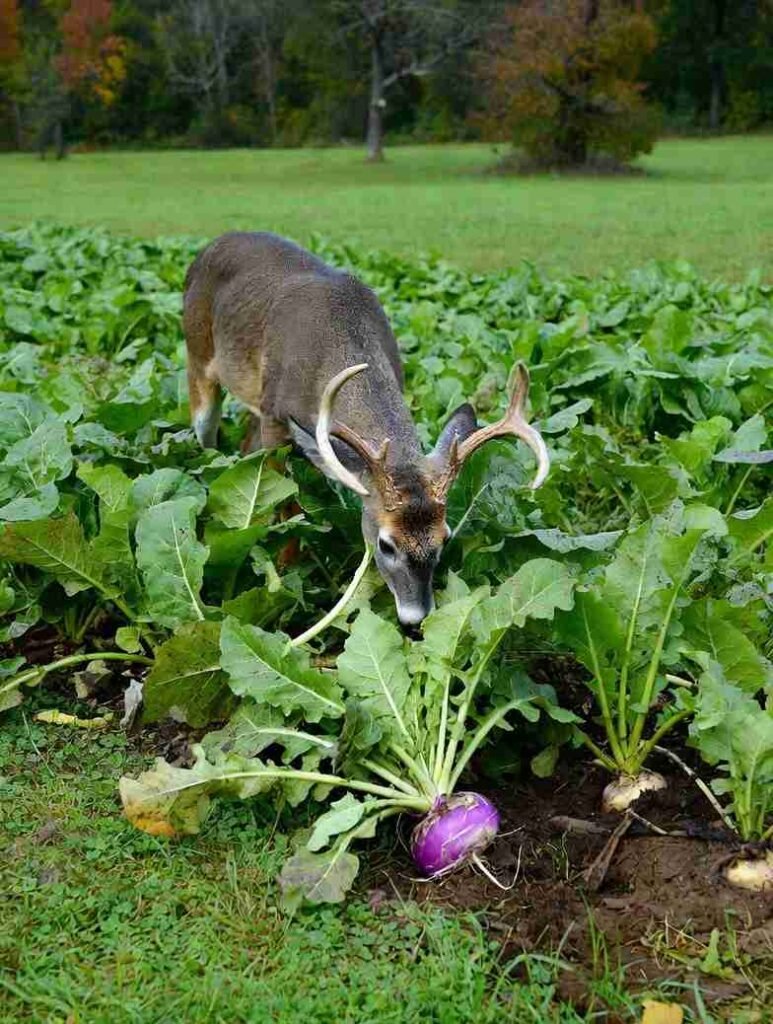
Turnips are a classic choice for deer food plots. They produce both leafy tops and underground bulbs, giving deer two sources of nutrition. Deer usually browse the leaves first, especially in early fall, and then dig into the bulbs after the first frost. Turnips grow quickly and are hardy in most soil types, making them ideal for both small and large plots.
Daikon Radishes
Daikon radishes are prized not only for their attractive leaves but also for their deep taproots, which help break up compacted soil. Deer enjoy the leafy tops early in the season, and the roots provide an additional food source later. Their strong scent is especially enticing for whitetails, making them a top choice for hunters and wildlife managers alike.
Forage-Rape
Forage-rape is a fast-growing, leafy brassica that thrives in late summer and early fall. Its high-protein leaves are a favorite for deer, especially before and after the first frost. Forage-rape provides excellent mid- to late-season grazing, helping maintain deer nutrition when natural food sources decline.
Kale
Kale is extremely cold-hardy, making it perfect for late-season food plots. It can withstand multiple frosts, which actually makes the leaves sweeter for deer. Its dense, leafy growth ensures a steady supply of forage even in colder weather, keeping whitetails grazing longer and supporting their energy needs through winter.
How to Plant Brassicas for Deer
Planting brassicas for deer takes four basic steps: prepare the soil, seed evenly, fertilize if needed, and maintain moisture for good germination. Most plots are ready to graze in 45 to 60 days when planted at the right time.
- Soil Preparation: Remove weeds and loosen the top layer for seed contact.
- Seeding: Spread seeds evenly at the recommended rate.
- Fertilization: Apply nitrogen fertilizer if your soil test indicates a need.
- Maintenance: Lightly pack soil to maintain seed contact and monitor growth for deer access.
Brassica Mixes for Deer Food Plots
The best brassica mix for deer combines fast-attracting varieties like radishes with longer-lasting ones like kale or rape. This gives deer something to graze from early fall all the way through winter, keeping your plot active longer than any single variety would.
- Turnip + Radish Mix: Strong fall attraction; deer enjoy leaves and roots.
- Forage-Rape + Kale Mix: Longer-lasting late-season forage; maintains nutrition through frost.
Variety in food plots encourages deer to graze evenly and keeps plots productive longer.
If you’re also growing plants or food plots this season, check out Garden Growth: Best Garden Fertilizers You Can Use for practical tips on choosing the right fertilizer
FAQs
What brassica do deer like most?
Deer are most attracted to turnips and radishes. Turnips offer both leafy tops and underground bulbs, while radishes draw deer in early with their strong scent and sweet roots. Both perform best after the first frost when sugar content peaks.
Do deer eat brassicas before frost?
Yes, deer will graze brassica leaves before frost, especially radish tops and rape. However, frost is the turning point, which converts starches into sugars. Also, it makes the whole plant significantly sweeter and far more attractive to whitetails.
Are brassicas suitable for small food plots?
Yes, brassicas are one of the best choices for small food plots. They grow fast and produce heavy forage in a compact space, and attract deer reliably from fall through winter, even in plots as small as a quarter acre.
Conclusion
The best brassicas for deer, turnips, radishes, forage-rape, and kale offer high-energy, frost-sweetened forage that attracts whitetails through fall and winter. Plant them in late summer, prepare your soil carefully, and consider using mixes for longer-lasting plots.
For best results, combine two or three varieties, match your planting window to your region, and let the first frost do the rest.
Disclaimer: This blog is for informational purposes only. Results may vary; follow local laws and use responsible wildlife practices.