Common Sago Palm Problems & How to Fix Them Naturally
Sago palm problems are usually caused by overwatering, poor drainage, pest infestations like cycad scale, or nutrient deficiencies such as manganese and magnesium.
The best fix is to improve soil drainage, water only when the soil is mostly dry, apply a slow-release palm fertilizer, and treat pests early with neem oil or systemic insecticides.
A Farmer’s View of the Sago Palm
The Sago Palm is a tough plant, but like any crop in the field, it has its moods. Give it too much water, and it sulks. Starve it of nutrients, and it fades. Ignore pests, and they quietly take over like weeds in monsoon season.
Understanding these patterns is the key to solving sago palm problems before they get serious.
Most Common Sago Palm Problems and Their Fixes
These ancient-looking sago palms often struggle silently. Below are the most common issues gardeners face and practical fixes to restore steady, healthy growth again naturally.
1. Yellow Leaves (Chlorosis & Nutrient Deficiency)
Yellowing fronds are the most reported issue. This can happen due to overwatering, poor drainage, or lack of essential nutrients like nitrogen, magnesium, and potassium. If new leaves come out yellow and weak, it often points to manganese deficiency, sometimes called “frizzle top.”
What causes it:
- Overwatering and soggy soil
- Nutrient deficiency in palms
- Pest damage from sap-sucking insects
How to fix it:
- Let the top 70-75% of soil dry before watering
- Use a slow-release fertilizer designed for palms
- Improve soil with sand or perlite for better drainage
2. Cycad Scale (White Fuzzy Pest Attack)
One of the most dangerous pests is cycad scale, often called Asian cycad scale. It appears as white, dusty or cotton-like spots on leaves and trunk. This pest can kill a sago palm if ignored.
What causes it:
- Warm, humid conditions
- Lack of regular inspection
- Spread from nearby infected plants
How to fix it:
- Use systemic insecticides like imidacloprid when infestation is severe
- Apply neem oil or insecticidal soap weekly
- Scrub off visible scale to expose hidden insects
3. Root Rot (Overwatering Damage)
Too much water is the number one killer of sago palms. When roots sit in wet soil, they suffocate and rot, often caused by fungal pathogens like phytophthora.
Signs to watch:
- Soft or mushy trunk
- Yellowing and drooping leaves
- Foul smell from the soil
How to fix it:
- Remove the plant and inspect the roots
- Cut away black or rotting roots
- Repot in a well-draining soil mix with sand or gravel
- Reduce watering frequency
4. Brown Tips and Leaf Scorch
Brown or crispy tips often come from environmental stress rather than disease.
Main causes:
- Harsh direct sunlight or heat stress
- Cold damage or frost exposure
- Salt buildup from fertilizers
How to fix it:
- Move the plant to bright but indirect sunlight
- Protect from extreme cold
- Flush soil occasionally to remove excess salts
5. Mealybugs and Sticky Residue
Mealybugs are soft-bodied insects that suck sap and leave behind sticky honeydew, which can lead to sooty mold.
What to do:
- Spray neem oil or insecticidal soap
- Clean leaves regularly
- Repeat treatment weekly until clear
6. Sago Palm Not Growing
Sometimes the problem is not a problem at all. Sago palms are naturally slow growers. But if growth completely stops, something is off.
Possible reasons:
- Low sunlight
- Poor soil nutrients
- Root-bound conditions
Fix:
- Ensure bright indirect light
- Feed with palm fertilizer during the growing season
- Repot every few years
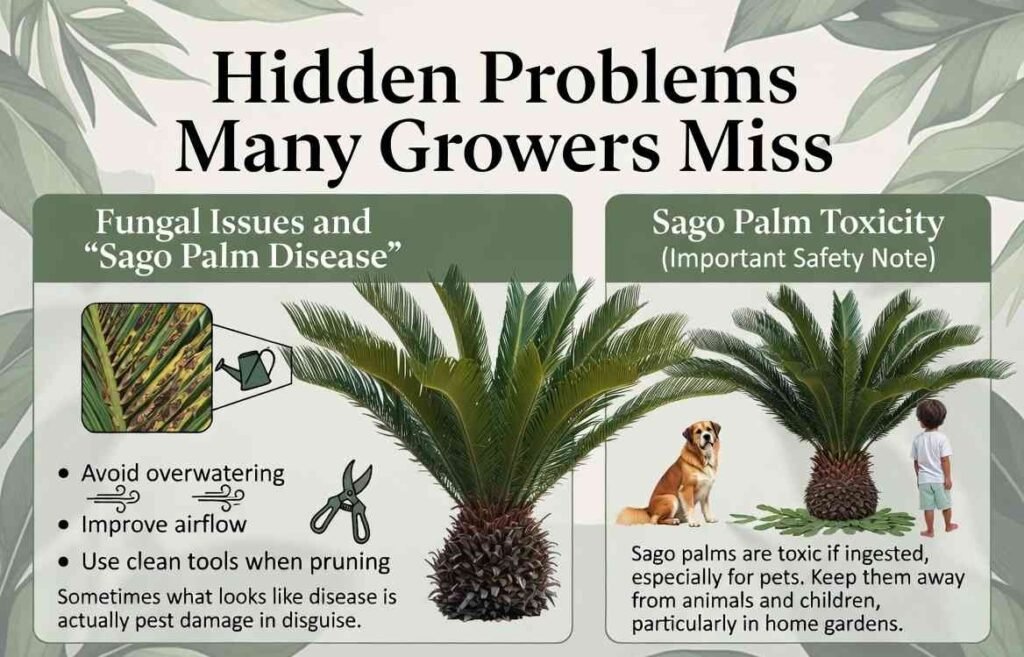
Hidden Problems Many Growers Miss
Fungal Issues and “Sago Palm Disease”
Sometimes what looks like disease is actually pest damage in disguise. Fungal infections can occur in overly wet conditions, leading to leaf spots or decay.
Prevention:
- Avoid overwatering
- Improve airflow
- Use clean tools when pruning
Sago Palm Toxicity (Important Safety Note)
Sago palms are toxic if ingested, especially for pets. Keep them away from animals and children, particularly in home gardens.
Best Care Practices to Prevent All Problems
A simple rule from the field: “Dry roots, loose soil, and patient feeding.” Sago palms stay healthiest when their care mimics dry, stable, low-stress conditions rather than frequent intervention.
- Use well-draining soil with sand, perlite, or cactus mix to improve aeration and prevent root rot from excess moisture buildup.
- Water only when the soil is mostly dry, as sago palms are drought-tolerant and sensitive to overwatering and soggy conditions.
- Provide bright, indirect sunlight to support steady photosynthesis while avoiding leaf scorch from harsh direct exposure.
- Fertilize lightly, about 2-3 times per year, using a balanced palm fertilizer to maintain nutrients without causing salt stress in the soil.
- Inspect leaves regularly for pests like scale or sap-sucking insects, which can weaken fronds and trigger yellowing or stunted growth.
- Maintain consistency, stable watering, airflow, and light conditions to reduce common issues like chlorosis, frizzle top, and root stress over time.
How to Revive a Dying Sago Palm
If your sago plant looks like it’s on its last breath, don’t rush to throw it away.

- Check roots first for rot
- Cut off dead or yellow leaves
- Repot in fresh, well-draining soil
- Place in indirect sunlight
- Feed lightly and wait
Recovery takes time. This plant grows slowly, but it also forgives slowly.
FAQs: Sago Palm Problems
Can I use sand in soil for sago palm?
Yes, adding sand or perlite improves drainage, which helps prevent root rot and keeps sago palm roots healthy.
Do sago palms need direct sunlight?
Sago palms grow best in bright, indirect sunlight. Too much direct sun can cause leaf burn, while low light slows growth.
Why are my sago palm leaves curling?
Leaves may curl due to water stress, nutrient imbalance, or pest activity. Adjust watering and inspect for insects to fix the issue.
Should I cut off yellow sago palm leaves?
Yes, remove fully yellow or dead leaves to improve the appearance and allow the plant to focus energy on healthy growth.
What is the best fertilizer for sago palm?
A slow-release palm fertilizer with micronutrients like magnesium and manganese works best to support steady growth and prevent yellowing.
Conclusion: Fix the Roots, Save the Plant
Most sago palm problems come down to three things: too much water, poor soil, or ignored pests. Fix the roots and environment, and the plant will recover in its own steady rhythm.
From a farmer’s eye, this plant is not weak; it’s just honest. Give it soggy soil, it complains. Starve it of nutrients, and it fades. Let pests sit quietly, and they take over like weeds after rain.
And one more thing many gardeners overlook: these plants don’t just fight disease, they can fight back. Their stiff, sharp fronds can easily poke or irritate skin during handling.
If you’ve ever been scratched or poked while caring for your plant, your next read should be our blog on Poked by Sago Palm.