Best Way for Bamboo Cutting Propagation: Explained
Lucky Bamboo is well-known as one of the most popular and beautiful indoor plants. It looks nice when we give it a shape or just plant bamboo with a side branch. Most of the time, we get a straight long bamboo when we buy it at a cheap price.
But we all want it with a side branch. Getting a branch is easy when you propagate lucky bamboo. Many of you don’t know the appropriate way how to propagate lucky bamboo. Believe me, it’s one of the easiest tasks you can do.
Bamboo cutting propagation involves taking a healthy bamboo stem or cane section with viable nodes and encouraging it to produce roots. The best method depends on the type of bamboo. Lucky Bamboo can root readily in water, while true garden bamboo often requires a more specific cane-cutting or division method.
So, I followed 3 easy steps and got amazing results to do lucky bamboo propagation from cuttings. So, now I am here to tell you about how I managed to propagate my lucky bamboo.
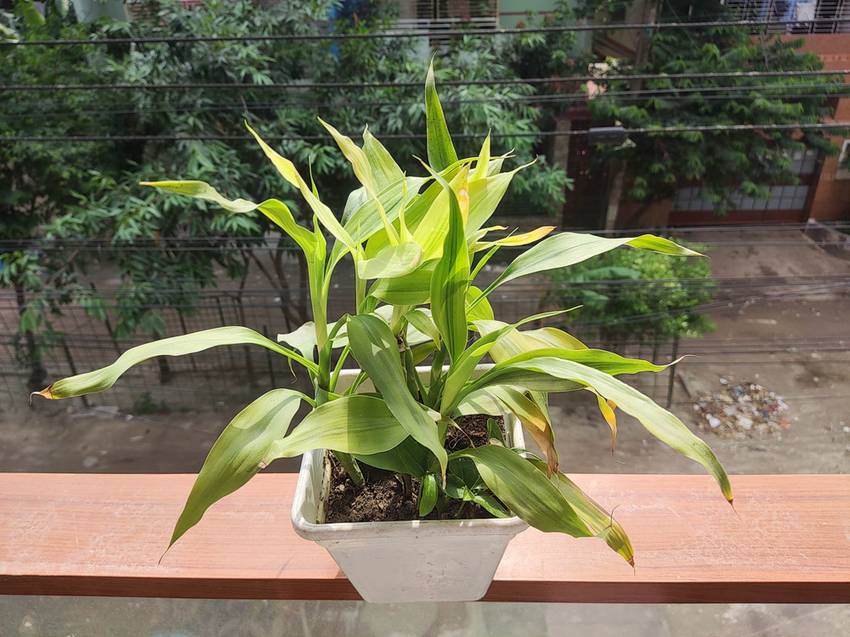
Quick-answer: Bamboo Cutting Propagation
| Bamboo propagation question | Quick answer |
|---|---|
| Can bamboo grow from cuttings? | Yes, but success depends on the bamboo type and cutting method. |
| Can you root bamboo cuttings in water? | Water propagation works particularly well for Lucky Bamboo. |
| Can true bamboo grow from cuttings? | Some true bamboo can be propagated from suitable cane or branch cuttings, but results vary by species. |
| How long do bamboo cuttings take to root? | Rooting can take several weeks, and the time varies with the plant and conditions. |
| Should a cutting have a node? | Yes. Viable nodes are important because new growth can develop from them. |
Bamboo Cutting Propagation: Step-by-Step
The method below is specifically based on my experience with Lucky Bamboo. Lucky Bamboo is Dracaena sanderiana, not true bamboo, so gardeners should not assume the same water-propagation method works equally well for every outdoor bamboo species.
As I said before, Lucky bamboo propagation from cuttings is very easy to propagate. And you don’t need to do a lot for it. However, before I start explaining the method let me share with you the name of the tools you will need for it.
- Sharp knife or anti-cutter
- Glass jar
- Pebbles
These things are almost available in our home. So, you don’t have to buy anything for it. Let’s check out the easy steps to propagate Lucky Bamboo.
Step 1
First, make sure your lucky bamboo is long enough to divide. Now, remove the leaves of the bamboo to the height from where you are planning to make a cut. But don’t remove the leaves of the upper part.
Step 2
Take your knife and cut the bamboo from the place you want. Make sure to cut from the place between two nodes. Because the higher nodes are places from where new branches will grow.
Step 3
Leave the mother plant in the bright light and don’t re-pot it for at least a couple of weeks. New brunches will appear within a few weeks. It’s now the turn for the cuttings. Place them in a clean glass jar full of clean filtered water and pebbles. Make sure to keep them straight.
Root development can begin within several weeks, but timing varies with the cutting, growing conditions, and type of bamboo.
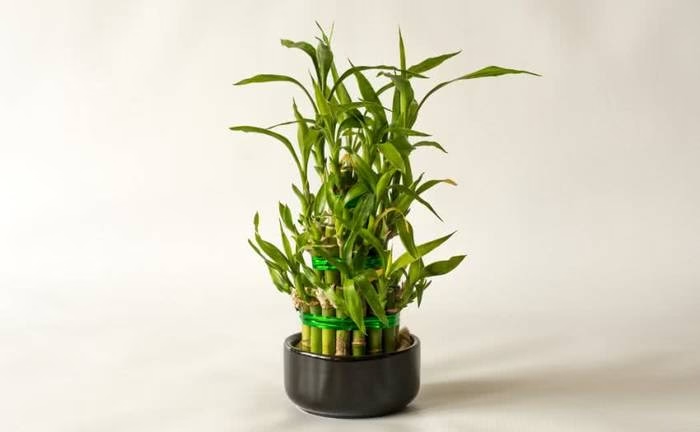
That’s it for the mission to propagate lucky bamboo plant. Don’t forget to take proper care for lucky bamboo plants.
You are going to get two new bamboo trees from each mother plant. The side branch will grow, and you will cut it again for water propagation to get a new one. And the cuttings will become the mother plant as well.
Water vs. Soil for Bamboo Propagation
When it comes to growing bamboo from cuttings, choosing between water and soil propagation can make a big difference. Each method has its pros and cons, depending on the bamboo species and your growing conditions.
Bamboo Cutting Propagation in Water
Rooting bamboo propagation from cuttings in water is a popular method for lucky bamboo (Dracaena sanderiana), which isn’t a true bamboo species but is often grown indoors. This method is best suited for decorative bamboo types and beginner gardeners.
How it works
- Place healthy bamboo cuttings in clean, non-chlorinated water.
- Remove lower leaves to prevent rot.
- Change the water every few days to keep it fresh.
Pros
- Easy to monitor root growth.
- Low mess, ideal for indoor propagation.
- Great for small clippings and ornamental varieties.
Cons
- Low success rate for true bamboo species like Bambusa or Phyllostachys.
- Roots may grow slower compared to soil.
Bamboo Cutting Propagation in Soil
Bamboo propagation from cuttings in soil gives suitable cuttings a growing medium in which new roots can develop. Use a well-draining medium and maintain consistent moisture without leaving the cutting saturated.
How it works
- Use well-draining soil rich in organic matter.
- Insert the cutting several inches deep with one or two nodes buried.
- Keep the soil consistently moist but not soggy.
Pros
- Higher success rate for tropical and temperate bamboo species.
- Stronger, more stable root systems.
- Ideal for permanent planting in gardens or containers.
Cons
- Roots are not visible while developing.
- Requires careful moisture control.

Tips to Improve Bamboo Rooting Success
Propagating bamboo from cuttings can be rewarding, but it takes the right approach to see results. Whether you’re growing clumping bamboo or running bamboo, these tips can help boost your success rate.
Start with Healthy, Mature Cuttings
Select a mature bamboo cane (also known as a culm) that has visible side shoots or nodes. Avoid thin, green stems – older, well-developed stalks root better.
- Use sterilized pruning shears or a handsaw.
- Cut just below a node for best rooting potential.
Use a Rooting Hormone in Bamboo Propagation from Cuttings
Applying a natural or commercial rooting hormone can give your bamboo a head start. It encourages faster root development and increases your chances of success, especially with soil propagation.
- Dip the cut end in rooting powder or gel.
- Let it dry for a few minutes before planting.
Keep Moisture Consistent
Bamboo cuttings need constant humidity and moisture to root well. Whether you’re using a propagation tray, pot, or garden bed:
- Mist the cuttings daily or cover them with a humidity dome.
- Avoid letting the soil dry out completely.
Choose a Warm, Sheltered Spot
Temperature plays a big role in root development. Keep bamboo cuttings in a shaded area that stays warm, especially during the first few weeks.
- Avoid direct sunlight during early stages.
- Maintain a temperature between 70°F and 85°F (21°C-29°C).
Consider Using a Mix of Perlite and Compost
A well-draining, nutrient-rich mix improves root growth. Try a blend of perlite, peat moss, and compost for soil propagation. For water rooting, use clean water and change it regularly.
My Personal Experience With Bamboo Cutting Propagation
My own experience with this method comes from propagating Lucky Bamboo indoors. I started with three individual plants that had no side branches. Once the stems had reached a suitable size, I took cuttings and placed them in clean water with pebbles. Watching the cuttings develop roots showed me how simple Lucky Bamboo propagation can be under suitable indoor conditions.
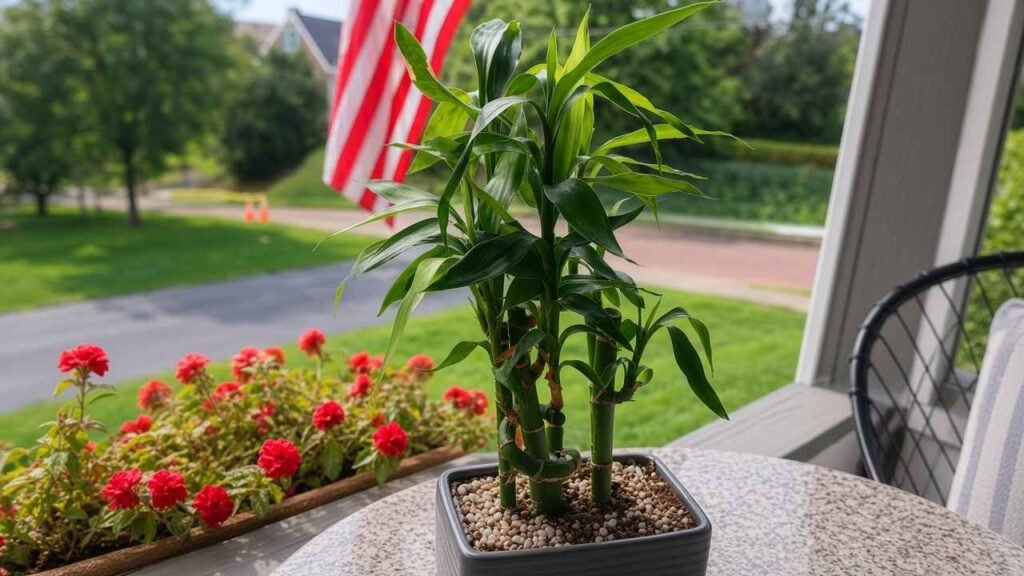
One important lesson from that experience is that Lucky Bamboo should not automatically be used as a model for every garden bamboo. The plant sold as Lucky Bamboo is not a true bamboo species, so propagation results can differ considerably with outdoor bamboo.
Goodbye Words
Isn’t it very easy to do bamboo propagation from cuttings? I have shared the raw images of my plants and am very much interested to see what yours is looking like.
Oh, one more thing I need to mention. Don’t plant the cuttings in the soil until the roots are at least 2 inches long. Otherwise, they can find it difficult to survive. You can also keep them in water as a form of bamboo plant care. Lucky Bamboo grows very nicely in water as well.
So, here we go for today. I will share more ideas from my real-life plantation regularly. Yesterday, I bought a Gardenia plant and will repot it in 2 days. Then, I’ll tell you how I do that, too.
So, just stay with us to get more effective information about indoor and outdoor plants. Thank you for your support.
FAQs
No. A bamboo leaf by itself is not normally used to produce a new plant. Successful bamboo propagation generally relies on viable plant material such as suitable stems, canes, branches, or divisions, depending on the type of bamboo.
A healthy stem or cane section with viable nodes is generally more useful for cutting propagation than a leaf alone. The best material depends on the bamboo species and propagation method.
Bamboo cuttings may fail because the plant type is unsuitable, the cutting lacks a viable node, moisture is poorly managed, or the cutting is exposed to unsuitable temperature or light. Healthy propagation material gives you a better starting point.
Some clumping bamboo can be propagated from suitable cuttings, but success varies by species and method. Division can be another option for established clumps, while certain stem or branch-cutting techniques may work for appropriate plants.
Disclaimer: This gardening information is for general educational purposes. Some pages may contain affiliate links or advertisements, and we may earn a commission from qualifying purchases at no additional cost to you.