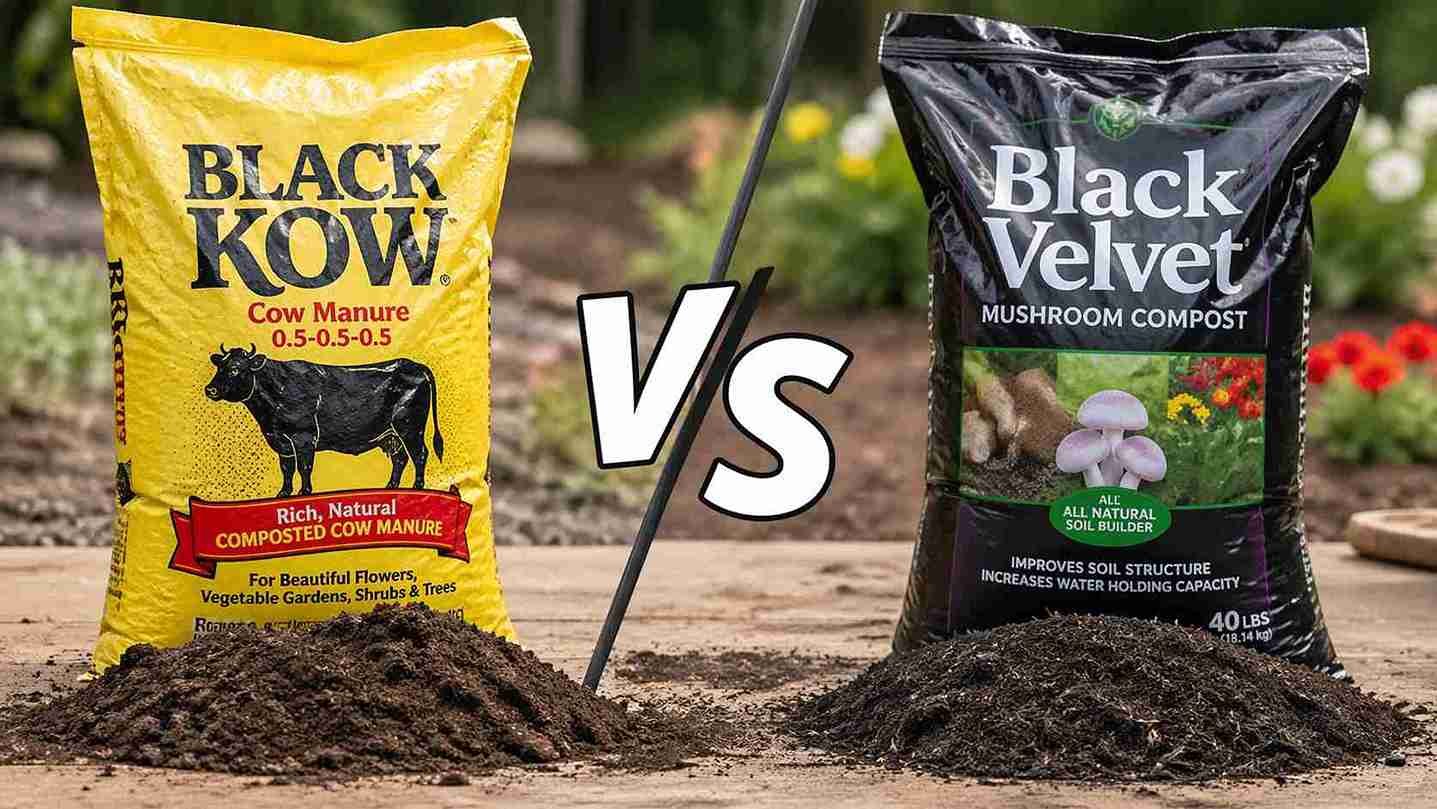
If you’ve stood in the garden center aisle staring at bags of Black Kow and Black Velvet, wondering what the difference actually is, you’re not alone. Both are popular bagged soil amendments, both are dark and earthy-smelling, and both promise better gardens.
But they’re made differently, they behave differently in the soil, and using the wrong one for the wrong job can leave your plants underwhelmed.
I’ve used both across multiple growing seasons in my raised beds and in-ground vegetable plots. Here’s what I’ve learned about Black Kow vs Black Velvet.
Black Kow vs Black Velvet: Quick Answer
Black Kow and Black Velvet are both composts, but they serve different purposes. Black Kow (cow manure) is safer for seedlings and general use, while Black Velvet (mushroom compost) improves drainage and works best in clay soil and containers.
What Is Black Kow & What’s Actually In It?
Black Kow is aged, composted cow manure. That’s it. No mystery ingredients. It’s been around since the 1970s and is one of the most widely available manure-based amendments in the US market.
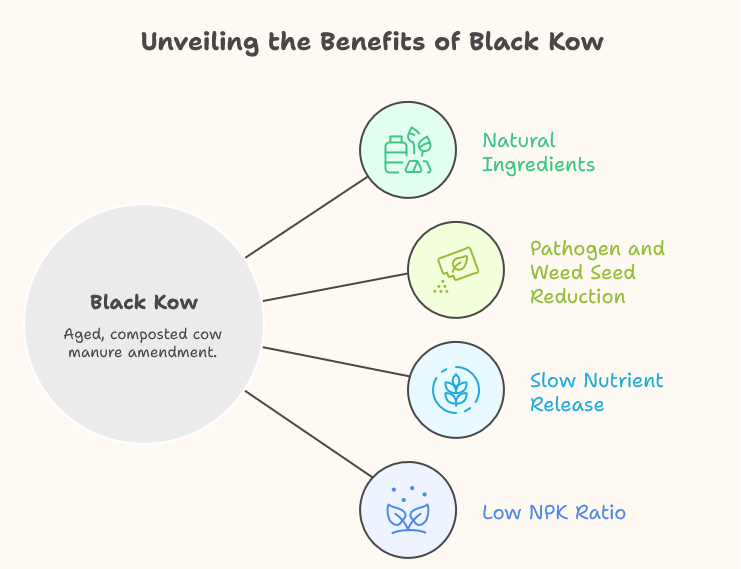
The bagged product is typically processed to reduce pathogens and weed seeds through high-temperature composting. According to the manufacturer, Black Kow has an NPK (nitrogen-phosphorus-potassium) ratio of approximately 0.5-0.5-0.5, which is low but steady.
That low number isn’t a bad thing; it means the nutrients are released slowly as soil microbes break the material down further. For a new gardener, slow-release is actually safer than a high-nitrogen product that can burn roots.
Key specs on Black Kow:
- Primary source: Composted cow manure
- NPK: ~0.5-0.5-0.5
- pH: Typically 6.8-7.2 (slightly neutral to alkaline)
- Texture: Fine, dark, crumbly when dry
- Best use: General soil amendment, vegetable gardens, flower beds
- Application rate: 1-3 inches worked into the top 6 inches of soil
One thing worth knowing: the smell. Fresh bags of Black Kow can have a barnyard odor that dissipates within a day or two once it’s worked into the soil. If you’re sensitive to it, wear gloves and don’t open the bag indoors. Check out the Black Kow disadvantages to know some minor caveats in your free time.
What Is Black Velvet & How Is It Different?
Black Velvet is a composted mushroom substrate product, sometimes also called spent mushroom compost or mushroom soil.
The base material is what’s left over after commercial mushroom cultivation, typically a mix of straw, corn cobs, cottonseed hulls, and other agricultural byproducts that were used to grow mushrooms and then composted down.
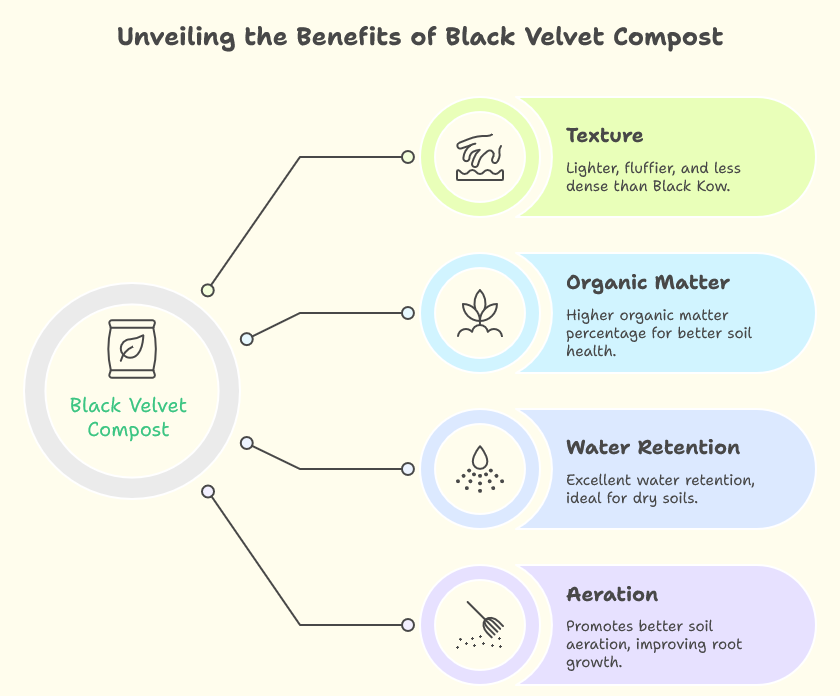
The texture is noticeably different from Black Kow. Black Velvet tends to be lighter, fluffier, and less dense. It also has a higher organic matter percentage, which translates to better water retention and aeration, two things that heavy clay soils desperately need.
Key specs on Black Velvet:
- Primary source: Composted mushroom substrate
- NPK: Varies, but typically ~0.5-0.4-0.6 or similar
- pH: Can run slightly alkaline, often 6.5-7.5, depending on the batch
- Texture: Lighter, more fibrous than manure-based products
- Best use: Clay soil improvement, container mixes, raised beds
- Application rate: 2-4 inches worked into 8-10 inches of soil
One thing to watch with mushroom compost: it can have higher salt content than manure compost, especially in fresh batches. Salts draw water away from roots through osmosis. If you’re transplanting seedlings, it’s worth mixing Black Velvet with native soil rather than using it straight from the bag.
Black Kow vs Black Velvet: Side-by-Side Comparison
Both products do similar jobs: they improve soil structure and feed soil life, but there are real differences worth knowing before you buy.
| Feature | Black Kow | Black Velvet |
| Source material | Cow manure | Mushroom substrate |
| NPK ratio | ~0.5-0.5-0.5 | ~0.5-0.4-0.6 |
| pH range | 6.8-7.2 | 6.5-7.5 |
| Texture | Dense, fine | Light, fibrous |
| Water retention | Good | Very good |
| Drainage improvement | Moderate | Better in clay |
| Salt content | Low | Moderate (watch fresh batches) |
| Odor | Moderate (fades fast) | Mild, earthy |
| Best for | Vegetable beds, lawns | Clay soils, containers, raised beds |
| Price (average, 40lb bag) | $7-$10 | $6-$9 |
Neither product is better in an absolute sense. The right one depends on what your soil already is.
This comparison is based on product characteristics and hands-on use, not sponsorship.
Black Kow vs Black Velvet: Major Differences That Affect Your Garden
Both composts look similar on paper, but their source materials, nutrient release, pH, texture, salt levels, and longevity change how they perform. Here is what actually matters.
Source Material: Cow Manure vs Mushroom Substrate
Black Kow starts as dairy cow manure, high-temperature composted to kill weeds and pathogens. Black Velvet begins as spent mushroom substrate, straw, corn cobs, gypsum, and peat, which feeds different soil fungi and builds longer-term structure.
Nutrient Profile: Fast vs Steady Release
Both deliver roughly 0.5% NPK. Black Kow releases nutrients within 4-6 weeks, creating an initial nitrogen flush. Black Velvet feeds slowly across 6-14 weeks, making it better for long-season crops like tomatoes, peppers, and squash.
| Nutrient Factor | Black Kow | Black Velvet |
| Nitrogen (N) | ~0.5% | ~0.5% |
| Phosphorus (P) | ~0.5% | ~0.4% |
| Potassium (K) | ~0.5% | ~0.6% |
| Release Speed | Moderate-fast | Slow, steady |
| Best Feeding Window | First 4-6 weeks | 6-14 weeks |
Soil pH Impact: Which Is Safer for Acid-Loving Plants
Black Kow runs pH 6.8-7.2, neutral with minor alkaline creep. Black Velvet can reach pH 7.5 because of gypsum and lime in the mushroom substrate. For blueberries or azaleas, Black Kow is safer; avoid both if the soil is already above 7.0.
Texture and Soil Structure: Fixing Clay vs Building Beds
Black Kow is dense and fine, blending easily into existing soil. Black Velvet is lighter and fibrous, making it superior for breaking up heavy clay work in 3-4 inches to improve drainage and root movement faster than manure-based compost.
Salt Content and Seedling Safety
Black Kow has low soluble salts (typically EC under 2.0), safe for seed-starting. Black Velvet can typically run EC 3.0-5.0, risking salt burn on young roots. Age it for a few weeks or use at ≤25% of mix; for direct seeding, choose Black Kow.
Long-Term Soil Building: Which Lasts Longer
Black Kow’s often reported C: N ratio of 15-20:1 decomposes quickly, releasing nutrients fast but not persisting. Typically, Black Velvet’s C: N of 25-40:1 breaks down slowly, improving soil aggregation and water retention across multiple seasons with fewer applications.
Which One Should You Actually Use?
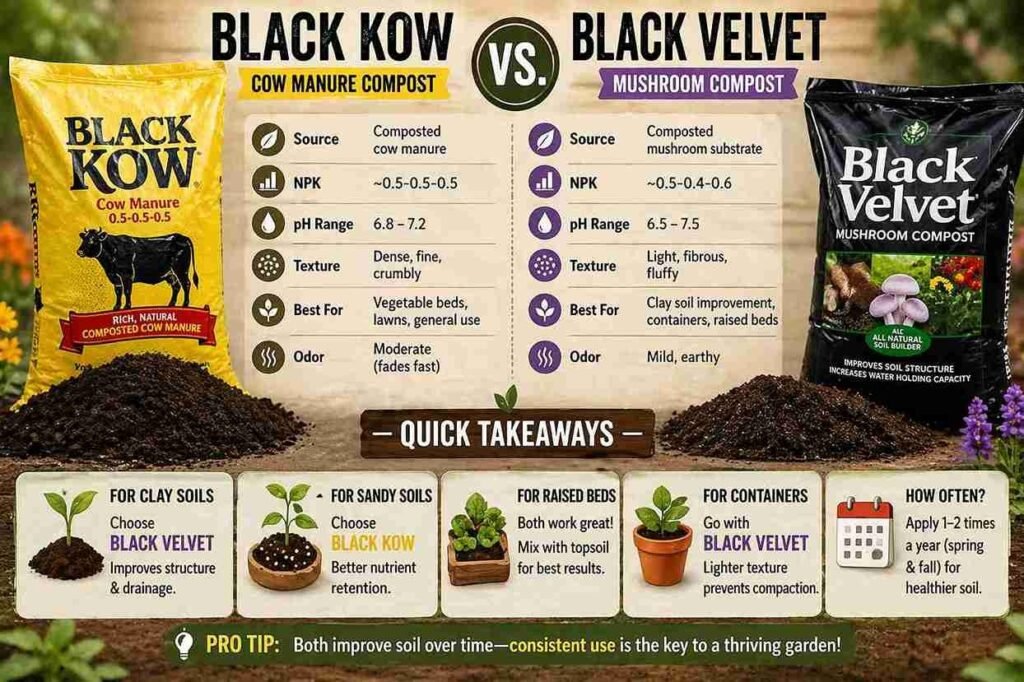
The honest answer is: it depends on your soil type and what you’re growing. I know that’s not the crisp answer people want, but soil improvement isn’t one-size-fits-all.
Back Cow & Black Velvet Compost For Clay-Heavy Soil
Clay soil compacts easily and drains poorly. Black Velvet wins here. The fibrous, lightweight structure of mushroom compost physically opens up clay particles, creating air pockets that roots can grow through.
Work 3-4 inches into the top 10 inches of soil in fall, and by spring, you’ll have noticeably looser ground.
Black Kow in clay isn’t harmful, but it’s denser. It still adds organic matter and improves microbial activity, but it doesn’t do as much to physically break up heavy clay.
For Sandy or Fast-Draining Soil
Sandy soil is the opposite problem; it dries out too fast and doesn’t hold nutrients well. Either product helps here, but Black Kow tends to have slightly higher nutrient content and binds a bit more in loose sandy soil. For vegetables in sandy ground, I’d lean toward Black Kow, supplemented with a good mulch on top.
For Raised Beds: Black Kow vs Black Velvet Compost
Both work well in raised beds. If you’re building a new bed from scratch, mixing Black Velvet with topsoil and perlite gives you excellent drainage and moisture retention together. For established beds that just need a seasonal refresh, a 1-inch topdress of Black Kow in early spring does the job fine.
For Container Gardening
So, stick with Black Velvet for containers, or mix a small amount of Black Kow with potting mix. Containers don’t have the same drainage as in-ground soil, and Black Velvet’s lighter texture prevents compaction in pots better.
How to Apply Each Product: Practical Tips for New Gardeners
Getting compost into the ground correctly makes a bigger difference than most people realize. Dumping a bag on top without working it in is a common beginner mistake; the nutrients stay near the surface and don’t reach the root zone.
Here’s a simple application guide for both products:
Back Cow Compost & Black Velvet – For new garden beds:
- Remove existing weeds and grass.
- Spread 2-3 inches of your chosen compost over the area.
- Use a garden fork or tiller to work it into the top 6-10 inches of native soil.
- Rake level and water lightly to settle.
- Wait 1-2 weeks before planting if using fresh Black Velvet (reduces salt risk).
For established beds (seasonal refresh):
- Lightly loosen the top 2 inches of existing soil with a hand cultivator.
- Spread 1-2 inches of compost around plants (keep a 2-inch gap from stems).
- No need to dig it in, rainfall and worms will incorporate it over time.
For lawns:
Black Kow is the better lawn amendment of the two. Apply a thin layer (1/4 to 1/2 inch) after aerating in the fall. Black Velvet is too light and fibrous to sit well on grass without washing away in the rain.
FAQs: Black Kow vs Black Velvet
Can I use Black Kow and Black Velvet together?
Yes, and it’s actually a good combo. Black Kow brings nutrients and microbial life; Black Velvet brings structure and water retention. A 50/50 mix works well for raised beds or new planting areas.
Will Black Kow burn my plants?
At normal application rates, no. The NPK is low enough that it won’t cause fertilizer burn. The exception is seedlings with very tender roots; work it into the soil a few weeks before transplanting just to be safe.
Is Black Velvet safe for vegetable gardens?
Yes, with one caveat. If the bag is very fresh and you detect a strong ammonia smell, let it sit open in a shaded spot for a few days before using it. This is rare, but it can happen with some batches.
How often should I apply these?
Once or twice a year is typical. Most gardeners apply in spring before planting and again in fall after the growing season ends. It’s difficult to over-apply compost, but there’s also a point of diminishing returns once your soil organic matter is above 5-6%.
Do these replace fertilizer?
Not entirely. Both Black Kow and Black Velvet have low NPK numbers and are primarily soil conditioners, not fertilizers. They improve the environment where roots live and support the microbes that make nutrients available, but for heavy-feeding vegetables like tomatoes and corn, you’ll still want a dedicated fertilizer through the growing season.
Which is better, Black Kow or Black Velvet?
Neither is universally better. Black Kow suits most gardens, while Black Velvet excels in heavy soil and container mixes.
Which one smells less?
Black Velvet, hands down. The earthy mushroom smell is mild and fades fast. Black Kow has more of a barnyard smell that dissipates in a day or two once it’s in the ground, but it’s more noticeable right out of the bag.
Bottom Line
Black Kow and Black Velvet are both solid, affordable compost products that do exactly what they’re supposed to do: build better soil over time. Black Kow is the more straightforward pick for general vegetable gardening and lawn use.
The Black Velvet earns its place in clay-heavy soils and container mixes where that lighter, more fibrous texture makes a real physical difference.
If you’re just starting out, Black Kow is probably the easier entry point. It’s available everywhere, it’s forgiving, and it has decades of proven use behind it. If your soil is dense and drains slowly, try Black Velvet first; you’ll see the difference by the second growing season.
Either way, the best thing you can do for a new garden is commit to adding organic matter every year. One bag of compost won’t transform your soil. Two or three seasons of consistent amending will.