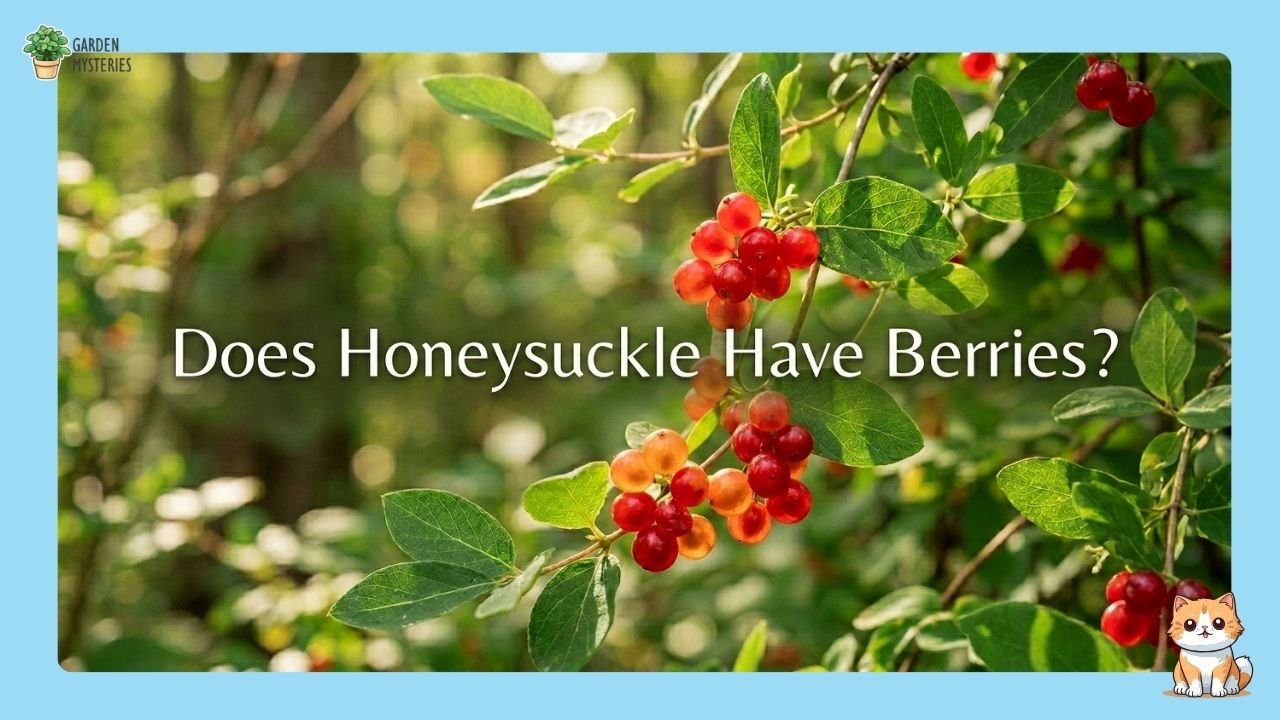
Yes, honeysuckle does have berries. They grow in small pairs after the flowers fade, and they come in red, orange, black, or dark blue depending on the species.
Most gardeners get confused because not all honeysuckle berries look the same. Some are toxic, some are completely safe, and a few look almost identical to edible ones.
Knowing the difference matters, especially if you have kids or pets in your garden. Read the entire blog to stay on the safe side with your honeysuckle berries.
Key Takeaways – Does Honeysuckle Have Berries
- Most honeysuckle berries are mildly harmful to humans and pets.
- Red or orange berries almost always mean the plant is unsafe.
- Dark blue, oval berries belong to the safe haskap variety.
- Birds can eat all honeysuckle berries without getting sick.
- Always identify your plant before touching or tasting the berries.
What Do Honeysuckle Berries Look Like?
Berries on a honeysuckle bush are small, round, and shiny. They always grow in pairs, sitting right next to each other on the stem. That paired growth is one of the easiest things to spot.
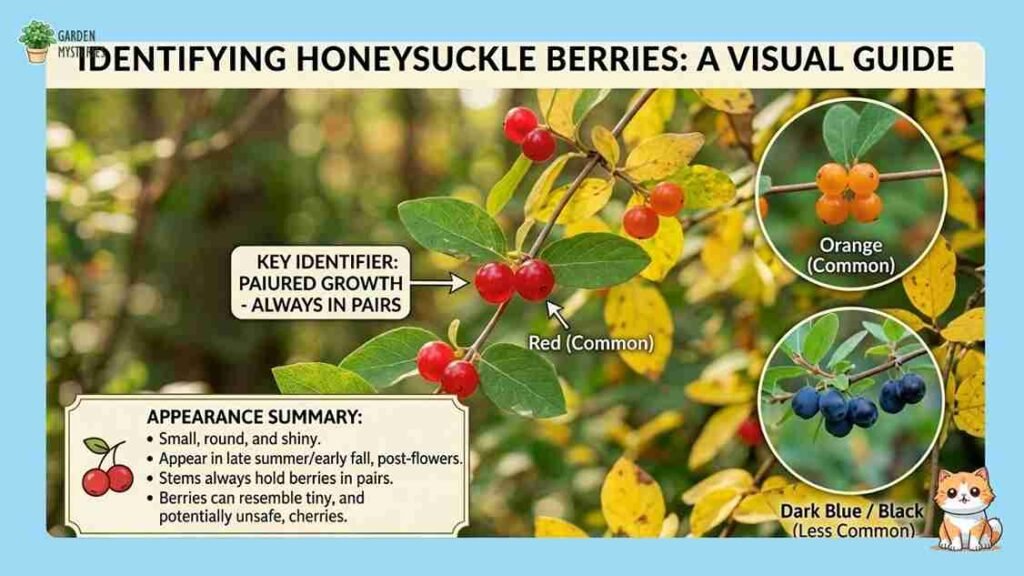
The color depends entirely on the species. Red and orange are the most common colors you will see on ornamental and invasive types. Dark blue or black berries show up on a few specific varieties.
They appear in late summer or early fall, right after the flowers drop. The plant looks quite different at that point. Sometimes, honeysuckle leaves can turn yellow. The bright berries stand out clearly against the green leaves.
I noticed the honeysuckle bush berries in my own garden looked almost like tiny cherries. That is what made me stop and actually look up whether they were safe.
Are Honeysuckle Berries Unsafe or Safe?
Most honeysuckle berries are unsafe for humans, even though most honeysuckle flowers are edible. They contain compounds that can cause nausea, stomach pain, or vomiting if eaten in larger amounts. A single berry may not cause serious harm, but it is still not worth the risk.
The one clear exception is haskap, also called honeyberry. These dark blue, oval-shaped berries are safe and even nutritious. They taste a bit like a mix of blueberry and tart cherry.
Color is your best quick guide here. Honeysuckle red berries and orange ones are the ones to avoid. Dark blue and elongated shape usually point to the safe haskap variety.
I once saw my neighbor’s kid reach for the red berries on a nearby bush of brown honeysuckle leaves. That is when I realized how important it is to know what you are looking at before anyone touches them.
Common Types of Honeysuckle That Have Berries
Not every honeysuckle looks the same or produces the same kind of berry. Here is a breakdown of the most common types you are likely to come across.
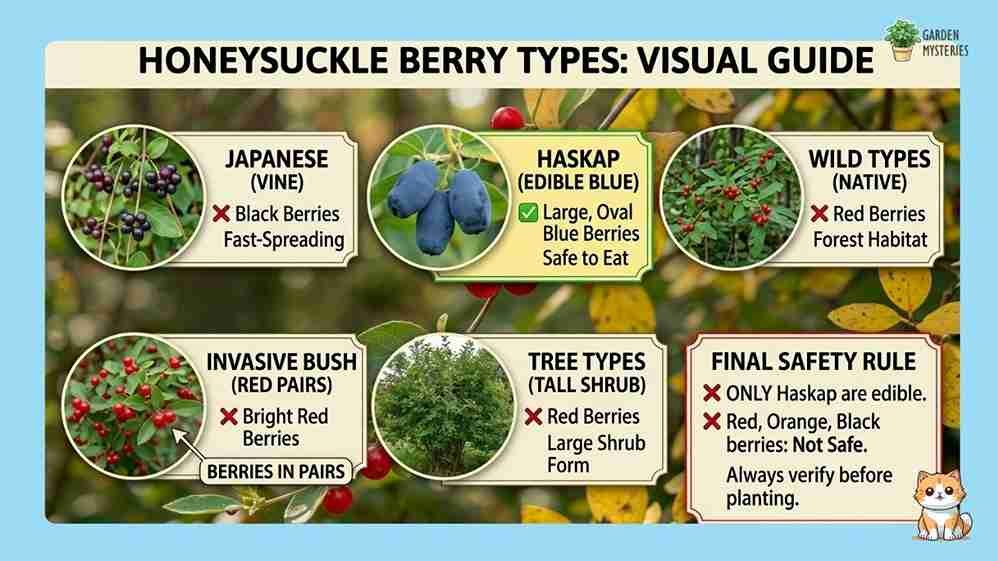
Japanese Honeysuckle (Lonicera japonica)
Japanese honeysuckle berries are dark purple to black and grow on a fast-spreading vine. They look different from the red bush types but are still not safe to eat.
Wild Honeysuckle
Wild honeysuckle berries are usually red and grow on native species found in forests and roadsides. Most of these are not considered safe for human consumption.
Invasive Bush Types (Tartarian, Morrow’s, Amur)
These are the most common bush honeysuckles in North American gardens. Their honeysuckle red berries are bright red and grow in pairs. They are invasive in many US states.
Honeysuckle Tree Types
Some people call tall, shrubby honeysuckles a honeysuckle tree because of their size. Honeysuckle tree berries are still red and follow the same rule: not safe for humans.
Haskap (Lonicera caerulea)
This is the only widely available honeysuckle with fully edible berries. The berries are dark blue, oval-shaped, and noticeably larger than the red varieties. This one is worth growing on purpose.
You can choose Honeysuckle or Jasmine for your garden to make it look flowery, but it’s always better to learn about the plant variations before choosing one. For honeysuckles, always go for the Haskap one for a safer option.
Why Are Birds Always Around Honeysuckle?
Birds can eat most honeysuckle berries safely. Their digestive systems handle the compounds that cause problems in humans. So you will often see robins, thrushes, and cedar waxwings going after the berries and flowers, even though some honeysuckle doesn’t smell.
However, some honeysuckle flowers smell like honey, and that’s a big reason insects and birds are attracted to them.
This is actually a problem when it comes to invasive types. Honeysuckle has berries that spread the plant, and birds eat and fly off, dropping seeds far from the original plant.
Japanese honeysuckle berries spread this way too. It is one of the reasons this vine has taken over roadsides and forest edges across much of the eastern United States.
Should You Remove the Berries from Honeysuckle Plants?
Yes, removing berries on a honeysuckle bush that is invasive is a smart idea. It slows down how fast the plant spreads through your neighborhood and local green spaces.
For haskap, there is no reason to remove anything. Those berries are the whole point of growing the plant. Harvest them when they turn dark blue and taste slightly soft.
For native species, check first. Some honeysuckle bush berries on native plants are part of the local food chain. Removing them may affect birds and small animals that depend on them seasonally.
How to Identify Your Honeysuckle Before Touching the Berries
Look at berry color, shape, and how the plant grows before you touch anything. These three things will get you most of the way there.
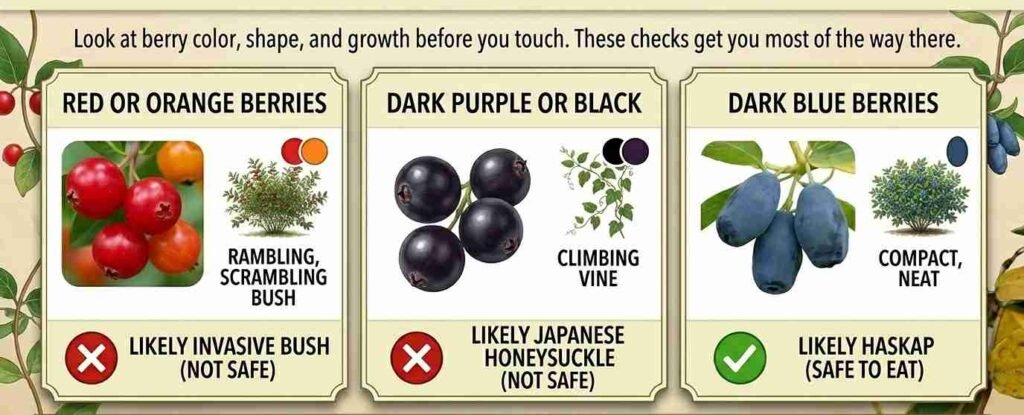
Use these quick checks:
- Red or orange and round: Likely invasive bush type, not safe
- Dark purple or black: Likely Japanese honeysuckle, not safe
- Dark blue and oval: Likely haskap, safe to eat
- Berries in pairs: Classic sign of all honeysuckle types
- Tall arching shrub with wild honeysuckle berries: Probably an invasive species
- Compact shrub sold as fruiting plant: Likely haskap or similar edible type
- Honeysuckle tree berries on a large multi-stem shrub: Still check before touching
When in doubt, check the USDA Plants Database or contact your local university extension office. They can identify your specific species based on region.
FAQs
Most honeysuckle berries are not edible. The haskap variety (Lonicera caerulea) is the main exception. Its dark blue, oval berries are safe. Red, orange, or black berries from other species are best avoided.
Yes, birds eat most honeysuckle berries without any problem. This is why invasive types spread so quickly across gardens and wild areas every fall.
Most honeysuckle berries are mildly harmful to dogs. If your dog eats any, watch for vomiting or signs of stomach upset and check with your vet to be safe.
End Note
Honeysuckle does produce berries, and most of them are not meant for humans or pets. The haskap is the only variety worth eating, and it looks clearly different from the rest.
Before you touch, taste, or let anyone near the berries on your plant, take a moment to identify it properly. A quick check now saves a lot of trouble later.