
Yes, most varieties of Coreopsis do bloom all summer, as long as they get full sun and light, well-drained soil. In my own beds, these cheerful yellow flowers keep coming back through the warmest months.
Some gardeners think coreopsis only flowers for a few weeks before fading out completely. That confusion usually comes from skipped deadheading, since old blooms left on the plant can slow down fresh growth fairly quickly.
This blog covers coreopsis growing conditions, the right planting time, plant size, and simple care tips from my own garden. Keep reading to learn how to keep these flowers blooming right through the summer season.
Key Takeaways: Do Coreopsis Bloom All Summer
Here are the quick facts about whether do Coreopsis blooms all summer or not, its blooming timeline, growing needs, and care, based on what has worked in my own garden this summer.
- Coreopsis blooms from late spring through early fall in most zones.
- Full sun and well-drained soil keep the flowers coming back.
- Deadheading spent blooms encourages more flowers through the season.
- Most coreopsis varieties grow between one and two feet tall.
- Coreopsis is a perennial in many zones, returning each spring.
- Lanceleaf coreopsis has narrow leaves that help with identification.
Do Coreopsis Bloom All Summer?
Coreopsis does bloom all summer in most regions, starting in late spring and continuing right into early fall. That long bloom window is one reason I always plant a few clumps near my front walkway.

How long does coreopsis bloom depends on the variety and how well the plant is cared for through the season. Many types flower for three to four months without much extra effort from the gardener.
Weather also plays a role in how long the blooms last from year to year in a garden. A cool, wet spring can sometimes delay the first flowers by a week or two.
In my experience, regularly removing old flowers makes a real difference in bloom length. I trim spent blooms every week or two, and this keeps the plant producing fresh flowers instead of seed pods.
Coreopsis Bloom Timeline
Most coreopsis varieties begin blooming in late spring or early summer, filling gardens with cheerful daisy-like flowers. The first blooms often appear in May or June, depending on your climate and variety.
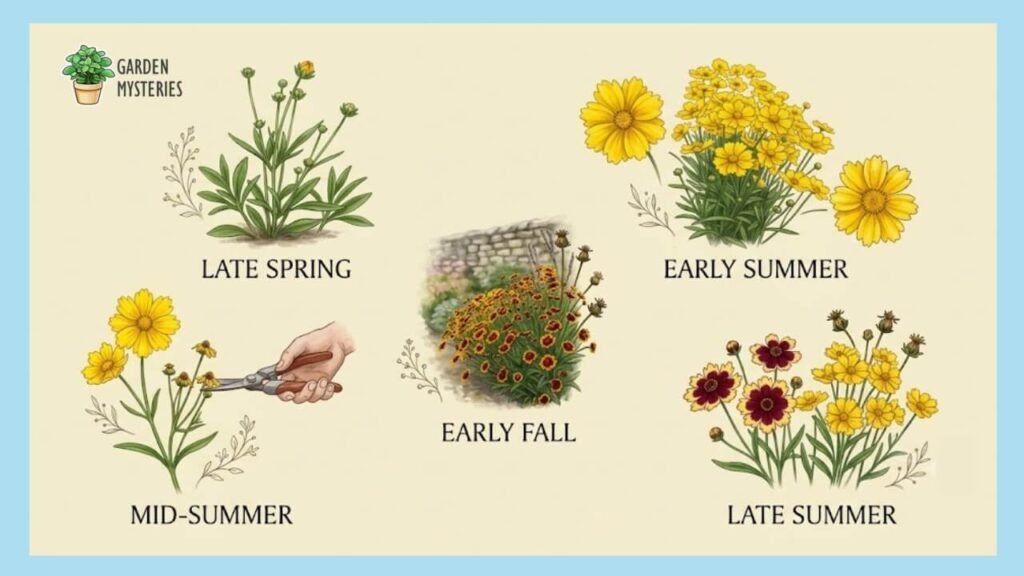
With regular deadheading and proper care, many coreopsis plants continue flowering through summer. Some modern cultivars even produce fresh blooms into early fall, especially in regions with mild weather.
| Season | What to Expect |
| Late Spring (May) | Flower buds begin opening on early varieties. |
| Early Summer (June) | Peak blooming starts with abundant colorful flowers. |
| Mid-Summer (July–August) | Continuous blooming if spent flowers are removed regularly. |
| Late Summer (August–September) | Wide varieties rebloom, though flowering may slow in extreme heat. |
| Early Fall (September–October) | Blooming continues until the first frost in many climates. |
What Conditions Help Coreopsis Bloom Longer?
Coreopsis growing conditions that support strong blooms include full sun, good drainage, and soil that is not too rich. These facts together made the biggest difference in my own garden this year.
- Sunlight: Coreopsis needs at least six hours of direct sun each day to produce plenty of blooms through summer.
- Drainage: These plants dislike sitting in wet soil, so raised bed soil mix or sloped areas work well for healthy roots.
- Watering: Established coreopsis handles dry spells fairly well, so deep watering once a week is usually enough for most gardens.
- Soil mix: A compost, manure, and raised bed soil gives roots a light, airy base without pushing too much leaf growth.
- Airflow: Spacing plants apart lets air move freely between them, which helps prevent fungal problems during humid summer weeks.
A lean soil mix has helped coreopsis flower non-stop in my garden, since rich soil often pushes leaf growth over blooms. Less can truly be more with this particular plant, at least in my experience.
When Should You Plant Coreopsis?
The best time to plant coreopsis is in spring, once the last frost has passed in your area. Fall planting can also work in warmer zones, giving roots time to settle before winter arrives.

When does tickseed bloom is a common question, since coreopsis is often sold as tickseed at local nurseries. Plants set out in spring usually start flowering within six to eight weeks of being planted.
The choice between compost or potting soil for a new coreopsis bed depends on where you are planting it. I have found compost works better outdoors, while potting soil suits container-grown plants on patios.
Early spring planting gives coreopsis a longer head start before summer heat arrives in most regions. In my experience, this usually leads to more total blooms by the time the season winds down.
How Big Does Coreopsis Get?
How big does coreopsis get is a fair question before choosing a planting spot in the garden. Most varieties reach one to two feet tall and spread about the same width at maturity.
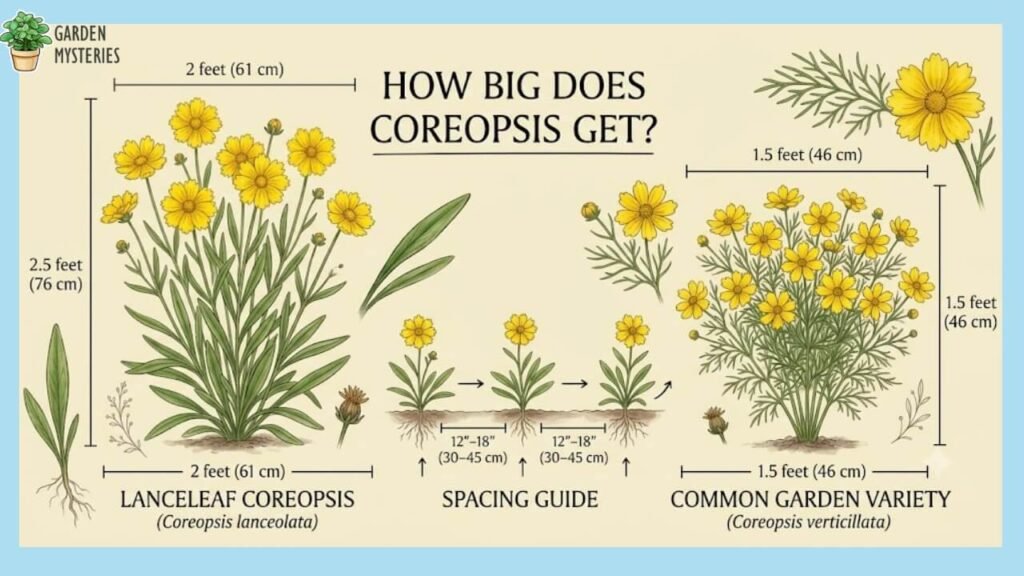
Lanceleaf coreopsis leaf shape is long, narrow, and slightly pointed, which helps separate it from other yellow-flowering plants nearby. This variety also tends to grow a bit taller than some other coreopsis types in the same bed.
Correct spacing gives each plant room to spread without crowding its neighbors nearby in the bed. I usually leave twelve to eighteen inches between young coreopsis plants when I first set them out.
Feeding plays a small role in overall size and bloom count across a full growing season. Light, occasional feeding tends to work better than heavy fertilizing for this particular plant.
- Space plants at least twelve inches apart for healthy airflow between them.
- Avoid heavy fertilizer, since it can push leafy growth over blooms.
- Homemade flower fertilizers, like diluted compost tea, work well for light monthly feeding.
Does Coreopsis Come Back Every Year?
Does coreopsis come back every year is a fair question, since many summer flowers are only annuals. Most coreopsis varieties are perennials, which means they return from the same roots each spring in the right growing zone.
Some coreopsis types behave more like short-lived perennials, lasting only two or three years before they start to fade. I replace older plants every few seasons to keep the bed looking full and healthy overall.
Winter hardiness varies a bit by region, so a plant that returns reliably in one garden might struggle in a colder one. Mulching the base lightly in fall has helped my own plants survive harsher winters.
Coreopsis or Cosmos is a common comparison for gardeners planning summer color in a sunny bed. Cosmos is usually an annual, while coreopsis often returns on its own, year after year, in the same spot.
FAQs
Most coreopsis varieties are perennials that return each spring once established in the right growing zone. Some types act more like short-lived perennials, lasting only a few seasons total.
Coreopsis is often called tickseed because its small, dark seeds resemble ticks in shape and size. This nickname is common across nurseries and gardening guides in many regions.
Yes, coreopsis often spreads through self-seeding and gradually expanding roots once it settles into a bed. Many gardeners notice small new plants appearing nearby each season.
Most coreopsis plants grow between one and two feet tall, depending on the variety and local growing conditions. Lanceleaf types can sometimes grow slightly taller than others in the bed.
End Note
Coreopsis really does bloom all summer when it gets enough sun, light soil, and a bit of regular deadheading. It also tends to come back on its own each spring, so you’re not starting from scratch every year.
Good soil makes the difference here. I like mixing in compost or aged manure for new beds, and switching to a lighter potting soil for anything in containers. Get that part right, and coreopsis will keep rewarding your garden for years.
Note: This content is for informational purposes only. Always follow product labels, safety instructions, and local regulations. Gardening results vary by climate, soil, plant variety, and individual growing conditions.