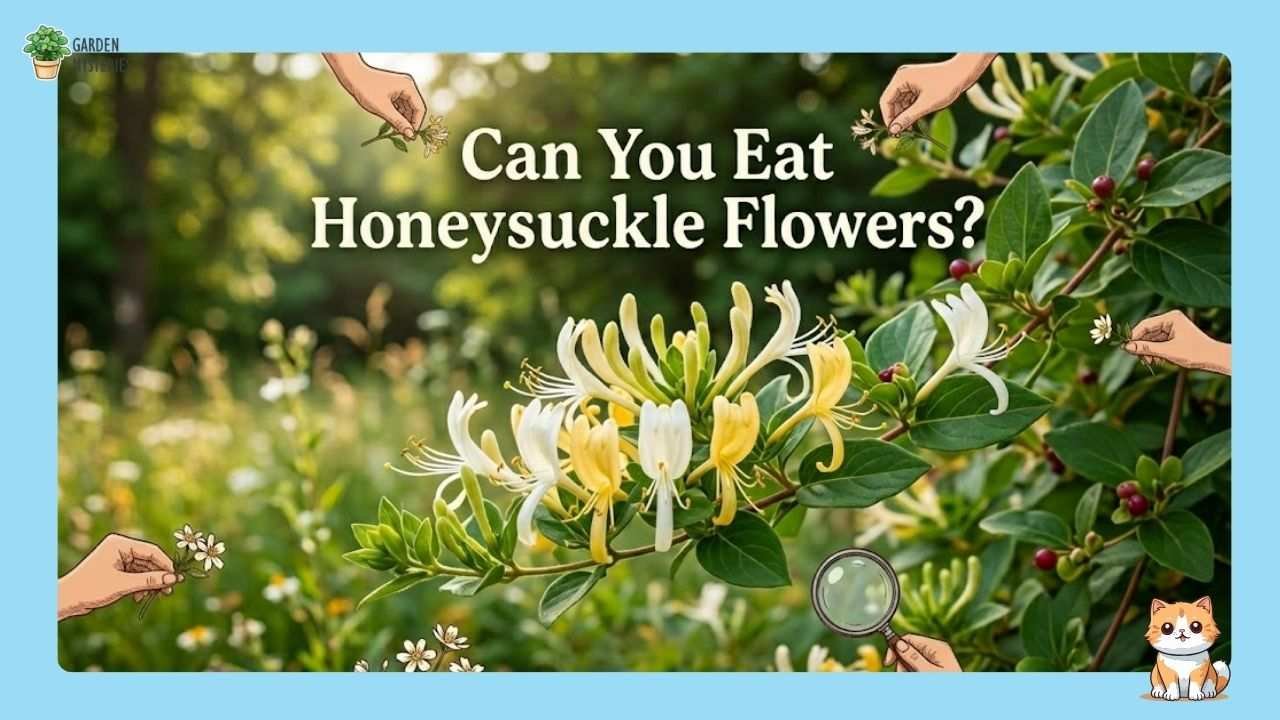
Yes, you can eat honeysuckle flowers. The nectar inside the blossoms is sweet and safe for most true honeysuckle species. Edible honeysuckle flowers have been enjoyed by foragers and home gardeners for generations.
The confusing part is that the flowers and berries follow completely different rules. Safe flowers, unsafe berries. Many people do not know this difference until they look it up.
If you grow honeysuckle at home or spot it in the wild, this blog will help you figure out what is safe to touch, taste, or skip entirely. Read on before you try anything.
Key Takeaways
- Honeysuckle flowers are safe to eat for most true species.
- The sweet nectar is drawn out by pulling the pistil gently.
- Most berries on honeysuckle plants are not safe to eat.
- Scent strength varies by species, time of day, and plant health.
- Always confirm your plant species before foraging anything from it.
Are Honeysuckle Flowers Actually Edible?
Yes, honeysuckle flower edible varieties are widely known in foraging and herbal circles. The flowers of most true Lonicera species are considered safe. The nectar inside is sweet, and the petals can be used in several ways.
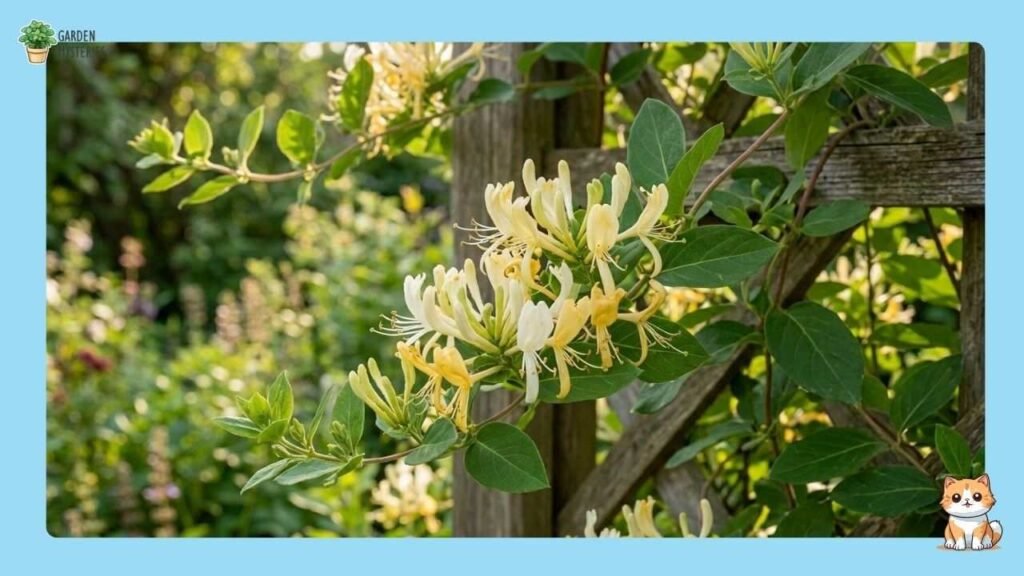
You can sip the nectar straight from the flower, infuse the petals into honey or syrup, or use the blossoms as a garnish. Some people steep them in hot water for a light floral tea.
That said, not every species is equal. The benefits of honeysuckle flower are most associated with common varieties like Lonicera japonica. Less familiar species are worth researching before you eat anything from them.
What Do Honeysuckle Flowers Taste and Smell Like?
A common question I always hear: does honeysuckle smell like honey? Mostly yes. The flowers have a soft, sweet fragrance that many people describe as warm and slightly floral. It is one of the reasons the plant is so popular in home gardens.
The nectar tastes exactly like it smells: light, sweet, and a little like diluted honey. It is not overpowering. Most people get just one small drop per flower when they pull the pistil through.
If your honeysuckle doesn’t smell, it could be the time of day, plant stress, or species differences. Scent is usually strongest in the evening and on warmer days. A struggling plant often loses fragrance before anything else shows.
How to Eat Honeysuckle Flowers Safely
Can you eat honeysuckle flowers straight from the plant? Yes, but there is a simple method that works best and keeps things clean and safe.
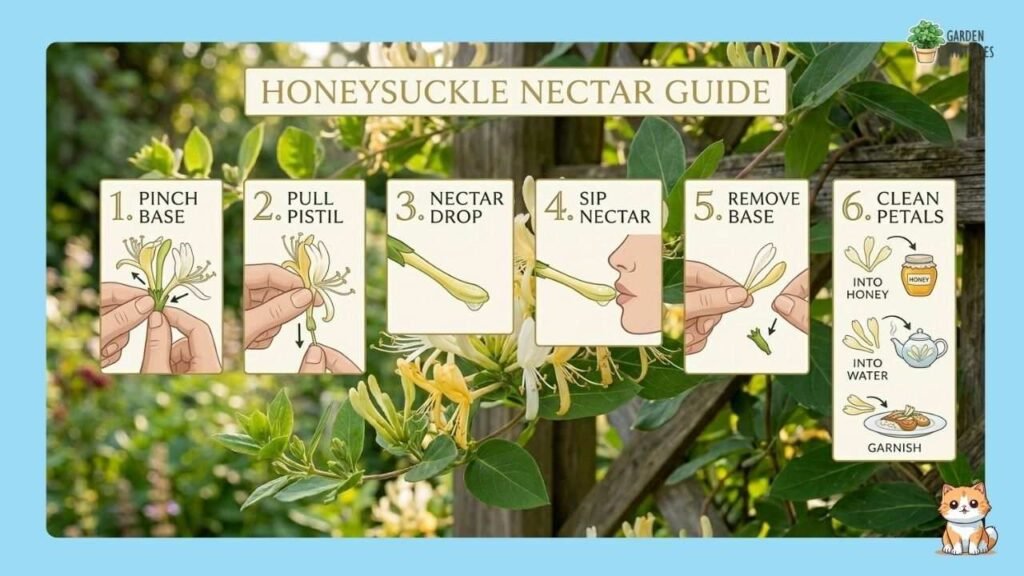
Here is how to do it properly:
- Pinch the base of the flower where it meets the stem
- Pull the pistil (the thin thread-like center) slowly all the way through
- A small drop of nectar will appear at the base as you pull
- Sip or lick that nectar drop directly
- Remove the calyx (small green base) before using petals in food, as it can taste bitter
- Infuse petals into warm water, honey, simple syrup, or use as a garnish
If you are deciding between jasmine or honeysuckle for a garden or foraging purpose, note that jasmine nectar is not typically consumed the same way. Honeysuckle is the one with the edible nectar tradition.
Health and Medicinal Benefits of Honeysuckle
The benefits of honeysuckle go beyond the garden. Traditional herbal systems, including Traditional Chinese Medicine, have used honeysuckle for a long time. The medicinal uses for honeysuckle are worth understanding, though results vary by person and preparation.
Anti-Inflammatory Properties
Honeysuckle flowers contain compounds that some herbalists associate with reducing inflammation. This is one reason they appear in traditional remedies across several cultures.
Use in Herbal Teas
Dried honeysuckle blossoms are commonly used in herbal teas. The tea is thought by some to support respiratory comfort, though no strong clinical evidence guarantees this effect.
Antioxidant Compounds
Some research suggests honeysuckle flowers contain antioxidants. These are naturally occurring compounds that may support general health, though more studies are needed before strong claims can be made.
Traditional Fever Support
In older herbal traditions, honeysuckle was sometimes used during fevers and colds. It remains a popular ingredient in herbal blends sold in Asian grocery stores today.
What Parts of Honeysuckle Are Not Safe?
Not everything on a honeysuckle plant is as friendly as the flowers. Honeysuckle has berries that follow a very different rule from the blossoms. Most red, orange, or black berries are not safe for humans to eat.
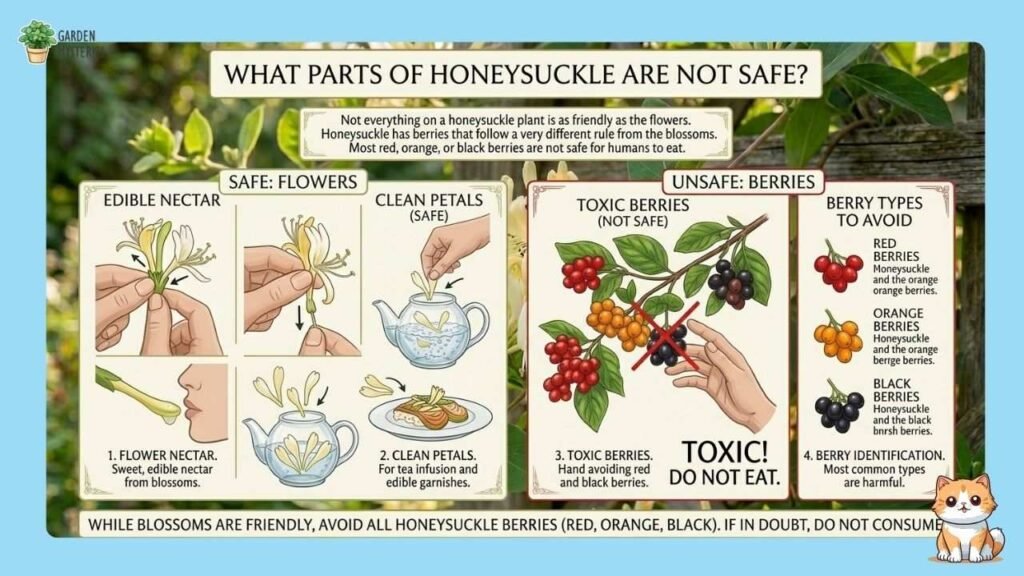
Brown honeysuckle leaves and stems are also not meant for consumption. If you notice leaves browning or dropping early, that is usually a sign of plant stress, not something to forage.
The one berry exception is haskap, also called honeyberry. Its dark blue oval berries are safe. All other common varieties should be avoided by both humans and pets. Dogs and cats are especially sensitive to honeysuckle berries and leaves.
How to Identify Edible Honeysuckle
Before you eat anything, make sure you are actually looking at a true honeysuckle and not a look-alike. A few visual checks can help you stay on the safe side.
Look for these signs:
- Tubular flowers in white, yellow, or pink, often in pairs
- Opposite leaves that grow in pairs along the stem
- Honeysuckle leaves turning yellow can signal stress or a struggling plant, not a different species
- Paired berries after flowering, usually red or dark blue depending on species
- Vine or arching bush habit, depending on the variety
- Watch out for Carolina Jessamine, a look-alike with yellow tubular flowers that is not safe to eat at all
- A compact shrub with dark blue oval berries is likely haskap, the edible fruiting type
When unsure, check the USDA Plants Database or contact your local extension office for regional guidance.
FAQs: Can You Eat Honeysuckle Flowers
Pinch the base of the flower and slowly pull the pistil all the way through. A small drop of sweet nectar appears at the end. You can also remove petals and use them in tea, syrup, or as a light garnish for desserts and drinks.
Rinse fresh blossoms and steep them in hot water for 5 to 10 minutes. Dried flowers work too. Strain before drinking. Some people add a small amount of honey to bring out the floral flavor a little more.
The flowers and their nectar are the edible parts. The berries, leaves, and stems of most species are not safe for people or pets. Haskap berries are the one well-known exception with fully edible fruit.
End Note
Honeysuckle flowers are one of those simple garden pleasures that are genuinely safe to enjoy. The nectar is sweet, the petals have real culinary uses, and the plant has a long history in herbal traditions. Just make sure you have the right species before you start foraging.
The most important thing to remember is that flowers and berries play by different rules on this plant. Get the ID right, skip the berries unless you have haskap, and the flowers are yours to enjoy.