Yes, honeysuckle does smell like honey, but it is not an exact match. The scent is sweeter and more floral than raw honey. Many people grow up assuming they are identical, and that confusion is completely understandable.
The mix-up happens because honeysuckle fragrances vary widely between species. Some smell intensely sweet while others barely have a scent at all. That gap throws a lot of gardeners off.
Knowing what your plant should smell like helps you spot problems early and enjoy it better. Read the entire blog before you draw any conclusions about your honeysuckle.
Key Takeaways – Does Honeysuckle Smell Like Honey
- Honeysuckle smells sweet and floral but not exactly like honey.
- Scent strength depends on species, temperature, and time of day.
- Lonicera japonica and Periclymenum are among the most fragrant types.
- The nectar tastes close to how the flowers smell, light and sweet.
- Flowers are generally safe to taste, but berries follow different rules.
Does Honeysuckle Smell Like Honey?
Honeysuckle smells similar to honey but with a softer, more floral character. I grew up pulling those tiny flowers apart in my garden, always expecting them to smell exactly like the honey jar in our kitchen. They never quite did, and that always puzzled me.
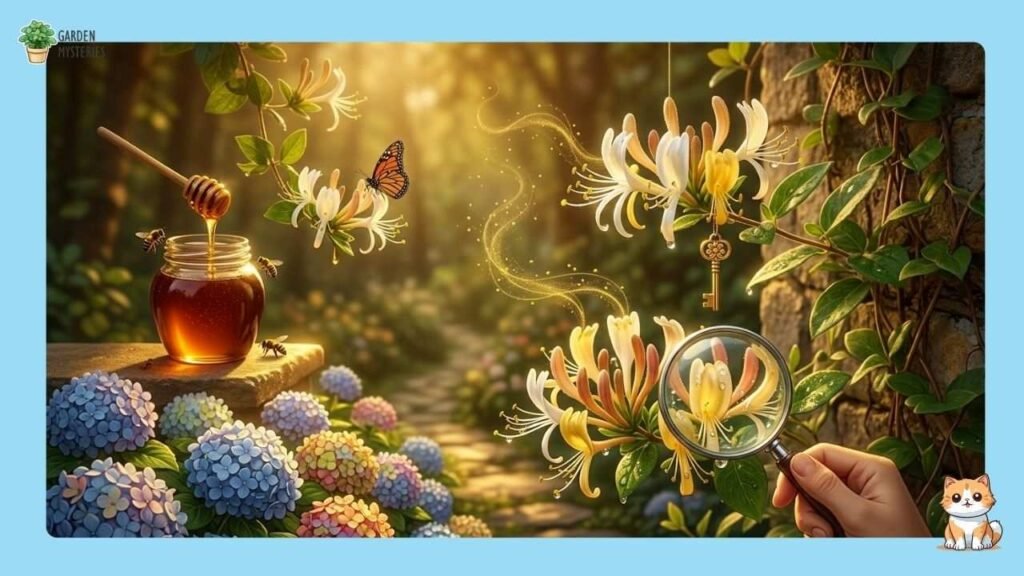
The scent is warm, sweet, and a little heady on a hot afternoon. It sits somewhere between honeysuckle smell and honeysuckle taste descriptions you find in perfume notes and actual raw honey. Close, but with more green and floral depth underneath.
If you have ever stood near jasmine or honeysuckle on a warm evening, you know both have that heavy sweetness in common. Jasmine leans more powdery. Honeysuckle stays fresher and lighter. The difference is subtle but real once you know what to notice.
Why Does My Honeysuckle Not Smell?
Several reasons can cause honeysuckle to smell weak or produce no scent at all. When I noticed my honeysuckle doesn’t smell the way it used to, my first instinct was that something was wrong with the plant.
Time of day matters more than most people realize. Honeysuckle scent peaks in the evening and early morning. Checking it at midday on a cloudy day will often give you nothing.
Plant stress also cuts the fragrance fast. Honeysuckle leaves turning yellow is often the first visible sign that your plant is struggling. A stressed plant puts less energy into flowers and scent. Check watering, soil, and sun exposure before assuming the species is just not fragrant.
Which Honeysuckle Smells the Strongest?
Not all honeysuckle species produce the same level of fragrance, and picking the right one makes a real difference in your garden. Some are bred for looks, not scent.
I noticed brown honeysuckle leaves on one of my older plants before I realized it was a purely ornamental variety with almost no perfume at all. That was when I started paying closer attention to species names before buying.
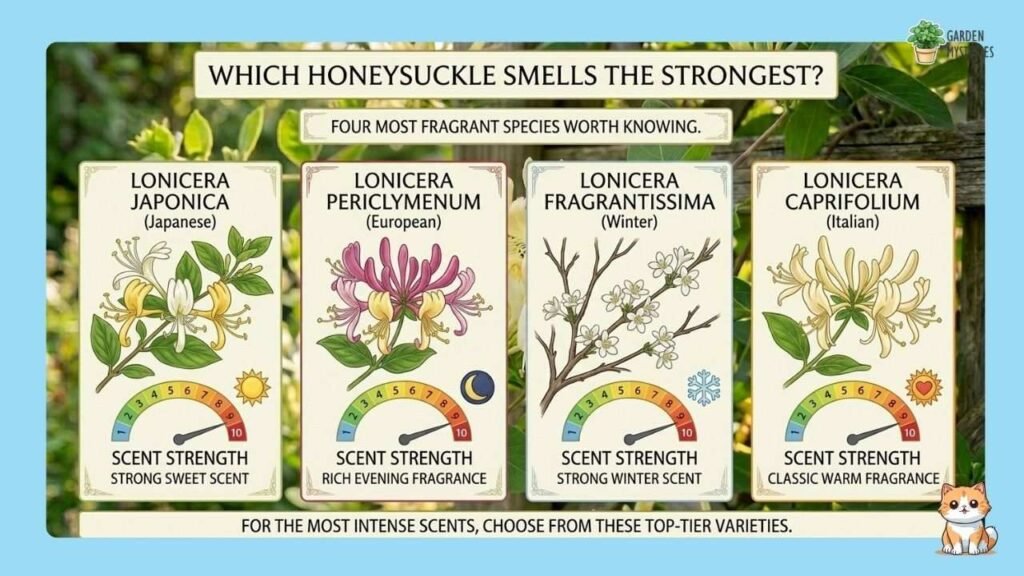
Here are the most fragrant honeysuckle species worth knowing:
- Lonicera japonica: Common Japanese honeysuckle, strong sweet scent, most widely known
- Lonicera periclymenum: European woodbine, rich evening fragrance, very popular in UK gardens
- Lonicera fragrantissima: Winter honeysuckle, blooms in cold months, surprisingly strong scent
- Lonicera caprifolium: Italian honeysuckle, creamy flowers, classic warm honeysuckle fragrance
Does Honeysuckle Taste As It Smells?
Yes, the nectar tastes follow the scent very closely. The first time I actually pulled a pistil through and tasted the nectar, it was exactly what the smell had promised: light, floral, and gently sweet.
The nectar is not as rich as honey. It is more like a single sweet note with nothing heavy behind it. Most people only get one small drop per flower, so it is more of a tasting experience than a snack.
Honeysuckle flowers are edible in the true Lonicera species, and the flavor holds up well in teas and syrups too. The petals carry a softer version of the same sweetness without being overpowering.
Honeysuckle Berries vs Flowers: Are Both Safe?
No, flowers and berries do not follow the same rules at all. This is probably the most important thing to understand about honeysuckle berries and how they differ from the blossoms.
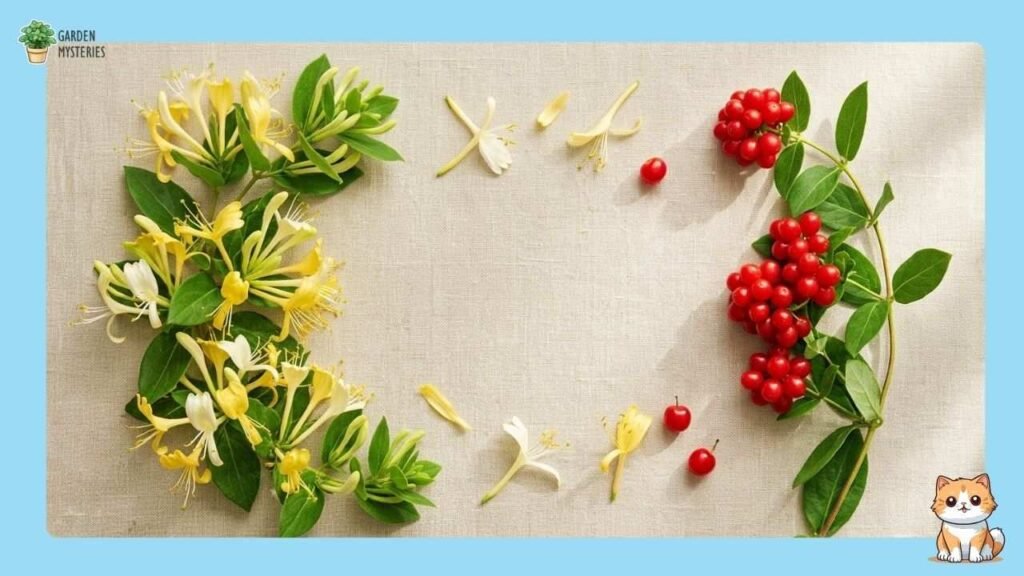
The flowers are generally safe to taste and use in food. The berries on most common species are not safe for people or pets. Red and orange berries are the ones to be most careful around.
| Honeysuckle Part | Common Species | Safe to Eat? |
| Flowers | Most Lonicera types | Yes |
| Nectar | Most Lonicera types | Yes |
| Red berries | Bush and vine types | No |
| Dark blue berries | Haskap only | Yes |
| Leaves and stems | All types | No |
The haskap variety is the one clear exception on the berry side. So, does honeysuckle smell like honey in its berry form? Not really. The berries are tart and berry-like, nothing like the floral scent of the flowers.
FAQs
Gardenia, jasmine, and sweet olive share a similar warm floral sweetness with honeysuckle. None of them are identical in scent profile, but these three come closest among flowers you are likely to find in a home garden.
Lonicera japonica and Lonicera periclymenum are widely regarded as the most fragrant varieties. Both release their strongest scent in the evening and tend to perform best on warm, slightly humid days in summer.
Red honeysuckle berries are generally not safe to eat and may cause stomach discomfort if consumed. The only widely known honeysuckle with fully edible berries is haskap, which produces dark blue oval fruit quite different from the red ones.
End Note
Honeysuckle does have that honey-like sweetness, but it is its own thing entirely. The scent is lighter, more floral, and more interesting than straight honey once you start paying attention to it.
Just remember that the flowers and berries on the same plant are not the same story. Always confirm your species before tasting anything, and enjoy the fragrance for what it actually is.