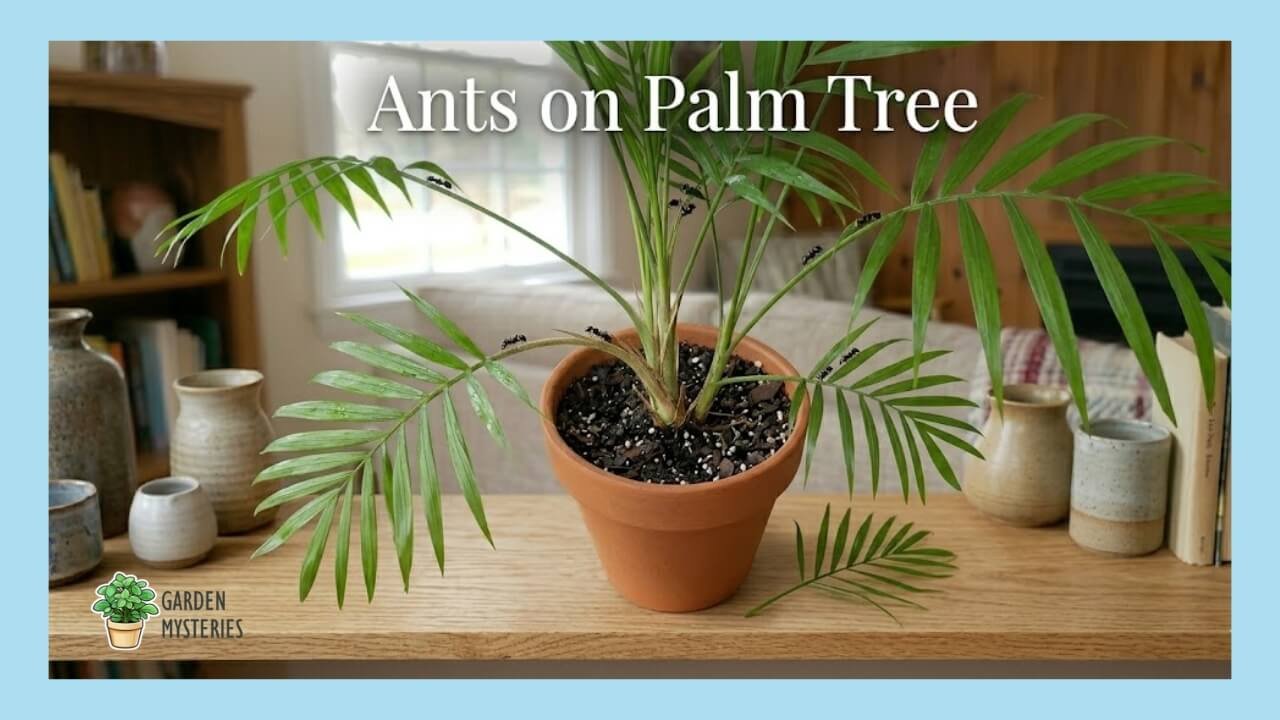
Ants on a palm tree rarely eat the palm itself. What they are actually doing is farming tiny sap-sucking pests like aphids, scale insects, or mealybugs hiding in the fronds. Those pests produce a sweet liquid called honeydew, and that is what brings the ants up the trunk.
A lot of people spray the ants and call it done. But that rarely fixes anything for long. The pests are still there, still producing honeydew, and the ants are back within days. Palm tree ants are a signal, not the root problem.
This guide will walk through why it keeps happening, what the real fix looks like, and how to stop it from repeating. Read through before reaching for a spray can.
Key Takeaways: Ants on Palm Tree
- Ants climb palm trees mainly to harvest honeydew from sap-sucking pests.
- Harming ants alone will not solve the problem for more than a few days.
- Scale, aphids, and mealybugs are the actual pests feeding on your palm.
- Sticky trunk barriers physically stop ants from reaching the fronds.
- Ant baits at the base work because workers carry the poison back to the queen.
- Fire ants are an exception and can damage roots by building large mounds nearby.
Why Are There Ants on Your Palm Tree?
Ants climb palm trees for honeydew, to make a nest, or to use it as a pathway. Understanding which one applies makes treatment much more straightforward from the start.
They Are Farming Sap-Sucking Pests
This is the most common reason you will find ants on palm tree trunks. Insects like aphids, mealybugs, and scale feed on the sap inside palm fronds and release a sticky, sugary liquid called honeydew as a byproduct.
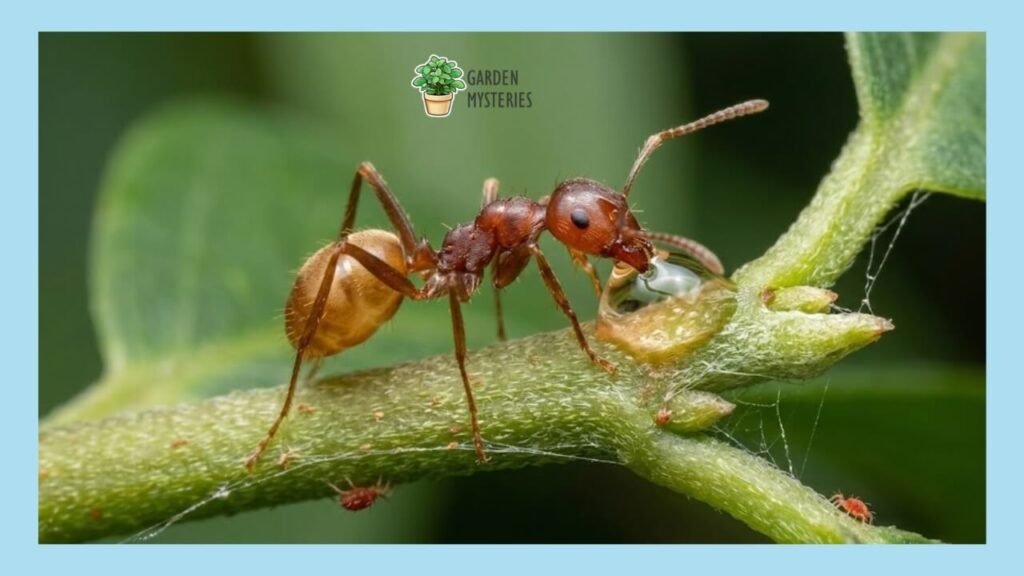
Ants are after that honeydew. They actually protect those pests from predators to keep the supply going. It is a working arrangement that benefits both, and it means the ants in palm tree situations are usually a sign of a pest colony already living in your fronds.
They Are Nesting in Rotting Fronds
Carpenter ants, in particular, do not eat healthy palm wood. But withered or decaying fronds are a different story.
Soft, damp wood is where they prefer to carve out galleries and build their nests. If you have old brown fronds left hanging on the tree, those can become nesting spots over time.
They Are Using the Tree as a Path to Your House
This is the part many people overlook. Sago palms and other varieties planted close to a structure become a highway for ants. Ghost ants are especially known for this.
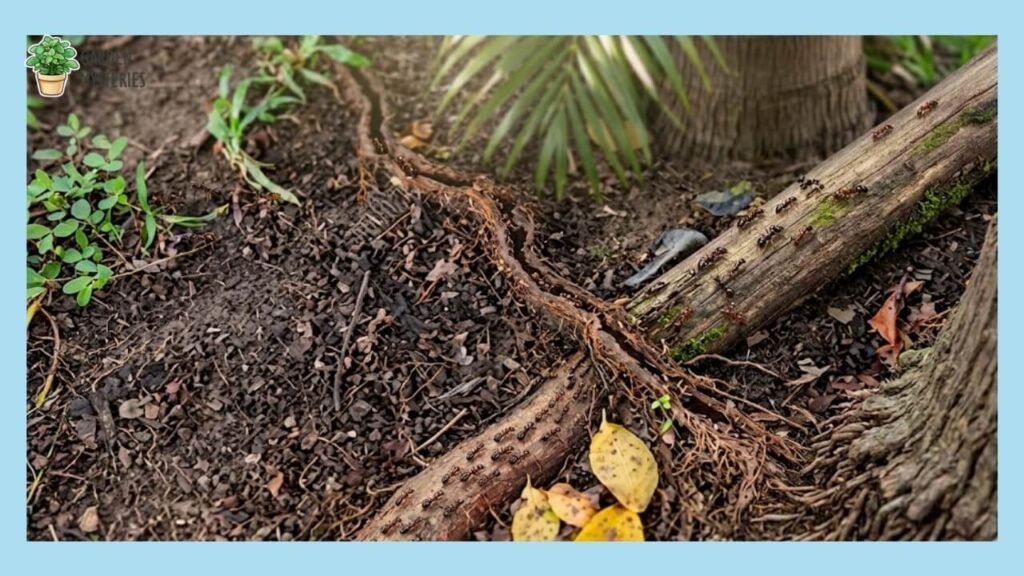
If a frond is touching your roof, siding, or a fence, ants do not need to cross the ground at all. They walk straight in. Sago palm problems like this come up regularly in homes where palms are planted right along the wall.
Are Palm Tree Ants Actually Dangerous?
Palm tree ants are not dangerous to the palm itself in most cases. They do not chew healthy wood or roots, and a trail of ants on the trunk does not mean your tree is in trouble.
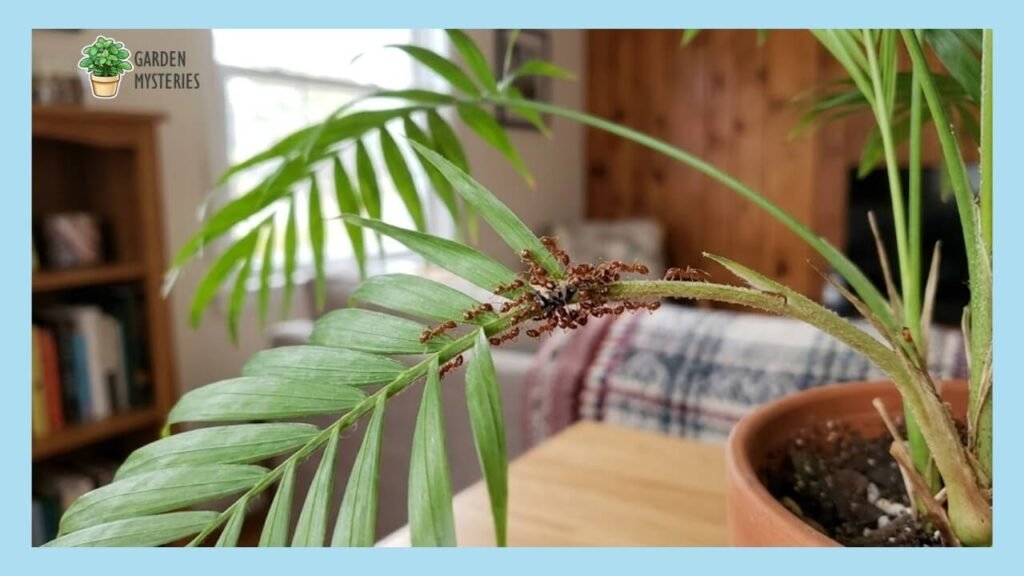
The indirect damage is where things get complicated. When ants protect scale or aphids, those pests keep multiplying without natural predators to control them. Over time, a heavy infestation of sap-sucking insects can weaken a palm, cause yellowing fronds, and slow growth noticeably.
Ants in palm trees also encourage sooty mold. Honeydew that drips onto leaves creates a surface where black mold grows. The mold itself does not harm the tree, but it blocks sunlight from reaching the fronds and adds stress.
Large fire ant colonies around the base of young palms may contribute to root stress and can interfere with maintenance activities.
Their mounds can reach 18 inches high and spread three feet across, which is a real problem for younger trees. If you are dealing with large reddish-brown ants and visible mounds near the trunk, that situation needs faster attention.
How to Get Rid of Ants Around Palm Trees
There are different ways you can get rid of ants on palm trees, like using a sticky barrier or ant baits. You just need to learn the right way
Use a Sticky Barrier on the Trunk
This is one of the most reliable physical options. Wrap a band of duct tape around the trunk with the sticky side facing out, then apply a sticky barrier product like Tanglefoot on top of it. Ants cannot cross it.
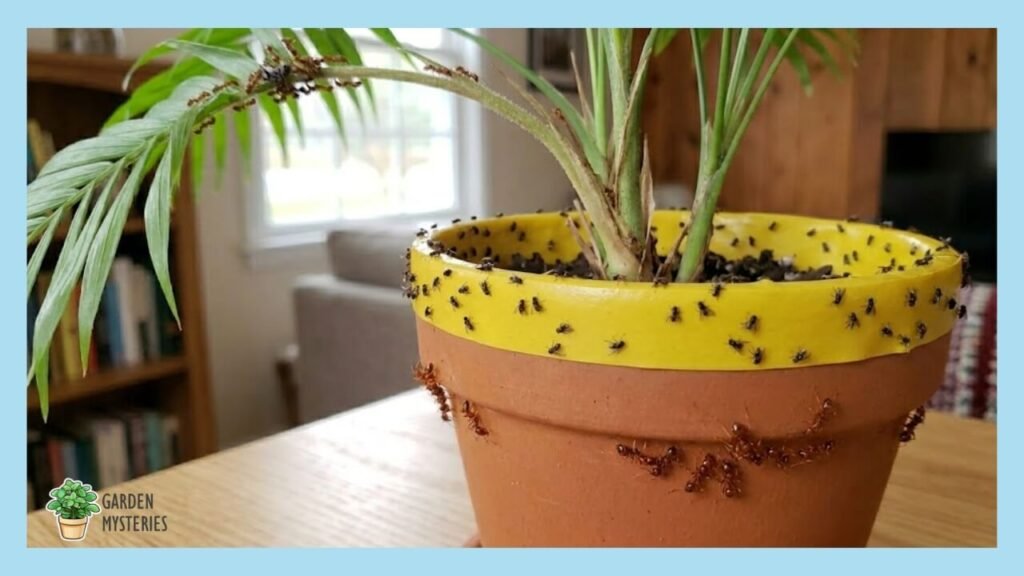
The key is checking the barrier every few weeks because debris, withered insects, and dust reduce its effectiveness over time. Do not apply Tanglefoot directly to the bark on young or thin-skinned palms, as it can cause irritation to the trunk surface.
When you are cleaning up damaged or pest-covered fronds before setting up any treatment, Physan 20 vs bleach is a comparison worth knowing. Physan 20 for vegetables plants is a gentler, plant-safe disinfectant that harms fungal and bacterial residue on cut fronds without the risk of damaging nearby roots. Bleach at high dilution works too, but it is harsher and needs to be rinsed off more carefully near the soil.
Place Ant Baits at the Base
Bait works better than contact spray for long-term control because the workers carry it back to the colony and the queen.
Liquid baits like Terro or granular options like Amdro placed at the base of the tree address the colony, not just the ants you can see. Place them where you notice the most activity and leave them undisturbed so workers have time to take the bait back.
Treat the Surrounding Soil
Spraying the base of the trunk and the soil around it with a residual insecticide helps deter ground-nesting species. This matters especially for ants in palm tree situations where fire ants are involved, as they often nest in the soil within a few feet of the trunk.
Treat the Real Problem: Scale, Aphids, and Other Pests
Long-term control of how to get rid of ants around palm trees always involves eliminating the honeydew source. Without that, ants will return no matter how many times you treat them.
Neem oil and horticultural oil sprayed on the fronds and the undersides of leaves smother soft-bodied pests like aphids and mealybugs without harsh chemicals.
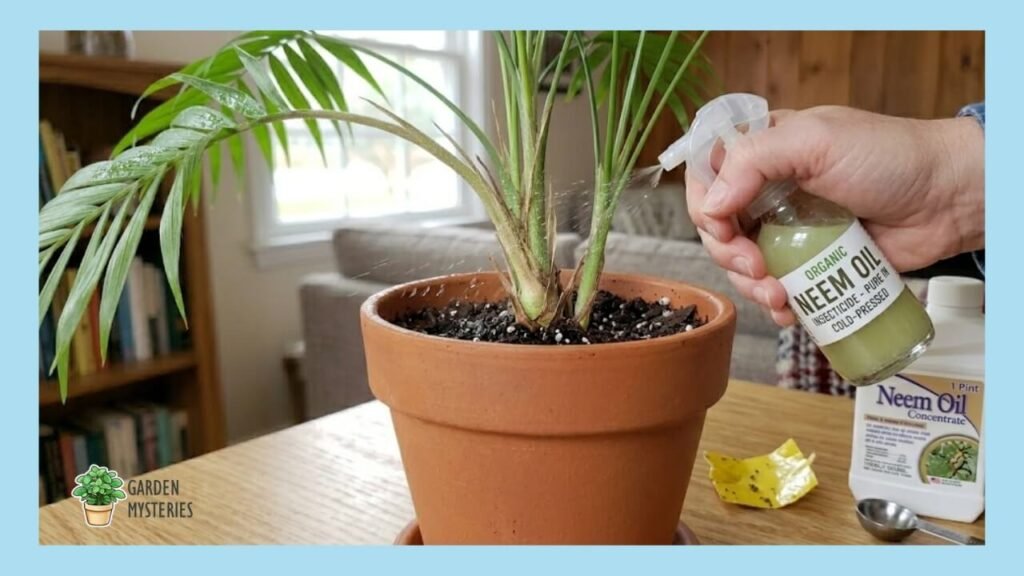
For heavier scale infestations, a systemic treatment containing imidacloprid applied to the soil allows the tree to absorb it and carry it through the plant tissue where surface sprays may not reach.
Here are the main pest treatment options to consider:
- Neem oil spray: Coats and suffocates soft-bodied pests like aphids and young mealybugs effectively.
- Horticultural oil: Works similarly to neem oil or neem cake fertilizer and is safe for most palm varieties when applied correctly.
- Systemic insecticide (imidacloprid): Best for scale that has hardened and resists surface sprays.
- Manual removal: For small infestations, rubbing scale off fronds with a damp cloth works well before spraying.
One thing people sometimes overlook: if you have a compost pile or organic mulch near the base of the palm, rolly pollies in compost are common. Rolly pollies themselves are not a problem and do not attract ants.
However, thick, moist organic matter piled against the trunk creates a habitat that other insects find attractive. Keep mulch a few inches away from the base to reduce that risk.
How to Stop Ants From Coming Back
Palm tree ants come back when conditions do not change, and prevention mostly comes down to cutting off the routes they use to reach the tree in the first place. Let’s learn about 3 effective methods.
Prune Fronds Away From Structures
Any frond touching a fence, wall, roof, or overhang is a direct path for ants. Trimming those points of contact is often more effective than any chemical treatment on its own. Check the clearance a few times a year since palms grow faster than people expect.
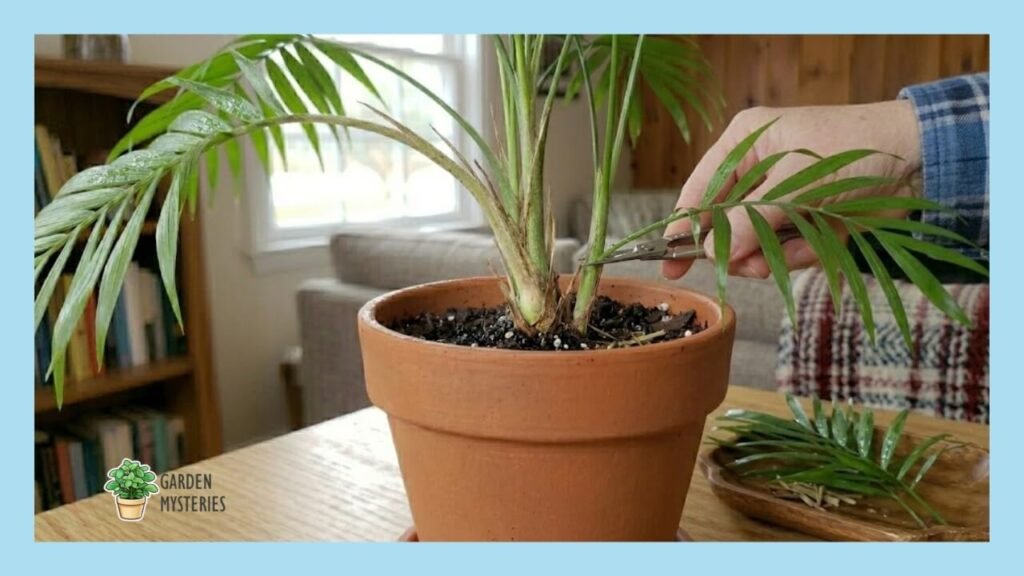
If you are doing trim work on a sago palm or any spiny palm variety, wear thick gloves and eye protection. Getting poked by sago palm spines is more serious than it sounds.
The sharp spines can cause painful puncture wounds and localized swelling. Do not rush that pruning job.
Keep the Base Clear
Debris, leaf litter, and old fronds piled around the base give ants a sheltered spot to build a colony close to the trunk. Clear the area around the base regularly and resist the urge to let fallen material accumulate.
A clean base also makes it easier to spot early signs of new pest activity before it gets established.
Reapply Sticky Barriers Regularly
A sticky trunk barrier is only effective when it is still tacky and free of debris. Check it every three to four weeks and reapply as needed.
During rainy seasons or periods of high dust, you may need to refresh it more often. This small habit makes a bigger difference than most treatments people apply to the fronds.
FAQs: Ants in Palm Tree
In most cases, no. Ants do not eat or damage healthy palms directly. The bigger concern is the sap-sucking pests they protect, which can weaken the tree over time if left untreated.
A diluted dish soap spray can knock back aphids and soft-bodied pests on contact. It is not a reliable long-term solution for ant control, though, since it does not reach the colony or queen.
Look for sticky residue on the fronds, small bumps or white cottony spots on the undersides of leaves, or yellowing that does not have an obvious watering cause. Ants trailing up the trunk are often the first visible sign.
Every three to four weeks is a reasonable interval. Check more often during dusty or rainy weather since debris fills the barrier faster and reduces how well it stops ants from crossing.
End Note
Ants on a palm tree are telling you something else is going on, usually a pest colony producing honeydew somewhere in the fronds. Treating the ants without treating the root problem is a short-term fix at best. Address the scale or aphids, block the trunk, and check whether the tree is giving ants a path into your home.
If you want to keep your palms healthy long-term, it helps to understand the full picture. Browse the rest of the blog for more straightforward palm care guides.
Note: This content is for informational purposes only. Results may vary by climate, soil, plant type, and care practices. Product availability and specifications may change. Always verify information independently, follow manufacturer instructions, and evaluate any products or external resources before use.