

Best Fertilizers for Fruit Trees: What to Use & When to Apply
If you’ve got fruit trees in your backyard or garden, you probably know how satisfying it is to pick your own fresh fruit. But for those trees to grow strong and produce sweet, juicy fruit, they need a steady diet of nutrients, and that’s where fertilizer comes in.
In this post, we’ll walk you through the best fertilizers for fruit trees, when to use them, how to apply them correctly, and a few common mistakes to avoid. Whether you prefer organic or synthetic options, you’ll find everything you need to help your trees thrive.
Quick Answer (TL;DR)
If you just want the simple and no-confusion version of the best fertilizers for fruit trees and how to fertilize fruit trees properly, here it is:
- Best overall fertilizer → 10-10-10 fertilizer for fruit trees (balanced and beginner-friendly)
- Best organic option → Compost + bone meal (improves soil naturally)
- Best timing → Early spring (right before new growth starts)
- Best method → Use a slow release fertilizer for fruit trees for steady feeding
- For better yield → Focus on the right NPK ratio for fruit trees and avoid overfeeding
This simple approach works for most trees and is the fastest way to increase fruit yield naturally without overcomplicating things.
Why Fruit Trees Need Fertilizer
Fruit trees aren’t high-maintenance, but they do need the right balance of nutrients to grow healthy roots, strong branches, and lots of fruit. Without proper fertilization, trees may struggle with poor growth, fewer blossoms, or small, tasteless fruit.
Here’s what they typically need:
- Nitrogen (N): Encourages leafy growth and helps new shoots develop.
- Phosphorus (P): Supports strong root systems and flower development.
- Potassium (K): Boosts fruit production, size, and overall plant health.
- Micronutrients: Elements like zinc, iron, boron, and magnesium support fruit quality and disease resistance.

Fertilizer Comparison Table (Quick Decision Guide)
To choose between different fertilizers can sometimes feel confusing. This table makes it easy to compare what works best based on your needs.
| Fertilizer Type | Best For | Speed | Risk |
| Organic (Compost, Bone Meal) | Long-term soil health, natural growth | Slow | Very low |
| Balanced (10-10-10) | General use for most fruit trees | Medium | Low if used correctly |
| Synthetic (High NPK) | Quick results, fast growth boost | Fast | Medium (overuse risk) |
| Liquid (Fish, Seaweed) | Quick nutrient boost, potted trees | Very fast | Low if diluted properly |
| Slow Release Fertilizer | Steady feeding over time | Slow & consistent | Very low |
Quick Tips for This Table
- New gardeners → Start with 10-10-10 fertilizer for fruit trees
- Organic lovers → Stick with compost-based feeding
- Weak trees → Add liquid fertilizer for a quick boost
Busy gardeners → Choose a slow release fertilizer for low maintenance
Start With a Soil Test
Before adding any fertilizer, it’s smart to test your soil. A soil test helps you understand what nutrients are already available and what might be missing. It also tells you the pH level, which affects how well your tree can absorb nutrients.
You can buy a DIY soil test kit online or send a sample to your local extension service. Once you know what your soil lacks, it’s easier to choose the best fertilizer for your specific trees.
Best Organic Fertilizers for Fruit Trees
Organic fertilizers release nutrients slowly over time, feeding your trees naturally and improving soil structure as they break down. If you prefer to go natural, here are some great options:
1. Composted Chicken Manure
This is rich in nitrogen, but also contains phosphorus and potassium. It’s great for overall tree health and works well for most types of fruit trees like apple, peach, or pear.
2. Blood-Meal
A high-nitrogen fertilizer that boosts leafy growth and helps young trees develop quickly. Be careful not to overuse it, it’s potent!
3. Feather Meal
Slow-releasing and high in nitrogen, this works well if you want to encourage steady growth without frequent applications.
4. Bone-Meal
Loaded with phosphorus, bone-meal is perfect if your soil lacks this nutrient. It helps your trees grow deeper roots and produce more blossoms.
5. Worm Castings and Compost
While not as nutrient-dense as some other options, compost and worm castings improve soil health, moisture retention, and microbial activity things every fruit tree loves.
✅ Pro Tip: Always apply organic fertilizer around the tree’s drip line (the area directly beneath the outer edge of the branches), not right up against the trunk.
Synthetic or Chemical Best Fertilizers for Fruit Trees
If you’re looking for quick results, synthetic fertilizers deliver nutrients fast. These are often labeled with NPK numbers like 10-10-10, 14-14-14, or 16-16-16, which stand for the percentage of nitrogen, phosphorus, and potassium.
10-10-10 Fertilizer
A balanced fertilizer that’s great for general use. It provides a solid nutrient base for fruit development, especially in the early growing season.
16-16-16 Fertilizer
This one is a bit stronger, so it’s best used if you know your soil can handle it. Ideal for larger, established fruit trees.
Calcium Nitrate
Used more selectively, calcium nitrate provides nitrogen and calcium, helpful for preventing issues like blossom-end rot in some fruits.
Be sure to follow package directions closely. Over-fertilizing can burn your trees or lead to excessive leaf growth with few fruits.
Balanced and Specialty Fertilizers for Fruit Trees
Some fertilizers are made specifically for fruit trees and contain a mix of macro and micronutrients. These blends often include trace minerals that support fruit development and improve resistance to pests and diseases.
Top Picks:
- Dr. Earth Fruit Tree Fertilizer – Organic, OMRI-listed, and packed with beneficial microbes.
- Espoma Tree-tone – Great for long-term feeding with a 6-3-2 NPK ratio.
- Jobe’s Organic Fruit & Citrus Spikes – Easy to apply, with slow-release nutrients and no mixing needed.
- Down to Earth Fruit Tree Mix (6-2-4) – Ideal for early spring applications.
- GreenGold® by Kynoch – Includes calcium and boron to improve fruit quality.
Best Fertilizer by Fruit Tree Type
Choosing the best fertilizer for fruit trees in spring isn’t one-size-fits-all. Different trees ask for different nutrients for fruit tree growth. If you match the NPK ratio for fruit trees to the type you’re growing, you’ll see better flowering, stronger roots, and improved fruit quality.
Here’s a simple, practical breakdown you can follow.
Apple Trees (Balanced Feeding)
- Best choice: 10-10-10 fertilizer for fruit trees or similar balanced blend
- Why it works: Apples need steady nitrogen, phosphorus, and potassium for overall growth
- Tip: Use a slow release fertilizer for fruit trees in early spring for consistent feeding
If you’re wondering how to increase fruit yield naturally, avoid too much nitrogen once fruit starts forming. Balance is key.
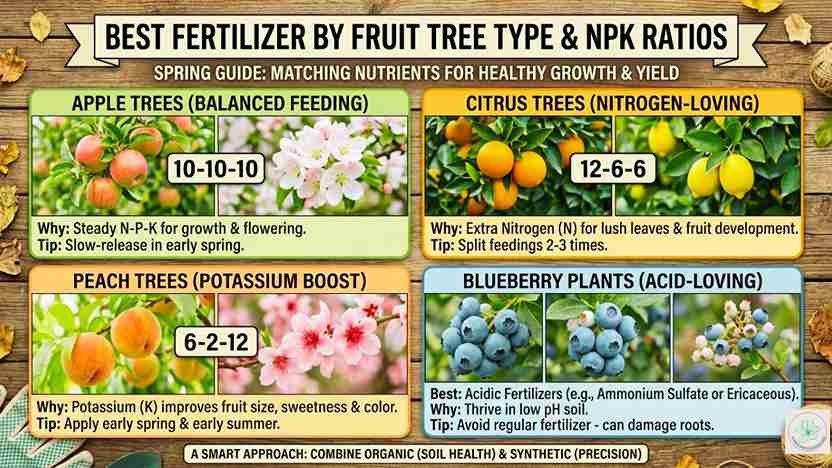
Citrus Trees (Nitrogen-Loving)
- Best choice: Higher nitrogen fertilizer (like 12-6-6 or similar)
- Why it works: Citrus trees need extra nitrogen for lush leaves and fruit development
- Tip: Split feeding into 2-3 small doses during the growing season
In the debate of fertilizer for apple trees vs citrus trees, citrus clearly needs more nitrogen, while apples prefer balance.
Peach Trees (Potassium Boost)
- Best choice: Fertilizers higher in potassium (like 6-2-12)
- Why it works: Potassium improves fruit size, sweetness, and color
- Tip: Apply in early spring and lightly again in early summer
This is one of the easiest ways to improve fruit quality without overfeeding.
Blueberry Plants (Acid-Loving)
- Best choice: Acidic fertilizers (like ammonium sulfate or ericaceous blends)
- Why it works: Blueberries thrive in low pH soil
- Tip: Avoid regular fertilizers-they can damage roots
Organic vs Synthetic Fertilizer for Trees
- Organic (compost, bone meal, feather meal): slow, improves soil health
- Synthetic (like 10-10-10): fast results, precise nutrient control
A smart approach? Combine both. Use organic for long-term soil health and a slow release fertilizer for steady nutrition.
Bonus: Fertilizer for Fruit Trees in Pots
Container trees need more frequent feeding because nutrients wash out quickly.
- Use a balanced liquid fertilizer every 2-4 weeks
- Or apply a slow release fertilizer for fruit trees every 2-3 months
When and How to Best Fertilizers for Fruit Trees
Timing makes a big difference when it comes to fertilizing. Here’s a quick breakdown:
Best Times to Fertilize
- Late Winter or Early Spring – Right before new growth starts.
- Early Summer – Optional second feeding if needed (especially for younger trees).
How to Apply Best Fertilizers for Fruit Trees
- Spread the fertilizer around the drip line of the tree, not directly at the base.
- Water deeply after applying to help nutrients reach the roots.
- For liquid fertilizers, dilute as directed and pour evenly around the root zone.
Avoid fertilizing in late summer or fall. This can trigger new growth that’s vulnerable to frost damage. You can read our blog on the soil mixes to know more about Compost vs Fertilizer.
How Much Fertilizer to Use (Simple Chart)
Knowing how to fertilize fruit trees properly isn’t just about choosing the right product; it’s about using the right amount. Too little won’t help, and too much can harm your tree.
Here’s a simple guideline you can follow.
| Tree Age / Size | How Much to Apply | Notes |
| Young Trees (1-3 years) | 0.5 lb per year of tree age | Focus on nitrogen for growth |
| Semi-Mature Trees | 1-1.5 lbs per inch of trunk diameter | Use balanced NPK ratio |
| Mature Trees (fruiting) | 1-2 lbs per inch of trunk diameter | Avoid excess nitrogen |
Quick Tips
- Always apply around the drip line, not the trunk
- Water deeply after feeding
- Use slow release fertilizer for fruit trees to avoid nutrient burn
If you’re using a 10-10-10 fertilizer for fruit trees, start on the lower end and adjust based on growth.
Fertilizing Young vs Mature Fruit Trees
Fruit trees need different care depending on their age.
Young Trees (0-3 years)
- Focus on nitrogen to encourage trunk and branch development.
- Use compost or a high-nitrogen fertilizer like feather or blood meal.
Mature Trees (4+ years)
- Balanced or fruit-specific fertilizers are better.
- Too much nitrogen can reduce fruit yield, so go easy.
Fertilizing Based on Soil Type
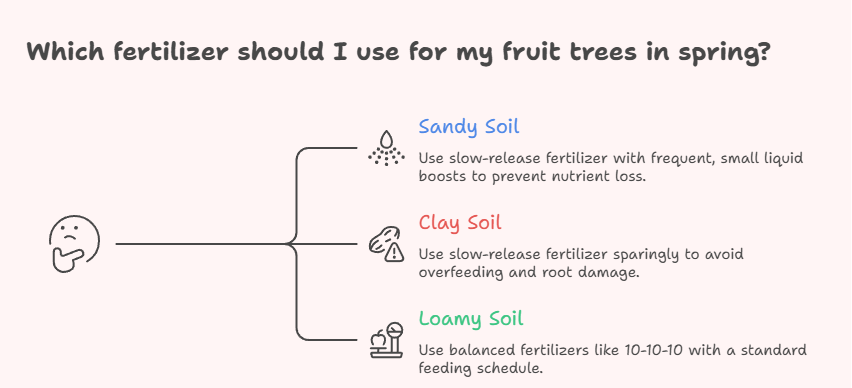
Before choosing the best fertilizer for fruit trees in spring, take a moment to understand your soil. The same fertilizer behaves very differently in sandy, clay, or loamy soil. Getting this right is a quiet advantage that many gardeners miss.
Sandy Soil (Fast-Draining, Low Nutrients)
- Problem: Nutrients wash away quickly
- Best approach: Light but frequent feeding
- Use: slow release fertilizer for fruit trees + small liquid boosts
Apply smaller amounts every 3-4 weeks during the growing season. This helps maintain steady nutrients for fruit tree growth without waste.
Clay Soil (Heavy, Nutrient-Holding)
- Problem: Holds nutrients but drains poorly
- Best approach: Avoid overfeeding
- Use: slow release fertilizer only
Clay already holds nutrients, so too much fertilizer can harm roots. Use a balanced NPK ratio for fruit trees and apply less often.
Loamy Soil (Ideal Balance)
- Problem: None (this is the dream soil!)
- Best approach: Standard feeding schedule
- Use: Balanced fertilizers like 10-10-10 fertilizer for fruit trees
Loam supports both drainage and nutrient retention, making it perfect for consistent growth and fruiting.
Quick Insight
Understanding soil type helps you master how to fertilize fruit trees properly. It also plays a big role in how to increase fruit yield naturally without overusing fertilizers.
Best Liquid Fertilizers for Fruit Trees
If granular fertilizers are slow and steady, liquid fertilizers are like a quick drink for your trees. They’re especially useful when your tree needs a fast nutrient boost during active growth.
Fish Emulsion (Fast Nitrogen Boost)
- Rich in nitrogen
- Great for early growth and leafy development
- Works well for both in-ground and fertilizer for fruit trees in pots
Perfect during spring when trees need energy to grow.
Seaweed Extract (Micronutrient Power)
- Contains trace elements like iron, zinc, and magnesium
- Improves root strength and stress resistance
Ideal for improving overall plant health and supporting fruit quality.
Compost Tea (Natural Soil Booster)
- Made from compost steeped in water
- Adds beneficial microbes to the soil
- Supports long-term soil fertility
A great option if you prefer organic vs synthetic fertilizer for trees.
How to Use Liquid Fertilizers
- Apply every 2-4 weeks during the growing season
- Always dilute according to instructions
- Apply around the root zone, not directly on the trunk
Liquid feeding works best alongside a slow release fertilizer for fruit trees for balanced nutrition.

Common Fertilizing Mistakes to Avoid
- Over-fertilizing: More isn’t always better. Too much nitrogen leads to lots of leaves, but few fruits.
- Fertilizing too close to the trunk: Always apply around the drip line.
- Skipping soil tests: You might be adding nutrients your soil already has.
- Wrong timing: Fertilizing too late in the season encourages soft growth that won’t survive winter.
FAQs
Q: What fertilizer increases fruit size?
Look for fertilizers high in potassium, like potash or those with an NPK ratio favoring K (e.g., 6-2-12). Potassium boosts fruit development and sweetness.
Q: Can you overfertilize fruit trees?
Yes, overfertilizing can cause excessive leaf growth and reduce fruit production. It can also damage roots, so always follow recommended amounts.
Q: When should I fertilize fruit trees?
You should fertilize fruit trees in early spring before new growth begins. A light feeding in early summer can help improve fruit development, but avoid fertilizing in late season.
Q: Is 10-10-10 fertilizer good for fruit trees?
Yes, it’s a solid all-purpose option, especially if you haven’t tested your soil yet.
Q: What’s the best fertilizer for fruit trees in pots?
Choose a balanced, slow-release fertilizer like Espoma Citrus-tone or use liquid seaweed for a gentle boost during the growing season.
Final Thoughts
Fertilizing your fruit trees doesn’t have to be complicated. With the right approach, you can help your trees grow healthier, produce more fruit, and stay strong year after year. Just remember to start with a soil test, pick the right product, and apply it at the right time.
Whether you go organic or synthetic, your trees will thank you with a harvest that’s sweeter, bigger, and better than ever.


