
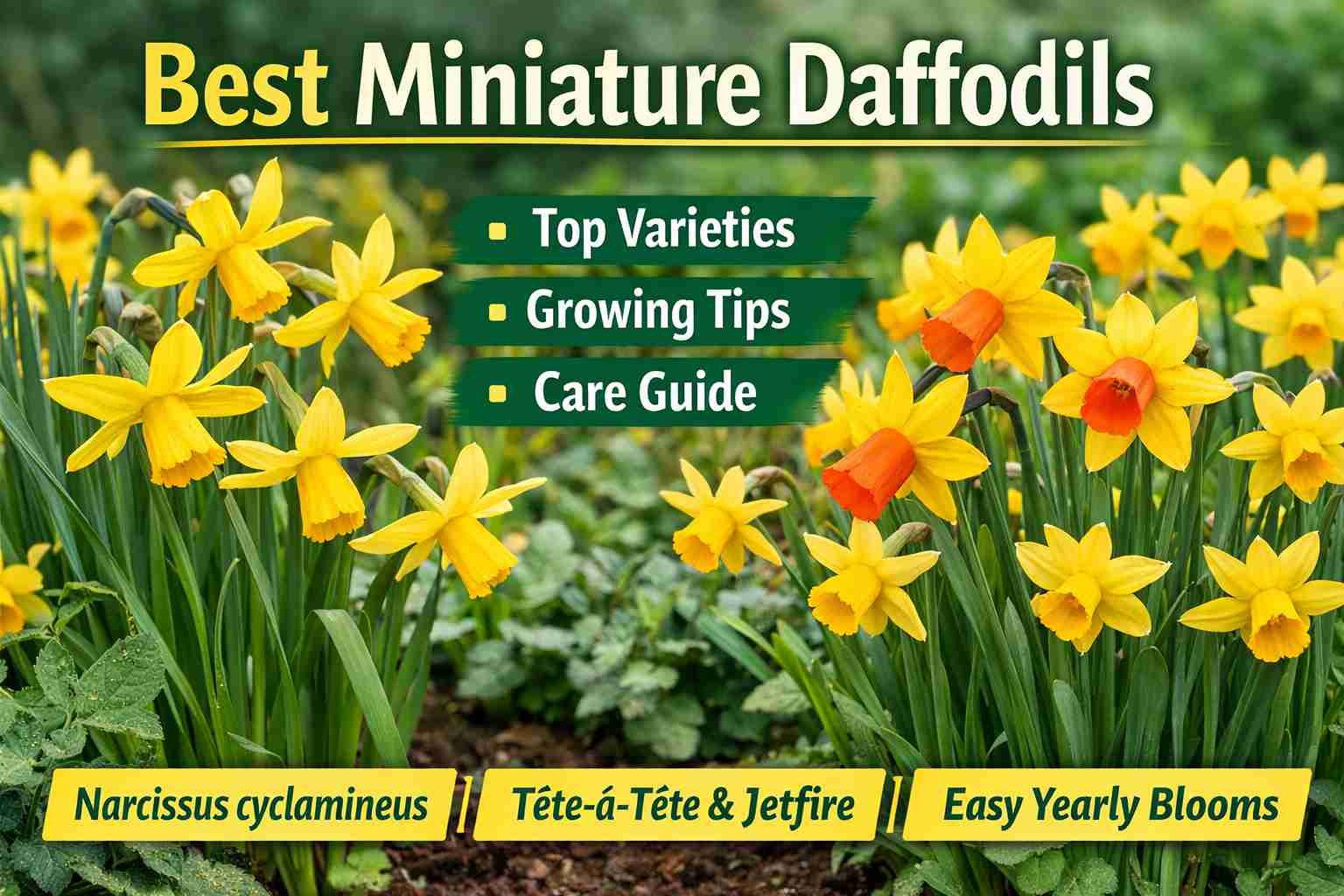
Best Miniature Daffodils for Small Gardens (Easy Picks)
If you’re looking for compact spring flowers, the best miniature daffodils are one of the prime choices. Popular varieties like Narcissus cyclamineus, ‘Tête-à-Tête’, ‘February Gold’, and ‘Jetfire’ are easy to grow, return every year, and thrive in small spaces.
These dwarf daffodils prefer full sun, well-drained soil, and minimal maintenance, making them ideal for both beginners and experienced gardeners.
Why Miniature Daffodils Are So Popular
Before choosing specific varieties, it helps to understand why miniature daffodils are such a favorite among gardeners. Their popularity comes from a mix of beauty, practicality, and reliability.
Miniature daffodils offer all the charm of traditional daffodils but in a smaller, more manageable form. They are perfect for gardens where space is limited or where a softer, more natural look is preferred. Unlike larger varieties, they rarely overpower other plants and instead blend harmoniously into borders, containers, and natural landscapes.
Another key reason for their popularity is their low-maintenance nature. Once planted, these bulbs require very little attention. They can survive cold winters, bloom early in spring, and return year after year without needing to be replanted.
For anyone looking to create a long-lasting spring display with minimal effort, the best miniature daffodils are an excellent choice.
Best Miniature Daffodil Varieties
Choosing the right variety is essential if you want consistent blooms and strong growth. Below are some of the best miniature daffodils known for their performance and visual appeal.
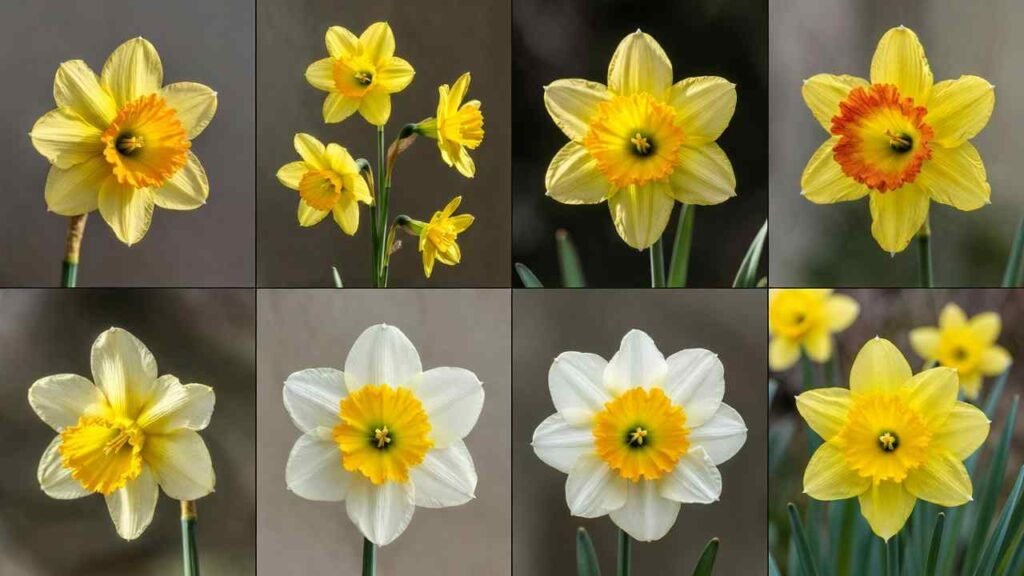
1. Narcissus cyclamineus
This variety is widely admired for its unique appearance. Its petals sweep backward, giving it a delicate and elegant look. It blooms early and works well in naturalized garden settings. Because of its graceful structure, it is often used as a parent plant for hybrid miniature daffodils.
2. Tête-à-Tête
This is one of the most commonly grown dwarf daffodils. It produces multiple bright yellow flowers on each stem and performs very well in containers. Its compact size and reliable blooming make it a favorite for small gardens and balcony spaces.
3. February Gold
As the name suggests, February gold variety blooms early in the season. It features bright yellow flowers and is known for its ability to handle changing spring weather. It is a strong and dependable option for beginners.
4. Jetfire
This variety stands out with its striking contrast of yellow petals and an orange trumpet. It is also known for its durability, as it can withstand wind and rain better than many other types.
5. Hawera
A softer and more refined option, ‘Hawera’ produces pale yellow flowers with a gentle fragrance. It is ideal for gardeners who prefer subtle colors and a more delicate appearance.
6. Minnow
‘Minnow’ produces clusters of small flowers with creamy white petals and yellow centers. It is perfect for adding texture and variation to borders or mixed flower beds.
7. Jack Snipe
This compact variety features white petals and a bright yellow cup. It blooms early and is suitable for naturalizing in lawns or under trees.
8. Baby Moon
One of the smallest daffodils, ‘Baby Moon’ produces bright yellow flowers and spreads easily. It is especially useful for rock gardens or areas where dense coverage is desired.
How to Grow Miniature Daffodils
Growing miniature daffodils is straightforward, but following the right steps ensures better blooms and healthier plants. This section covers the essentials to help you get started successfully.
Choosing the Right Location
Miniature daffodils need a location that receives enough sunlight to support healthy growth. A spot with full sun or partial shade works best. Ideally, they should receive at least 4 to 6 hours of sunlight each day.
Daffodils Soil Preparation
Soil quality plays a major role in bulb health. These plants prefer well-drained soil, as excess moisture can cause bulbs to rot. If your soil tends to hold water, you can improve drainage by adding sand or organic matter.
Planting Guidelines
Planting at the correct depth is important for proper growth. Perennial spring bulbs should be planted at a depth of about two to three times their height. Spacing them 5 to 10 cm apart allows room for natural multiplication over time.
Watering Tips
After planting, water the bulbs to help them establish roots. During the growing season, keep the soil slightly moist but avoid overwatering. Too much water can damage the bulbs and reduce flowering.
Post-Bloom Care
Once the flowers fade, it is important to let the leaves remain until they turn yellow and dry out. This allows the plant to store energy for the next growing season. Removing leaves too early can weaken future blooms.
Best Growing Conditions
Understanding the ideal growing environment can help you achieve consistent results year after year. Miniature daffodils are adaptable but perform best under certain conditions.
They thrive in regions with cool winters and mild springs. Most varieties grow well in USDA Zones 4 to 8, although some can tolerate slightly warmer or cooler climates. Good drainage remains essential regardless of location, as waterlogged soil is one of the most common causes of failure.
In areas with heavy rainfall, planting in raised beds or containers can help protect the bulbs. In drier climates, occasional watering during the growing season ensures steady development.
Do Miniature Daffodils Return Every Year?
One of the biggest advantages of miniature daffodils is their ability to come back year after year. These plants are perennials, meaning they naturally regrow each spring without needing to be replanted.
Over time, many daffodil varieties multiply through bulb division. This means a single planting can gradually expand, creating larger and more impressive displays. Some varieties may also spread through seeds, although this process is slower.
With proper care, miniature daffodils can remain productive for many years, making them a cost-effective and reliable addition to any garden.
Miniature Daffodils Common Problems & How to Fix Them
Even though miniature daffodils are easy to grow, occasional issues can arise. Knowing how to identify and fix these problems helps maintain healthy plants.
No Daffodil Flowers
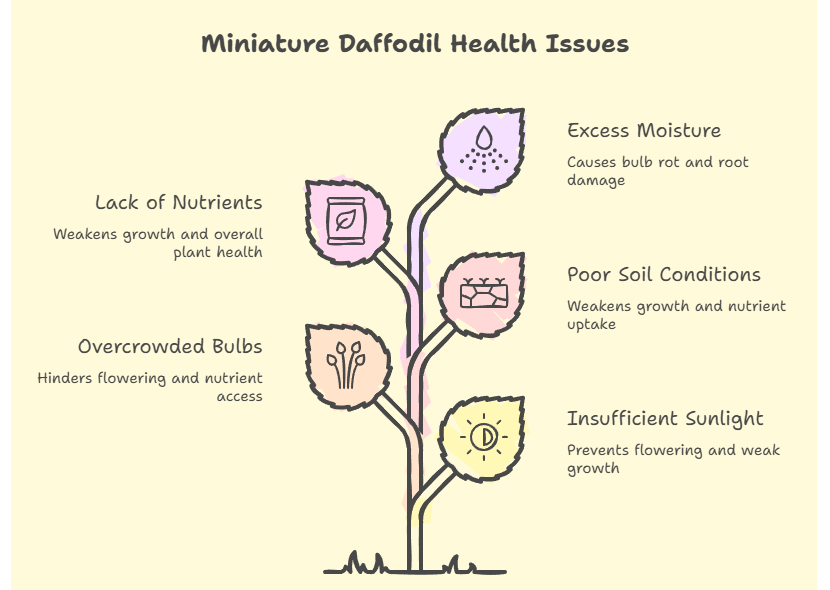
If your plants produce leaves but no flowers, the most common causes are insufficient sunlight or overcrowded bulbs. Moving them to a sunnier location or dividing the bulbs can solve the problem.
Weak Growth
Weak or thin growth may result from poor soil conditions or a lack of nutrients. Improving soil quality and adding a balanced fertilizer can help strengthen the plants.
Daffodils Bulb-Rot
Rotting bulbs are usually caused by excess moisture. Ensuring proper drainage and avoiding overwatering are the best ways to prevent this issue.
Best Uses in Garden Design
Miniature daffodils are highly versatile and can be used in various ways to enhance your garden. Their small size allows them to fit into spaces where larger plants might not work.
They are ideal for:
- Borders and pathways
- Containers and balcony gardens
- Rock gardens
- Woodland-style planting under trees
- Naturalized lawns
By combining different daffodil varieties, you can create layers of color and extend the blooming period throughout early spring.
Helpful Tip for Best Mini Daffodil Growth
Healthy plants often depend on proper nutrition. If you can use a suitable fertilizer, it can improve flower size, color, and overall plant strength. Pairing good soil with the right feeding routine can make a noticeable difference in your results.
Improve Soil for Better Blooms
Healthy soil helps miniature daffodils grow stronger and bloom better. Adding organic matter like composted-manure (such as Black Kow) improves drainage and nutrients.
Final Thoughts
Miniature daffodils are a practical and rewarding choice for gardeners of all experience levels. They combine beauty with reliability, offering bright spring blooms with very little maintenance. Their ability to return each year and gradually spread makes them an excellent long-term investment for any garden.
Whether you prefer bold yellow varieties or softer, more delicate tones, there is a miniature daffodil to suit every style. With the right care and conditions, these small flowers can transform your outdoor space into a vibrant spring display.
Note: This content is for informational purposes only. Results may vary depending on climate, soil conditions, and gardening practices.


