If you want to attract butterflies to your garden, you may wonder whether you should plant a butterfly bush vs milkweed. Both plants can bring butterflies and other pollinators to your yard, but they serve different purposes.
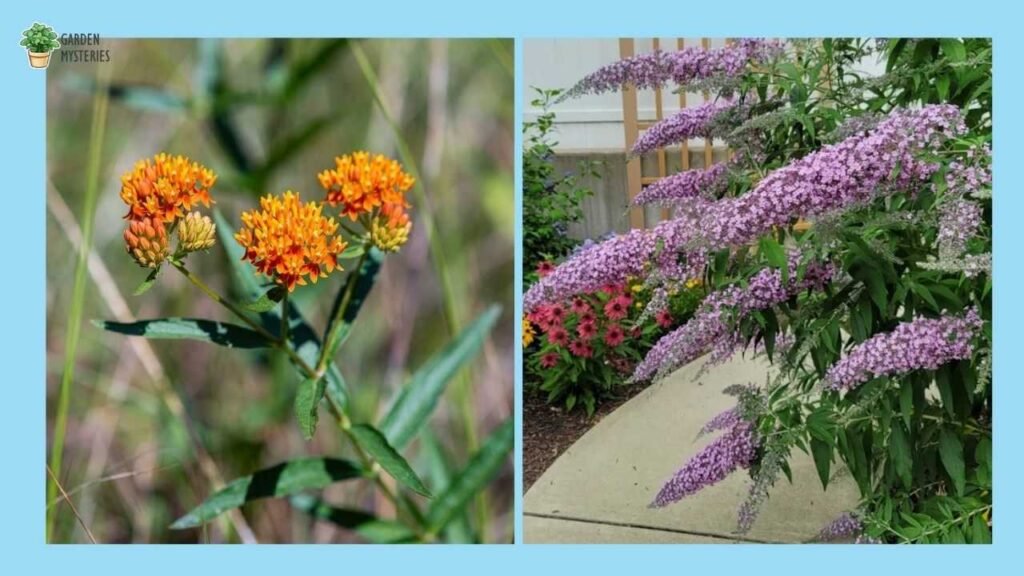
Butterfly bush is mainly a nectar plant for adult butterflies. Milkweed also provides nectar, but it has another important role: many milkweed species serve as host plants for monarch caterpillars. There is also an important name mix-up. Butterfly weed is not the same as butterfly bush. Butterfly weed, or Asclepias tuberosa, is actually a type of milkweed.
So, if your goal is to create a garden that supports butterflies beyond the adult stage, native milkweed is an important plant to consider.
Quick Answer: Butterfly Bush vs Milkweed
Butterfly bush and milkweed are different plants with different roles in a butterfly garden. Butterfly bush is a flowering shrub that provides nectar for adult butterflies, while milkweed provides nectar and serves as a host plant for monarch caterpillars. Also, Butterfly weed, often confused with butterfly bush, is actually a type of milkweed, specifically Asclepias tuberosa. For supporting monarchs and the butterfly life cycle, native milkweed is generally the more important choice.
Butterfly Bush vs Milkweed: The Key Difference
The biggest difference comes down to how each plant supports butterflies.
| Feature | Butterfly Bush | Milkweed |
| Plant group | Buddleja or Buddleia | Asclepias and related milkweed species |
| Main benefit | Nectar for adult pollinators | Nectar plus host-plant value |
| Supports monarch caterpillars | No | Yes, suitable milkweed species do |
| Growth habit | Woody shrub | Usually herbaceous perennial |
| Size | Often a large shrub | Varies widely by species |
| Best use | Flowering pollinator shrub | Native butterfly and pollinator habitat |
| Butterfly weed relationship | Separate plant | Butterfly weed is a type of milkweed |
The important point is that these plants are not interchangeable.
A butterfly bush can be covered with visiting butterflies, especially when it is in bloom. However, seeing many adult butterflies does not mean the plant provides everything those butterflies need to complete their life cycle.
Milkweed fills a different role. Monarch butterflies lay their eggs on milkweed, and monarch caterpillars feed on its leaves. That makes milkweed especially valuable in gardens designed to support monarchs.
Butterfly Bush vs Butterfly Weed vs Milkweed
The names can cause plenty of confusion.
- Butterfly bush is a woody flowering shrub in the Buddleja or Buddleia group.
- Butterfly weed is a completely different plant. Its scientific name is Asclepias tuberosa, and it belongs to the milkweed group.
- Milkweed is a broader term that covers many species. Common milkweed, showy milkweed, swamp milkweed, and butterfly weed are examples of plants within the milkweed group.
In simple terms:
- Butterfly bush ≠ butterfly weed
- Butterfly weed = one type of milkweed
This distinction matters because a gardener looking for a butterfly-friendly plant may accidentally assume that butterfly bush and butterfly weed are simply two names for the same thing. They are not.
If you’re also comparing other garden products and trying to choose the right option for your plants, you may find our guide to Sta-Green vs Miracle-Gro Potting Mix helpful.
What Is a Butterfly Bush?
Butterfly bush is a fast-growing flowering shrub known for its long clusters of small, fragrant flowers. Depending on the variety, the blooms may appear in shades of purple, pink, white, or other colors.
Its flowers produce nectar that can attract adult butterflies, bees, and other pollinators.
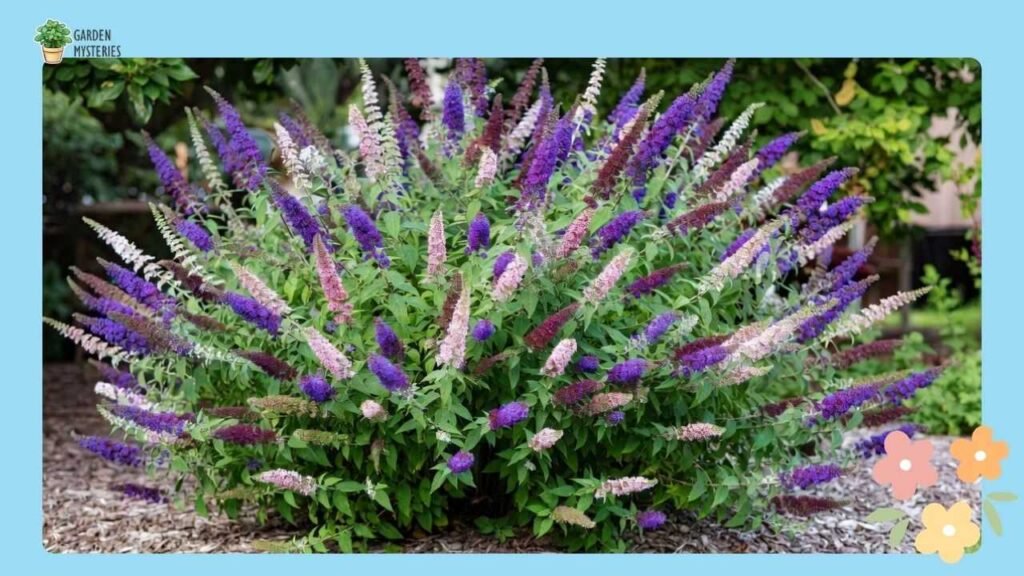
The shrub can become quite large, although mature size depends on the species, cultivar, climate, and pruning. Some varieties are compact, while others can grow into substantial garden shrubs.
One thing to remember is that butterfly bush is primarily a nectar plant. It can provide an excellent food source for adult butterflies, but it does not replace host plants that caterpillars need.
Gardeners should also check local recommendations before planting butterfly bush. Some Buddleja species can spread outside gardens and are considered invasive or potentially invasive in certain regions, while sterile cultivars may have different characteristics.
What Is Milkweed?
Milkweed refers to a group of plants that includes many species with different shapes, sizes, and growing habits.
Most gardeners know milkweed because of its connection to monarch butterflies. Female monarchs lay their eggs on suitable milkweed plants, and monarch caterpillars feed on the leaves after hatching.
Milkweed flowers also produce nectar, so the plants can support adult butterflies and other pollinators.
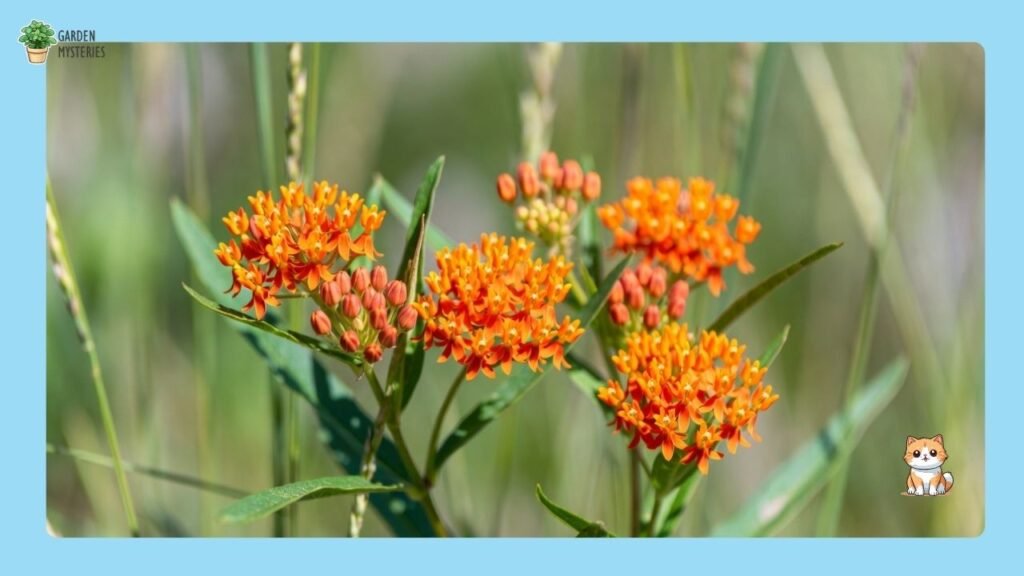
This gives milkweed a special place in a wildlife garden. It can provide resources at more than one stage of the butterfly life cycle.
However, not every milkweed species grows the same way. Some are tall and spreading, while others stay relatively compact. Some prefer dry, sunny soil, while others grow better in moist conditions.
Choosing a milkweed species that naturally suits your region is usually the best approach.
Is Butterfly Weed the Same as Milkweed?
Yes. Butterfly weed is a type of milkweed.
The plant commonly called butterfly weed has the scientific name Asclepias tuberosa. It is sometimes called butterfly milkweed because it belongs to the milkweed group.
This explains why searches for milkweed vs butterfly weed can be confusing. They are not two completely unrelated plants.
Instead:
- Milkweed is the broader group.
- Butterfly weed is one specific species.
- Asclepias tuberosa is the scientific name for butterfly weed.
- Butterfly bush is a separate plant.
If you see the term milkweed tuberosa, it is referring to Asclepias tuberosa, the scientific name associated with butterfly weed.
For gardeners planning a complete outdoor space, our comparison of Scotts vs Vigoro Mulch also covers two popular mulch options.
Butterfly Bush vs Milkweed for Monarch Butterflies
For monarchs, milkweed has an advantage that butterfly bush does not.
Adult monarchs need nectar from flowers, but monarch caterpillars need milkweed leaves as their food source. The female butterfly also needs suitable milkweed plants when laying eggs.
This creates an important difference between a nectar plant and a host plant.
- A nectar plant helps feed adult butterflies.
- A host plant provides the food and habitat needed by developing caterpillars.
Butterfly bush can help adult butterflies find nectar, but suitable milkweed species provide the host-plant function monarch caterpillars require.
That is why a garden designed for monarchs should not rely only on flowering nectar plants. Adding native milkweed can make the garden more useful for the butterfly’s life cycle.
Are Butterfly Bushes Bad for Butterflies?
The answer is more complicated than a simple yes or no.
Butterfly bushes can provide nectar for adult butterflies, so they are not useless to pollinators. The concern is that they may be planted as a replacement for native host plants when they cannot perform the same role.
There is also a separate issue involving invasiveness. Some butterfly bush species can spread beyond cultivation in certain areas. Whether this is a concern depends on the species, cultivar, and local environment.
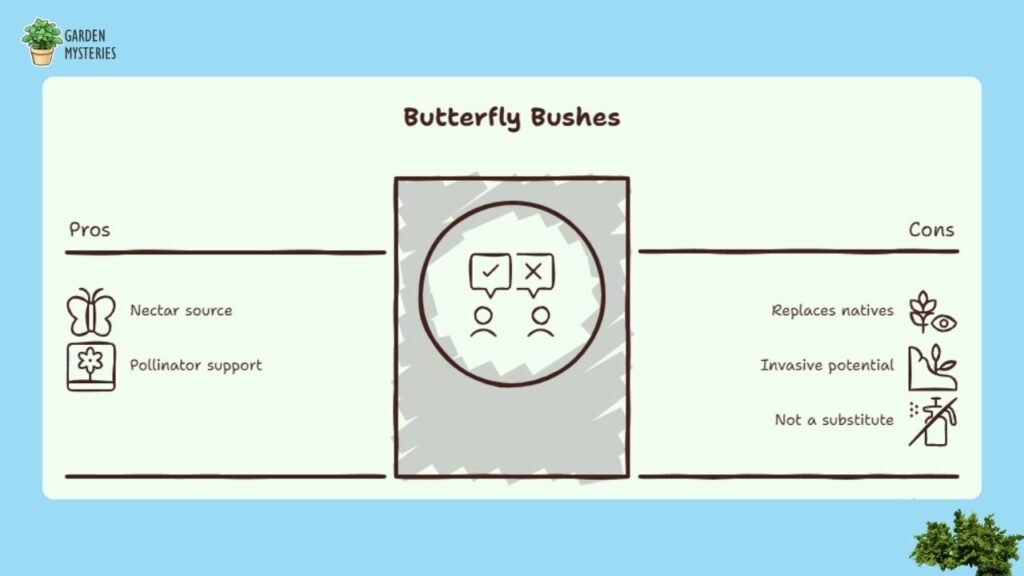
So, are butterfly bushes bad for butterflies? Not necessarily. But they should not be viewed as a substitute for native plants that support caterpillars.
If you want to build a stronger butterfly habitat, consider combining appropriate native host plants with a variety of nectar-producing flowers.
Common Milkweed vs Butterfly Milkweed
The common milkweed vs butterfly milkweed comparison is another source of confusion.
- Common milkweed, Asclepias syriaca, can grow tall and spread through underground rhizomes. It is often better suited to larger naturalized areas or gardens where its spreading habit is welcome.
- Butterfly weed, Asclepias tuberosa, is generally more compact and has bright orange flowers. It tends to form a clump rather than spreading in the same way as common milkweed.
Both can provide value to monarchs, but their appearance and growth habits are quite different.
If you want a more compact plant for an ornamental flower bed, butterfly weed may be easier to fit into the design. If you have more space and want a taller, naturalized planting, common milkweed may be worth considering.
How Big Does Butterfly Weed Get?
So, how big does butterfly weed get?
Butterfly weed is generally a compact milkweed compared with some taller species. It commonly grows around 1 to 3 feet tall, with a similar or somewhat smaller spread depending on growing conditions.
The plant develops upright stems and produces clusters of vivid orange flowers during summer.
If you’re wondering how tall does butterfly weed grow, the answer can vary with climate, soil, sunlight, and the age of the plant. It is usually much smaller than a mature butterfly bush.
The question how tall does butterfly milkweed get has the same basic answer because butterfly milkweed is another common name for Asclepias tuberosa.
Butterfly Milkweed Seedlings: What Do They Look Like?
Young butterfly milkweed seedlings can be easy to overlook, especially when they first appear among other garden plants.
As they develop, look for upright growth and narrow leaves. The mature plant eventually forms a clumping habit and produces its characteristic orange flowers.
If you are growing butterfly weed from seed, patience is important. Young plants may take time to establish a strong root system before they put on substantial top growth.
Because Asclepias tuberosa develops a deep taproot, avoid disturbing young plants unnecessarily once they are established.
Does Milkweed Spread More Than Butterfly Bush?
It depends on the species.
Some milkweed species, such as common milkweed, can spread through underground rhizomes and may gradually occupy more garden space. Butterfly weed is different because it develops a deep taproot and generally forms a more compact clump.
Butterfly bush grows as a woody shrub. Some types can spread by seed, while the behavior varies among species and cultivars.
So, if you are asking does butterfly milkweed spread aggressively, the answer is generally no. Butterfly weed is typically less aggressive in the garden than spreading milkweed species such as common milkweed.
Still, growing conditions and local climate can influence how plants behave.
Which Should You Plant?
The best choice depends on what you want from your garden.
- Choose milkweed if your main goal is to support monarch caterpillars and create habitat for the butterfly life cycle.
- Choose butterfly weed if you want a compact, attractive milkweed with bright orange flowers and strong value for a native pollinator garden.
- Choose common milkweed if you have enough space for a taller plant that can spread and you want to create a more naturalized planting.
- Choose butterfly bush if you want a large flowering shrub that provides nectar for adult butterflies and fits well with your local growing conditions.
For many gardeners, the best answer is not choosing one plant over the other. A diverse garden can provide more benefits than a single species.
Can You Plant Butterfly Bush and Milkweed Together?
Yes, you can plant butterfly bush and milkweed together if both are suitable for your location and growing conditions.
The two plants can serve different purposes. Butterfly bush can provide nectar for adult butterflies, while milkweed can provide both nectar and an important host-plant resource for monarch caterpillars.
You can make the garden even more useful by adding other native flowers that bloom at different times throughout the growing season.
The goal should be diversity rather than relying on one “butterfly plant.”
A garden with suitable host plants, nectar-rich flowers, shelter, and pesticide-free growing practices can provide a more complete environment for butterflies and other beneficial insects.
Frequently Asked Questions
Does butterfly bush attract monarch butterflies?
Yes, adult monarch butterflies may visit butterfly bush flowers for nectar. However, butterfly bush does not serve as a host plant for monarch caterpillars. If you want to support monarchs through their caterpillar stage, add suitable milkweed species to your garden along with nectar-producing flowers.
What is the best milkweed for a butterfly garden?
The best milkweed depends on your location, soil, climate, and available space. Butterfly weed (Asclepias tuberosa) is a compact choice with bright orange flowers, while common milkweed (Asclepias syriaca) can work well in larger naturalised areas. Native milkweed species suited to your region are generally a good starting point for a butterfly garden.
What is the difference between butterfly milkweed and common milkweed?
Butterfly milkweed, commonly known as butterfly weed, is Asclepias tuberosa. It usually forms a compact clump and produces bright orange flowers. Common milkweed, Asclepias syriaca, is generally taller and can spread through underground rhizomes. Both are milkweed species and can provide host-plant value for monarch caterpillars.
Does common milkweed spread quickly?
Common milkweed can spread through underground rhizomes as well as by seed, allowing established plants to form colonies over time. This spreading habit can be useful in naturalised or meadow-style plantings but may require management in smaller formal gardens.
Final Verdict
When comparing butterfly bush vs milkweed, the best choice depends on what you want your garden to accomplish.
Butterfly bush can be a valuable nectar source for adult butterflies, while milkweed plays a more specialized role by providing both flowers and a host plant for monarch caterpillars. Butterfly weed is a type of milkweed, not a type of butterfly bush, and this distinction is important when choosing plants.
For a butterfly-friendly garden, consider planting suitable native milkweed alongside a diverse selection of nectar-producing flowers. If butterfly bush is appropriate for your area, it can complement that planting rather than replace it.
The strongest butterfly garden is rarely built around one plant. It is built around a mix of plants that provide food, habitat, and seasonal resources throughout the year.
Disclaimer: This article provides general gardening information for educational purposes only. Plant growth, invasiveness, and suitability vary by region. Check local guidelines and trusted horticultural sources before choosing plants for your garden.