
What Are Cherub Tomatos – Summer Growing Guide
Cherub tomatos summer growing requires full sunlight, warm temperatures, regular watering, and balanced nutrients for steady growth and healthy fruit production. These cherry tomatoes perform best in hot weather with consistent care and light pruning.
To get the best yield of cherub tomatos, plant them in well-draining soil, provide support, and feed regularly with a balanced fertilizer like Miracle Grow. Proper care results in sweeter fruits, healthier plants, and a steady summer harvest.
If you’re planning to grow cherub tomatos summer, this guide covers everything you need. It’s from planting and care to boosting sweetness and harvesting at the perfect time. Stay put!
Quick Summary: Cherub Tomatos Summer
- Cherub tomatos grow best in warm summer conditions with full sunlight
- They typically take 60-75 days from planting to harvest
- Consistent watering improves sweetness and prevents fruit issues
- Well-draining soil and proper spacing boost plant health
- Regular feeding with balanced fertilizer (like Miracle-Gro) increases yield
- Harvesting frequently encourages continuous fruit production
What Are Cherub Tomatos?
Cherub tomatos are a small variety of cherry tomatoes known for their sweet taste, thin skin, and juicy texture. They are typically bright red when ripe and are valued for their balanced flavor, making them popular in home gardening and fresh cooking.
These tomatoes grow on vining (indeterminate) plants, which means they continue producing fruit throughout the growing season when given proper sunlight, watering, and nutrition. They are commonly grown as part of summer vegetable gardening because they perform well in warm weather.
Cherub tomatos form in clusters and develop steadily as the plant matures. With regular care and good soil conditions, they can provide a consistent harvest, making them suitable for both garden beds and container growing.
Why Cherub Tomatos Summer Growth Works Best
Growing cherub tomatos in summer gives the best results because of natural seasonal advantages.
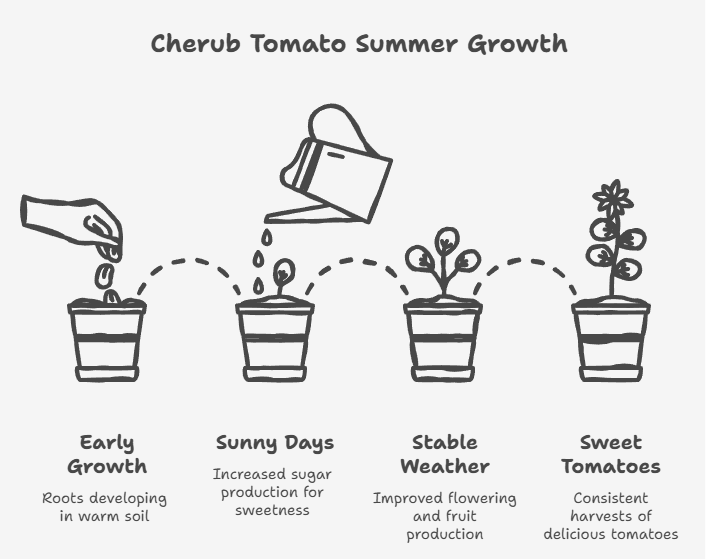
Warm soil helps roots develop faster, while long sunny days increase sugar production. This leads to sweet tomatoes with better taste and consistent harvests.
Stable weather also improves flowering, which means more fruits over time.
How to Grow Cherub Tomatos in Summer (Step-by-Step)
Proper care during the summer season helps cherub tomato plants grow steadily, produce more fruit, and maintain good plant health. Following the right process improves both yield and fruit quality.
Choose the Right Location
Select a location that receives full sunlight for 6-8 hours daily. Sunlight supports healthy growth, strong flowering, and better fruit development in tomato plants.
Avoid areas with heavy shade, as limited light can slow plant growth and reduce fruit production.
Prepare the Soil
Use well-draining soil mixed with compost or organic matter. Good soil structure helps roots grow deeply and absorb nutrients efficiently.
Focus on:
- Loose, well-aerated soil
- Balanced moisture retention
- Natural compost for soil improvement
Healthy soil supports steady plant growth throughout the summer season.
Planting
Plant seedlings slightly deeper than the original pot level. This encourages stronger root development and helps the plant stay stable.
Keep 18-24 inches spacing between plants to ensure:
- Better airflow around plants
- Reduced risk of leaf diseases
- Proper space for root expansion
Good spacing helps plants grow in a balanced and healthy way.
Watering
Water the plants regularly to maintain consistent soil moisture. Deep watering is better than frequent shallow watering, as it helps roots grow stronger.
Proper watering helps:
- Reduce plant stress during hot weather
- Support steady fruit development
- Maintain healthy plant structure
Avoid overwatering, as it can affect root health.
Feeding for Better Yield
Use a balanced vegetable fertilizer to support healthy growth and fruit production. Nutrients help the plant stay strong during the summer growing season.
Benefits of proper feeding:
- Supports steady plant growth
- Helps improve fruit formation
- Encourages continuous production during warm months
Applying fertilizer at recommended intervals helps maintain healthy plant development.
Support the Plant
Use stakes, cages, or supports to keep tomato plants upright. This helps prevent branches from bending under fruit weight.
Plant support improves:
- Air circulation around leaves
- Sunlight exposure to all parts of the plant
- Overall plant stability and structure
How Long Do Cherub Tomatos Take to Grow?
A common question behind cherub tomatos summer growing is how long it takes for plants to produce fruit. Understanding the growth timeline helps with better planning, care, and harvest expectations.
Most cherub tomato plants take around 60 to 75 days from transplanting to start producing ripe fruit. Once the plant enters the fruiting stage, it continues producing throughout the summer season, especially when it receives consistent sunlight, proper watering, and balanced nutrition.
During warm weather conditions, steady plant care supports healthy flowering, continuous fruit set, and improved yield consistency. Regular harvesting also encourages the plant to keep producing new tomatoes over time.
Harvesting Cherub Tomatos for Best Flavor
Harvesting at the right time is important for achieving the best taste, texture, and overall quality of cherub tomatoes during the summer growing season.
Pick fruits when they are fully red, evenly colored, and slightly firm to the touch. At this stage, cherry tomatoes develop their natural sweetness and balanced flavor, making them ideal for fresh eating and salads.
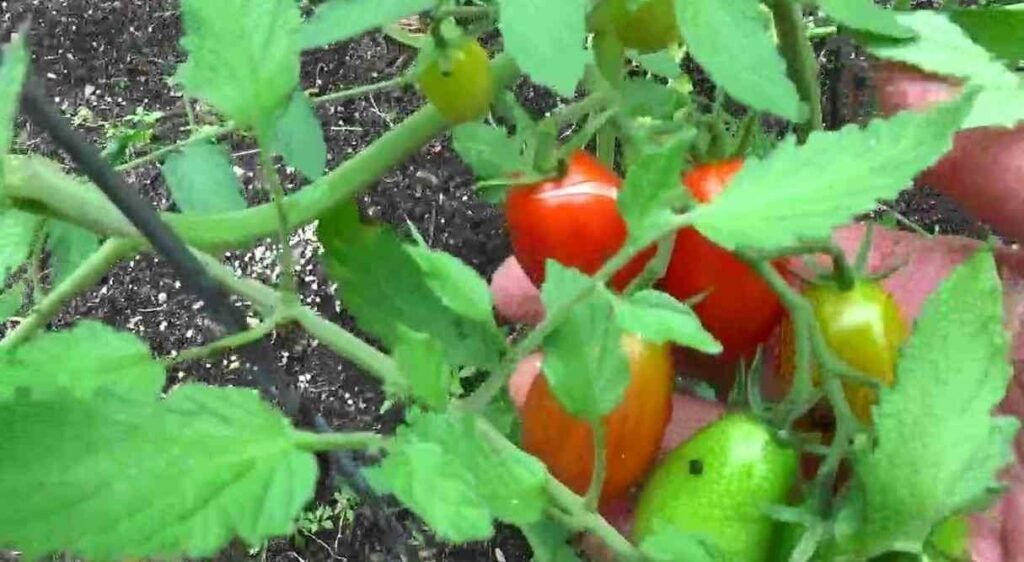
For the best results, harvest regularly instead of leaving ripe fruits on the plant for too long. Frequent picking helps stimulate the plant to produce more flowers and continue fruiting throughout the season, improving overall yield.
Early morning is often the best time for harvesting. Cooler temperatures help maintain freshness, firmness, and post-harvest quality, especially when tomatoes are stored or used later in the day.
Common Problems in Growing Cherry Tomatoes and Fixes
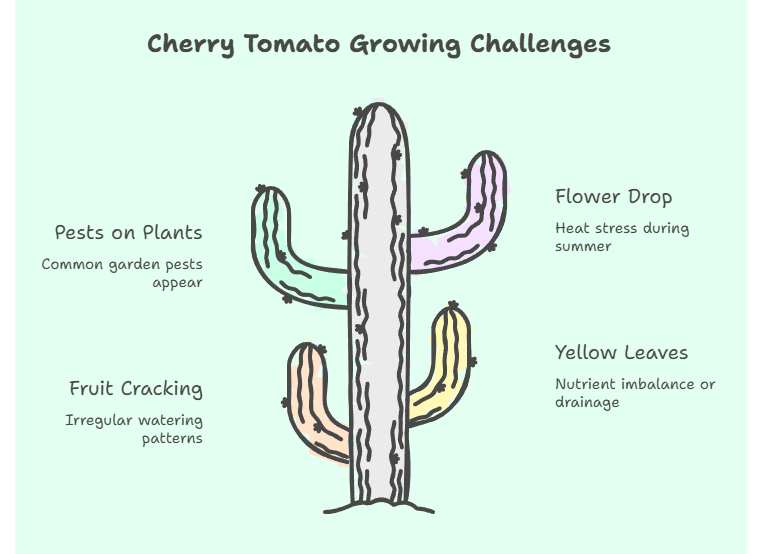
Every tomato grower, whether on a balcony or a backyard patch, learns one truth sooner or later: plants speak through their problems. Cherry tomatoes are generous, but they do show stress when conditions drift off balance.
Cracking on Fruits
Cracked tomatoes usually trace back to irregular watering patterns, especially after dry spells followed by heavy watering or rain.
To prevent this, keep soil moisture steady and even throughout the season. Deep, consistent watering helps the fruit expand at a natural pace without stress on the skin.
Yellow Leaves
Yellowing leaves often signal a nutrient imbalance or drainage issue in the soil. It can also appear when roots struggle to breathe in compacted ground.
Improve this by:
- Using balanced feeding at regular intervals
- Ensuring proper soil drainage
- Removing overly wet conditions around the root zone
Healthy roots usually restore leaf color over time.
Pests on Plants
Common garden pests can appear during warm months, especially on tender new growth. This is a familiar part of tomato plant care in home gardens.
Simple, gentle approaches often work best:
- Neem-based sprays for routine control
- Mild soap water for soft-bodied insects
- Regular leaf inspection to catch issues early
Consistency matters more than intensity here.
Flower Drop
When flowers fall before fruit forms, heat stress is often the main reason, especially during peak summer conditions.
To manage this:
- Provide light afternoon shade when temperatures rise sharply
- Maintain steady watering to reduce plant stress
- Avoid excess nitrogen during flowering stage
Once conditions stabilize, plants usually resume normal fruit setting.
Best Ways to Use Cherub Tomatos in Summer Meals
Cherub tomatos carry a natural summer sweetness that fits easily into everyday cooking without needing heavy preparation.
They are commonly used in fresh salads, where their juiciness blends well with greens, onions, and light dressings. In warm pasta dishes, they soften quickly and add a mild, balanced flavor that works well with olive oil and herbs.
They also suit light roasting, which deepens their taste while keeping their structure intact. For quick use, they can be eaten raw as a snack or added to wraps and sandwiches for a fresh bite.
Because of their small size and naturally sweet profile, cherub tomatos remain a flexible ingredient in summer meals, especially when simple cooking is preferred.
Growing Cherub Tomatos in Containers
When garden space is tight, container growing becomes a practical way to keep cherub tomatoes thriving through summer.
Choose a medium to large container with proper drainage holes to prevent water buildup. Place it where the plant receives full sun for most of the day, as light directly influences flowering and fruit formation.
Keep the soil evenly moist, adjusting watering based on heat and wind conditions, and feed at regular intervals to support steady growth.
With consistent care, container-grown plants can still produce a reliable harvest, even in limited spaces.
Are Cherub Tomatos Summer Worth Growing?
For most home gardeners, they are a dependable choice. They adapt well to both garden beds and containers, require basic care, and reward steady attention with a generous harvest.
Their performance through warm months makes them suitable for anyone looking for a productive, low-complexity summer crop.
Final Thoughts
Cherub tomatos summer is all about growing sweet, productive plants in the right conditions. With proper sunlight, steady watering, and balanced feeding using trusted options like Miracle-Gro, you can improve both quality and yield.
With consistent care, these small tomatoes can deliver a reliable and flavorful harvest all season long.
FAQ: Cherub Tomatos
What are cherub tomatos?
Cherub tomatos are small cherry-type tomatoes known for their sweet flavor, juicy texture, and thin skin. They are commonly grown in home gardens and eaten fresh during the summer season.
Do cherub tomatos grow well in summer?
Yes, cherub tomatos grow well in summer because warm temperatures and long sunlight hours support healthy plant growth, flowering, and fruit development.
How long do cherub tomatos take to grow?
Cherub tomatos usually take about 60 to 75 days from planting to produce ripe fruit. With proper care, they continue producing throughout the growing season.
How often should I water cherub tomatos in summer?
They should be watered deeply 2 to 3 times per week, depending on heat and soil conditions. The soil should stay evenly moist but not waterlogged.
How can I increase yield of cherub tomatos?
Provide full sunlight, regular watering, nutrient-rich soil, and proper plant support. Consistent care helps improve flowering and fruit production.


