The Chinese lucky money plant (Pilea peperomioides) is popular for its round, coin-shaped leaves and tidy upright growth. Its distinctive foliage makes it easy to include in many types of home decor, from spacious living rooms to compact desks.
The plant is also associated with good fortune and prosperity in some plant traditions. Its round leaves are often compared with coins, while the offsets it produces make it easy to share new plants with friends and family.
You do not need expensive accessories to make a Pilea stand out. A suitable pot, a bright location, and a little creativity can turn this simple houseplant into an attractive focal point.
Key Takeaway
A Chinese lucky money plant (Pilea peperomioides) is a popular houseplant with round, coin-shaped leaves linked with luck and prosperity in some traditions. For healthy growth, give it bright, indirect light, well-draining soil, and careful watering. You can style it in a decorative pot, on a plant stand, in a woven basket, on a desk, or as part of a small Pilea collection.
Ways to Style a Chinese Lucky Money Plant
Here are seven practical ways to style a Chinese lucky money plant at home.
1. Display It in a Decorative Pot
A decorative pot can significantly change the appearance of a Chinese money plant.
Choose a planter that complements your room without distracting from the plant’s rounded foliage. Neutral ceramic, terracotta, stone-effect, and textured planters can all work well.
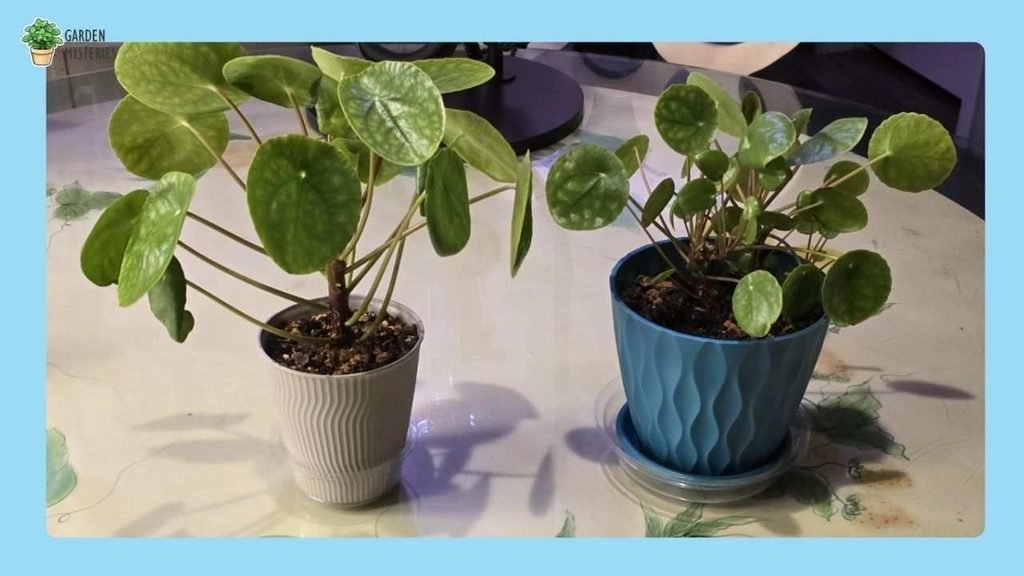
Place the plant on a desk, bookshelf, bedside table, or small plant table where its leaves can be appreciated up close.
Do not choose appearance over drainage. Use a planter with a drainage hole, or keep the Pilea in a nursery pot inside a decorative cover.
The best soil for Chinese money plant should drain well and should not remain wet for extended periods. Bright, indirect light also supports healthy, compact growth.
2. Put Your Chinese Lucky Money Plant on a Stand
A plant stand adds height and helps a Pilea become part of the room rather than looking like another small tabletop plant.
Use a wooden, metal, or painted stand beside a sofa, cabinet, window, or empty wall. A mature plant can create a fuller display as its stems and leaves spread outward.
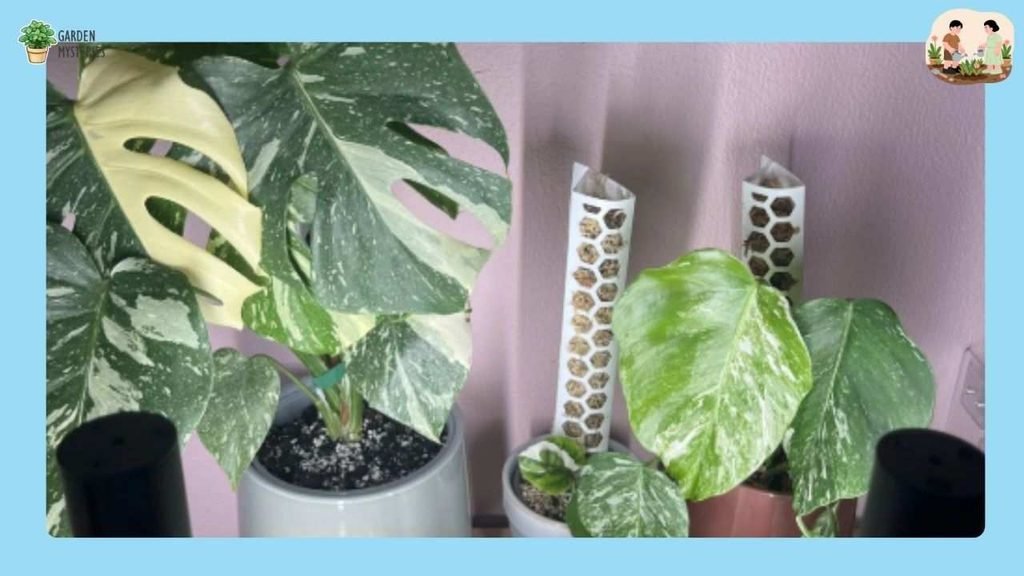
This approach is useful in small rooms because it makes use of vertical space without adding more furniture to the floor.
Keep the plant near a bright window, but protect it from intense direct sunlight. Rotate the pot occasionally so the plant receives light more evenly and does not lean strongly in one direction.
3. Use a Woven Basket for a Natural Look
For a warmer and more relaxed style, place your Chinese lucky money plant inside a woven basket.
Jute, seagrass, rattan, and similar natural materials pair well with the plant’s smooth green leaves. This look can suit boho, rustic, Scandinavian, and nature-inspired interiors.
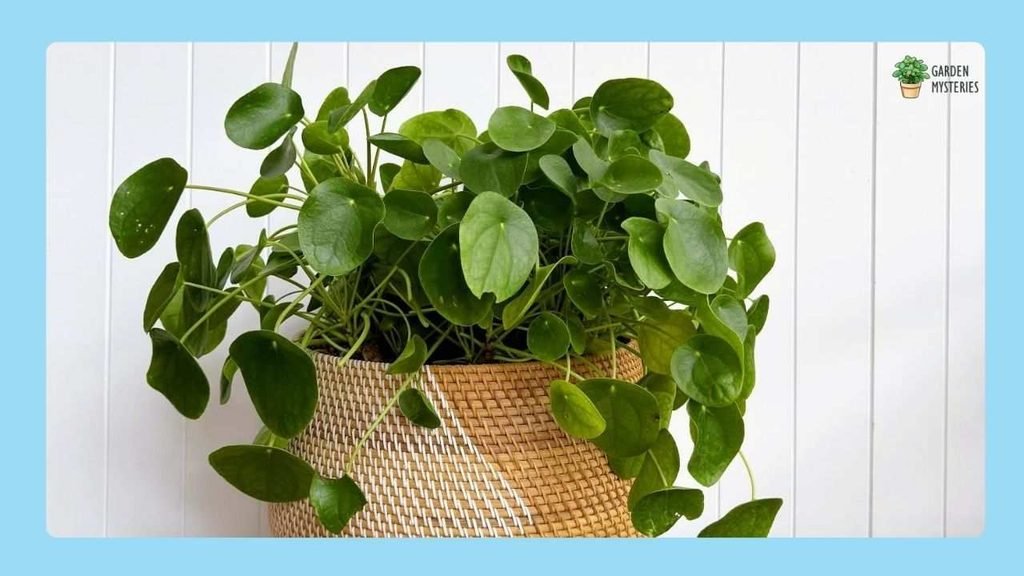
Use a nursery pot inside the basket instead of planting directly into a decorative basket unless the basket is specifically made for planting.
An inner pot also makes watering easier. Remove it from the basket, water the plant thoroughly, allow excess water to drain, and then return it to the basket.
Do not leave the plant standing in collected water. Constantly wet potting mix can contribute to root problems.
4. Create a Lucky Plant Corner
An unused corner can become a simple indoor garden with one well-positioned Pilea.
Place your Chinese money plant on a stable wooden stool or plant stand. You can add a small tray, framed artwork, natural stone, or another understated decorative item nearby.
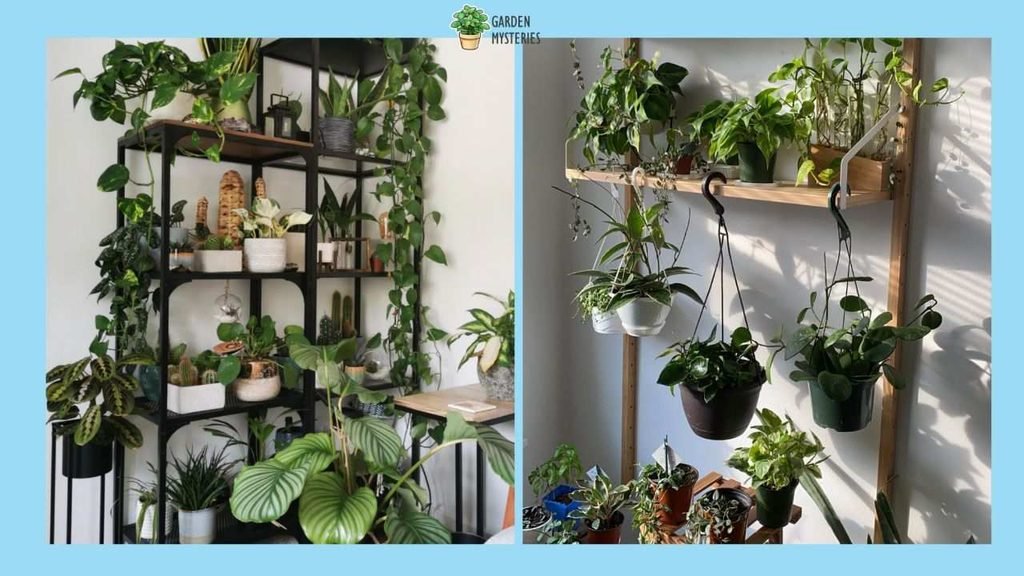
If you follow Chinese Feng Shui money plant traditions, you may choose a location that you personally associate with prosperity or positive energy. Feng Shui placement is a cultural practice and personal belief, not a scientifically proven method for creating wealth.
For the plant itself, suitable growing conditions remain the priority.
Provide bright, indirect light and keep the plant away from harsh direct sun and cold drafts. Very low light can lead to weak, stretched growth.
5. Make a Small Pilea Collection
One Chinese money plant can eventually become several plants.
Pilea peperomioides commonly produces offsets, or small baby plants, around the base of a mature plant. When the offsets are sufficiently developed, they can be separated and grown in individual containers.
This makes a Pilea collection an enjoyable decorating project.
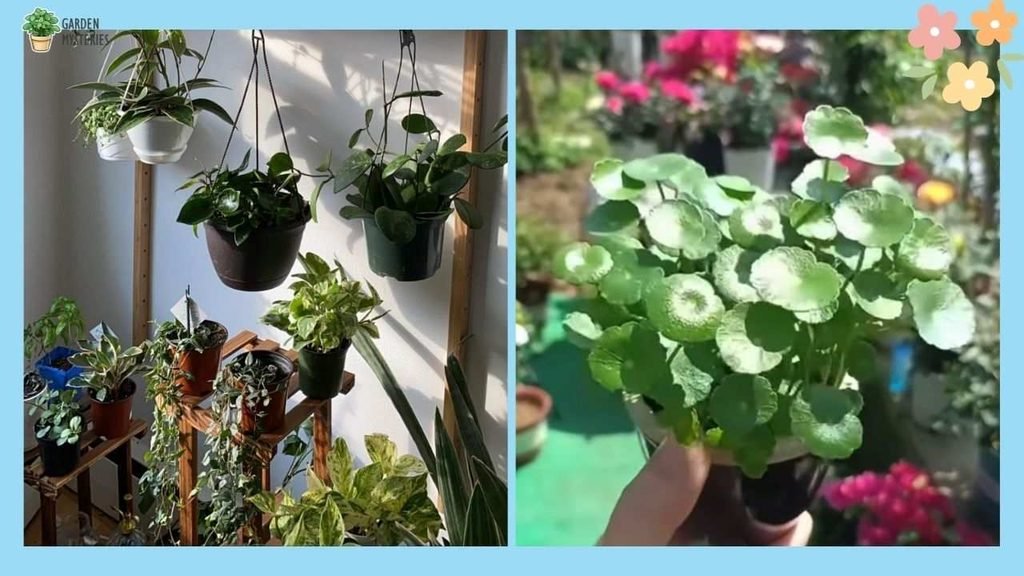
Try grouping three or four plants in pots of different heights. Use similar colors for a coordinated appearance, or combine ceramic, terracotta, and woven containers to add texture.
This idea also reflects the plant’s traditional lucky symbolism. Rather than viewing it as a promise of financial gain, you can treat it as a living symbol of growth, sharing, and abundance.
If your plant produces healthy offsets, you can also give one to a friend or family member.
6. Style One on Your Desk
The compact shape of a Chinese lucky money plant makes it a suitable choice for a desk or home office.
Use a small pot and place the plant where it can receive plenty of indirect daylight. A wooden desk, simple ceramic container, and one or two natural decorative objects can create a clean display without making the workspace feel crowded.
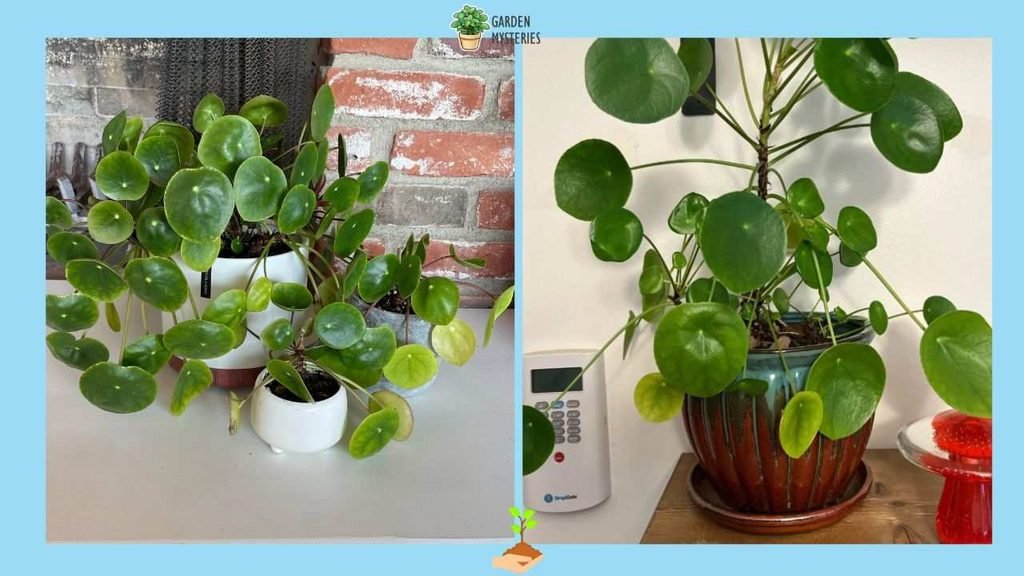
The coin-like leaves give the plant visual interest without relying on flowers.
If your desk is far from a window, watch for signs of weak or stretched growth. Move the plant closer to a brighter location if needed.
A healthy plant will always look better as a decorative feature than one struggling in a dark corner.
7. Display Pilea in Glass for a Propagation Look
For a different style, use glass containers to display young Pilea plants during propagation.
A clear glass vessel lets you observe developing roots while the small plant adds a fresh green accent to a shelf or windowsill.
Chinese money plants can be propagated in more than one way, and healthy plants often produce offsets. Some growers also root leaf cuttings in water or moist growing media, although results can vary.
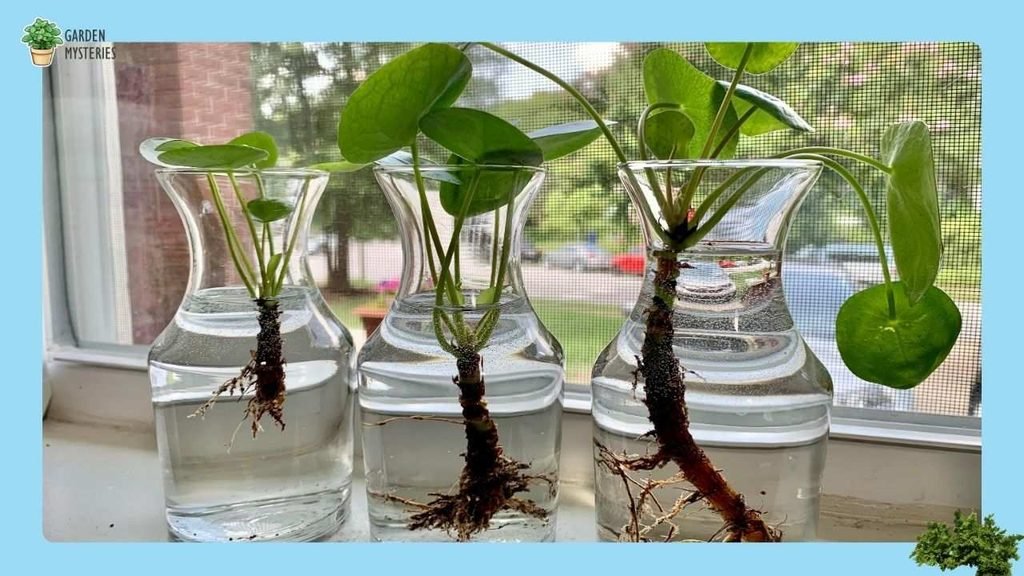
For a decorative display, keep the glass clean and provide suitable light. Once a propagated plant has developed a healthy root system, transfer it to a suitable free-draining potting mix.
This arrangement can look especially attractive when several small plants are grouped in glass containers of different sizes.
How to Choose Soil and Mulch for a Chinese Money Plant
A beautiful display still needs the right growing setup underneath it. For a Chinese lucky money plant, focus on a well-draining potting mix that allows excess water to escape while giving the roots enough moisture to grow. If you are comparing common mixes, our guide to Sta-Green vs Miracle-Gro explains how drainage, moisture retention, texture, and added nutrients can differ between products.
Mulch is different. A Pilea grown indoors normally does not need a thick mulch layer on top of its potting mix. It can trap moisture around the stem and make it harder to judge when the soil surface has dried. For outdoor gardening, mulch has a different role. Our Scotts vs Vigoro Mulch comparison covers moisture retention, coverage, texture, and proper application.
How to Keep Your Chinese Lucky Money Plant Looking Its Best
Good styling begins with good plant care.
A Chinese lucky money plant generally grows best in bright, indirect light. An east- or west-facing window may work well, while a plant near a strong south-facing window may need to be placed farther from the glass.
Allow the upper layer of the potting mix to dry before watering again. Do not leave the roots sitting in water, and always use a container with adequate drainage.
If you notice Chinese money plant brown leaves, yellowing foliage, or weak growth, review the growing conditions before making several changes at once. Overwatering, poor drainage, unsuitable light, and other environmental stresses can affect the appearance of houseplants.
You may also occasionally see a Chinese money plant bloom. The flowers are much less noticeable than the leaves, so most people grow this Pilea primarily for its foliage.
Why Is It Called a Chinese Lucky Money Plant?
The name is largely connected to the plant’s appearance and cultural associations.
Its flat, round leaves resemble coins, which has helped make the plant a popular symbol of money, prosperity, and good fortune. It is also sometimes associated with Feng Shui and is often given as a housewarming or good-luck gift.
Another reason people connect it with abundance is that a healthy plant can produce offsets that may be separated and shared.
A Pilea cannot guarantee wealth, but it can represent something more tangible: growth that can be multiplied and passed along.
Final Thoughts
A Chinese lucky money plant does not need elaborate decor to make an impression. Place it in an attractive pot, raise it on a stand, tuck it into a woven basket, or create a small collection from its offsets.
The key is to combine the plant’s natural shape with a container and location that suit your space.
Keep the leaves healthy with bright, indirect light, well-draining soil, and careful watering. With the right care, your Pilea can become both a cheerful houseplant and a meaningful green accent in your home.
Disclaimer: This article provides general gardening information for educational purposes. Plant care results vary by growing conditions. Cultural, Feng Shui, and money-related claims are presented as traditions or beliefs, not guaranteed financial, health, or scientific outcomes.
More Blogs: