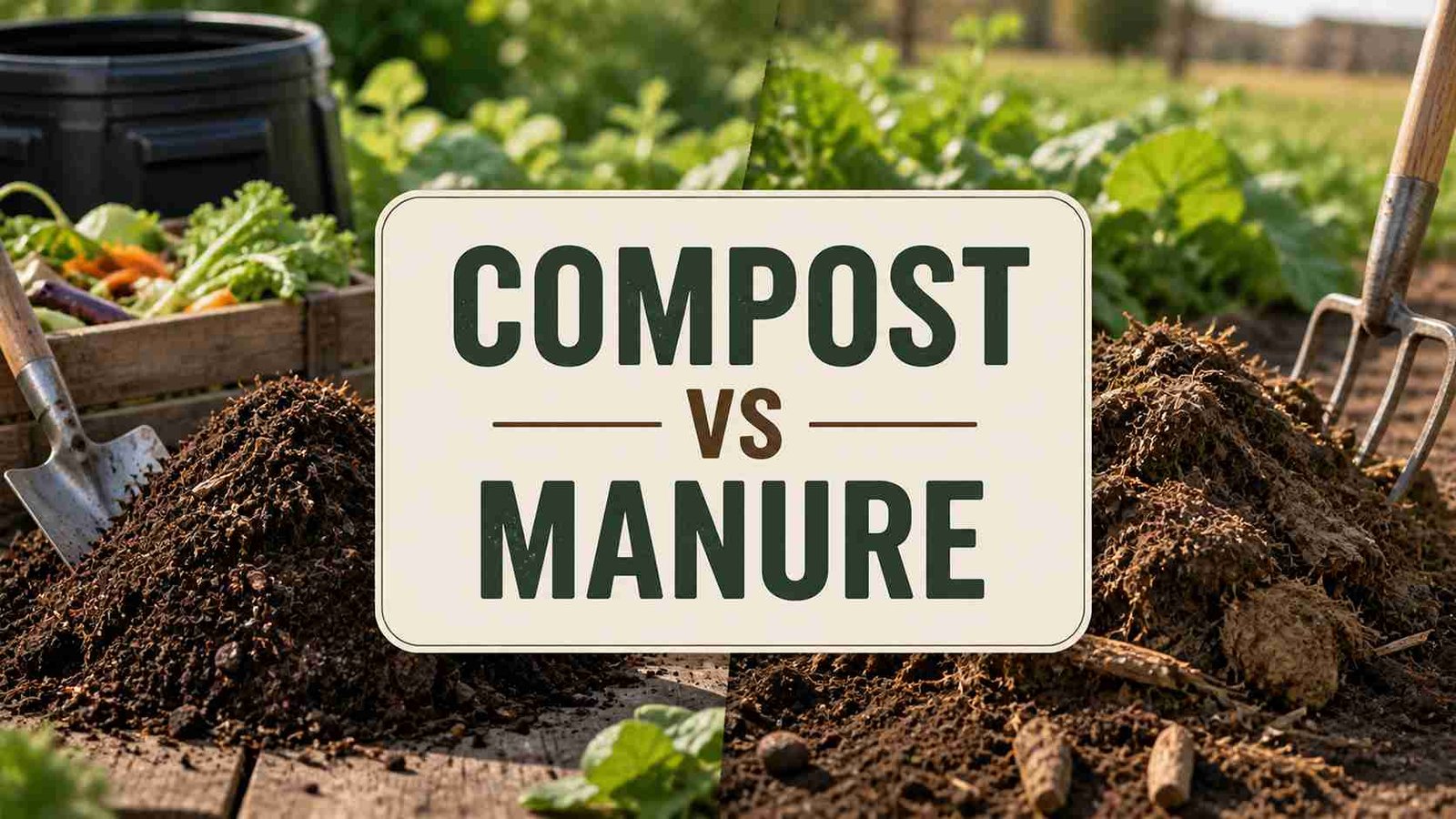
If you’re comparing compost or manure, think of your soil like a living system rather than just dirt. Both compost and manure feed plants, but they work in very different ways beneath the surface where roots, microbes, and nutrients interact.
Manure and compost do different jobs in the garden. Compost improves soil slowly by building better structure and long-term fertility, while manure provides faster nutrients but must be used carefully.
This blog will help you understand what your garden actually needs. No matter the goal, you will get some ideas for healthier soil, stronger vegetables, and balanced mixes that support growth.
Manure or compost: Compost is fully decomposed organic matter that improves soil structure, water retention, and releases nutrients slowly. Manure is new or aged animal-based organic matter that provides faster nitrogen. But it can burn plants or carry pathogens if not properly aged.
The compost is preferred as safe and better for long-term soil health, while aged manure is useful for quick fertility boosts.
What Is Compost?
In the discussion of manure or compost in soil mix, compost is considered the most stable and soil-friendly option. It is fully decomposed organic matter formed from kitchen scraps, dry leaves, grass clippings, plant residues, and sometimes well-processed manure.
Unlike fresh manure, compost has already gone through complete breakdown, turning into a dark, crumbly, humus-rich material that improves soil from within.
Why Compost Stands Out
- Improves soil structure → loosens heavy clay soil and helps sandy soil retain moisture and nutrients
- Slow, steady nutrient release → feeds plants gradually without overwhelming roots
- Safe for all plants → no risk of burning seedlings or delicate root systems
- Reduces weed seeds and pathogens → high-temperature composting neutralizes most harmful organisms
Best Use Cases
- Building healthy raised beds and vegetable gardens
- Mixing into potting soil for containers and seedlings
- Long-term soil fertility improvement and organic matter buildup
- General use in home gardening, where safety and consistency matter
What Is Manure?
In the context of manure versus compost, manure refers to animal-based organic matter’ (cow, chicken, horse, goat, etc.) that may be used in its new form or after aging.
Unlike compost, which is fully decomposed organic matter, manure is more “active” and changes quickly once added to soil.
What Manure Brings to Soil
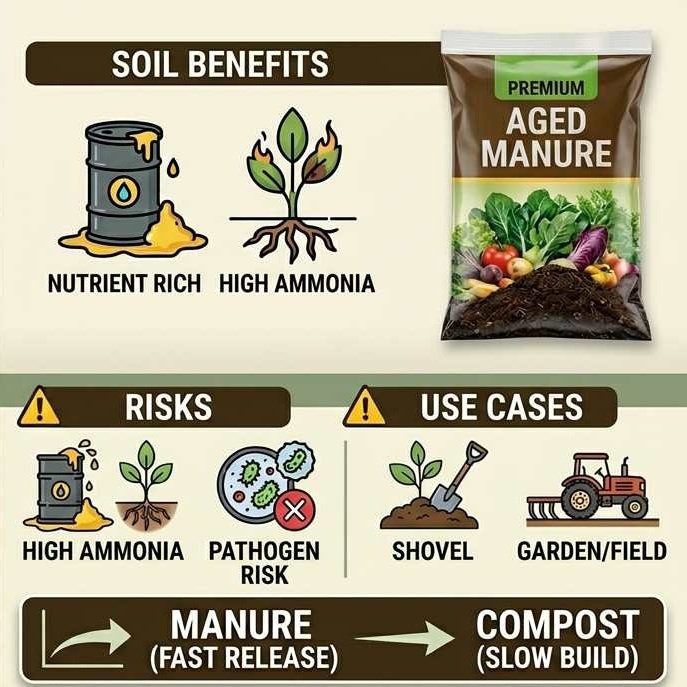
- High nitrogen content → especially in fresh manure, supporting rapid vegetative growth
- Fast nutrient release → works quickly compared to slow-release compost
- Strong growth push → ideal for leafy crops when properly aged
Risks to Know
- Can burn plant roots if applied fresh because of high ammonia levels
- May contain pathogens like E. coli if not composted properly
- Often carries weed seeds, which can spread in garden beds
Best Use Cases
- Restoring nutrient-depleted or exhausted soils
- Pre-plant soil preparation before sowing crops
- As an ingredient in a manure and compost mix for balanced fertility
- Large-scale farming or field applications where aging is properly managed
According to NRICD, ‘Using fresh manure directly can add too many nutrients to the soil and may bring in weeds or harmful germs. If excess nutrients wash away, they can also cause water pollution through runoff.’
When comparing manure and compost, manure acts like a fast nutrient surge, while compost builds long-term soil health and structure.
Compost vs Manure (Side-by-Side Comparison)
This table shows a simple manure versus compost comparison so you can quickly understand how they differ in composition, nutrients, safety, and best garden use.
| Feature | Compost | Manure |
| Composition | Decomposed organic mix | Animal-based organic matter |
| Nutrient Release | Slow, steady | Fast, concentrated |
| Safety | Gentle on plants | Needs proper aging before use |
| Weed Seeds | Mostly not present | May still be present |
| Soil Structure | Excellent improvement | Moderate improvement |
| Best For | Long-term soil health | Quick fertility boost |
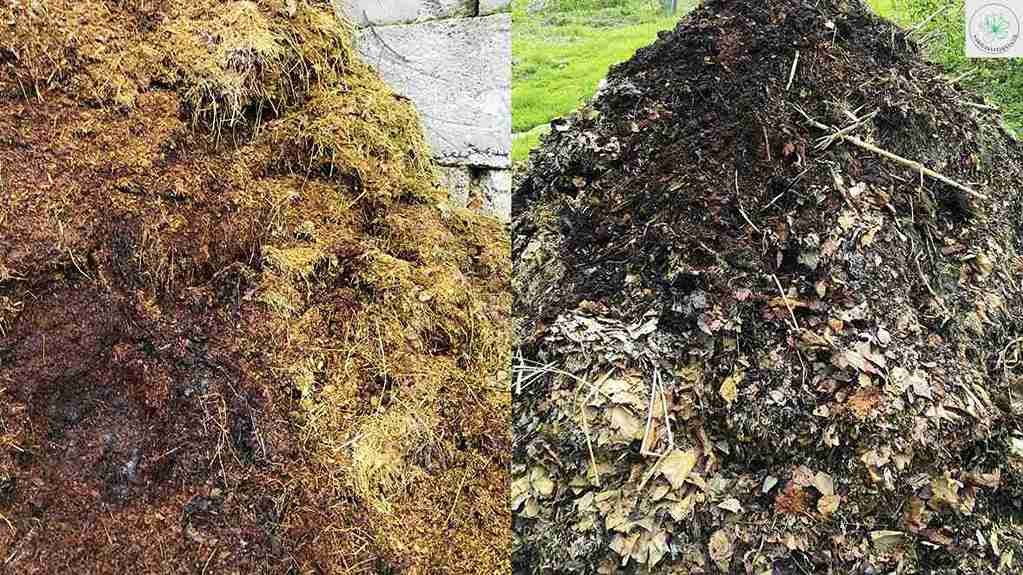
Cow Manure and Compost: Black Kow vs Brut Cow Compost
When comparing cow manure and compost, especially products like Black Kow vs Brut Cow Compost, the goal is to find a balance between nutrient strength and soil safety. Both fall under the broader compost versus manure discussion, but they are not exactly the same in how they behave in your garden.
Black Kow is a well-known composted cow manure, meaning it has been aged and processed into a stable, soil-friendly amendment. It’s safer for direct use, improves soil structure, and supports long-term fertility. It is ideal for vegetable gardens, raised beds, and general soil conditioning.
On the other hand, Brut Cow Compost (often marketed as a stronger organic compost blend) tends to have a richer nutrient profile, sometimes with added organic materials.
Which is better?
- Choose Black Kow → if you want safe, balanced, and consistent soil improvement
- Choose Brut Cow Compost → if your soil needs a richer organic boost and faster results
Compost or Manure: Which Should You Choose?
Choosing between manure or compost depends on what your soil is asking for right now. Both improve fertility, but they work in very different ways in the manure vs compost cycle of soil building.
Choose Compost If
- You want safe, consistent soil improvement
- You’re growing vegetables in containers, raised beds, or mixed garden soil
- You care about long-term soil biology, structure, and moisture retention
- You want a stable, slow-release organic amendment (rich in humus-like material)
Compost works like a “soil conditioner,” steadily improving fertility without risk of burning plants. Many gardeners prefer organic compost like R&M Organics Premium Compost for vegetable beds because of its balanced nutrient profile and improved soil texture.
Choose Manure If
- Your soil is nutrient-depleted or exhausted
- You need a quick nitrogen boost for fast plant growth
- You can safely use aged or composted manure (6-12 months minimum)
- You are preparing soil before planting heavy feeders
Manure acts more like a fast-release nutrient source, especially useful when properly composted into stable organic matter. You can check out Espoma Organic Chicken Manure if you want to try it on your garden soil.
From my experience, compost is the safer foundation. Manure becomes powerful only when aged or blended into a manure and compost mix, which combines fast nutrients with long-term soil stability.
Compost and Manure Mix Together (Best of Both Worlds)
Here’s where things get interesting. The best option is often a manure and compost mix, especially composted manure.
Why this combo works:
- Manure adds nutrient power
- Compost stabilizes and balances it
- Reduces smell, pathogens, and burn risk
Think of it as turning fresh fuel into a slow-burning energy source.
Manure vs Compost for Vegetable Gardens
For most home gardens, compost vs manure isn’t a competition. Use compost as your base for safe, balanced growth, and add aged manure when crops need an extra nutrient push.
- Use compost for most vegetables: It improves soil structure, supports microbial life, and releases nutrients steadily
- Use aged manure for heavy feeders like cabbage, corn, and spinach. It can boost nitrogen for faster leafy growth
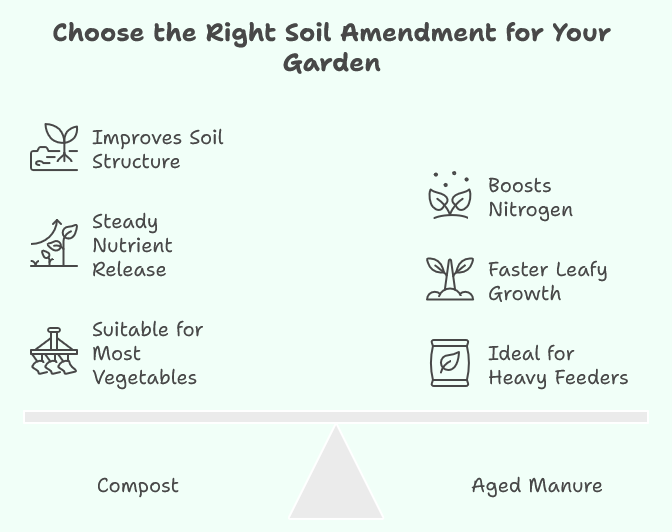
Crop-Specific Tip (What Your Plants Actually Want)
- Leafy greens (spinach, lettuce, cabbage): They thrive with manure and compost, thanks to higher nitrogen that encourages lush leaf production
- Fruiting plants (tomatoes, peppers, cucumbers): Do these perform better with these two options? Compost wins here, providing balanced nutrients without excessive leaf growth
Pro tip: A light manure and compost mix before planting creates a nutrient-rich, well-structured bed that supports both early growth and long-term yield.
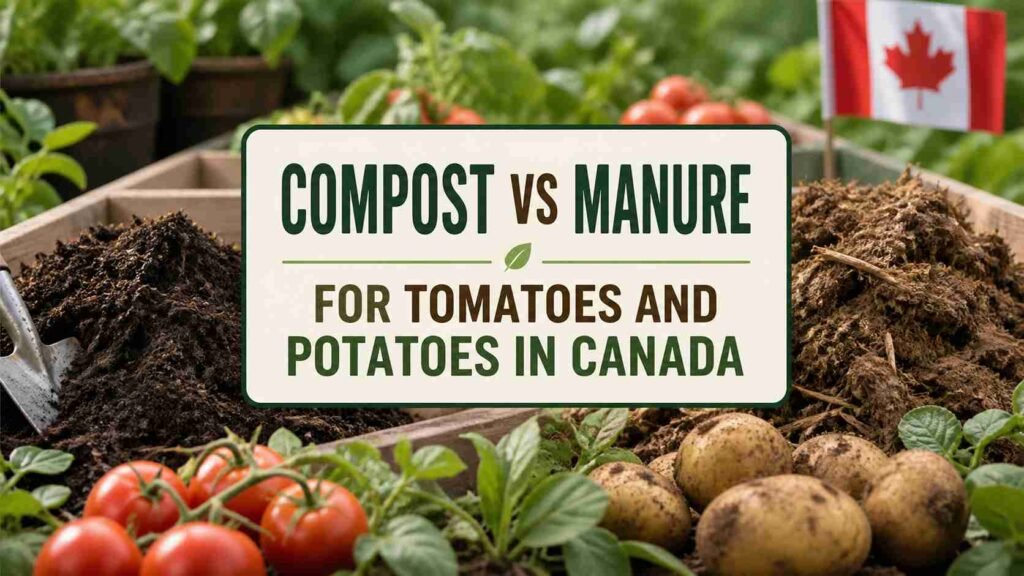
Compost or Manure for Tomatoes and Potatoes in Canada
When it comes to compost versus manure in Canada, both tomatoes and potatoes respond differently depending on how the soil is managed, especially in cooler climates with shorter growing seasons.
- For potatoes in Canada, compost is usually a better foundation. It improves soil structure, helps with drainage in heavier soils, and supports steady tuber formation. A small amount of aged manure can be added during soil preparation, but too much nitrogen may lead to leafy growth instead of a strong potato yield.
- For tomatoes in Canada, compost again plays the main role by providing balanced, slow-release nutrients that support flowering and fruit development. In the manure vs compost comparison, manure should be used carefully. Excess nitrogen can delay fruiting and create overly lush plants with fewer cherub tomatoes.
Best Approach for Canadian Gardens
A balanced manure and compost mix, with compost as the dominant component, gives the most reliable results for both crops. It supports healthy soil biology, improves moisture retention, and ensures steady growth throughout the Canadian growing season.
Manure or Compost: Common Mistakes to Avoid
Even a rich soil mix can go sideways if the basics are skipped. When choosing compost or manure or balancing them, these are the pitfalls that quietly reduce yields and soil health:
- Using fresh manure directly on plants: Fresh manure is too strong. It can burn roots, introduce pathogens, and disrupt soil biology. Always use well-aged or composted manure.
- Assuming manure = compost: They are not the same. Compost is fully decomposed and stable, while manure is fresh or semi-decomposed. Confusing the two leads to poor soil management.
- Overloading nitrogen: Too much manure can push excessive leafy growth with little fruit. This is a common issue when misjudging either one for crops like tomatoes.
- Ignoring compost in difficult soils: In sandy soil, nutrients wash away quickly. In clay soil, roots struggle to breathe. Compost fixes both by improving structure and moisture balance.
Modern soil practices show that a balanced manure and compost mix helps avoid these mistakes while supporting healthy, productive plants season after season.
Is Manure the Same as Compost?
No, they are not the same. In the world of Manure or compost, these two play very different roles in your soil.
- Manure = fresh or aged animal-based organic matter (cow, chicken, horse)
- Compost = fully decomposed’ organic matter from plant scraps, kitchen waste’, and sometimes manure
Even when comparing both amendments, it’s important to know that aged manure is still not compost. It may be safer than fresh manure, but it hasn’t fully broken down into the stable, soil-building material that compost becomes.
Why This Difference Matters
Compost is gentle, balanced, and ideal for improving soil structure, moisture retention, and long-term fertility. Manure is stronger and faster-acting, especially in nitrogen, but needs proper handling to avoid plant stress.
If you want safe, steady soil improvement, go with compost. If you need a nutrient boost and can manage it properly, use aged manure or a manure and compost mix for better results.
Things To Remember about Compost & Manure
If you’re weighing compost versus manure, think of your soil as a long-term investment rather than a quick fix. The choice between manure or compost depends on what your garden needs right now and what it will need next season.
Compost or manure? Compost is your steady builder. It improves soil structure, boosts microbial life, and helps roots grow in a balanced environment. Manure, on the other hand, acts faster. It’s rich in nitrogen and gives plants a quick push, but it must be well-aged to stay safe and avoid burning delicate roots.
For most gardeners, the sweet spot is a manure and compost mix. This combination delivers nutrients while also improving soil texture and water retention. Using compost and manure together creates a more complete soil system, especially in vegetable beds.
When deciding on manure or compost for a vegetable garden, keep it simple:
- Use compost for seedlings, containers, and overall soil health
- Use aged manure for heavy feeders and nutrient-poor soil
This balanced approach keeps your soil fertile, safe, and productive season after season.
FAQs
Compost is better for long-term soil health, while aged manure is better for quick nutrient boosts.
Yes, a manure and compost mix provides balanced nutrients and improves soil structure safely.
No, they are not the same. Manure is animal-based organic matter, while compost is fully decomposed organic matter.
You should use compost for most vegetables and aged manure for nitrogen-loving crops like leafy greens.
Final Verdict
In the compost or manure debate, compost is the safer, long-term soil builder, improving structure, moisture retention, and microbial health. Manure acts faster, offering a strong nitrogen boost, but only when properly aged to avoid plant stress.
For most gardeners, the best solution is a mix of both amendments or composted manure for balanced nutrition and soil stability.
For a deeper soil knowledge, you may also read: Compost vs Fertilizer, to understand when organic soil builders outperform chemical nutrients in real garden conditions.
NOTE: This content is for informational purposes only. Always follow safe gardening practices and local agricultural guidelines when using manure or compost.