
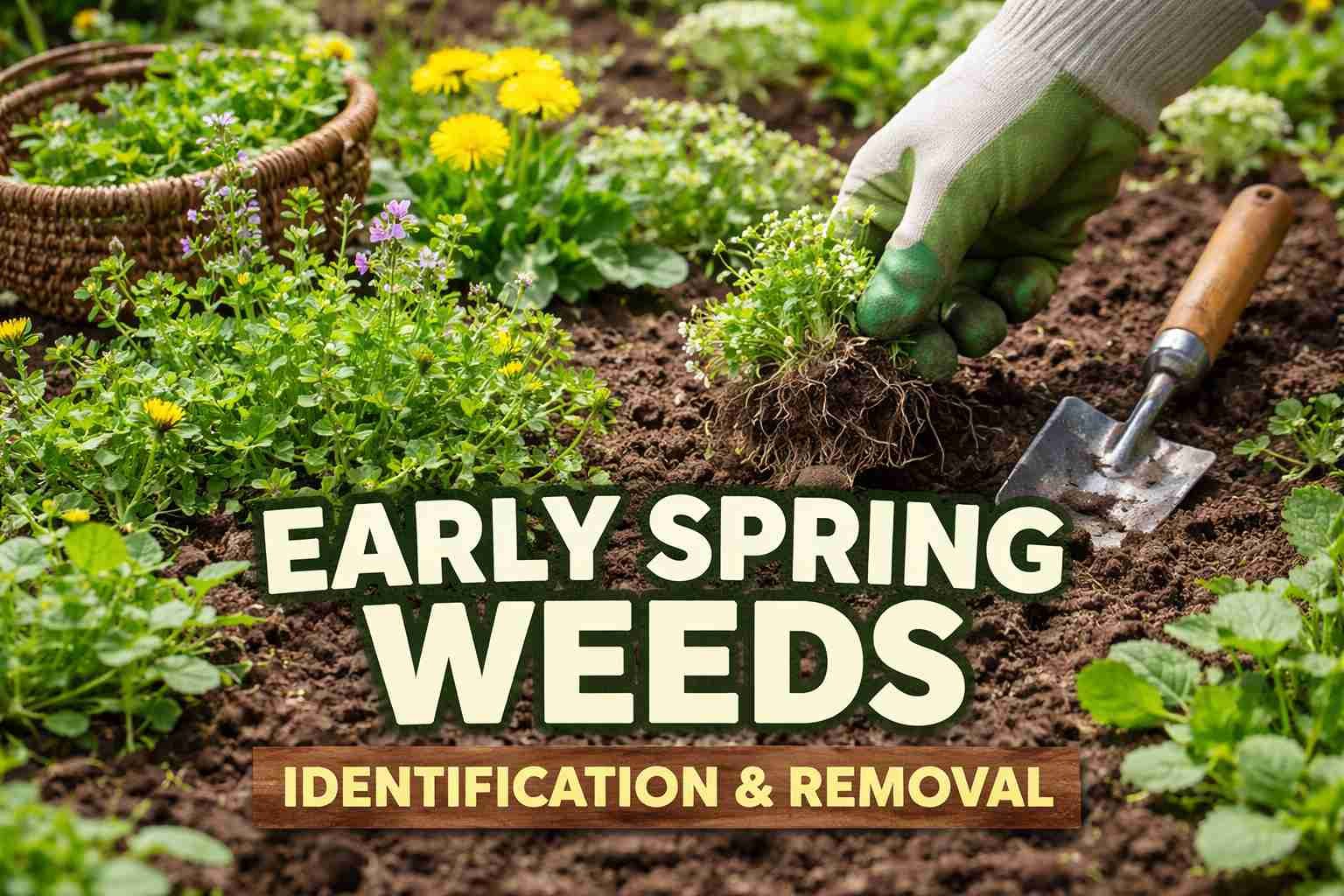
Early spring has a certain mood in the garden. The soil is still cold in the mornings, soft by midday, and everything feels like it’s just waking up slowly. And right in that quiet window, early spring weeds show up first, before your vegetables, before your flowers, before anything you actually planted starts moving.
If you’ve ever stepped outside in early spring and thought, “Where did all these little green things come from overnight?” you’re not imagining it.
That’s exactly how early spring weeds work. They don’t rush. They simply arrive earlier than everything else and take advantage of empty soil.
What Are Early Spring Weeds?
Early spring weeds are fast-growing plants that germinate in cool, moist soil before most garden plants begin active growth. Common early spring weeds include chickweed, henbit, dandelion, cleavers, and lesser celandine. The best control method is early removal, before roots strengthen or seeds develop.
Why Early Spring Weeds Take Over So Fast
If you’ve been gardening for a while, you’ll notice something. Early spring weeds don’t compete fairly; they just start earlier.
Here’s what’s really going on in the soil:
- The ground is moist from winter melt and rain
- Garden plants are still half asleep underground
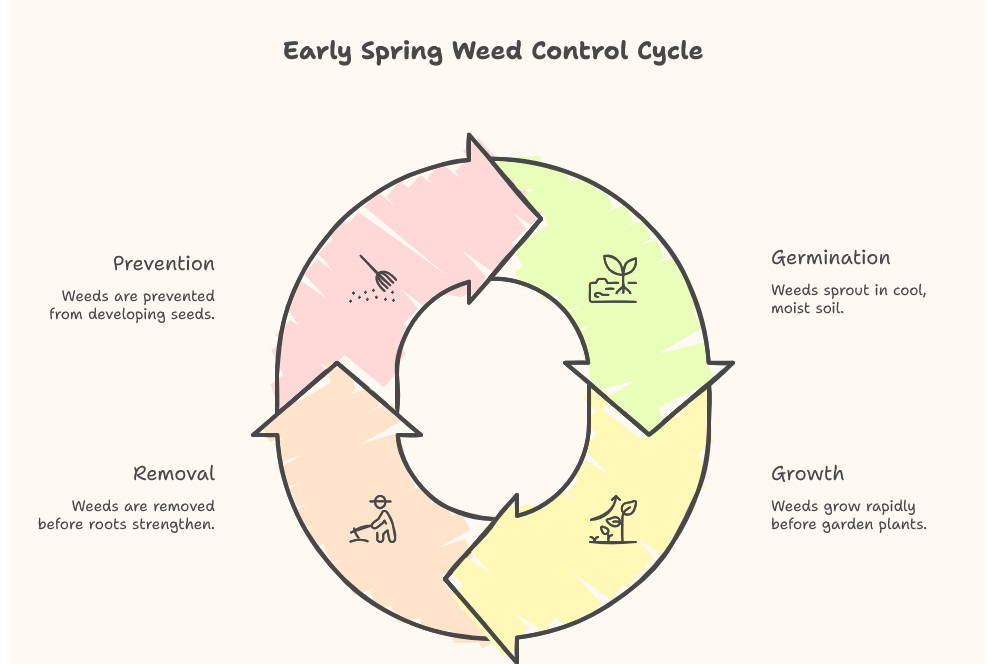
- Weeds are already germinating in cool soil conditions
- There is very little competition for nutrients or space
Early spring weed control is most effective when done during early growth stages, before roots establish and before seed production begins.
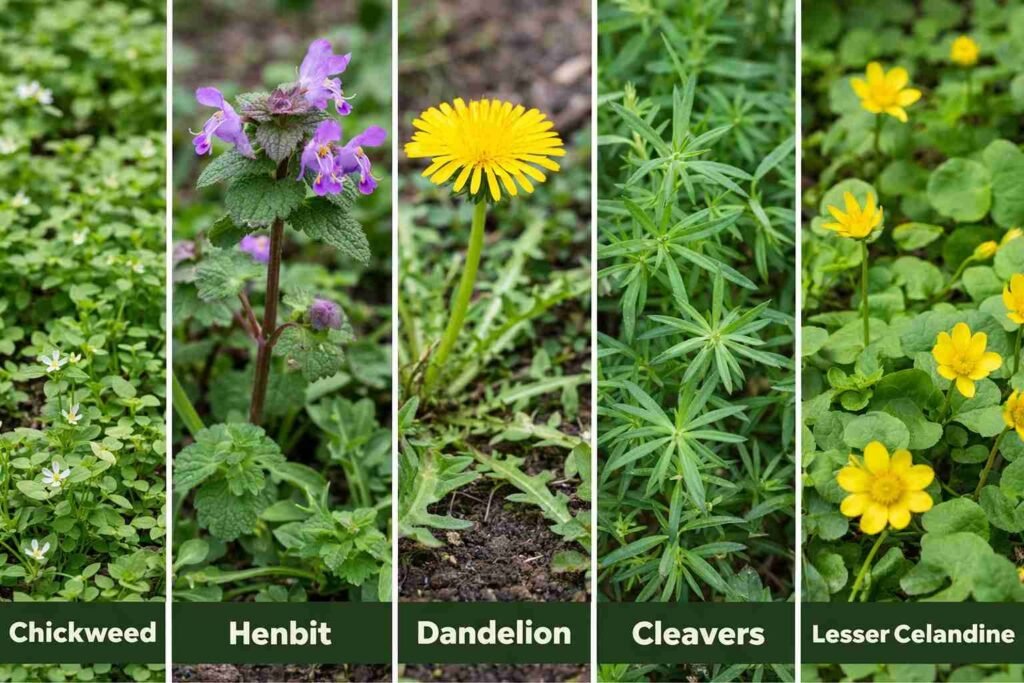
The 5 Most Common Early Spring Weeds You’ll See First
These are the usual suspects. If you’re seeing green growth early in the season, chances are it’s one of these.
1. Chickweed (Stellaria media)
Chickweed is usually the first weed most gardeners notice. It grows low, soft, and fast, almost like it’s trying to quietly carpet the soil before anything else wakes up.
You’ll see:
- Tiny white star-like flowers
- Bright green oval leaves
- Thin stems form spreading mats
Why it spreads so easily:
Chickweed loves cool, damp soil conditions, exactly what early spring gives it.
How to control chickweed:
Pull it early when the roots are still shallow. At this stage, it comes out easily by hand.
Chickweed is one of the easiest early spring weeds to remove if pulled before flowering begins.
2. Henbit (Lamium amplexicaule)
Henbit is one of those weeds that actually looks a bit “pretty” at first glance. Purple flowers, soft leaves, and a gentle spread, but don’t let that fool you.
You’ll notice:
- Purple tubular flowers
- Leaves wrapping around stems
- Upright but spreading growth
Why it becomes a problem:
Henbit spreads quickly in lawns and garden beds during early spring and can form thick patches.
Best removal method:
Pull it before it starts flowering. Once it sets seed, you’ll see it again next season.
Henbit spreads mainly through seeds, so removing it before flowering prevents future infestations.
3. Dandelion (Taraxacum officinale)
Dandelion is the classic “everyone knows it, but nobody enjoys it” weed.
Bright yellow flowers turn into fluffy seed heads that travel with the wind like tiny parachutes.
You’ll see:
- Yellow flowers in early spring
- Jagged rosette leaves at ground level
- Deep taproot system
Why it’s stubborn:
The taproot goes deep and can regrow if broken.
How to remove it properly:
Don’t just pull the top. Use a tool and try to remove the full root in early spring when it’s still small.
Dandelions are easiest to remove in early spring before their taproots fully develop.
4. Cleavers (Galium aparine)
Cleavers is the one that always ends up stuck to your clothes without you noticing.
It doesn’t just grow; it grabs onto everything.
You’ll see:
- Sticky stems that cling
- Whorled narrow leaves
- Fast climbing growth in shaded areas
Why it spreads:
Seeds and stems attach to animals, clothes, and tools, helping them move everywhere.
Control method:
Pull early before it starts climbing and setting seed.
Cleavers spread by clinging to movement, so early removal is key to preventing garden spread.
5. Lesser Celandine (Ranunculus ficaria)
This one is the troublemaker.
It looks harmless with its shiny leaves and bright yellow flowers, but underground it tells a different story.
You’ll see:
- Glossy heart-shaped leaves
- Bright yellow buttercup-like flowers
- Dense spreading patches
Why it’s difficult:
It spreads through underground tubers, not just seeds.
Best control method:
Dig deep and remove the full plant, including tubers. Pulling alone is not enough.
Lesser celandine cannot be controlled by pulling alone; complete tuber removal is necessary.
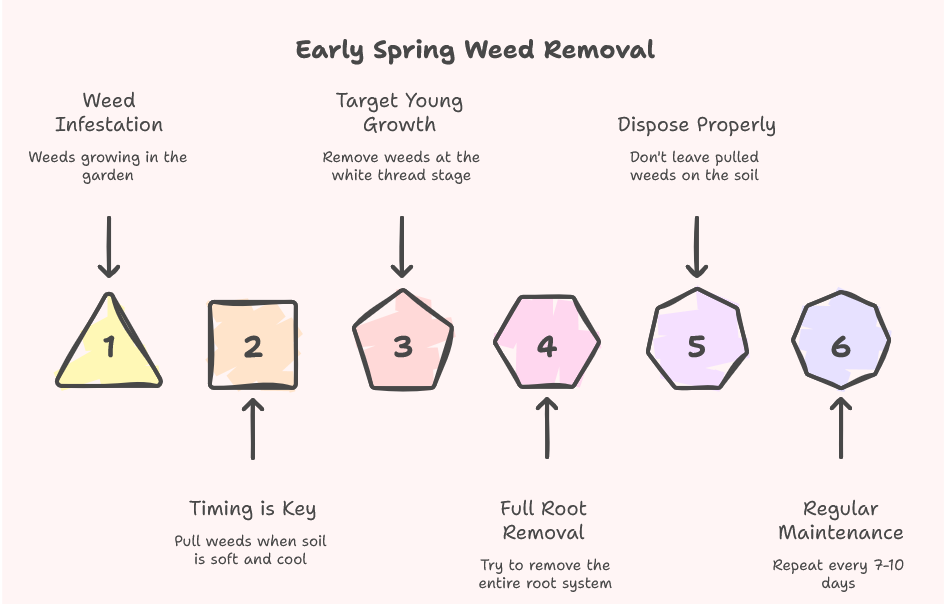
How to Remove Early Spring Weeds (Simple Field Method)
Early spring weed control doesn’t need chemicals or complicated systems. In most gardens, the difference between a clean bed and a weed takeover comes down to timing, consistency, and how early you act.
When the soil is still slightly cool and moist from winter, early spring weeds are at their weakest stage. Their roots haven’t anchored deeply yet, and many are still in that soft, early growth phase often called the “white thread stage.”
This is your best window for natural early spring weed removal.
What Actually Works in Real Garden Conditions
- Pull weeds when the soil is slightly moist (after light rain or watering)
- Focus on young seedlings before they spread or form mats
- Target the “white thread stage” where roots are still thin and undeveloped
- Remove the full root whenever possible, especially for taproot weeds like dandelion
- Avoid leaving pulled weeds on top of soil, as some can re-root or drop seeds
- Repeat removal every 7-10 days during early spring weed growth season
Why This Method Works
Early spring weeds grow fast because they are adapted to cool soil conditions and low competition. If you wait even a couple of weeks, many species shift from weak seedlings into stronger, seed-producing plants.
That’s why early intervention matters more than effort.
This approach helps reduce:
- weed seed spread in garden beds
- competition for soil nutrients and moisture
- overcrowding in vegetable and flower beds
- long-term invasive spring weed pressure
The best way to control early spring weeds is to remove them early while they are still young and before they develop deep roots or produce seeds.
Pulling weeds from moist soil and repeating removal every 7-10 days helps prevent regrowth and reduces future weed pressure in garden beds.
Natural Early Spring Weed Prevention
Once weeds show up, you’re reacting. Prevention is where you stay ahead. Try this:
- Add a 2-3 inch mulch layer to block light
- Avoid overwatering early season beds
- Keep garden soil covered or planted
- Improve soil drainage and structure
- Inspect new nursery plants before planting
Mulching is one of the most effective natural methods for preventing early spring weeds by blocking light and reducing germination. You should read this blog on old soil when repotting, if you are confused about the soil mix.
Quick Comparison of Early Spring Weeds
A quick comparison of early spring weeds to help identify and manage them easily.
| Weed | Root Type | Difficulty |
| Chickweed | Shallow | Easy |
| Henbit | Shallow | Easy |
| Cleavers | Shallow | Easy |
| Dandelion | Taproot | Medium |
| Lesser Celandine | Tubers | Hard |
FAQs About Early Spring Weeds
What are early spring weeds?
They are fast-growing weeds that appear in cool soil before most garden plants begin active growth.
What is the best way to remove early spring weeds?
Pull them early when roots are shallow and before they begin producing seeds.
Why do early spring weeds grow so fast?
Cool, moist soil and low competition give them ideal conditions to establish quickly.
How can I prevent early spring weeds naturally?
Mulching, dense planting, and regular early-season monitoring are the most effective methods.
Final Thought
Early spring weeds are not enemies, just opportunists using open soil, moisture, and low competition. Effective early spring weed control is all about timing rather than force. When removed early in the seedling or “white thread stage,” they are easier to pull and far less likely to spread through seeds or deep roots.
A few consistent passes through the garden in early spring reduce early spring weeds pressure, improve soil access for desired plants, and set a healthier start for the growing season. The real secret is simple: act early, stay consistent, and prevent seed formation before it begins.


