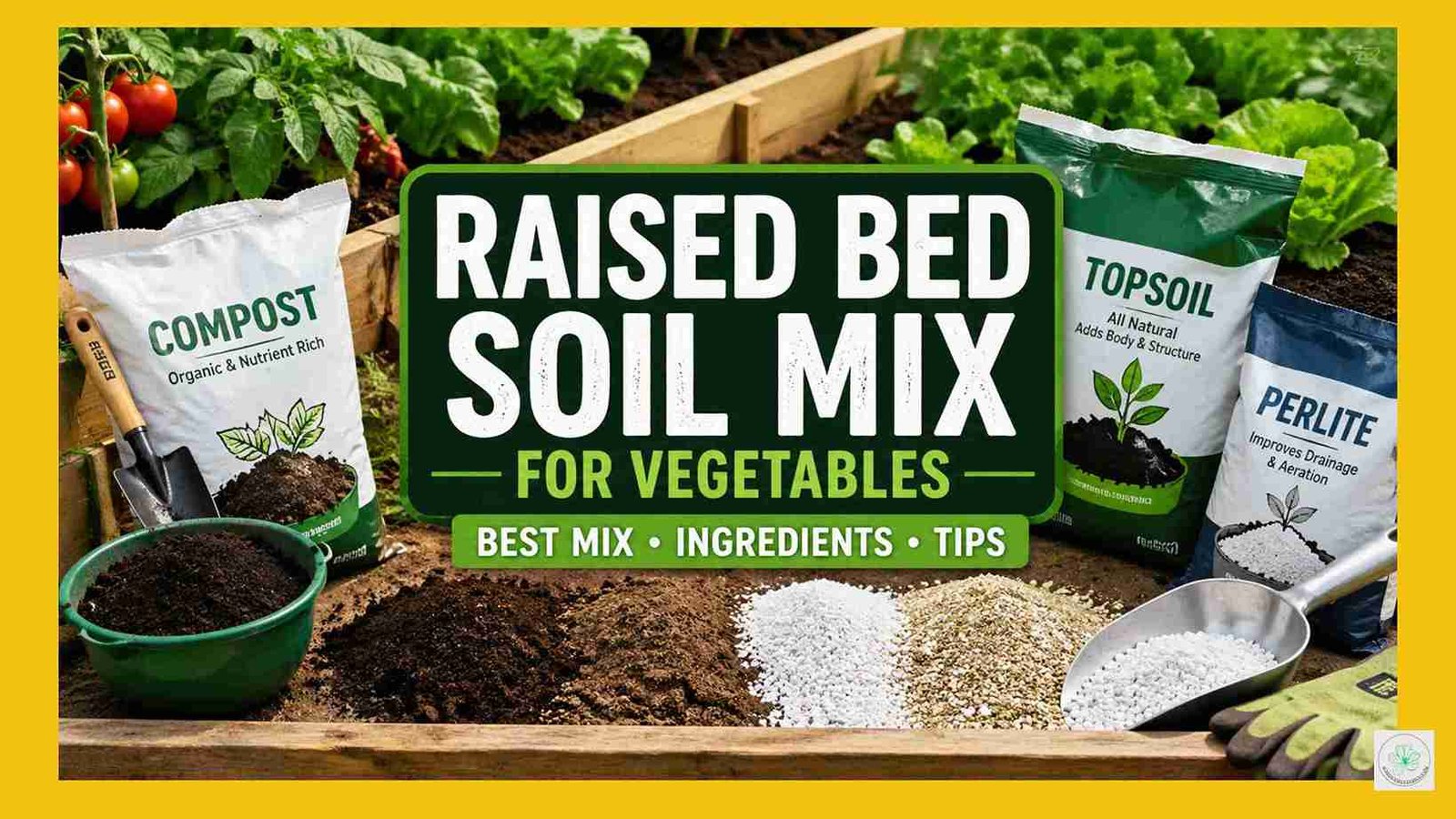
The best raised bed soil mix for vegetables is a 40-40-20 blend: 40% compost, 40% topsoil, and 20% aeration material like perlite or coarse sand. This guide will cover the exact ratios, when to use each variation, and the mistakes that quietly reduce yields.
The right blend creates a living system: airy enough for roots to breathe, rich enough to feed growth, and stable enough to last through seasons.
We’ve tested this 40-40-20 mix across three growing seasons in our balcony garden and consistently see stronger root development compared to store-bought bagged soil.
Best raised bed soil mix in 3 steps:
- Mix 40% compost, 40% topsoil, 20% aeration
- Use 2-3 compost types for better nutrients
- Add fresh compost yearly to maintain fertility
What Is the Best Raised Bed Soil Mix for Vegetables?
Quick Answer: Mix 40% compost + 40% topsoil + 20% perlite or coarse sand. This 40-40-20 formula gives vegetables balanced drainage, nutrients, and root space. Refresh with 2-3 inches of compost each spring.
Keep in mind, a good soil mix for vegetables is a well-draining, nutrient-rich blend of compost, topsoil, and aeration materials.
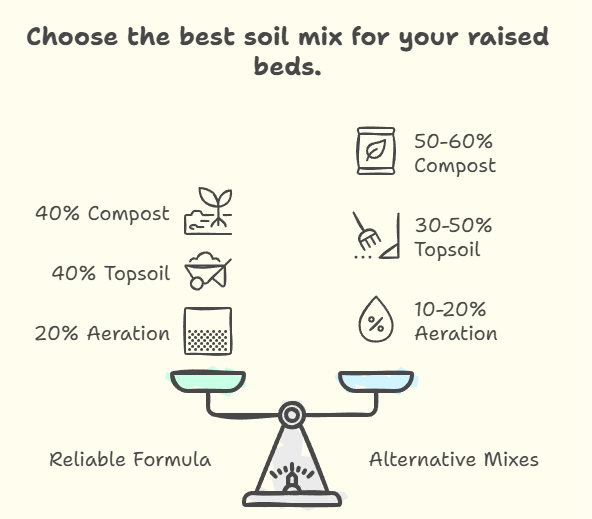
The most reliable formula:
- 40% compost
- 40% topsoil
- 20% aeration (perlite, sand, or rice husk)
This mix works because it balances:
- Nutrients (from compost)
- Structure (from topsoil)
- Drainage & oxygen (from aeration materials)
Here is a quick table for your convenience:
| Component | Percentage | Purpose |
| Compost | 40-60% | Nutrients & soil life |
| Topsoil | 30-40% | Structure & stability |
| Aeration (perlite/sand) | 10-20% | Drainage & oxygen |
Other Proven Alternatives: Raised Bed Soil Mix for Vegetables
- 50/50 mix: 50% compost + 50% topsoil (budget-friendly)
- Mel’s Mix: 1/3 compost + 1/3 peat/coir + 1/3 vermiculite (lightweight)
- High compost mix: 60% compost + 40% base soil (high yield, needs maintenance)
A good raised bed soil mix may also contain 50-60% compost and 40-50% topsoil or aeration materials. This combination creates loose, nutrient-rich soil that supports healthy vegetable growth and prevents compaction.
Raised Bed Soil Mix Ratios Compared (Which One Should You Use?)
Each mix behaves differently over time. Choosing the right one is like picking the right tool-not all are built for the same job.
| Mix Type | Ratio | Best For | Pros | Cons |
| 40-40-20 | Compost / Topsoil / Aeration | Most gardens | Balanced, stable, high yield | Slightly higher cost |
| 50/50 Mix | Compost / Topsoil | Budget setups | Cheap, simple | Can compact over time |
| Mel’s Mix | Compost / Peat/Coir / Vermiculite | Small beds, containers | Lightweight, excellent drainage | Expensive, can break down |
| 60% Compost Mix | Compost-heavy | Fast growth | Nutrient-rich | Can become dense, needs aeration |
Quick Decision Guide:
Check out the following key points for your convenience.
- Want low maintenance + long-term stability → Go with 40-40-20
- Want cheap and simple → Use 50/50 mix
- Growing in small or shallow beds → Try Mel’s Mix
- Want maximum early growth → Use high compost mix (with care)
5 Best Bagged Raised Bed Soil Mixes for Vegetables
Not everyone wants to mix compost, topsoil, and aeration materials from scratch. Bagged raised bed soil mixes can save time, reduce mess, and make gardening easier for beginners or small-space growers.
The best bagged raised bed soil should provide balanced drainage, moisture retention, organic matter, and enough structure to support healthy vegetable roots over time.
Here are five reliable options gardeners commonly use for raised beds and vegetable gardens.
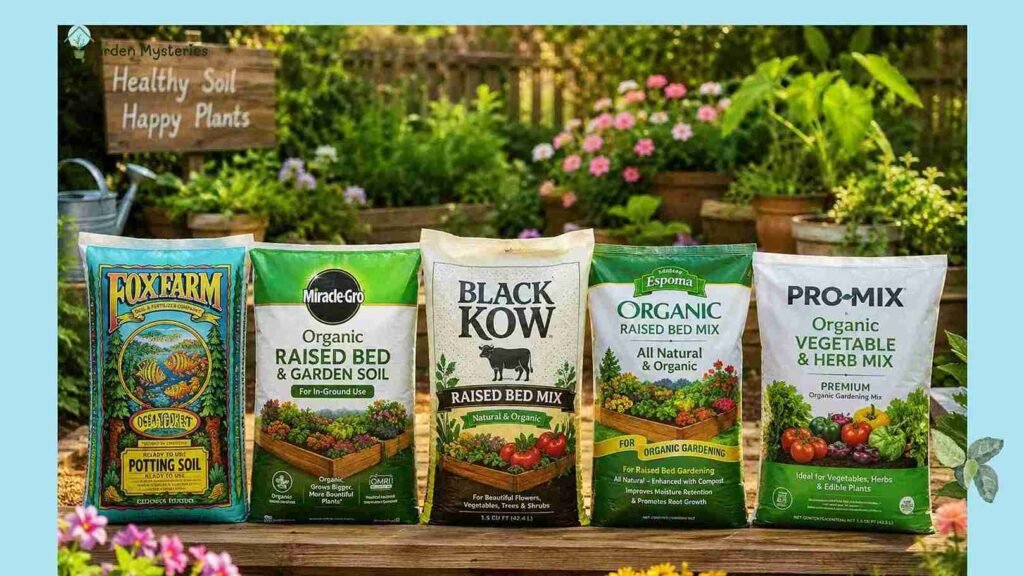
1. FoxFarm Ocean Forest Potting Soil
FoxFarm Ocean Forest is a nutrient-rich soil blend made with composted forest humus, earthworm castings, and organic materials. It works well for tomatoes, peppers, herbs, and container vegetables because it holds moisture while still allowing good airflow around roots. Also, check our guide on FoxFarm soil comparison if you are unsure about Happy Frog and Ocean Forest soil mix.
Best for:
- Fast-growing vegetables
- Container gardens
- Nutrient-demanding crops
2. Miracle-Gro Organic Raised Bed & Garden Soil
Miracle-Gro raised bed mix is widely available and beginner-friendly. It contains compost and organic matter designed to improve soil structure and moisture retention in vegetable beds.
Best for:
- Beginner gardeners
- Quick raised bed setup
- Large backyard beds
3. Black Kow Raised Bed Mix
Black Kow products are known for composted cow manure blends that improve soil fertility and microbial activity. Their raised bed mixes work especially well when combined with native soil or additional compost.
Best for:
- Improving poor soil
- Organic gardening
- Long-term soil building
4. Espoma Organic Raised Bed Mix
Espoma Organic Raised Bed Mix contains natural organic matter designed to support vegetables, herbs, and flowers. It has a lighter texture than heavy garden soil, helping roots expand more easily in raised beds.
Best for:
- Organic vegetable gardens
- Herbs and leafy greens
- Moisture-balanced beds
5. Pro-Mix Organic Vegetable & Herb Mix
Pro-Mix blends are lightweight and provide strong drainage with good moisture control. They are commonly used in container gardening and shallow raised beds where compacted soil becomes a problem.
Best for:
- Small raised beds
- Balcony gardens
- Lightweight growing setups
Even high-quality bagged soil improves when mixed with fresh compost and additional aeration materials like perlite or coarse sand.
What Makes the Best Raised Bed Soil? (Core Principles)
Before you start mixing ingredients, it helps to think like a gardener who’s seen a few seasons come and go. Great soil isn’t about brand labels or trendy mixes; it’s about how the soil behaves over time. Plants don’t read product names; they respond to structure, moisture, and nutrients working together in balance.
Here are the core principles that separate a shining raised bed from one that slowly struggles.
1. Drainage (Prevent Waterlogging & Root Disease’)
Vegetable roots need consistent moisture, but they also need space to breathe. When soil holds too much water, oxygen gets pushed out, creating conditions for plant root rot, fungal issues, and stunted growth.
A well-balanced raised bed soil should:
- Drain excess water quickly after watering or rain
- Stay moist without becoming soggy
- Prevent standing water in the root zone
This is why mixes often include coarse sand, perlite, or rice husk. They create pathways for water to move instead of sitting.
2. Aeration (Oxygen for Healthy Root Growth)
Healthy soil is full of tiny air pockets. These pockets let roots absorb oxygen, which is just as important as water and nutrients.
Without proper aeration:
- Roots struggle to expand
- Microbial activity drops
- Soil becomes dense and lifeless
Good raised bed soil should feel light, crumbly, and easy to dig, not sticky or compact. Materials like perlite, vermiculite, and organic matter help maintain this loose structure.
3. Nutrient Density (Sustained Plant Feeding)
Vegetables are heavy feeders, especially crops like tomatoes, peppers, and leafy greens. They don’t just need nutrients once; they need a steady supply throughout the growing season.
That’s where compost comes in:
- Provides slow-release nutrients
- Supports beneficial soil microbes
- Improves overall soil fertility
But here’s a key point many overlook: More compost isn’t always better.
Too much compost can make soil overly dense and reduce airflow. The goal is balanced nutrition, not overload.
4. Soil Stability (The Most Overlooked Factor)
This is where real-world gardening experience matters.
Some materials, especially peat moss, coco coir, or unfinished compost, break down over time. As they decompose, the soil structure changes, leading to:
- Soil collapse (beds sinking over time)
- Compaction (reduced root space)
- Poor aeration (less oxygen availability)
This is why a good raised bed mix includes stable components like topsoil or mineral-based materials.
A high-quality mix doesn’t just perform well today; it holds its structure through seasons, watering cycles, and plant growth.
Key Ingredients Explained: When to Use Them
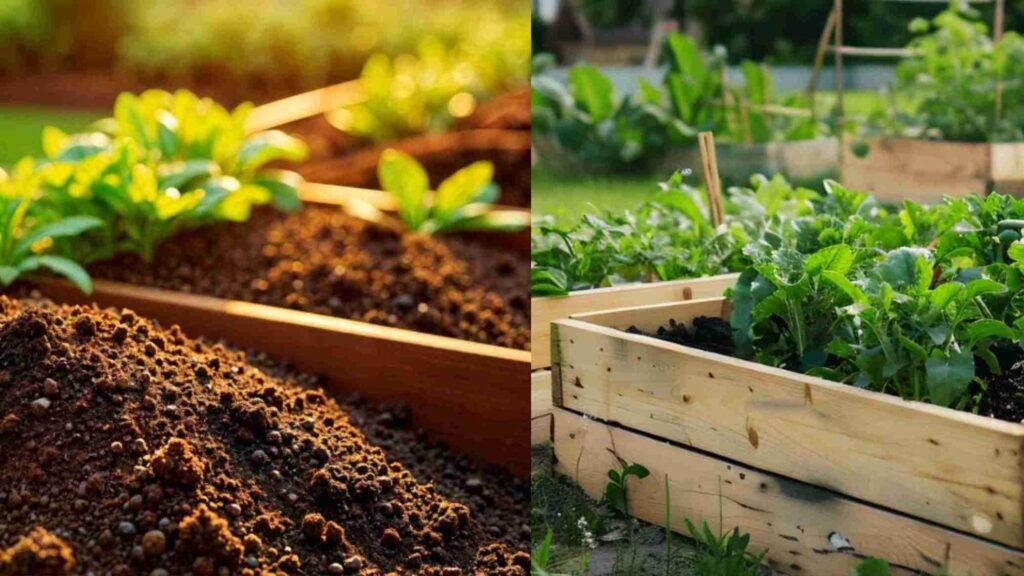
Understanding each component lets you build your own perfect mix, even with local materials.
Topsoil Layers (Structure & Mineral Base)
Topsoil forms the structural foundation of any raised bed mix, giving roots a stable mineral base to anchor into and draw nutrients from over the long term. Also, check our topsoil and subsoil layers blog for more info on that topic.
Best for:
- Long-term stability
- Preventing collapse
Avoid when:
- It’s heavy clay (causes waterlogging)
Quick Tip: Always try to mix topsoil with compost-never use it alone in raised beds.
Compost (The Engine of Growth)
Compost is the single most important ingredient in a raised bed soil mix. It feeds your plants, rebuilds soil life, and improves both drainage and moisture retention at the same time.
Best benefits:
- Provides nutrients
- Improves water retention
- Supports beneficial microbes
The secret most guides miss: Use multiple compost sources (black kow cow manure, kitchen waste, vermicompost) for better nutrient diversity.
Peat Moss vs Coco Coir
Both peat moss and coco coir serve the same core purpose: lightening your mix and holding moisture. But which one you choose depends on your budget, climate, and how sustainable you want your garden to be. Check our blog on peat moss and coco Coir for more details on that matter.
Peat Moss / Coco Coir:
- Excellent moisture retention
- Improves lightness
But over time:
- They decompose and shrink
- Soil becomes compact
Smart use:
- Use in small beds or containers
- Avoid relying on them long-term in large beds
Aeration Materials (The Breath of Soil)
Aeration materials like perlite, coarse sand, and rice husk prevent your soil from compacting over time. They keep oxygen flowing to roots so beneficial microbes and plants can actually thrive.
Options:
- Perlite (lightweight, excellent aeration)
- Coarse sand (improves drainage)
- Rice husk (great for humid climates)
Without aeration, even good soil becomes hard and lifeless.
Best Compost Types for Vegetable Raised Beds
Not all compost is equal. Think of them as different “nutrient flavors” for a raised bed soil mix for vegetables.
| Compost Type | Benefit | Best Use |
| Vermicompost | High nutrients, microbial boost | Seedlings, high-value crops |
| Manure compost | Slow-release nutrients | Base soil mix |
| Kitchen compost | Balanced organic matter | General use |
| Leaf mold | Improves structure | Moisture retention |
Pro tip: You should mix 2-3 types of compost instead of relying on one.
Cheap & Easy Ways to Fill a Raised Bed
Filling a raised bed fully with soil can get expensive fast. Here’s how experienced gardeners cut costs without sacrificing performance.
Layering Method – Natural Fill Strategy
Start from the bottom:
- Logs, sticks, branches
- Dry leaves or garden waste
- Then your soil mix on top
This method:
- Saves money
- Improves drainage
- Slowly releases nutrients
Bulk Soil Strategy
Instead of buying expensive bagged soil:
- Use local topsoil + compost
- Mix it yourself
This can cut costs by 50-70%
Partial Fill Hack
If your bed is deep:
- Fill the bottom 30-50% with organic material
- Add quality soil mix on top
Plants only need the top 20-30 cm of high-quality soil.
How to Customize Soil Mix for Different Vegetables
Not all vegetables need the same soil. Follow these simple steps to adjust your raised bed soil mix for better growth and higher yields.
Adjust Soil for Leafy Greens (Spinach, Lettuce)
For leafy greens, increase compost to about 50% to create nitrogen-rich soil that supports fast leaf growth and healthy green development.
Adjust Soil for Root Crops (Carrot, Radish)
For root vegetables, use loose, well-draining soil. Add more sand or aeration material and avoid heavy compost to prevent misshapen roots.
Adjust Soil for Fruiting Crops (Tomato, Chili, Eggplant)
Fruiting vegetables need balanced nutrients. Use a stable soil mix with compost and add a potassium source like wood ash to support flowering and fruit production.
How to Improve Raised Bed Soil Mix Every Year
Even a perfectly mixed raised bed doesn’t stay perfect. With every harvest, nutrients are pulled out, structure shifts, and microbes rise and fall like seasons in miniature. Think of your soil less as a static mix and more as a living system that needs gentle tuning each year.
- Annual Soil Refresh
Each growing season, your goal is simple: restore nutrients, protect structure, and keep soil life active.
Do this once a year (ideally before planting)
Add 2-3 inches of compost: This replenishes organic matter, improves soil fertility, and feeds beneficial microbes that drive plant growth.
Lightly mix into the top layer (5-10 cm): Avoid deep digging. Gentle mixing protects soil structure and microbial balance while improving nutrient distribution.
Apply mulch (straw, dry leaves, or grass clippings): Mulch acts like a protective blanket, it reduces moisture loss, regulates soil temperature, and prevents surface compaction.
Over time, this simple routine keeps your soil nutrient-rich, moisture-balanced, and biologically active. - Every 2-3 Years: Restore Soil Structure
Even well-maintained soil can slowly become dense because of watering, root growth, and natural decomposition.
Every couple of years:
Add aeration materials (perlite, coarse sand, or rice husk): This restores airflow, improves drainage, and keeps roots from struggling in compact soil.
Loosen the top layer gently: Break up any compacted zones without disturbing deeper soil layers too much.
This step is especially important in humid climates where soil tends to compact faster and lose air pockets. - Why This Matters
Soil mix isn’t just “there”, it’s constantly changing:
– Organic matter breaks down
– Nutrients get used up
– Structure shifts with time
If you ignore it, even the best soil mix can turn heavy, tired, and less productive.
But with small, consistent care, your raised bed does something remarkable: It gets better every year, becoming richer, looser, and more resilient.
Common Raised Bed Soil Mistakes
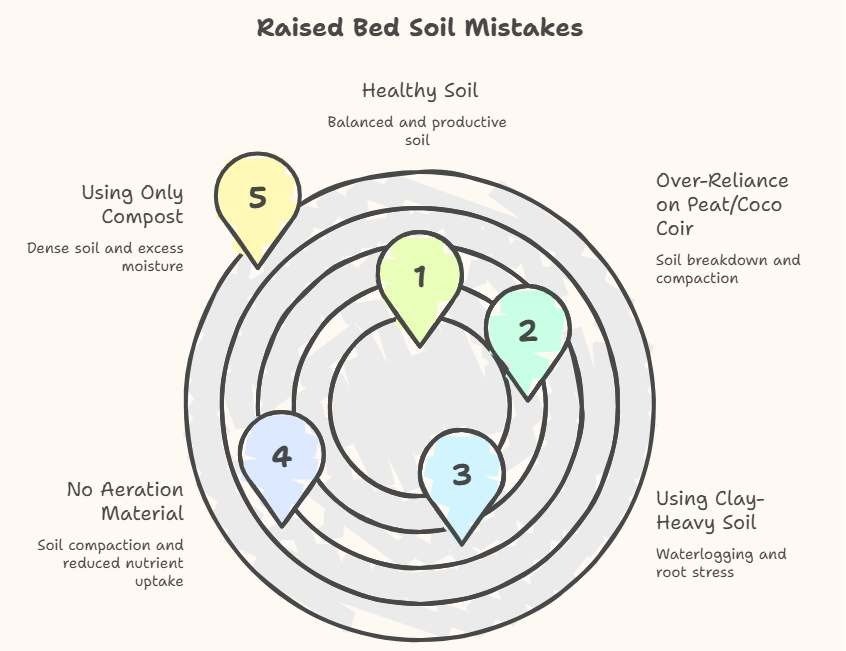
Even a good soil mix can fail if a few basics are ignored. These mistakes don’t always show immediately, but over time, they reduce growth, lower yields, and make plants harder to manage.
Using Only Compost
Compost is rich, but on its own, it becomes too dense and holds excess moisture. This limits airflow around roots and can lead to weak growth. Always balance compost with topsoil and aeration materials.
No Aeration Material
Without ingredients like perlite, coarse sand, or rice husk, soil gradually compacts and loses air pockets. Compacted soil restricts root expansion and reduces nutrient uptake.
Using Clay-Heavy Soil
Clay soil holds water for too long and drains slowly. In raised beds, this often leads to waterlogging and root stress. If using local soil, mix it well with compost and aeration materials to improve structure.
Over-Reliance on Peat or Coco Coir
Peat moss and coco coir improve moisture retention, but over time, they break down and shrink, causing soil to settle and compact. Use them in moderation and combine with more stable materials like topsoil.
Using Fresh Manure
Fresh manure contains high levels of nitrogen and ammonia that can burn plant roots and damage seedlings. Always use well-aged or composted manure.
Healthy raised bed soil is all about balance; nutrients, airflow, and structure working together. Avoid these common mistakes, and your soil will stay productive season after season.
FAQs: Raised Bed Soil Mix
What is the best soil mix for raised beds?
The best soil mix for raised beds is 40% compost, 40% topsoil, and 20% aeration material like perlite or sand. This balanced mix improves drainage, supports root growth, and provides steady nutrients for vegetables.
Can I use only compost in raised beds?
No, using only compost in raised beds is not recommended. Compost alone becomes dense over time and reduces airflow, so always mix it with topsoil and aeration materials.
Can I use potting soil in raised beds?
Potting soil can be used in small amounts, but it’s not ideal for raised beds because it is too light and breaks down quickly, leading to poor structure.
How often should I replace raised bed soil?
You don’t need to replace raised bed soil. Instead, refresh it yearly by adding compost to maintain nutrients and soil structure.
Conclusion
The best raised bed soil mix for vegetables isn’t one fixed recipe; it’s a balance of nutrients, drainage, and aeration. Start with the proven 40-40-20 soil mix for consistent results, then adjust based on crops and climate.
Great soil improves over time with compost and care. For better results, pair this with proper watering. You should see our guide on how often to water a vegetable garden to keep your raised beds productive year-round.
Note: This content is for informational purposes only. Gardening results may vary based on climate, soil conditions, and care practices. Always adapt methods to your local environment and follow safe gardening practices.