
What to Grow in a Winter Garden?
Growing a garden during winter may sound impossible in many regions, but in the southern United States, it is not only possible, it is often ideal. If you are wondering what to grow in a winter garden in the South, the answer includes a wide range of vegetables, herbs, and flowers that thrive in mild winter conditions. Thanks to extended growing seasons, manageable frost periods, and cooler temperatures, winter gardening in the southern US can be productive, rewarding, and surprisingly easy.
This guide explains how winter gardening works, how to plan around weather and frost dates, and exactly which plants perform best in a southern winter garden.
Why Winter Gardening Works in the South
One of the biggest advantages of southern gardening is climate flexibility. Most southern states fall within USDA hardiness zones 6 through 10, which means winters are generally mild compared to northern regions. While summer heat can stress plants, winter temperatures often stay within a range that cool-season crops prefer.
Winter gardening in the South also brings fewer pests, more consistent rainfall, and reduced watering needs. With proper planning and light frost protection, gardeners can grow fresh produce almost year-round. These conditions make a winter garden in the South an excellent option for both beginners and experienced growers.
Understanding Winter Garden Weather in the Southern US
Before planting anything, it is essential to understand your local growing conditions. Southern states span several USDA zones, each with different average temperatures and frost patterns. Knowing your first frost date and last frost date helps determine when to plant and which crops will survive outdoors.
Gardeners can use their zip code to find accurate frost date information and create a seasonal planting calendar tailored to their area.
Winter Temperature Ranges
Southern winters typically fall into three categories:
- Cold season: Average temperatures below 35°F, with occasional freezes
- Cool season: Temperatures between 35°F and 65°F, ideal for most winter crops
- Warm winter periods: Short stretches above 65°F, common in zones 8-10
Understanding these temperature fluctuations helps gardeners choose frost-tolerant and cold-hardy plants.
How to Plan a Winter Garden Step by Step
Successful winter gardening starts with planning. Begin by identifying your USDA zone and noting average monthly temperatures. Next, mark frost dates and periods of heavy rainfall. This information helps you decide whether to grow in raised beds, containers, or directly in the ground.
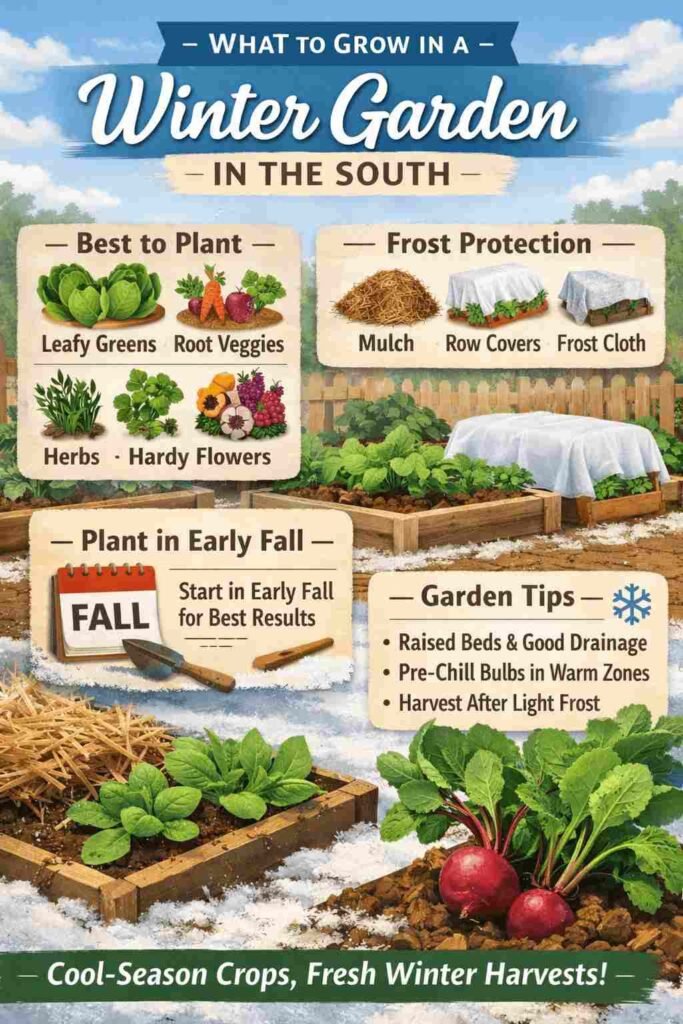
Winter garden planning should also consider crop maturity time. Fast-growing vegetables like radishes and lettuce are ideal, while slower crops such as garlic and carrots need an early start. Using mulch, row covers, or frost cloth can help stabilize soil temperature and protect plants during cold nights.
What to Plant in a Winter Garden in the South
When deciding what to plant in a winter garden in the South, it helps to divide plants into categories. Winter garden plants generally include cool-season vegetables, hardy herbs, and cold-tolerant flowers. Many of these crops grow better in winter than in summer because they prefer cooler temperatures and steady moisture.
Winter Garden Planting Guide for the South (Quick Reference)
| Plant Type | Best Crops to Grow | Cold Tolerance | Planting Time | Protection Needed |
| Leafy Greens | Spinach, Lettuce, Kale, Arugula, Swiss Chard | High | Early Fall | Mulch during hard freezes |
| Root Vegetables | Carrots, Beets, Radishes, Turnips | Medium to High | Early Fall | Light frost cloth if needed |
| Cole Crops | Broccoli, Cabbage, Cauliflower, Brussels Sprouts | High | Late Summer to Early Fall | Row cover in cold snaps |
| Alliums | Garlic, Onions, Leeks, Chives | Very High | Fall | Minimal protection |
| Warm-Season Holdovers | Strawberries, Peppers (Zones 9-10) | Low to Medium | Fall | Frost cloth required |
| Winter Herbs | Cilantro, Parsley, Rosemary, Thyme, Sage | Medium | Fall | Protect from excess moisture |
| Hardy Flowers | Pansies, Snapdragons, Sweet Peas | Medium | Fall | Usually none |
| Bulbs & Corms | Tulips, Daffodils, Ranunculus | High | Fall | Pre-chill in warm zones |
Best Vegetables for a Winter Garden in the South
Cool-season vegetables form the foundation of most winter gardens. These crops grow best in mild temperatures and often improve in flavor after light frost exposure.
Popular winter garden vegetables include:
- Spinach
- Lettuce varieties
- Kale
- Broccoli
- Carrots
- Beets
- Radishes
- Swiss chard
These vegetables are well suited to southern winter gardening and can be harvested over extended periods.
Hardy vs Semi-Hardy Vegetables
Hardy winter vegetables can tolerate freezing temperatures and occasional frost. These include spinach, kale, garlic, cabbage, Brussels sprouts, arugula, and turnips.
Semi-hardy vegetables withstand light frost but may need protection during deeper freezes. Examples include carrots, beets, peas, lettuce, cauliflower, and celery.
Warm-Season Vegetables That Can Overwinter
In zones with very mild winters, some warm-season crops can continue growing or overwinter successfully. These include onions, strawberries, chives, and certain varieties of tomatoes when protected with row covers.
Important Notes for Growing Winter Vegetables
Cold temperatures are not always the biggest challenge for winter gardens. Excess moisture combined with cold soil can damage plant roots. Using raised beds or well-draining soil helps prevent this issue.
Mulching is especially important in winter. Materials such as straw, pine needles, dried leaves, or cardboard help retain soil warmth and regulate moisture. Frost cloths and low row covers protect plants during freezing nights while still allowing airflow.
Starting larger crops indoors and transplanting them outdoors gives plants a strong head start. Broccoli, cabbage, kale, and cauliflower benefit greatly from this method.
Best Flowers to Grow in a Winter Garden
Winter gardens are not limited to vegetables. Many flowers thrive during cooler months and add color when summer blooms fade.
Bulbs and Corms
Bulbs such as tulips, daffodils, hyacinths, crocus, anemones, and ranunculus require a cooling period known as vernalization to bloom properly. In warmer southern climates, some bulbs may need pre-chilling before planting.
Hardy Annual Flowers
Hardy annuals grow from seed, bloom within one season, and tolerate light frost. These include pansies, snapdragons, sweet peas, poppies, larkspur, and stock flowers.
Biennial and Wildflowers
Biennial flowers grow foliage during the first year and bloom the following season. Foxglove, hollyhocks, and sweet william fall into this category. Many southern wildflowers, such as bluebonnets and coneflowers, thrive when planted before winter.
Best Herbs for a Winter Garden in the South
Many herbs prefer cooler weather and grow exceptionally well during winter. Popular winter garden herbs include cilantro, parsley, rosemary, thyme, sage, dill, oregano, and mint.
While many herbs tolerate light frost, excessive moisture can cause damage. Growing herbs in containers allows gardeners to move them under shelter during extreme weather. Raised beds also work well when paired with frost protection.
Cover Crops for Winter Soil Health
Cover cropping is an excellent practice for unused garden beds during winter. Cover crops protect soil structure, reduce weed growth, and improve nutrient content.
Winter-killed cover crops, such as oats, grow during fall and naturally die back in cold weather. Winter-hardy cover crops, like winter rye, survive through winter and are tilled into the soil before spring planting. Both options improve long-term soil health.
Winter Garden Tips for Southern Growers
Southern weather can change quickly, so preparation is key. Sudden temperature drops may occur within hours, making frost protection essential.
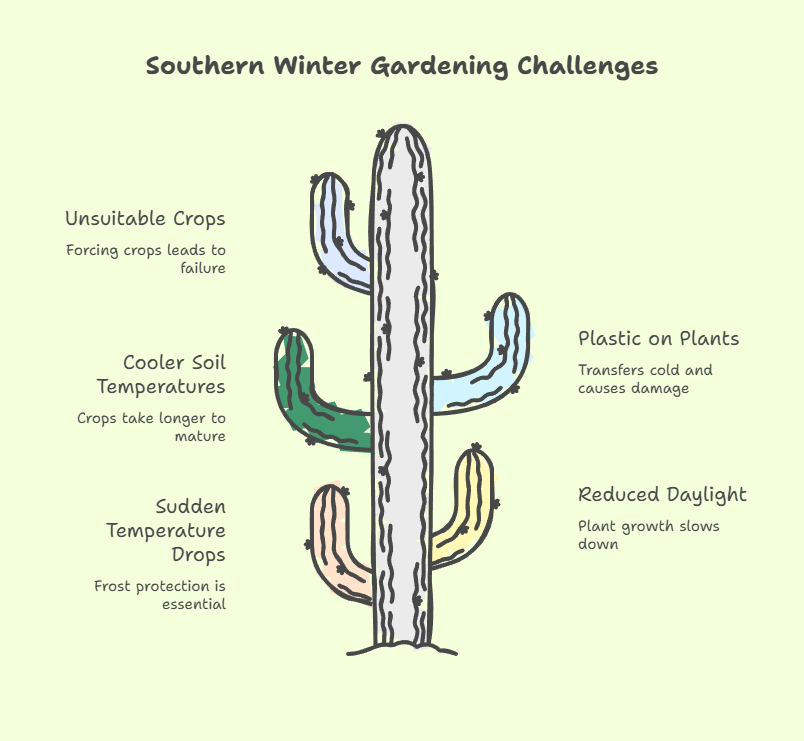
Plant growth often slows during winter due to reduced daylight and cooler soil temperatures. Patience is important, as some crops may take longer to mature.
Always have frost blankets or row covers ready. Avoid placing plastic directly on plants, as it can transfer cold and cause damage. Most importantly, grow plants that suit your local climate instead of forcing unsuitable crops.
Beginner-Friendly Winter Garden Starter Plan
For beginners, simplicity leads to success. Easy winter vegetables include lettuce, spinach, radishes, and herbs like parsley or cilantro. These crops grow quickly, require minimal care, and provide regular harvests. Starting small helps build confidence and experience while enjoying fresh produce throughout winter. You can also read this blog for more pro tips.
FAQs
Can you grow vegetables all winter in the South?
Yes, many southern areas support winter gardening when frost-tolerant crops are chosen and light protection is used during colder nights.
When should I plant a winter garden in the South?
Most winter vegetables are planted in early fall so they can develop strong roots before temperatures begin to drop.
What vegetables survive frost?
Spinach, kale, garlic, cabbage, broccoli, arugula, and turnips are known for handling frost better than many other crops.
Do winter gardens need frost protection?
Basic protection such as mulch, row covers, or frost cloth is usually enough during occasional cold spells.
Conclusion
Knowing what to grow in a winter garden in the South opens the door to fresh harvests during months many gardeners overlook. With the right planning, climate awareness, and plant choices, winter gardening becomes one of the most productive and enjoyable seasons. Start with easy crops, protect plants during cold snaps, and let your winter garden thrive while others wait for spring.


