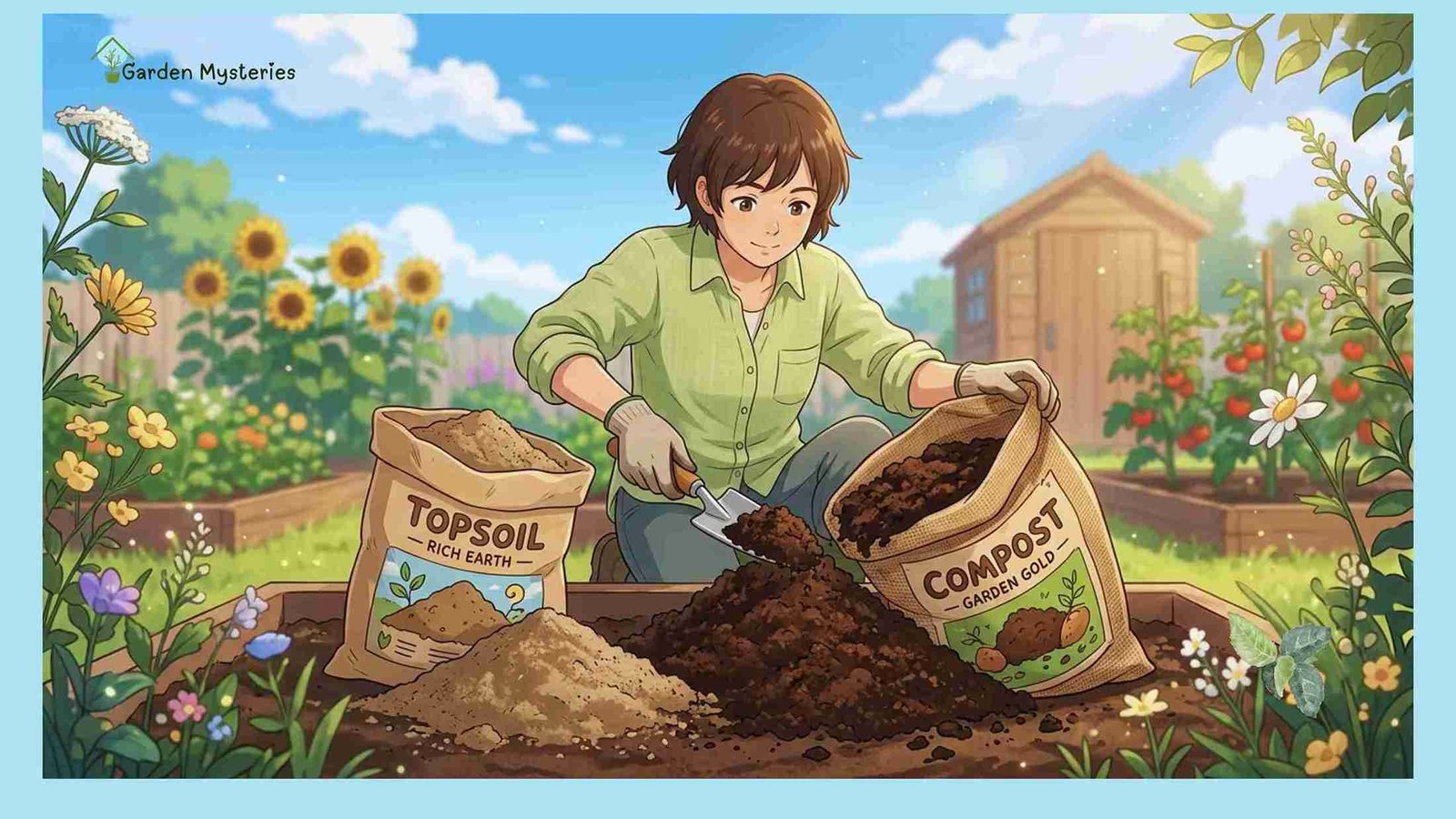
Mixing topsoil with compost turns ordinary dirt into a rich, living foundation for your garden. This one step can change how your plants grow. Topsoil gives roots something to anchor into, while compost brings in nutrients, beneficial microbes, and better moisture control. As a result, they create a balanced soil that drains well yet holds enough water to keep plants thriving.
Whether you’re planting vegetables, improving flower beds, or fixing patchy grass, getting this mix right makes a visible difference. Done properly, it can boost plant growth, improve soil structure, and revive tired ground within just a few days.
The best way to mix topsoil with compost is to combine 60% topsoil with 40% compost, blend it into the top 6-8 inches of soil, water lightly, and let it settle for 2-5 days before planting. Here, we will explain how to mix topsoil with compost using simple ratios, step-by-step methods, and soil type adjustments for better plant growth.
Quick Summary: How to Mix Topsoil with Compost
Here is a quick summary of the best method to mix topsoil with compost.
- Use 60% topsoil + 40% compost for garden beds
- Try using 30-50% compost, depending on soil quality
- Use 70% topsoil + 30% compost for lawns and grass seeding
- Mix soil 6-8 inches deep for strong root growth
- Water lightly after mixing to activate nutrients
- Let the soil rest for 2-5 days before planting
- Always adjust based on soil type (sand, clay, or loam)
What Is Topsoil?
Topsoil is the upper layer of soil where most plant roots grow and absorb water, oxygen, and nutrients. It mainly contains sand, silt, clay, and small amounts of organic matter that help support healthy plant development.
Good-quality topsoil improves root stability, drainage, moisture balance, and overall soil structure, making it important for lawns, flower beds, vegetable gardens, and landscaping projects. Most gardeners mix topsoil with compost to create a richer and more balanced growing environment for plants.
What Is Compost?
Compost is organic material that has naturally broken down into a dark and nutrient-rich soil amendment. It is commonly made from leaves, grass clippings, kitchen scraps, and other natural plant materials.
Compost improves soil fertility, boosts microbial activity, enhances moisture retention, and helps soil stay loose and breathable for healthier root growth. When mixed with topsoil, compost creates a balanced soil blend that supports stronger plants, better drainage, and long-term soil health.
Should You Mix Topsoil with Compost?
Blending topsoil with compost improves soil quality by balancing structure and nutrients. It’s especially important when planning garden beds or figuring out the best ratio of topsoil to compost for steady plant growth.
- Soil Structure Balance: Compost lightens heavy topsoil, improving airflow, drainage, and texture for healthier roots and easier digging.
- Nutrient Enrichment: Adds organic nutrients and microbes, supporting steady plant feeding without overwhelming roots or causing burn issues.
- Moisture Control: Helps soil retain moisture while still draining well, creating stable hydration for plants in changing weather conditions.
- Raised Bed Support: Essential for achieving a stable topsoil and compost ratio for raised beds that supports long-term productivity and plant health.
- Long-Term Soil Health: Improves organic matter over time, making the best ratio of topsoil to compost more effective season after season.
Topsoil vs Compost Difference
Topsoil is the natural upper layer of soil that provides structure and a base for plant roots, while compost is decomposed organic material that enriches soil with nutrients and improves fertility. Beginners often confuse the two, but they serve very different roles in gardening.
So, this comparison is important because it clarifies why gardeners often combine both instead of using one alone.
Step-by-Step: How to Mix Topsoil with Compost
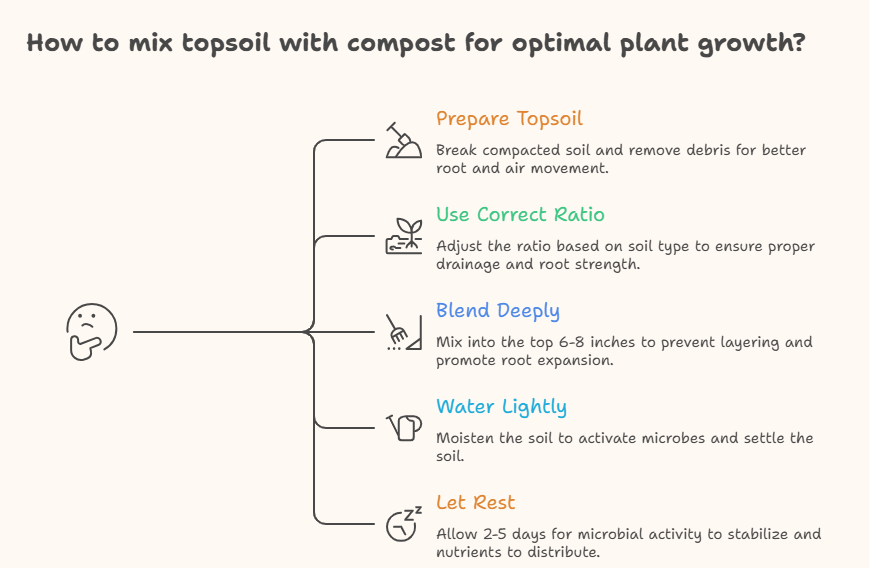
Mixing topsoil with compost works best when you follow a simple method: prepare clean soil, use the right ratio, blend deeply, water lightly, and let it settle before planting. Here is a simple guide to mixing topsoil and compost correctly.
1. Prepare Your Topsoil Properly
From my gardening experience, soil preparation always decides how well plants perform later. Start by breaking compacted soil and removing stones, roots, or debris so air and roots can move freely. Most topsoil (like Earthgro-style mixes) is mainly mineral-based and low in nutrients, while garden soil already contains organic matter.
That’s why I rarely use topsoil alone. Compost is the real “activator” – it improves structure, boosts microbial life, and balances moisture and airflow. Plants consistently grow better when compost is blended into topsoil instead of using raw soil directly.
2. Use the Correct Mixing Ratio
In practice, wrong soil ratios cause more garden failures than anything else. A balanced mix ensures proper drainage and root strength:
Garden beds: 60% topsoil + 40% compost
Sandy soil: 50/50
Clay soil: 40% topsoil + 60% compost
Sandy soil drains too fast, while clay holds excess water. Compost fixes both by improving structure and biological activity.
3. Blend Deep Into the Soil
Thorough mixing is important for consistent soil quality. Blend the topsoil and compost into the top 6-8 inches of soil where most roots grow. Deep mixing prevents layering, which can restrict water flow and root expansion. When soil is evenly combined, plants develop stronger roots, better stability, and improved access to nutrients.
4. Water Lightly After Mixing
After mixing, apply a light watering to moisten the soil. This step activates beneficial microbes in the compost, helping them break down organic matter into plant-available nutrients. Moist soil also settles faster and creates a more stable growing environment. Avoid overwatering, as overly wet soil can reduce airflow and slow microbial activity.
5. Let the Soil Rest
Allow the soil to rest for 2-5 days before planting. This short waiting period helps microbial activity stabilize and allows the soil structure to settle naturally. As the compost integrates, nutrients begin to distribute evenly. Planting after this resting phase ensures roots grow in balanced, well-prepared soil for better results.
Best Soil Mix for Different Gardening Goals
For healthy vegetables and flowers, the ideal mix is 60% topsoil and 40% compost, creating a balanced soil that supports steady growth, strong roots, and consistent moisture without becoming too heavy or compact.
For Vegetable Gardens & Flowers
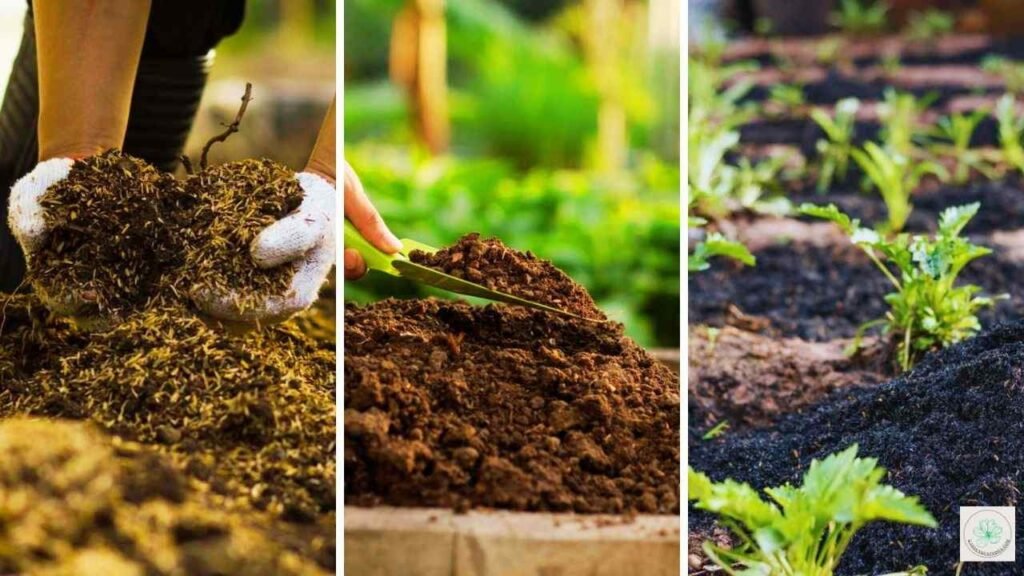
Using a 60/40 mix (topsoil/compost) gives plants the best of both worlds. The topsoil provides structure so roots can anchor firmly, while compost feeds the soil with nutrients and beneficial microbes. This combination keeps soil loose, improves airflow, and helps retain just enough moisture without becoming soggy.
Benefits:
- Improves root growth by creating soft, workable soil
- Boosts nutrient availability for steady plant development
- Enhances water retention while still allowing proper drainage
This mix works especially well for vegetables, annual flowers, and raised beds where soil quality directly affects plant health and yield.
For Lawns, Seeding & Patchy Grass
A healthy lawn starts from the soil surface down. For best results, use a 70% topsoil and 30% compost mix to create a smooth, nutrient-rich base that supports fast and even grass growth.
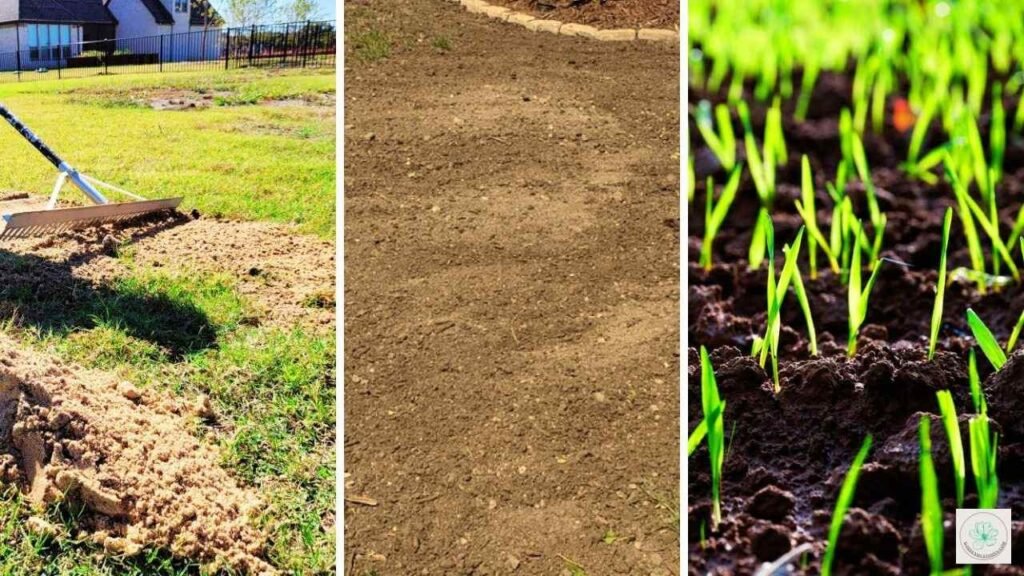
When repairing patchy areas or starting new grass, the goal is to level the surface while quietly feeding the roots underneath. A higher topsoil ratio keeps the ground even and stable, while compost adds just enough organic matter to support healthy germination.
For lawn repair:
- Topsoil for patchy grass: Use a 70% topsoil + 30% compost mix for balanced support
- Earthgro topsoil for grass seeding: Apply a thin ½-1 inch layer, then spread seeds evenly
- How to mix topsoil with compost for lawn repair: Typically, 1-2 inches is enough for leveling and reseeding
- Best topsoil for lawn leveling: Choose fine, screened topsoil that spreads smoothly without clumps
This method creates a clean, even surface while giving new grass roots the nutrients they need to establish quickly and grow thicker over time.
Note: Our gardening content is for informational purposes only. Plant performance may vary by climate, soil, and care methods. Some links may be affiliate links, which may earn us a small commission at no extra cost to you.
Earthgro Topsoil vs Vigoro for Mixing With Compost
When choosing soil for gardening or lawn repair, many beginners compare Earthgro topsoil and Vigoro garden soil because both are commonly used for improving soil quality. The main difference is that Earthgro works more as a base topsoil, while Vigoro already contains added organic materials that make it closer to a planting mix.
Earthgro Topsoil
Earthgro topsoil is best used for filling low spots, lawn leveling, grass seeding, and improving existing soil structure. Since it contains limited organic matter, it usually performs best when mixed with 40-50% compost. Adding compost improves drainage, moisture retention, microbial activity, and nutrient availability for healthier plant growth.
Vigoro Garden Soil
Vigoro garden soil contains composted forest products and organic matter, making it richer than standard topsoil. Because it already includes nutrients and organic material, most gardeners only need to add around 20-30% compost to create a balanced growing mix. It can help maintain proper airflow and prevent overly wet soil conditions.
Which Soil Works Best?
For lawn repair, leveling, and large landscaping projects, Earthgro topsoil is often the better option because it spreads evenly and blends well with compost. For flower beds, vegetables, and direct planting, Vigoro garden soil may require less preparation before use.
No matter which product you choose, the goal remains the same: create loose, nutrient-rich, well-draining soil that supports strong root development and long-term plant health.
Best Topsoil Brands for Gardening
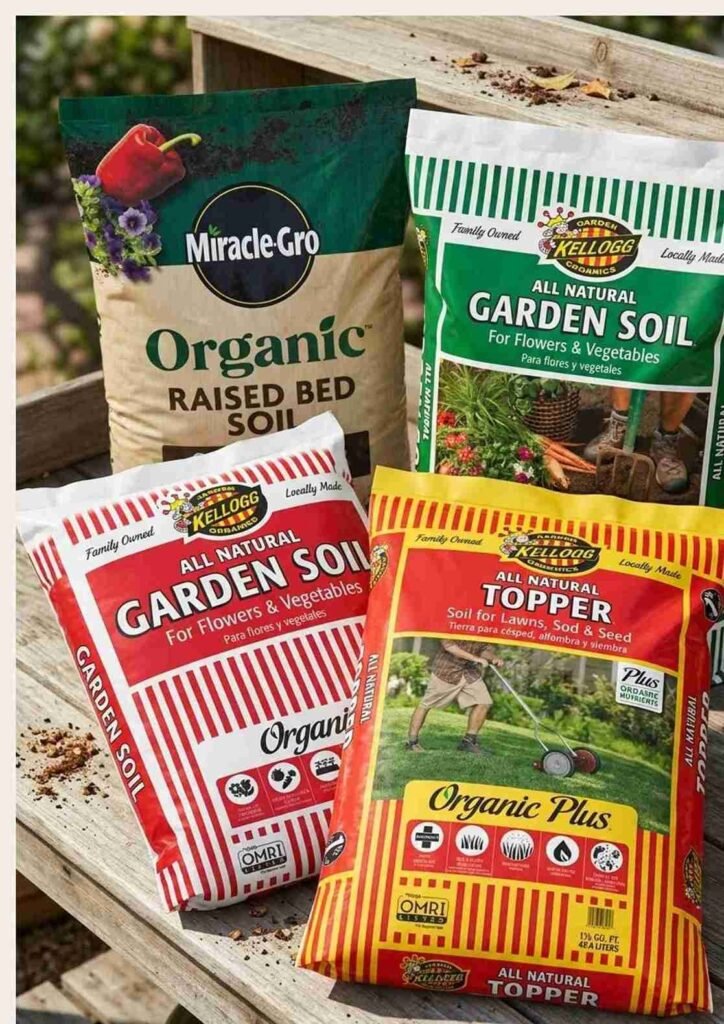
When choosing topsoil, the brand matters more than most beginners realize. Popular brands like Scotts, Miracle-Gro, and Kellogg have become go-to options because they’re widely available, consistent, and designed for different gardening needs.
Popular & Trusted Topsoil Brands
Choosing the best topsoil depends on your gardening goal, like lawn leveling, grass seeding, or mixing with compost for planting. Below are some widely used and trusted options.
Scotts Topsoil
Scotts Earthgro topsoil is one of the most commonly used options for lawn leveling, filling low areas, and improving basic soil structure. It contains minimal nutrients, so it performs best when mixed with compost before planting vegetables or flowers. It is a reliable choice for large-scale soil preparation and grass seeding projects.
Miracle-Gro Garden Soil
Miracle-Gro garden soil is a nutrient-enriched mix designed for direct planting. It contains added organic matter and plant food that can support growth for several weeks to months. This makes it a good option for beginners who want a ready-to-use soil without heavy compost mixing.
Kellogg Garden Organics Topsoil
Kellogg Garden Organics topsoil focuses on organic soil improvement and natural structure enhancement. It is well-suited for vegetable gardens, raised beds, and eco-friendly gardening. When used with compost, it creates a balanced soil mix that supports long-term soil health.
Timberline & Local Premium Topsoil
Timberline and regional topsoil products are usually screened and locally sourced, making them suitable for lawn leveling, grading, and landscaping projects. Their texture often blends well with compost, improving drainage and soil consistency in garden beds.
How to Choose the Right One
When comparing best topsoil for lawn leveling, topsoil for grass seeding, or topsoil vs garden soil, focus on these:
- Texture: Fine and screened soil spreads evenly
- Organic content: Higher organic matter improves fertility
- Purpose:
- Filling/leveling → basic topsoil (like Earthgro)
- Planting → enriched soil (like Miracle-Gro or Kellogg)
Well, the principle stays the same: combine topsoil with compost to create a well-balanced soil mix that supports healthy roots and long-term soil performance.
Common Mistakes to Avoid
I’ve used different topsoil and compost mixes over the years, and the results can vary more than you’d expect. Sometimes plants thrive, other times they struggle, and almost always, it comes down to a few small mistakes in how the soil was prepared.
Using Only Topsoil
At first glance, topsoil looks rich and ready to use. I’ve tried planting directly in it, and growth was slow and uneven. The reason is simple: most topsoil lacks organic matter.
Experts like the USDA Natural Resources Conservation Service emphasize that healthy soil needs organic inputs for proper structure and nutrients. Without compost, soil can compact and limit root development.
Adding Too Much Compost
It’s easy to think more compost means better results. I’ve made that mistake too, especially in raised beds. The soil stayed too wet, and plants didn’t perform well.
Researchers and extension services often note that excessive organic matter can reduce airflow and cause waterlogging. A balanced mix, usually around 30-40% compost, keeps soil fertile without becoming overly dense.
Mixing Only on the Surface
Many beginners just spread compost on top and assume it will work its way down. In my experience, this leads to shallow roots and uneven growth.
They say roots grow where conditions are best, and if nutrients stay on the surface, roots won’t go deeper. Proper mixing into 6-8 inches ensures a consistent soil texture and better root expansion.
Skipping the Resting Period
This is one step people often ignore. I used to plant immediately after mixing, but results improved once I started waiting a few days. Researchers have found that microbial activity needs time to stabilize after soil disturbance. Letting the soil rest for 2-5 days helps nutrients settle and creates a more reliable environment for planting.
Getting these basics for how to mix topsoil with compost right makes a noticeable difference. A well-prepared mix supports stronger roots, better drainage, and healthier plant growth over time.
For best results, you should use a 60:40 topsoil to compost ratio, mix 6-8 inches deep, water lightly, and wait a few days before planting to improve soil structure and nutrient availability.
FAQs
Use 30-50% compost, depending on soil quality. Poor or compacted soil benefits from more compost, while healthier soil needs a smaller amount to maintain balance and structure.
No, planting directly in topsoil is not recommended. Topsoil alone often lacks enough nutrients and may become compacted after some time. Mixing it with compost creates a healthier, more breathable soil environment for better plant growth.
The best topsoil for lawn leveling is fine and screened topsoil that spreads easily and creates a smooth surface. It works best when blended with compost to improve soil structure and support healthy grass growth.
Yes, Earthgro topsoil is suitable for grass seeding when used correctly. It performs best when mixed with compost and applied in a thin layer of about ½ to 1 inch to support even germination and steady root establishment.
Yes, you can mix compost into existing soil. It improves structure, drainage, and nutrients. Blend a few inches of compost into the top layer of soil for better plant growth results.
Wrapping Up
Mixing topsoil with compost may seem simple, but it’s one of the most effective ways to build healthy, productive soil. When balanced correctly, it creates a living system that supports roots, improves moisture retention, and feeds plants naturally.
Topsoil gives roots a firm base, but on its own it lacks the nutrients plants need. Compost fills that gap. If you’re unsure how soil layers work, this guide on topsoil vs subsoil can help you understand the foundation better.