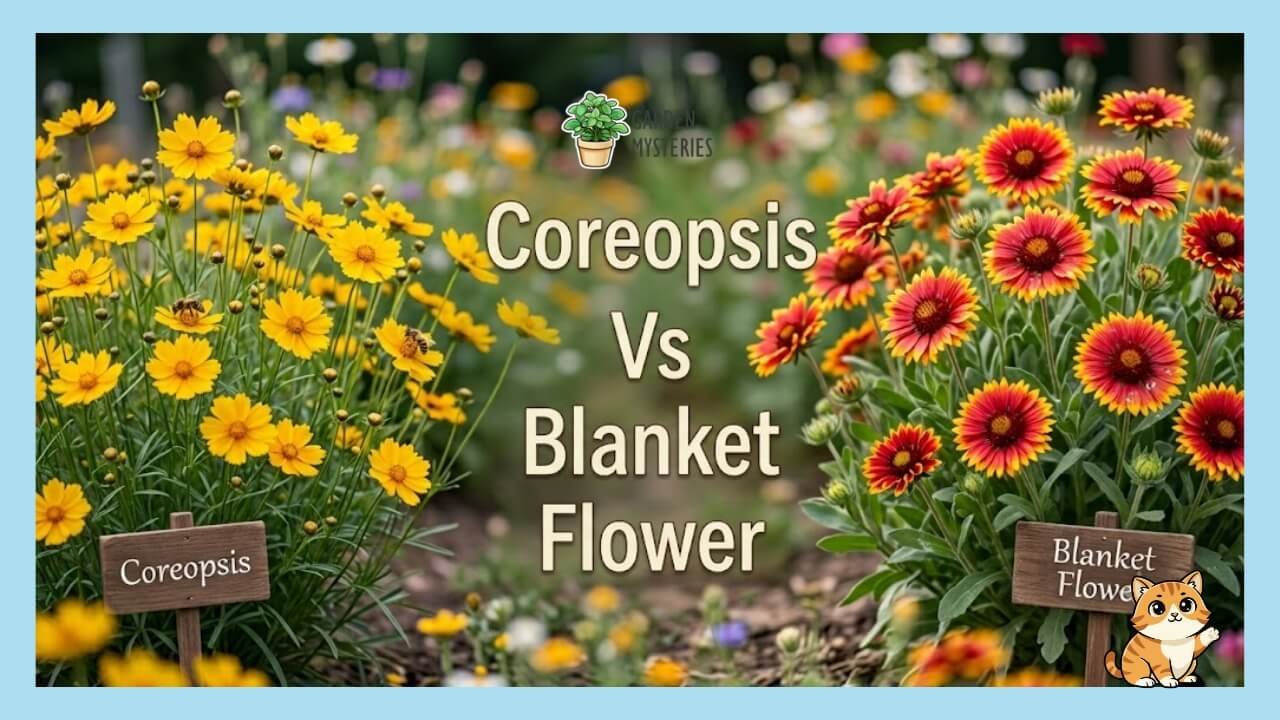
When I compare coreopsis vs blanket flower in my own garden beds, the fastest way to tell them apart is the flower center. Coreopsis has a flat, button-like center, while blanket flower has a raised, dome-shaped center with deeper color bands.
Many new gardeners mix up these two flowers because both bloom in warm shades of yellow, orange, and red. Once you check the petals and foliage closely, the confusion clears up fast, and you can decide between them with more confidence.
This guide walks through every difference between coreopsis and blanket flower, from bloom time to soil needs. Read on to find out which one suits your garden better, or whether you should grow both.
Key Takeaways
Before we go into detail, here are six quick facts worth remembering from this comparison.
- Coreopsis grows thin, daisy-like petals and shows a flat yellow center.
- Blanket flower shows broader petals with red and orange bands.
- Coreopsis usually blooms nonstop through summer when you deadhead it often.
- Blanket flower tends to grow taller and spreads out wider.
- Both plants need full sun and soil that drains well.
- Blanket flower handles drought better than most coreopsis varieties do.
Coreopsis Vs Blanket Flower: Difference at First Glance
At first glance, coreopsis and blanket flower share warm colors, but their petals, centers, and leaves set them apart. Many gardeners mix them up in crowded nursery displays.
Coreopsis grows thin, feathery leaves on slender stems that sway easily in a breeze. Its petals stay narrow and notched, with a flat, small center.
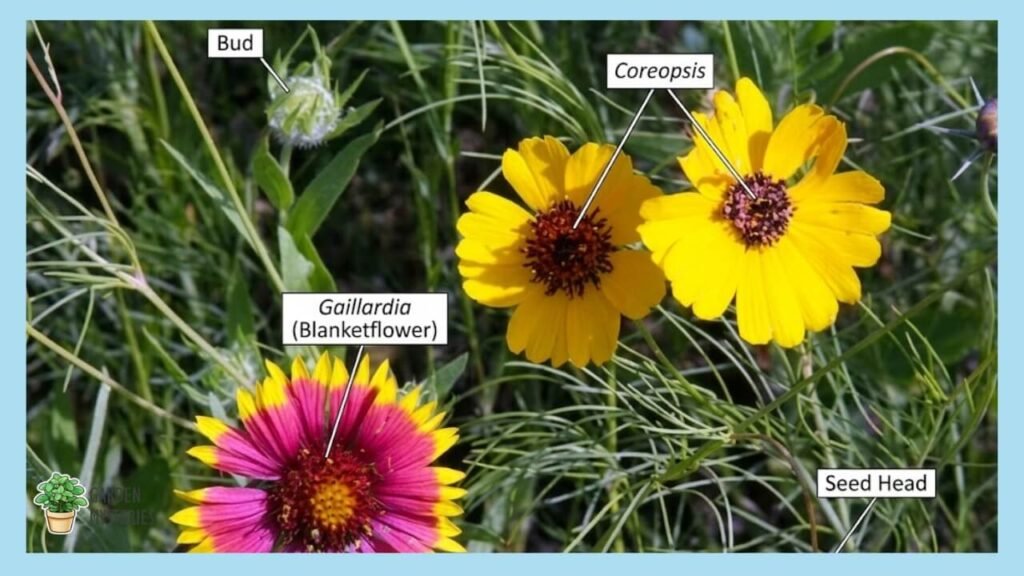
If you wonder what does a blanket flower look like, picture broad petals banded in red and orange around a fuzzy, raised center. The foliage feels coarser and a bit hairy.
- Petals: narrow in coreopsis, broad and banded in blanket flower.
- Center: flat in coreopsis, raised and textured in blanket flower.
- Foliage: feathery in coreopsis, coarse and hairy in blanket flower.
- Growth habit: loose clumps in coreopsis, upright form in blanket flower.
| Feature | Coreopsis | Blanket Flower |
| Petal shape | Narrow, slightly notched | Broad, banded in color |
| Flower center | Flat and small | Raised and fuzzy |
| Foliage texture | Fine and feathery | Coarse and hairy |
| Growth habit | Loose, spreading clumps | Upright, clumping form |
Once you notice these small traits, spotting coreopsis vs blanket flower in a nursery aisle gets much easier.
Coreopsis Vs Blanket Flower: Blooming Season, Plant Size, and Growth Habit Compared
Coreopsis and blanket flower bloom for most of the warm season, though their timing and size differ in a few noticeable ways. Knowing these differences helps you plan where each one goes in your beds.
Blooming Period
Gardeners often ask, do coreopsis bloom all summer, and in my experience, most varieties do if deadheaded regularly. Skip that step and blooms slow down by midsummer.
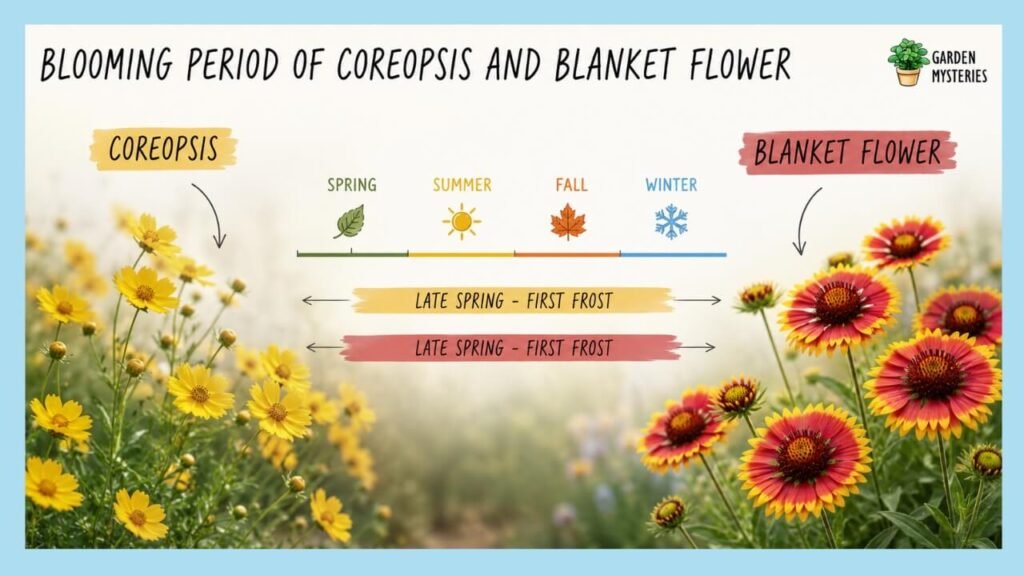
Blanket flower blooms almost as long, usually starting in late spring and lasting until the first frost. Neither plant needs much fuss to keep flowering all season.
Mature Height and Spread
If you are curious how tall does blanket flower grow, most garden varieties reach one to two feet, with a similar spread. A few taller cultivars push closer to three feet.
Coreopsis tends to stay shorter and bushier, though some tall varieties can rival blanket flower in height. Give both room to breathe, since crowded plants bloom less and struggle with airflow.
Growth Rate and Longevity
Both plants grow quickly from seed or nursery starts, often flowering in their first season. Coreopsis usually lives as a short-lived perennial and may fade after two or three years unless divided.
Blanket flower shares that same short lifespan in many climates. It often self-seeds, though, and returns on its own the following year.
Growing Conditions That Help Coreopsis And Blanket Flower Plants Thrive
Coreopsis and blanket flower share nearly identical growing needs, which makes them easy to plant near each other. Both prefer conditions that mimic their native prairie roots rather than rich, damp garden soil.
Soil and Sunlight Requirements
Both plants want full sun, at least six hours a day, to bloom their best. They tolerate poor, sandy soil far better than heavy clay that holds water.
If you are growing blanket flower in a spot with soggy soil, raised beds solve that problem quickly.
Watering and Feeding Needs
Once established, both plants handle dry spells better than most flowering perennials. Overwatering causes more harm than underwatering, since soggy roots invite rot.
A light feeding is usually enough for both. Homemade flower fertilizers made from compost tea work well without pushing too much leafy growth.
Garden Beds vs Containers
Both flowers grow well in garden beds or containers, as long as drainage stays good. For containers, a raised bed soil mix with extra grit or sand helps prevent soggy roots. Garden beds give more room to spread, while containers suit smaller patios and balconies.
Mulching and Seasonal Care
A thin natural organic mulch layer helps both plants through hot summers and cold snaps. Even though it works, there are facts you need to consider. Make sure to keep mulch away from the base of the stems to avoid trapped moisture.
Common Growing Mistakes to Avoid
The most common mistake I have seen is planting these flowers in rich, heavily amended soil meant for vegetables, which backfires with floppy stems and fewer blooms each season.
- Skip rich, heavily amended soil that is better suited to vegetable beds.
- Avoid over-fertilizing, since too much nitrogen weakens stems and blooms.
- Do not plant in soil that stays wet or drains poorly.
- Space plants properly, since crowding invites mildew and fewer flowers.
Coreopsis or Blanket Flower: Which One Fits Your Garden Style Better?
Coreopsis often suits cottage and meadow gardens, while blanket flower fits bold, sun-drenched borders with warm colors. Your choice comes down to the look and upkeep you want.
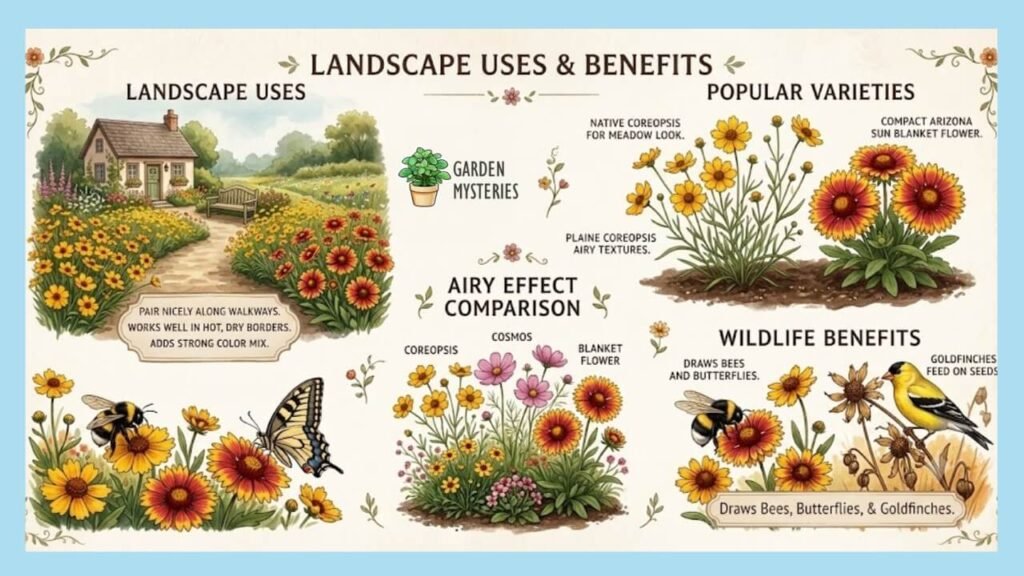
Some gardeners lean toward the softer texture of coreopsis. Others prefer the bolder color punch that blanket flower brings to a bed.
Best Uses in Landscape Design
Cottage gardens and pollinator meadows both benefit from coreopsis flowers, perennial varieties planted in loose drifts. Blanket flower works well in hot, dry borders where you want strong color from midsummer onward. Both pair nicely along walkways or mixed into wildflower patches.
Popular Varieties Worth Growing
The native plains coreopsis flower offers a wilder, meadow-like look with taller, airier stems. Among the many types of blanket flowers, Gaillardia grandiflora varieties like Arizona Sun stay compact and bloom heavily.
Gardeners debating Coreopsis or Cosmos for a similar airy effect often end up growing all three in the same bed.
Pollinator and Wildlife Benefits
Bees and butterflies visit both flowers often, drawn to their open, nectar-rich blooms. Goldfinches sometimes feed on coreopsis seed heads left standing through the fall and winter months.
Common Questions Before Choosing Between Them
Most gardeners can grow coreopsis and blanket flower together without any trouble at all. Their needs overlap so closely that mixing them in the same bed rarely causes problems.
Maintenance stays fairly light for both, though coreopsis may need more frequent dividing every few years. Blanket flower resists disease a little better in humid climates, while coreopsis can struggle with powdery mildew in damp conditions.
The right soil often comes down to compost or potting soil, depending on whether you plant in the ground or in pots.
Garden soil usually benefits from a bit of compost mixed in. Containers do best with a lighter potting mix that drains fast.
Choose Coreopsis if:
- You want a longer bloom season with smaller, delicate flowers.
- Your garden has a cottage or meadow style.
Choose Blanket Flower if:
- You want bold color and strong drought tolerance.
- Your garden gets intense heat and full sun for most of the day.
Plant Both if:
- You want layered color and a longer pollinator season overall.
- Your soil drains well and gets plenty of direct sun.
Once you weigh these factors, deciding on coreopsis vs blanket flower becomes a much simpler task.
FAQs: Coreopsis vs Blanket Flower
Can coreopsis and blanket flower be planted together?
Yes, they share similar soil, sun, and water needs. Mixing them in the same bed usually works well without extra effort.
Which flower attracts more butterflies and bees?
Both flowers attract plenty of bees and butterflies. Blanket flower’s wider, flatter blooms may offer easier landing spots for larger butterflies during peak bloom.
Is blanket flower more drought-tolerant than coreopsis?
Blanket flower generally tolerates drought a bit better once established, though coreopsis also handles dry spells reasonably well in most average garden conditions.
Which flower requires less maintenance over the years?
Blanket flower often needs less dividing, since it self-seeds readily, while coreopsis benefits from division every few years to stay full and healthy.
End Note
Choosing between coreopsis vs blanket flower really depends on the look you want and how much upkeep you are willing to give. Both flowers reward gardeners with long bloom seasons and steady pollinator visits.
If you have the space, planting both together gives you layered color from early summer through the first frost. These two prairie natives rarely disappoint once settled into a sunny and well-drained spot. Both stay forgiving for beginners still learning their garden.