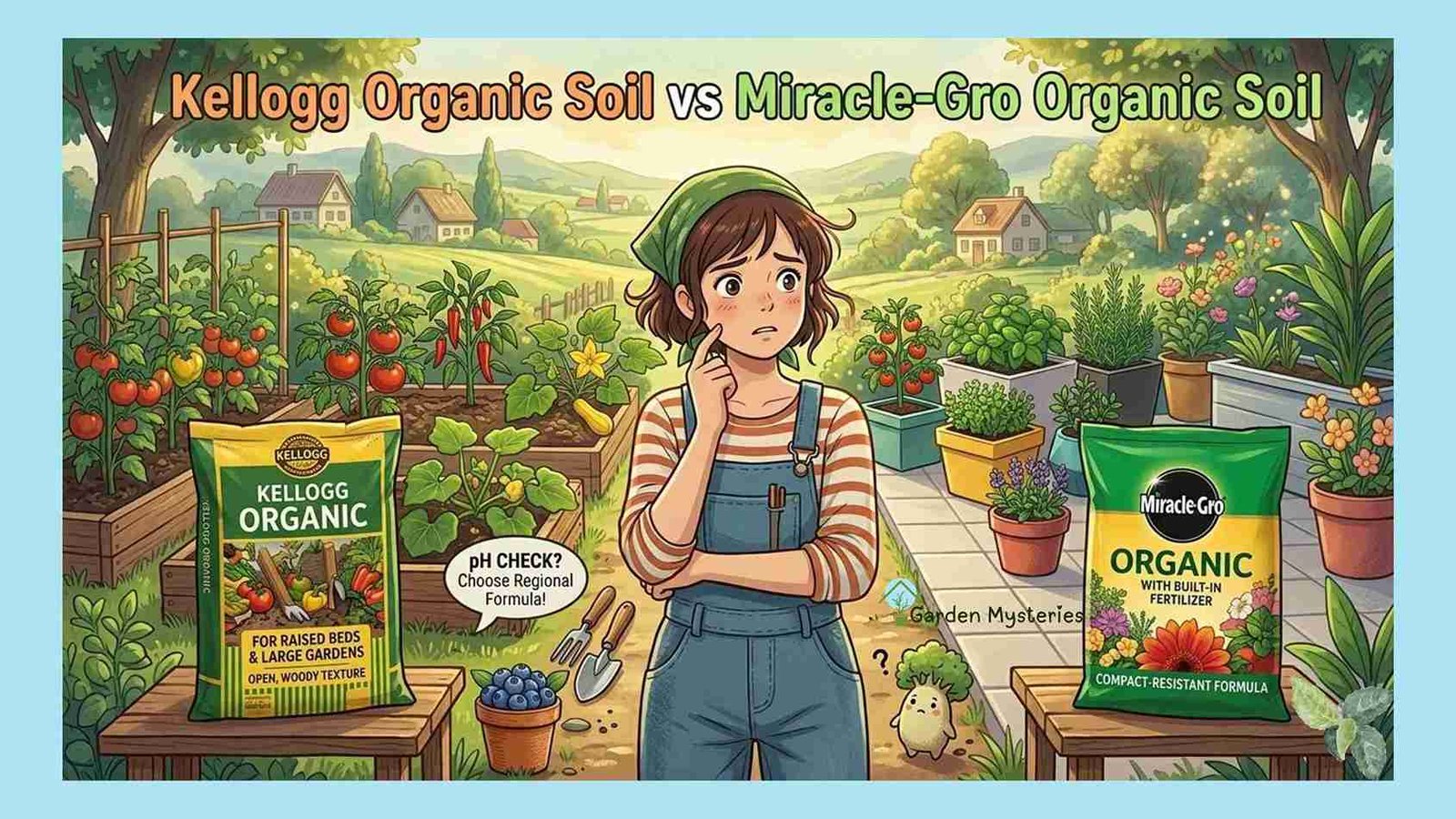
Two bags. Same aisle. Both say organic. Picking between kellogg organic soil vs miracle gro organic soil feels harder than it should. Your cart is still empty, the price difference is small, and both brands are everywhere.
Kellogg and Miracle-Gro are two of the most widely available bagged soils in the US. You can find them at Home Depot, Lowe’s, and Walmart across the country. But availability does not mean they perform the same way in your garden beds.
This post breaks down Kellogg organic soil vs Miracle-Gro organic soil across four things that actually matter: ingredients, price, real-world performance, and which one fits your specific garden setup.
Key Takeaway
Kellogg organic soil works best for large raised beds and vegetable gardens on a budget. Miracle-Gro organic soil suits container gardening and convenience-first setups. Both are OMRI certified, but their ingredients, price per cubic foot, and best use cases are different. This guide breaks down exactly where each one wins.
What Is Kellogg Organic Soil?
Kellogg Garden Products has been around since 1925. It is a family-owned company based in California, and that local, small-batch approach shows up in how they source and blend their soils.

Key Ingredients and Certifications
This is where Kellogg stands out from most mass-market brands. The ingredient list reads like a real organic raised bed soil recipe, not a bag of filler. Also, you can check our guide on raised bed soil mix for more gardening ideas. Every product in the Kellogg Garden Organics review lineup carries OMRI listing and meets National Organic Program standards.
- Worm castings
- Bat guano
- Kelp meal
- Composted poultry manure
- Aged forest products and arbor fines
Who Makes Kellogg’s and Where It Is Sold
Kellogg Garden Products is still run by the Coleman family, the same family that founded it a century ago in California. That independent ownership means no corporate parent pushing cheap fillers into the formula.
You can find their products at Home Depot and Lowe’s nationwide. One thing worth knowing from any honest Kellogg raised bed soil review is that formulas vary by region. Ingredients differ between the West Coast and Southeast versions, so always read the bag label where you shop. Bag sizes typically run from 1.5 to 3 cubic feet.
What Is Miracle-Gro Organic Soil?
Miracle-Gro is owned by The Scotts Miracle-Gro Company, one of the largest lawn and garden brands in the world. It is mass-market by design, built for consistency and wide availability rather than small-batch sourcing.
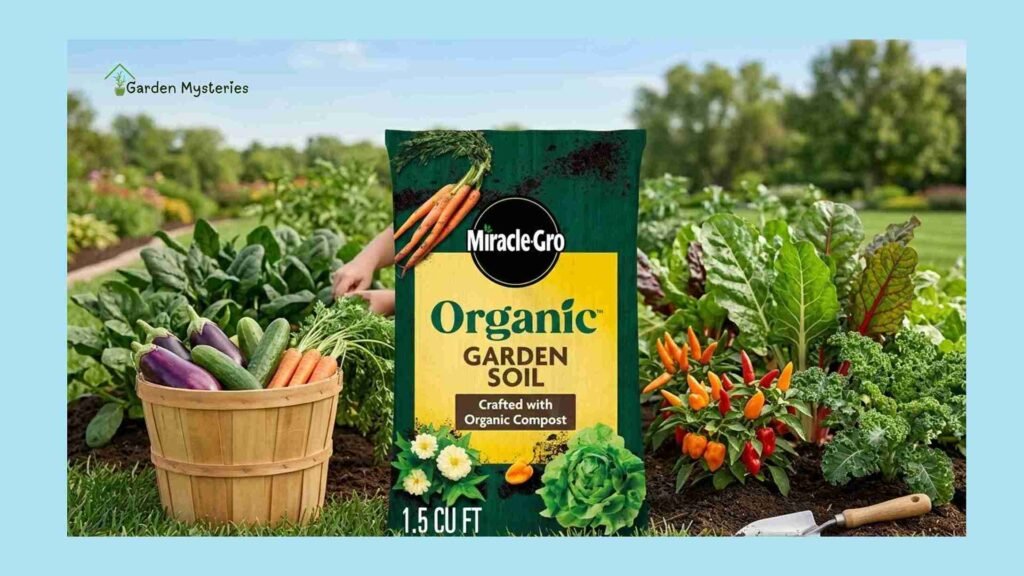
Key Ingredients and Certifications
When comparing Miracle Gro versus Kellogg organic soil, the ingredient approach is noticeably different. Miracle-Gro leans on a peat-based formula with added fertilizer rather than a diverse blend of biological inputs. The Miracle-Gro Performance Organics potting mix line is OMRI listed, which means it meets certified organic standards.
- Sphagnum peat moss
- Perlite for drainage
- Slow-release organic fertilizer
- OMRI listed and NOP compliant
- Feeds plants for up to 6 months
Miracle Gro Product Range and Where to Buy
Miracle-Gro runs several organic lines, including Nature’s Care and Performance Organics. You can find them at Home Depot, Lowe’s, Walmart, and most online garden retailers. Stock is rarely an issue. The tradeoff is that product formulas are standardized nationally, so what you buy in Texas is the same as what ships to Maine.
Kellogg vs Miracle-Gro Organic Soil: At a Glance
Before we get into the details, here is a quick organic soil comparison to show where kellogg vs miracle gro soil lines up at a high level.
| Feature | Kellogg | Miracle-Gro |
| OMRI Certified | Yes | Yes (select lines) |
| Main Ingredients | Forest products, worm castings, bat guano, kelp meal | Sphagnum peat moss, perlite, slow-release fertilizer |
| pH Range | 6.0 to 7.3 | 6.0 to 6.5 |
| Fertilizer Included | Natural inputs only | Yes, slow-release up to 6 months |
| Bag Size Options | 1.5 to 3 cu ft | 1 to 2 cu ft |
| Best For | Raised beds, in-ground gardens | Containers, smaller projects |
| Family Owned | Yes | No |
That table gives you the snapshot. The full kellogg organic soil vs miracle gro organic soil breakdown below covers what those differences actually mean for your plants.
Kellogg vs Miracle-Gro: Detailed Comparison
Numbers and labels only tell part of the story. When you look at miracle gro vs kellogg organic soil side by side in real garden conditions, the differences go deeper than the bag design.
Ingredients and Soil Biology
Kellogg builds its formula around living soil inputs. Bat guano, worm castings, and kelp meal feed soil biology, not just the plant directly. Miracle Grow takes a different approach, using sphagnum peat moss as the base with a slow-release fertilizer blended in.
Both carry OMRI listed potting soil status on their organic lines, but the underlying philosophy is different. Kellogg feeds the soil. Miracle-Gro feeds the plant.
pH Levels and Drainage
Kellogg runs a wider pH range, sitting between 6.0 and 7.3 depending on your regional formula. That higher end can be a problem for acid-loving plants like blueberries. Miracle-Gro stays tighter, generally between 6.0 and 6.5, which suits most vegetables and herbs.
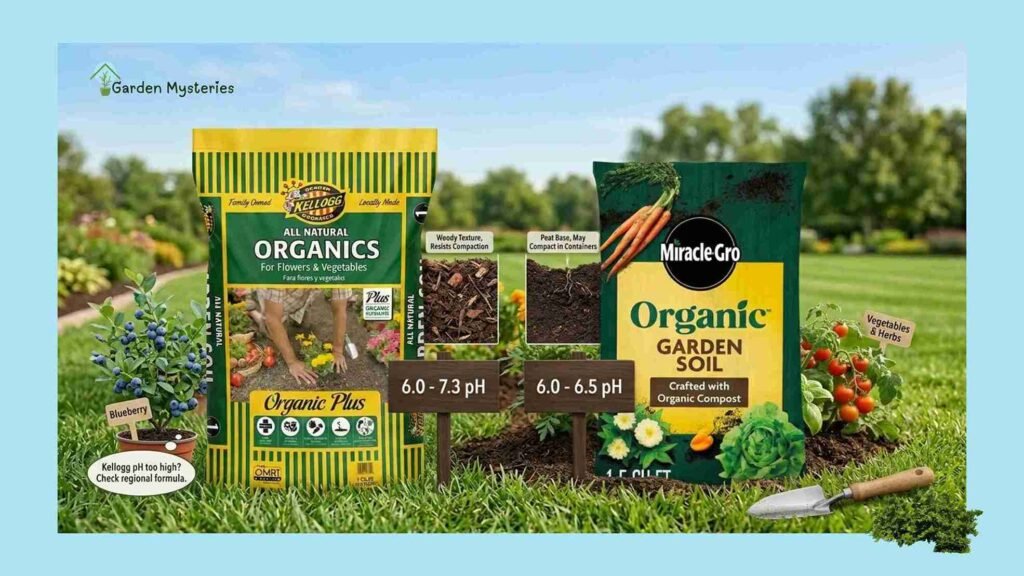
On drainage, Kellogg’s woody texture resists compaction better over time. Miracle-Gro’s peat base can compact in containers after repeated watering, which reduces airflow to roots.
Price and Value Per Cubic Foot
This is where kellogg vs miracle gro soil gets interesting for budget-conscious gardeners. Kellogg typically comes in larger 2 to 3 cubic foot bags at a lower cost per cubic foot.
Miracle-Gro bags are smaller and more expensive per volume, though easier to find on sale at big-box stores. For large raised beds, Kellogg stretches your budget further. For a couple of pots on a balcony, the price difference barely matters.
Smell, Texture, and Ease of Use
Kellogg has a strong, woody, earthy smell when you open the bag. That comes from the forest products and biological inputs. It is not unpleasant, but it is noticeable.
Miracle-Gro smells cleaner and has a finer, more uniform texture that many gardeners find easier to work with in containers. Both pour and mix easily straight from the bag with no prep needed.
When to Use Kellogg and When to Use Miracle-Gro
Both Miracle Gro and Kellogg soils can grow healthy plants. The real question is where and how you are gardening. Matching the soil to your setup makes a bigger difference than most people expect.
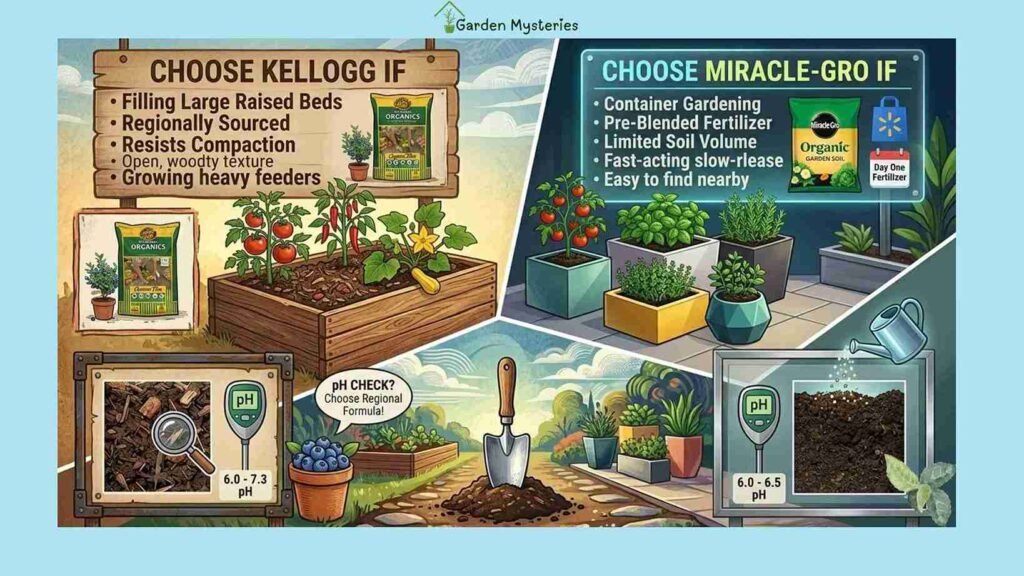
Choose Kellogg If
Kellogg is the stronger pick when you are working with larger ground-level or raised bed projects. It is built around biological inputs that improve soil structure over multiple growing seasons, not just one. If you want the best organic soil for raised beds without paying premium container-soil prices, Kellogg delivers real value.
- Filling large raised beds on a budget.
- You prefer regionally sourced, locally blended organic raised bed soil.
- Your garden needs a woody, open texture that resists compaction over time.
- You are growing heavy feeders like tomatoes, peppers, or squash.
- You want diverse biological inputs beyond a single fertilizer source.
Choose Miracle-Gro If
Miracle-Gro fits situations where convenience and consistency matter most. The built-in slow-release fertilizer removes one step from your routine, which is genuinely helpful for beginner gardeners or low-maintenance setups.
- Container gardening on a patio, balcony, or indoors.
- You want fertilizer already blended in from day one.
- Smaller garden projects with limited soil volume needed.
- You need a bag today and only have a Walmart nearby.
When weighing miracle gro vs kellogg organic soil for a productive organic soil for vegetable garden setup, Kellogg wins on biology and value. Miracle-Gro wins on convenience and availability.
What Real Gardeners Say About These Soils
Specs on a bag are written by marketing teams. Real results come from people who have actually put these soils in their beds and watched what happens. Here is what consistent feedback across Home Depot reviews, Reddit gardening threads, and gardening forums shows.
What Kellogg Users Report
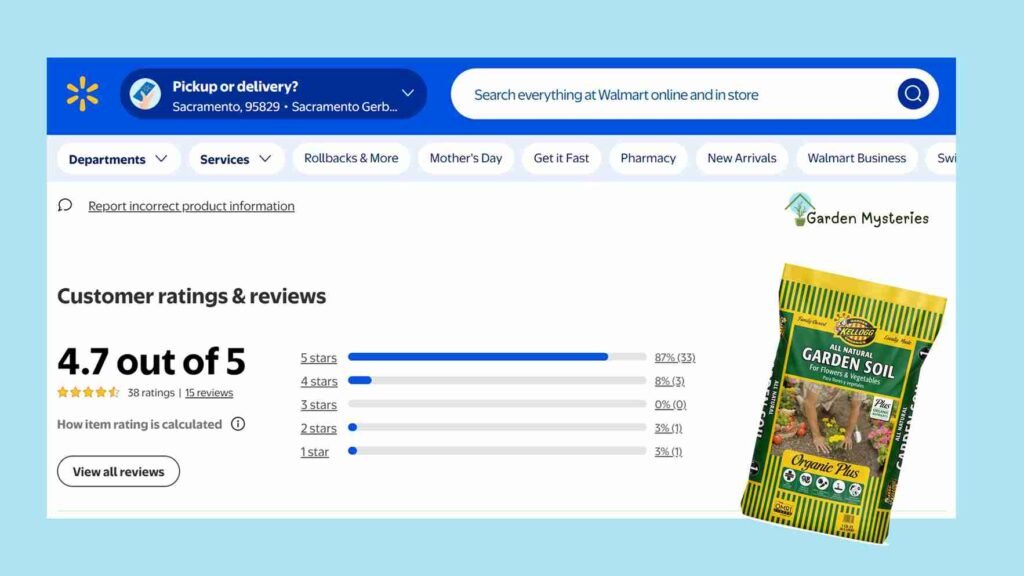
Any honest Kellogg Garden Organics review (shown in the image below) pulls up a mixed but mostly positive picture. Gardeners growing tomatoes, peppers, and squash in raised beds report strong growth and good moisture retention through hot summers. The most common praise is the rich biological smell and open, workable texture.
- Strong plant growth reported for heavy-feeding vegetables
- Good drainage and resistance to compaction over a full season
- Occasional wood chip pieces found in the bag
- Regional formula variation surprises some buyers who switch stores
- A small number of users report pH running high, needing adjustment
What Miracle-Gro Organic Users Report
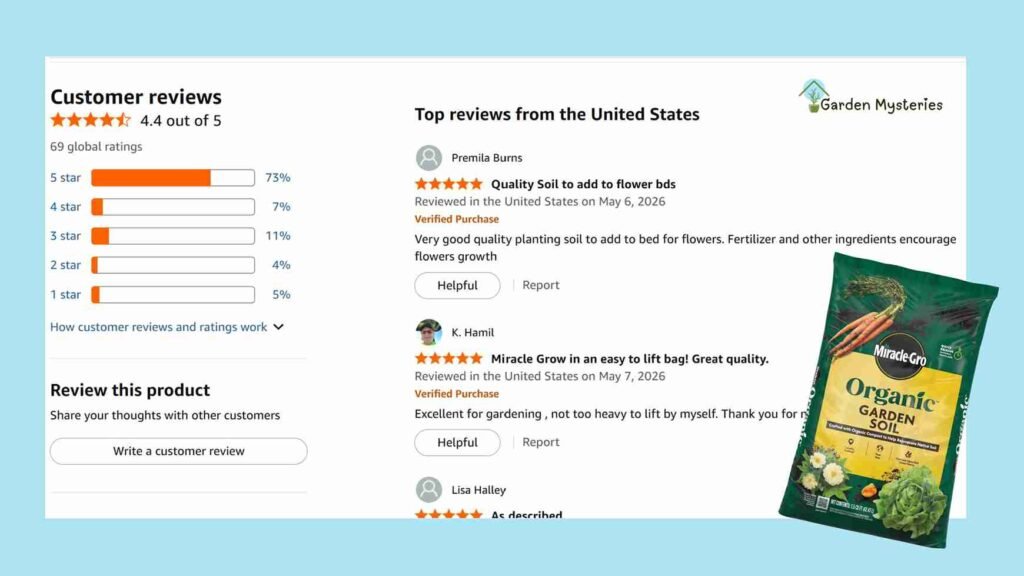
A fair Miracle Gro organic soil review (shown in the image below) shows that consistency is the brand’s biggest strength. Gardeners appreciate getting the same product whether they buy in spring or fall. Complaints are less about performance and more about value.
- Praised for clean texture and easy use in containers
- Built-in fertilizer appreciated by beginner gardeners
- Some users report compaction in pots after heavy watering
- A few reports of fungus gnats, likely from the peat base staying too moist
When Miracle Gro versus Kellogg organic soil comes up in gardening communities, the verdict usually depends on project size. Raised bed growers lean Kellogg. Container gardeners lean Miracle-Grow.
Is Miracle-Gro Organic Soil Worth It vs Budget Alternatives?
When you step back and look at miracle gro vs organic soil options as a whole, the price gap becomes harder to ignore. For one or two pots, a few extra dollars mean nothing. For filling four raised beds, it adds up fast.
Price vs Performance Breakdown
Bagged soil pricing shifts by region and season, but general patterns hold steady across most US markets. Miracle-Gro organic lines typically cost more per cubic foot than Kellogg and most store-brand alternatives. Here is how they generally stack up:
- Miracle-Gro organic lines: higher cost per cubic foot, smaller bag sizes
- Kellogg Garden Organics: mid-range price, larger bags, better volume value
- FoxFarm Ocean Forest: premium price, strong biological inputs, popular with serious growers
- Store-brand OMRI-listed soils at Home Depot or Lowe’s: lowest cost, variable quality
When Spending More Makes Sense
Paying more for Miracle-Gro makes sense in specific situations. Small container gardens, indoor herb setups, and seedling starts benefit from the built-in slow-release fertilizer because you are working with limited soil volume. The added feeding gives young plants a reliable start without extra effort.
For larger projects, the best bagged soil for vegetable garden use is usually the one that gives you the most certified organic volume for your budget. That points toward Kellogg or a quality store-brand OMRI-listed mix over Miracle-Gro. If you are interested in topsoil, you can read our guide on top soil and compost in your free time.
You should check the current bag prices at your local store before buying. Prices shift seasonally, and sale events can change the math completely.
FAQs
It depends on your budget and how much space you are filling. For large raised beds, Kellogg delivers strong biological inputs at a better price per cubic foot.
For smaller raised bed setups or single-season projects, Miracle-Gro works well and the built-in fertilizer saves you an extra step. Neither choice is wrong.
Some Miracle-Gro lines are genuinely organic. The Performance Organics and Nature’s Care ranges carry OMRI listing and meet National Organic Program standards. But not every Miracle-Gro product on the shelf is organic.
Always check the bag for the OMRI logo before buying. If it is not there, the product is not certified organic, regardless of what the front label says.
Yes, Kellogg performs well for most vegetables, especially heavy feeders like tomatoes, peppers, and squash grown in raised beds or in-ground gardens.
The one thing to watch is pH. Kellogg can run up to 7.3 in some regional formulas. A quick soil pH test before planting helps you catch any adjustment needs early.
Conclusion
The verdict on Kellogg organic soil vs Miracle gro organic soil comes down to how you garden. Kellogg is the stronger pick for large raised beds and vegetable gardens where biology and budget both matter.
Miracle-Gro wins on convenience. It is consistent, widely stocked, and the built-in fertilizer suits container gardening and smaller projects.
Both are legitimate organic options. Pick the one that matches your garden size, your goals, and your budget. Check current prices and bag availability at your local store before you buy.