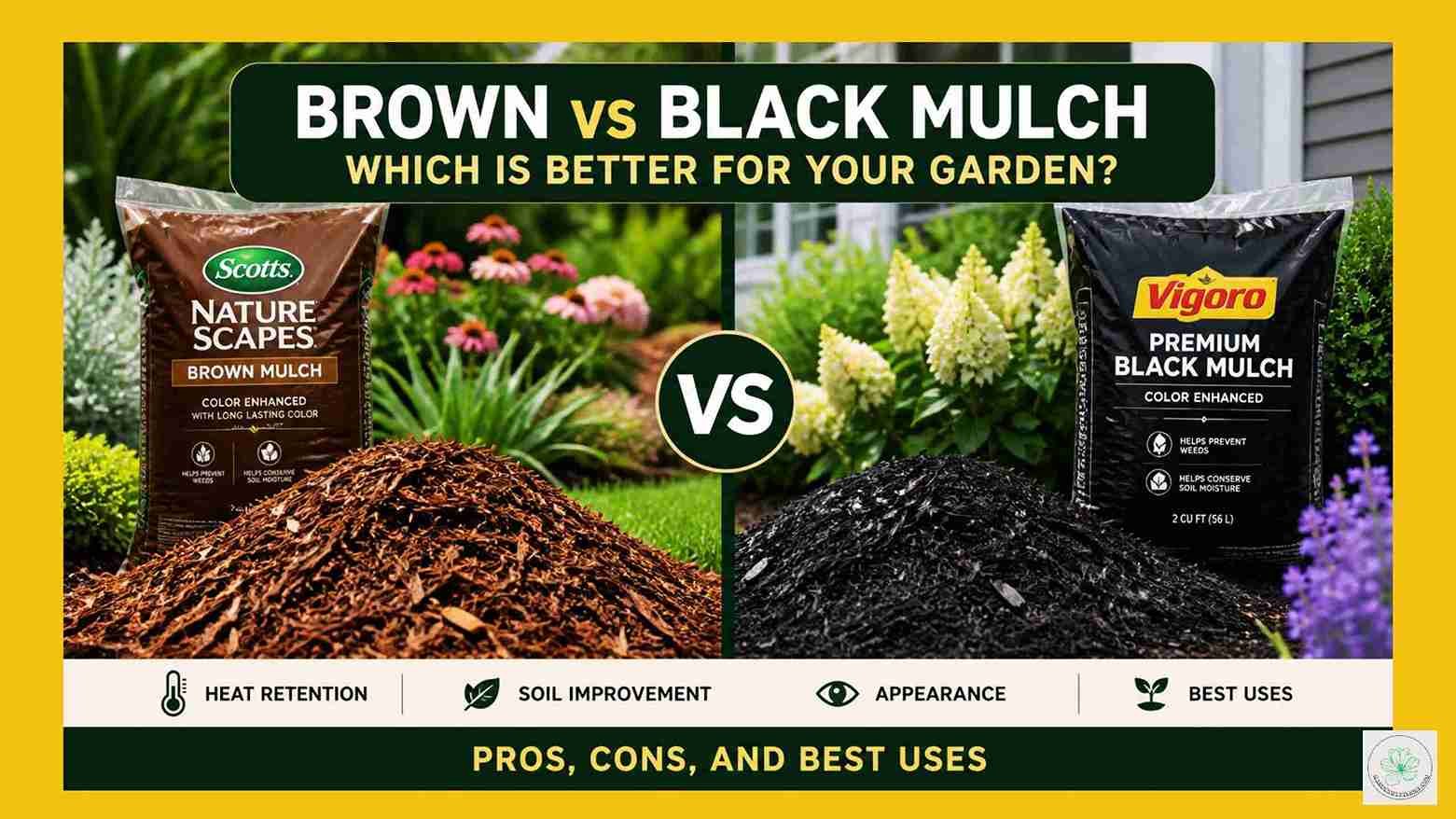
Brown vs Black Mulch is a comparison of how mulch color affects soil temperature, moisture retention, weed control, plant growth, and overall landscape performance. In simple terms, black mulch vs brown mulch comes down to heat and appearance; black mulch absorbs more heat and warms soil faster, while brown mulch offers a more natural look and supports balanced soil conditions.
In gardening practice, mulch color plays a functional role beyond design. It influences how soil holds moisture, how quickly it warms, and how stable plant roots remain throughout the season. Black mulch is commonly used in decorative beds and cooler climates where early soil warming is beneficial. Brown mulch is preferred for vegetable gardens, trees, and natural landscapes where long-term soil health and steady moisture are more important.
The right choice between brown vs black mulch depends on climate, plant type, and garden goals. Below is a detailed comparison to help you choose the best option for your landscape.
Which Mulch Is Better: Brown or Black Mulch?
Brown mulch is better for most home gardens because it supports soil health and maintains stable moisture. Black mulch is better for cooler climates and decorative landscapes where additional warmth and strong visual contrast are beneficial.
Quick Answer
Brown mulch → better for vegetables & soil health
Black mulch → better for heat retention & decorative contrast
Best overall → brown mulch for most home gardens
What Is Brown Mulch?
Brown mulch is a natural-looking garden mulch used to protect soil, retain moisture, and support healthy plant growth. It is commonly made from shredded bark, wood chips, or organic plant materials that blend easily into most landscape designs. Many gardeners prefer brown mulch because it creates a softer, more earthy appearance in garden beds and around trees.
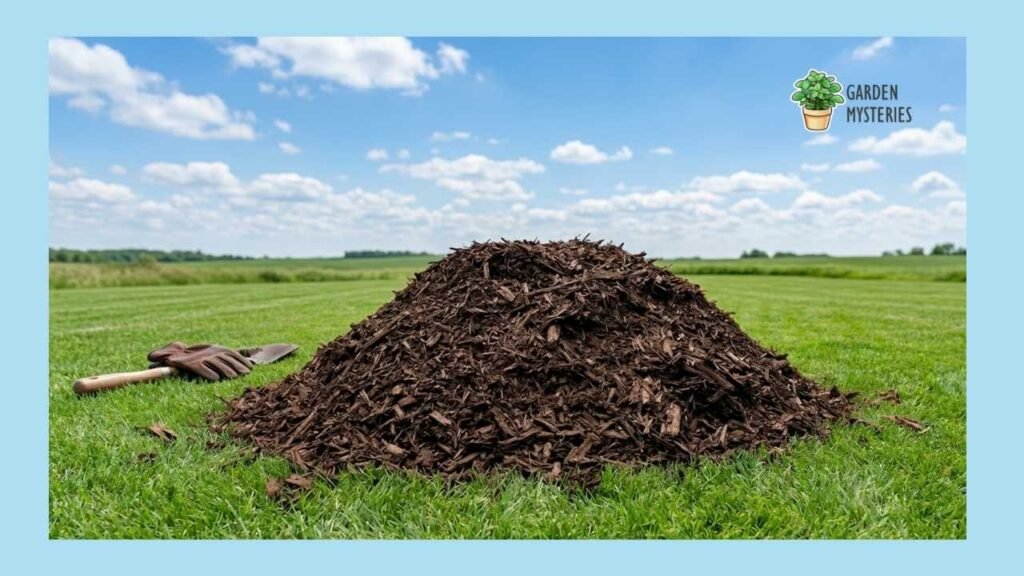
One of the main advantages of brown mulch is its balanced effect on soil temperature and moisture levels. Unlike darker mulch types, it does not absorb excessive heat, which makes it suitable for vegetable gardens and plants that prefer stable growing conditions.
Brown mulch also helps reduce weed growth and slowly improves soil structure as it breaks down over time. With proper application, it can support long-term soil health while keeping garden spaces neat and natural-looking.
What Is Black Mulch?
Black mulch is a type of garden mulch commonly used to improve soil protection, moisture retention, and landscape appearance. It is usually made from shredded wood, bark, or other organic materials that are dyed or naturally dark in color. Many gardeners use black mulch to create a strong contrast around plants, flower beds, and walkways.
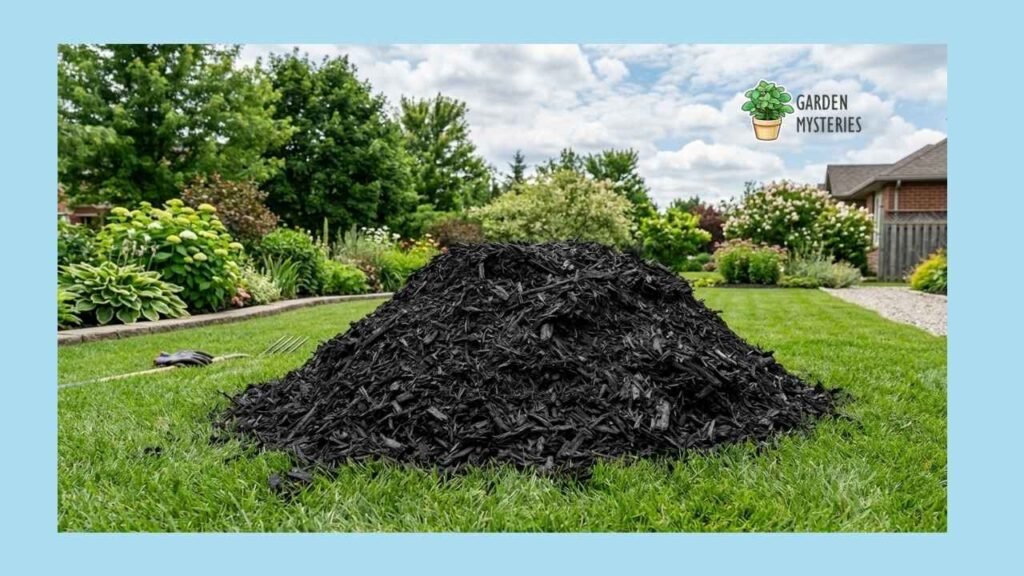
One of the main benefits of black mulch is its ability to absorb and retain heat. This can help warm the soil faster during cooler seasons, making it useful for early planting and heat-loving plants like tomatoes and peppers.
Black mulch also helps reduce weed growth, limit moisture evaporation, and keep garden beds looking tidy. When applied correctly, dark mulch can support healthier soil conditions and improve the overall appearance of outdoor spaces.
Is Black Mulch Safe for Gardens?
Most commercial black mulch products use carbon-based or iron-oxide-based colorants that are generally considered safe for garden use when purchased from reputable manufacturers.
However, mulch quality can vary by supplier. Gardeners should choose products from established brands and avoid mulch made from unknown waste materials or treated wood sources.
For edible gardens, you should always review product labeling and manufacturer recommendations before application.
Why Mulch Color Matters More Than You Think
Mulch is often treated like a finishing touch, something you spread after planting to tidy things up. In reality, it behaves more like a quiet manager beneath your plants, regulating moisture, temperature, and even how your garden feels visually.
Choosing between brown mulch vs black mulch is not just about color. It shapes:
- Soil temperature
- Water retention patterns
- Visual harmony of your landscape
- Long-term soil health
That’s why this decision deserves more than a quick guess. Some studies on soil temperature show darker surfaces can raise soil warmth by several degrees compared to lighter materials.
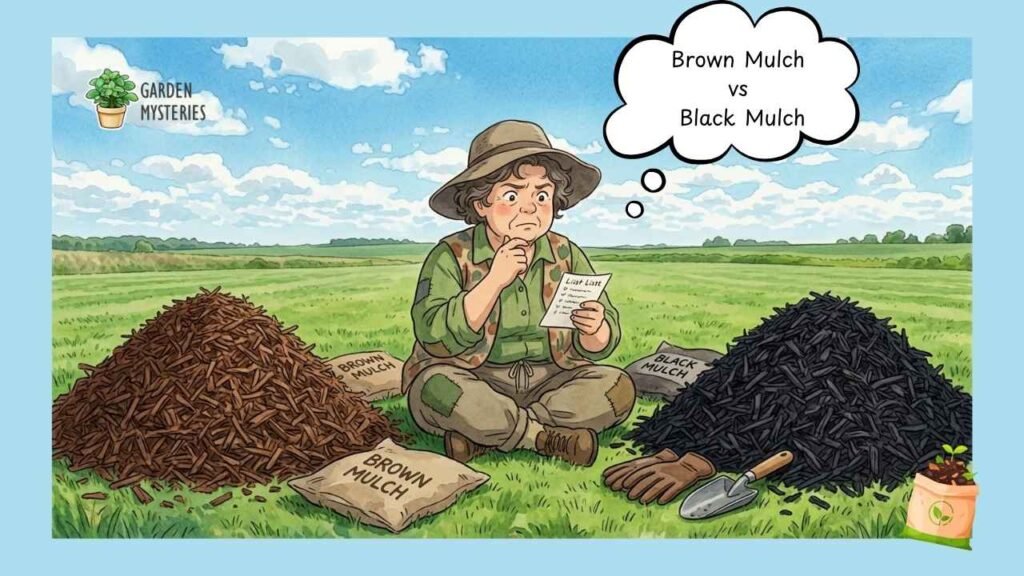
Mulch Color Comparison: Brown vs Black Mulch
This quick comparison of brown mulch vs black mulch highlights key differences in heat retention, appearance, soil impact, and best garden use to help you choose the right option easily.
| Feature | Black Mulch | Brown Mulch |
| Heat Retention | High | Moderate |
| Look | Bold, high contrast | Natural, earthy |
| Fading Pattern | Can turn grayish | Fades gradually |
| Soil Contribution | Depends on the material | Often improves soil over time |
| Best Use | Decorative beds, cool climates | General gardening, long-term use |
This mulch color comparison highlights the core difference: Black mulch is more about visual impact and warmth, while brown mulch leans toward balance and sustainability.
Does Black Mulch Retain Heat?
Yes, black mulch is known for its strong heat-retention properties, and this is one of the key reasons gardeners choose it in both ornamental landscaping and vegetable garden beds. Because of its dark color, it absorbs a higher amount of solar radiation and converts it into heat, which then transfers into the top layer of soil.
This process influences soil temperature regulation, root zone warming, and early-season plant growth, making it a useful material in specific gardening conditions where warmth is beneficial.
How Black Mulch Affects Soil Temperature
Black mulch acts like a solar heat absorber, capturing sunlight during the day and gradually releasing warmth into the soil. This can lead to:
- Faster soil warming in spring
- Improved root activation in cool soil conditions
- Enhanced early growth for certain garden plants
- More stable soil microclimate in partially shaded areas
In practical garden use, this makes it especially useful for season extension gardening and early planting preparation.
When Black Mulch Is Most Useful
Black mulch performs best in situations where soil warming supports plant development. Common garden scenarios include:
- Early spring vegetable gardening, when the soil is still cold
- Cooler climate regions where heat retention improves growing conditions
- Raised beds and container gardens, where soil temperature fluctuates quickly
- Heat-loving crops, like tomatoes, peppers, and eggplants
- Shaded garden areas, where sunlight exposure is limited
In these cases, black mulch can support better germination rates, stronger root establishment, and improved early growth performance.
When Black Mulch Should Be Used Carefully
While black mulch is beneficial in many setups, it can also create challenges in warmer environments. Because it absorbs and holds heat, it may contribute to:
- Excessive soil warming in hot summer climates
- Increased moisture evaporation from topsoil
- Higher irrigation frequency needs
- Potential heat stress on shallow-rooted plants
For sensitive crops or already warm garden zones, prolonged heat retention can push soil temperatures beyond the ideal range for root development. You can read our blog on Miracle-Gro topsoil if you are interested in topsoil.
Practical Gardening Insight on Black Mulch and brown mulch
Black mulch is best understood as a soil temperature management tool, not a universal solution. Its effectiveness depends heavily on climate, crop type, and seasonal timing.
In cooler conditions, it supports growth by creating a warmer root environment. In hotter conditions, it may require careful monitoring of soil moisture and plant stress levels.
Black Mulch vs Brown Mulch: Pros and Cons
Choosing between black and brown mulch often comes down to how you want your garden to perform and look over time. Both options help with moisture retention, weed suppression, and basic soil protection, but they behave a little differently in real conditions.
Black mulch tends to influence soil temperature more, while brown mulch leans toward a steady, natural balance. For most home gardens, the decision is less about right or wrong and more about matching the mulch to your climate, plant types, and design style.
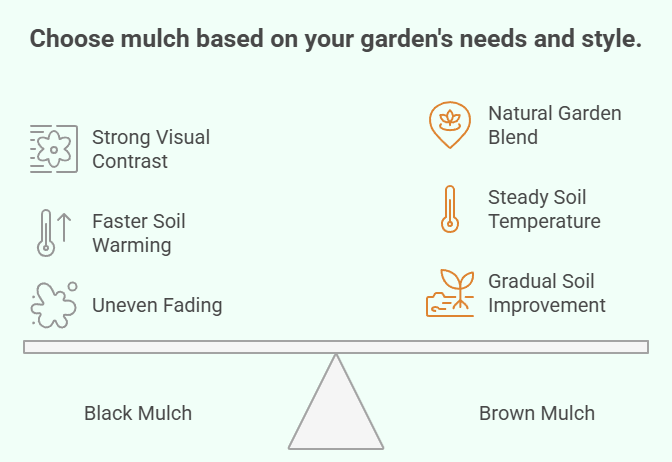
Black Mulch Advantages
- Creates a strong contrast with green foliage and flowers.
- Enhances visual appeal in modern landscape designs.
- It helps the soil warm faster during cooler periods.
Black Mulch Limitations
- Color may fade unevenly over time.
- Can highlight bare patches once fading begins.
- Heat buildup may not suit all plants.
Brown Mulch Advantages
- Blends naturally with most garden styles.
- Supports gradual soil improvement as it decomposes.
- Maintains a consistent look even as it ages.
Brown Mulch Limitations
- Less dramatic visually.
- Does not significantly increase soil temperature.
- May appear subtle in highly decorative spaces.
Which Mulch Lasts Longer? Brown or Black Mulch
When comparing dark vs brown mulch longevity, it has two layers: physical lifespan and visual lifespan.
- Both black and brown mulch break down at a similar rate, depending on the material
- However, brown mulch tends to look better for longer
Black mulch fading often becomes more noticeable, shifting toward gray tones that contrast sharply with plants. Brown mulch fades more gradually, maintaining a cohesive appearance.
So if your concern is longevity in appearance, brown mulch usually performs more consistently.
Budget vs Premium Mulch: What Changes?
Not all mulch is equal, even within the same color category. Some black mulch products hold their deep color for months, while others turn gray quickly. The same applies to dark brown mulch. Texture, wood quality, processing method, and dye treatment all affect performance. So, when comparing budget vs premium mulch, you should consider:
Budget Mulch
Budget mulch is commonly used for large landscaping projects where coverage matters more than appearance.
- May contain mixed wood pieces
- Color consistency can vary
- Works well for large coverage areas
Premium Mulch
Premium mulch is designed for cleaner texture, better appearance, and improved long-term performance.
- More uniform texture
- Better color retention
- Often processed for improved performance
If curb appeal matters, premium mulch is usually the better option for modern landscapes and flower beds.
Common Options You’ll See
Some products appear repeatedly in searches for the best black mulch brand and best brown mulch for landscaping.
- Scotts brown mulch → known for consistency and availability
- Scotts black mulch → widely used for decorative beds
- Nature Scapes black mulch → enhanced color-treated finish
- Nature Scapes brown mulch → designed for a natural landscape look
If you’re building a garden on a budget, lower-cost mulch works fine. On the other hand, if appearance and uniformity matter, higher-quality options offer better results. You can also read our detailed guide on Scotts vs Vigoro Mulch comparison in your free time.
Best Mulch Color for Different Garden Types
The best mulch color depends on your garden style, local climate, and plant needs. In general, black mulch creates bold contrast and absorbs more heat, while dark brown mulch gives a softer, more natural appearance and keeps soil temperatures more balanced.
Different mulch colors can also affect how your landscape looks next to siding, brick, trees, shrubs, and flowers.
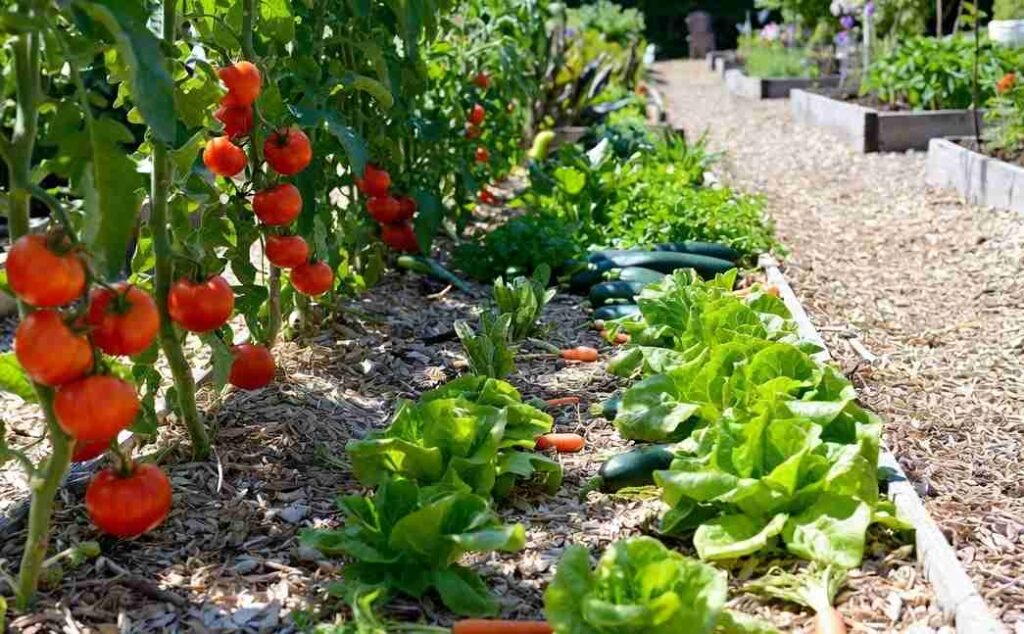
Mulch for Vegetable Gardens
Best choice: Brown mulch
Brown mulch is often considered the best mulch for vegetable gardens because it supports balanced soil temperatures and creates a more natural growing environment.
- Supports soil health and microbial’ activity
- Maintains balanced soil temperature
- Improves soil structure gradually as it breaks down
For edible beds, many gardeners prefer natural options like Scotts Nature Scapes Deep Forest Brown Mulch, which blends well while helping retain moisture without overheating the soil. Some users consider it as one of the best mulch for vegetable garden.
Flower Beds and Decorative Areas
Best choice: Black mulch
Black mulch is one of the most popular choices for decorative landscapes because it creates sharp visual contrast around flowers and shrubs.
- Highlights bright blooms and foliage
- Creates clean visual contrast
- Works well in formal or modern layouts
If visual impact matters, Vigoro Premium Black Mulch is often used to frame flower beds and give landscapes a neat, defined look.
Around Trees and Shrubs
Best choice: Brown mulch
Brown mulch works especially well around trees and shrubs because it mimics the appearance of a natural forest floor.
- Mimics the natural forest floor
- Supports long-term soil condition
- Encourages gradual organic matter buildup
A product like Timberline Hardwood Bark Mulch works well here, offering a more natural breakdown that benefits tree roots over time.
Best Mulch for Cool Climate Gardens
Best choice: Black mulch
Black mulch absorbs more sunlight, which helps warm soil earlier in spring.
- Helps warm soil faster in early season
- Supports root activity and early growth
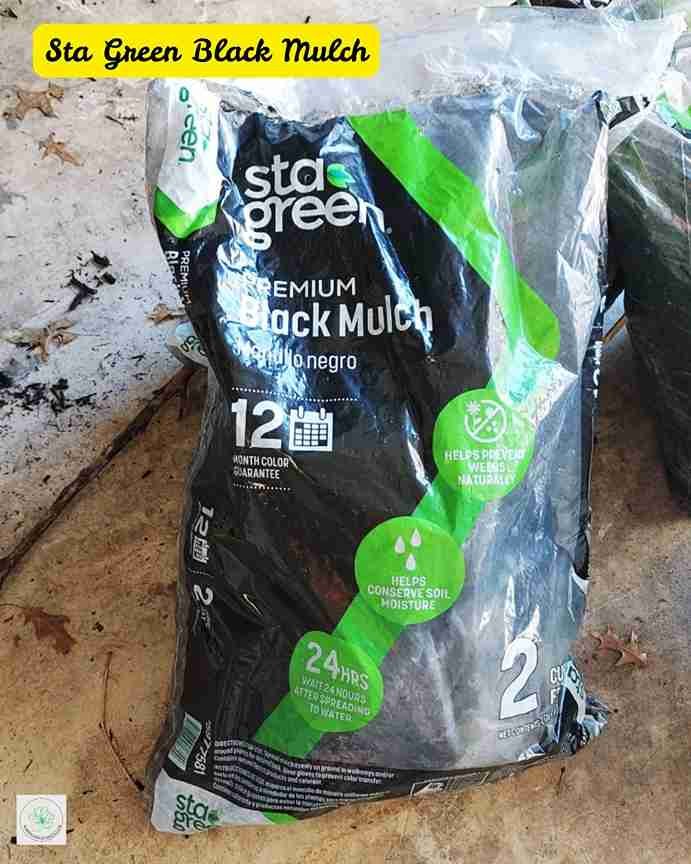
In cooler zones, darker mulches like Sta Green Black Mulch can give plants a useful head start during spring.
Mulch for Hot Climate Gardens
Best choice: Brown mulch
Brown mulch is usually better in hot climates because it keeps root zones from overheating.
- Reduces the risk of soil overheating
- Maintains steady moisture levels
Lighter and natural mulches like Ameriscape Cedar Mulch are often chosen to keep soil cooler while still conserving water.
Is Brown Mulch Better for Vegetables?
Brown mulch is generally better for vegetable gardens because it helps maintain balanced soil temperature and steady moisture levels. Unlike black mulch, it does not overheat the soil, which protects plant roots during warm weather.
As it breaks down, brown mulch also adds organic matter, improving soil structure and microbial activity. This effect makes it especially useful for crops like tomatoes, lettuce, and peppers that need consistent growing conditions. For most home gardeners, brown mulch offers a reliable choice for healthy vegetable growth.
Does Mulch Color Affect Soil Temperature?
Yes. Darker mulch surfaces absorb more solar heat, which can slightly increase soil temperature compared to lighter natural mulch. This effect is most noticeable during early spring and in cooler growing regions.
Use black mulch when warmth and visual contrast matter. Choose brown mulch when you want balance, moisture control, and long-term soil support. Also, check out our seed starting mix guide for DIY ventures.
Soil Health: Black or Brown Mulch – The Overlooked Factor
One of the most important differences rarely gets enough attention. As mulch breaks down, it contributes to soil structure. Brown mulch, often closer to natural wood decomposition, can gradually improve:
- Soil texture
- Moisture retention
- Microbial activity
Black mulch can do this as well, depending on material, but its primary role is often visual rather than soil-focused.
If your long-term goal is healthier soil, brown mulch often aligns better with that objective.
Why Brown Mulch Often Benefits Soil Over Time
As natural wood mulch decomposes, it contributes organic matter to the soil. Organic matter improves soil structure, water-holding capacity, and microbial activity. While both brown and black organic mulches can provide this benefit, brown mulch is often selected specifically for long-term soil-building purposes rather than decorative impact.
Black vs Brown vs Organic Mulch – Comparison Table for Gardens
Choosing the best mulch color for garden is a bit like choosing clothing for your soil. Some fabrics trap heat, others breathe, and a few quietly feed the ground while they work.
| Feature | Black Mulch | Brown Mulch | Organic Mulch |
| Soil Temperature | High warming | Moderate | Insulating (cooler) |
| Moisture Retention | Medium | Medium-high | High |
| Soil Health | Low (mainly cosmetic) | Low-moderate | High (adds nutrients) |
| Best Use Case | Cool climates, early growth | General landscaping | Vegetable gardens, soil improvement |
| Maintenance | Low | Low | Needs replenishing |
| Visual Style | Bold contrast | Natural look | Rustic, earthy |
Note: Mulch color alone does not determine quality. Wood source, processing method, texture, and application depth often have a greater impact on garden performance than color itself.
Common Mulch Mistakes to Avoid
Even high-quality mulch can fall short if it’s not applied with care. Small missteps often lead to bigger issues like poor plant health, excess weeds, or uneven soil moisture.
- Applying too thin → A light layer won’t block sunlight effectively, allowing weeds to push through and compete for nutrients. Aim for enough coverage to create a proper barrier.
- Applying too thick → Overloading mulch can trap moisture and limit airflow, which may stress roots and slow healthy soil activity. Balance matters more than quantity.
- Placing mulch against stems or trunks → Piling mulch directly around plant bases can hold excess moisture and increase the risk of rot or disease. Keep a small gap for airflow.
- Choosing based only on color → Appearance is important, but function matters more. Soil temperature, moisture retention, and plant type should guide your choice.
Mulch works best when applied with the right depth, spacing, and purpose. The technique often makes a bigger difference than the material itself.
How Much Mulch Should You Use?
Getting mulch depth right is where many gardens quietly succeed or struggle. A simple and consistent approach usually works better than overthinking it.
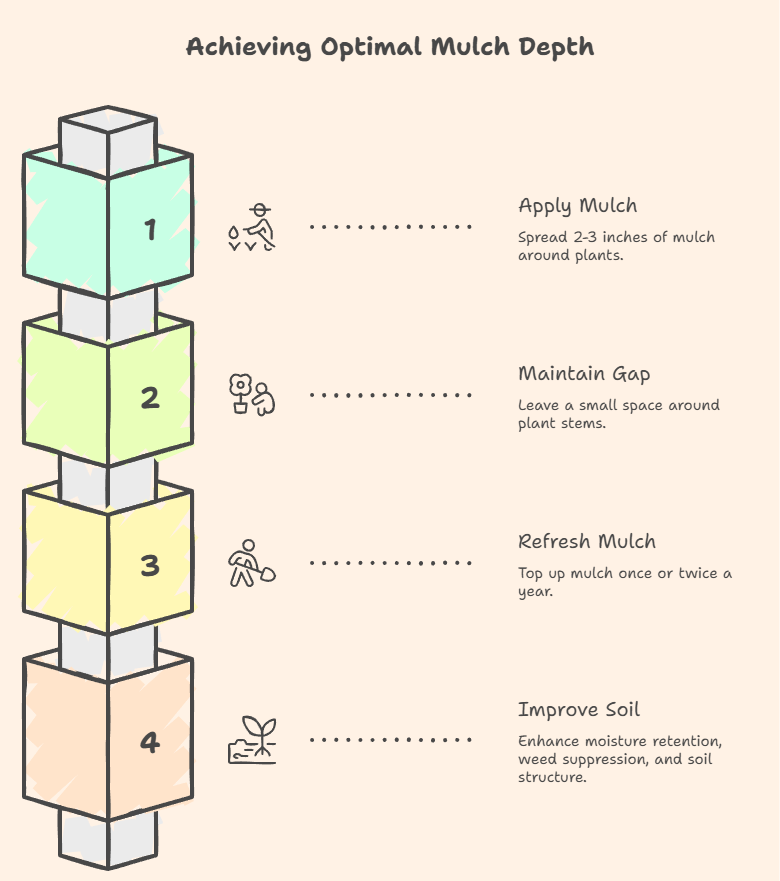
- Apply 2 to 3 inches of mulch → This depth is enough to block weeds, reduce evaporation, and protect the soil without limiting airflow.
- Keep a small gap around plant stems → Leave a little breathing space near trunks and stems to prevent excess moisture buildup and reduce the risk of rot.
- Refresh once or twice a year → Organic mulch naturally breaks down over time, so topping it up helps maintain coverage and soil benefits.
What this improves:
- Better moisture retention, meaning less frequent watering
- More effective weed suppression
- Improved soil stability and structure over time
A steady 2-3 inch layer, applied carefully and refreshed as needed, keeps your mulch working with the soil rather than against it.
Our Verdict: Black Mulch vs Brown Mulch
Choosing between black and brown mulch depends on your goal. Black mulch suits decorative spaces, adds strong contrast, and helps warm soil in cooler conditions. It works well where visual impact and early growth matter.
Brown mulch fits gardens that lean toward a natural look. It supports gradual soil improvement and keeps a consistent appearance as it ages. So, it is a reliable choice for long-term use.
In real garden conditions, mulch performs best as part of a system. Depth, timing, and placement often matter more than color alone. A properly applied black or brown mulch layer helps retain moisture, limit weeds, and keep soil stable through the growing season.
FAQs: Brown vs Black Mulch
Brown mulch is better for natural garden appearance and soil health, while black mulch is better for heat retention and bold visual contrast. The choice depends on climate, plant type, and design preference.
Yes, black mulch absorbs more sunlight and retains more heat than brown mulch. It works well in cooler climates but may overheat soil in hotter regions.
Both break down at a similar rate, but brown mulch tends to maintain its appearance longer as it fades more naturally, while black mulch often turns gray over time.
Brown mulch is generally better for most plants because it keeps soil temperature balanced and improves soil structure. Black mulch is better for heat-loving plants in cooler environments.
Wrapping Up
The debate between black mulch vs brown mulch often focuses on appearance, but the real story runs deeper.
- Black mulch brings warmth and contrast
- Brown mulch brings balance and longevity
So you should,
Choose black mulch → for heat & contrast
Choose brown mulch → for balance & soil health
When matched correctly to your garden’s needs, either black mulch or dark brown can support healthy, productive growth. The key is not choosing the “better” mulch, but choosing the right mulch for your conditions.
Note: This content is for informational purposes only. Gardening results may vary based on climate, soil conditions, and care practices. Always adapt methods to your local environment and follow safe gardening practices.