
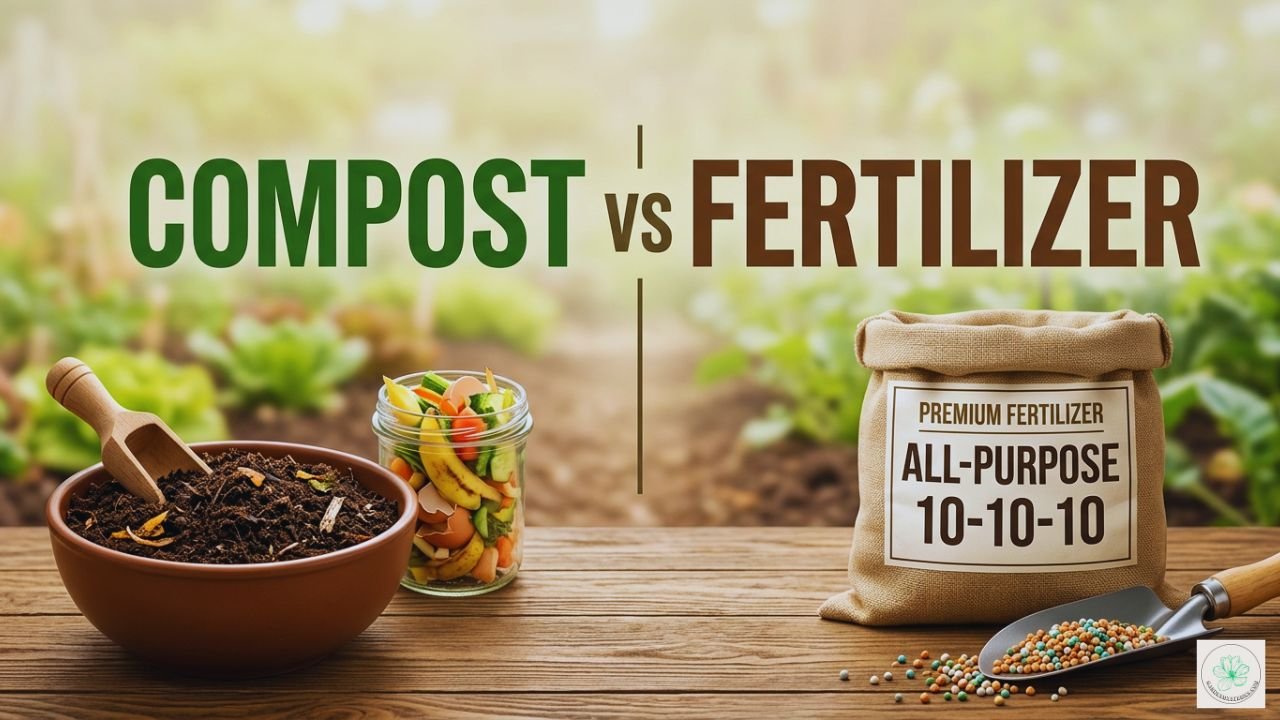
Compost vs Fertilizer: Key Differences & Garden Tips
Most plant problems do not start above the soil; they begin deep inside it. You may see yellow leaves, weak stems, or slow growth even after regular care. These signs often confuse new gardeners and make them worry about plant health.
This happens when soil lacks compost or proper fertilizer in the right balance. Many people feel confused about compost vs fertilizer and use the wrong one. When that happens, plants struggle more, and the condition becomes worse instead of better.
So, how can you avoid this confusion and fix the problem the right way? The answer is simple. Learn the clear difference between compost and fertilizer and how each one works. Here is everything you need to know.
What Is Compost? (And Why Gardeners Call It “Black Gold”)
Compost is a natural material that breaks down over time into rich, dark soil food for plants. Gardeners call it “black gold” because it improves weak soil and helps plants grow strong and healthy. You can make compost at home or just buy it.
Among many compost brands, Black Kow is the most popular one. If you don’t want to go through the hassle of making homemade compost, you can simply buy Black Kow alternatives and let your plants thrive.
However, the dark material works slowly inside the soil and keeps improving its quality over time. It does not just feed plants for a short time; it also supports long-term soil life and better plant growth.
What Happens During Composting
Organic matter slowly breaks down with the help of tiny living microbes that work inside the soil. These materials change shape and turn into a soft, dark substance called humus.
- Kitchen scraps: Food waste like vegetable peels and leftover plant parts that break down into soil nutrients
- Leaves: Dry fallen leaves that slowly decompose and improve soil texture
- Grass clippings: Fresh cut grass that adds moisture and nitrogen during breakdown
- Manure: Animal waste that becomes rich organic matter after full decomposition
Over time, all these materials turn into humus, which makes soil rich, soft, and full of natural plant food.
What Is Fertilizer? (Understanding NPK and Plant Nutrition)
Fertilizer is a plant food that gives direct nutrients to help plants grow faster and stay active in their growing stage. It supports plant growth when the soil alone cannot supply enough nutrients.
Plants take nutrients from fertilizer through their roots after it mixes with soil moisture. This process helps plants grow leaves, flowers, and fruits in a shorter time when used correctly.
The 3 Primary Nutrients (NPK)
Fertilizer mainly works through three key nutrients that support different parts of plant growth in a balanced way.
- Nitrogen (N): Helps plants grow fresh green leaves and strong stem development
- Phosphorus (P): Supports strong root formation and improves flower growth stages
- Potassium (K): Improves overall plant strength and helps with resistance against stress
When nitrogen is low, leaves often turn yellow and lose their fresh green color. Low phosphorus causes weak roots and poor flowering, while low potassium reduces plant strength and natural resistance.
The number of fertilizers indicates these 3 ingredients, like 16-16-16 liquid fertilizers, 10-10-10 fertilizers, etc.
Types of Fertilizers
Fertilizers come in two main forms, and each works in a different way depending on soil and plant needs.
- Organic fertilizers: Natural options like composted manure, bone meal, and fish emulsion that release nutrients slowly over time
- Synthetic fertilizers: Manufactured products like NPK 10-10-10, urea, and DAP that give quick nutrient support for fast plant response
Compost vs Fertilizer: Comparison at a Glance
Compost improves soil health over time, while fertilizer feeds plants with quick nutrients for fast results. Before going into details, check this table to understand the core differences simply and clearly.
| Feature | Compost | Fertilizer |
| Purpose | Improves soil health | Feeds plants |
| Speed | Slow-release | Fast-acting |
| Soil Structure | Improves aeration and drainage | No effect |
| Microbial Life | Supports beneficial microbes | Can be reduced if overused |
| Long-term Benefit | Yes | Limited |
Note: Compost builds long-term soil fertility, while fertilizer provides immediate nutrients for plant growth.
Compost vs Fertilizer: Differences in Details
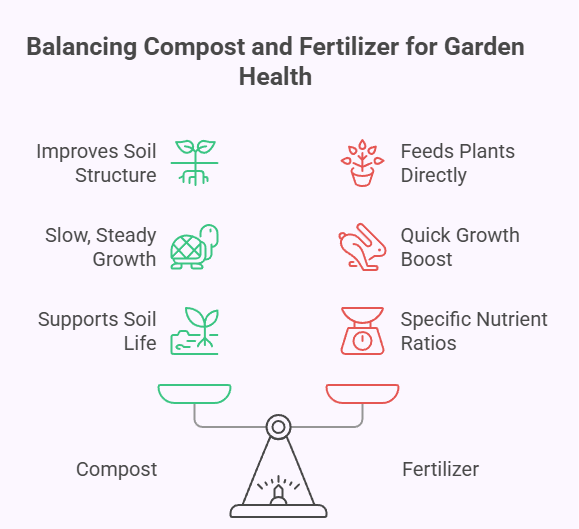
Compost and fertilizer work in very different ways inside soil, and both play important roles in healthy plant growth. One builds soil health slowly, while the other gives plants quick nutrients for active growth stages.
Compost Improves Soil Structure
Compost works inside soil by improving texture, air flow, and water balance for long-term plant health. It slowly changes poor soil into a soft growing medium that supports stronger roots and steady plant growth over time.
Unlike quick plant foods, compost does not act fast on visible growth, but it keeps soil alive and active. This is why many gardeners rely on compost as the base for all planting work.
Fertilizer Feeds Plants Directly
Fertilizer gives nutrients straight to plants through soil water, helping them grow faster in a short time. It supports leaf growth, flowering, and fruit production when plants need extra energy during active growth stages.
Many gardeners search for the best garden fertilizers when plants show weakness or slow development. Fertilizer works quickly, but it does not improve soil quality like compost does.
Compost Supports Long-Term Soil Life
Compost creates a healthy environment for microbes, fungi, and earthworms that naturally support plant growth. This living soil system improves fertility slowly and keeps soil productive for many growing seasons.
Gardeners often compare soil quality in mixes like Sta Green & Miracle Gro potting mix, where compost-rich soil usually performs better. It builds long-term balance that plants depend on every season.
Fertilizer Works with Specific Ratios
Fertilizer comes in measured nutrient ratios that support different plant needs during growth stages. These ratios help gardeners control feeding based on plant type, soil condition, and growth speed.
For example,7-7-7 fertilizer gives equal nutrients for general plant care, while 16-16-8 liquid fertilizer supports faster growth in active seasons. These formulas act quickly but need careful use.
Compost vs Fertilizer in Real Garden Use
Compost is mainly used to prepare soil before planting, while fertilizer is used during plant growth for quick support. Both can work together when used at the right time and in the right amount.
Healthy gardens often combine both methods instead of relying on one. Compost builds the base, and fertilizer gives extra power when plants demand more nutrients for growth and production.
Compost vs Fertilizer: Which One Should You Use?
Compost and fertilizer work best when used with clear timing and purpose in gardening. One prepares soil for long-term strength, while the other supports plants during active growth when nutrients are needed quickly.
The Truth: It’s Not a Choice, It’s a Strategy
Compost and fertilizer are not competing options in gardening practice. Compost acts as the foundation that builds healthy soil, while fertilizer works as a supplement that supports plants when they need extra nutrition during growth stages.
Many gardeners compare products like Black Kow & Miracle Grow to decide soil improvement methods. The better approach is not comparison, but understanding how both fit into a planned feeding system for healthier plants and stable soil conditions.
Good soil has a balance between subsoil & topsoil, and compost helps improve both layers over time. Fertilizer cannot fix poor soil structure, but it can support plants once soil conditions are already stable and ready for growth.
When to Use Compost
Compost works best before planting because it improves soil structure and prepares a healthy base for roots. It helps loosen hard soil and also improves water movement inside both subsoil & topsoil layers.
It is also useful when the soil looks weak, dry, or compacted after repeated planting cycles. Long-term soil health depends on compost because it slowly rebuilds organic matter that plants need for stable growth over many seasons.
When to Use Fertilizer
Fertilizer is best used during active growth stages when plants need quick nutrient support. It helps leaves grow faster, supports flowering, and improves fruit development in a short time period.
Many gardeners use fertilizers for fruit trees when trees show slow growth or weak fruit production. Fertilizer is also helpful when plants show visible nutrient deficiency, but it should never replace soil improvement methods like compost.
Why Understanding Soil Health Matters More Than You Think
Soil is not just dirt where plants sit and grow slowly over time. It is a living system full of tiny microbes, fungi, and organic matter. These small life forms break down nutrients and help roots absorb them easily.
When soil structure is poor, roots struggle to grow deep and stay healthy. Hard soil blocks air, and loose soil fails to hold enough water for plants. Even after adding fertilizer, roots cannot take up nutrients properly in such weak soil.
This is why soil health always comes first before adding any plant food later. To fix this problem, you need something that improves soil from the inside. That is where compost plays an important role in every garden.
Compost improves the soil ecosystem over time, while fertilizer provides immediate nutrients but does not enhance soil structure or long-term fertility.
Pro Tips for Using Compost and Fertilizer Together
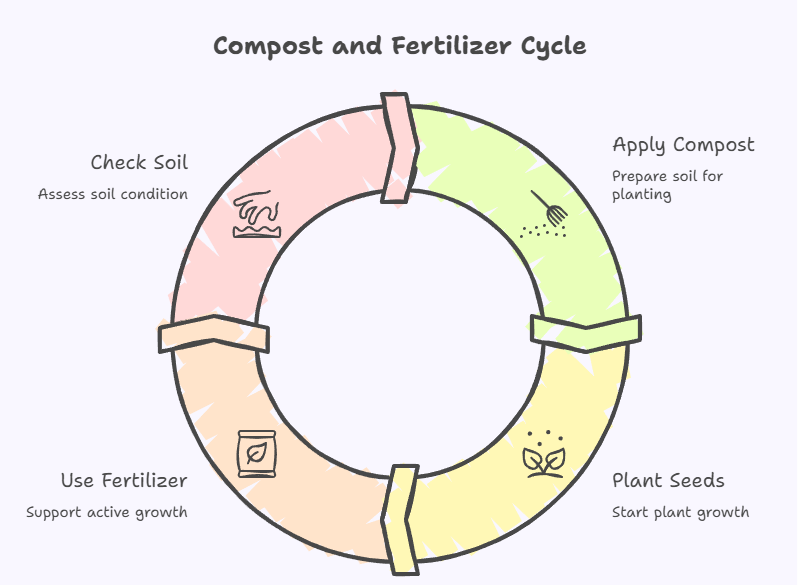
Compost and fertilizer give the best results when you use them in a planned way for different plant stages. Compost prepares soil first, while fertilizer supports plants later during active growth for stronger results.
Apply Compost Before Planting
Compost should always go into soil before planting begins because it creates a soft and healthy base for roots. It improves soil texture and helps water stay balanced in both dry and moist conditions.
When compost mixes with soil properly, it slowly improves subsoil & topsoil layers over time. This gives plants a stable growing environment where roots can spread easily and take nutrients in a natural way.
Use Fertilizer During Growth Stages
Fertilizer works best after plants start growing and show active leaf or flower development. It gives quick nutrients that help plants stay strong during their most demanding growth periods.
Some gardeners use Miracle Grow on Seedlings to support early plant growth when seedlings look weak or slow. Fertilizer should always match plant needs, so careful use is important to avoid stress on young roots.
Always Check Soil Condition First
Before adding anything, soil condition should guide your decision because weak soil cannot support healthy plant growth. Good soil holds moisture, allows air movement, and supports strong root systems naturally.
If the soil feels hard or dry, compost should be used first before any fertilizer application. Healthy soil always decides how well fertilizer will work, so soil balance comes before any feeding schedule.
FAQs: Compost vs Fertilizer
Is compost better than fertilizer?
Compost improves soil quality over a long period by building structure and supporting microbes. Fertilizer gives plants quick nutrients, but it does not improve soil health or long-term growing conditions.
Can I plant directly in compost?
No, planting directly in compost is not a good idea for most plants. Compost must mix with soil to create proper drainage, air flow, and stable root support.
How often should I add compost?
Compost usually needs to be added once or twice during each growing season. This helps maintain soil health and slowly improves the structure for continuous plant support.
Does compost replace fertilizer?
No, compost does not fully replace fertilizer in gardening. It reduces the need for frequent feeding, but fertilizer is still useful when plants need quick nutrient support.
End Note
Compost builds a strong soil foundation slowly over time. Fertilizer supports plants by boosting growth during active stages when nutrients are needed most for healthy development.
Healthy soil always leads to consistent and resilient plant growth in every season. Focus on the soil first, and plants will take care of themselves naturally.


