You must be looking for an EarthBox replant kit alternative because it’s not always available everywhere. Here you will uncover innovative solutions for replenishing soil nutrients, optimizing plant growth, and achieving bountiful harvests without compromising on quality.
If you cannot find the original EarthBox Replant Kit, don’t worry. There are many effective EarthBox Replant Kit alternatives that work just as well for container gardening. You can use simple DIY soil mixes, balanced fertilizers, dolomite lime, and mulch to refresh your EarthBox system and keep plants healthy. This guide will show you the best substitutes, recipes, and affordable options for better harvests.
Quick Answer: Best EarthBox Replant Kit Alternative
The best EarthBox Replant Kit alternative is a DIY mix of balanced fertilizer (7-7-7 or 10-10-10), dolomite lime, and peat or coco-based potting soil. This combination supports steady nutrients, proper pH balance, and strong root growth in self-watering container systems.
EarthBox Replant Kit Alternatives – Quick Answer Table
Here’s a quick breakdown of how an Earthbox replant kit alternative compares to the original components:
|
Component |
EarthBox Kit |
Alternative |
|
Fertilizer |
7-7-7 |
Any balanced fertilizer |
|
Dolomite |
Included |
Garden lime |
|
Mulch cover |
Plastic |
Black plastic / organic mulch |
|
Soil |
Peat mix |
Coco peat/potting mix |
What Is an EarthBox Replant Kit?

The Earthbox is a popular gardening system that allows people to grow plants, herbs, and vegetables in a contained and efficient manner. It’s designed to make gardening easier for both beginners and experienced gardeners.
The Earthbox typically consists of a self-watering container with a water reservoir, a cover, a planting grid, and casters for easy mobility. The “Earthbox Replant Kit” is an accessory or a set of materials sold separately from the main Earthbox system.
It is meant to help users replant or refresh their Earthbox after a growing season. The kit typically includes items like:
- New mulch cover: The cover helps maintain moisture and prevents weed growth.
- Fertilizer: Earthbox-specific fertilizer optimized for the system’s growing conditions.
- Aeration screen: Placed at the bottom of the Earthbox, it ensures proper drainage and root aeration.
- Dolomite: To help regulate soil pH and provide essential nutrients to plants.
- Organic-based dolomite: An organic alternative to standard dolomite.
- Plastic end caps: These are optional and used to close the Earthbox’s watering tube during transport.
If you are looking for alternatives to the Earthbox Replant Kit, there are various ways you can refresh or replant your Earthbox without purchasing a specific kit.
You can buy individual components like fertilizer, dolomite, and mulch covers from garden centers or online stores. Alternatively, you can choose to use organic fertilizers and dolomite to ensure a natural approach.
Just ensure that any alternatives you select are suitable for your plant types and growing conditions. If you’re unsure about specific materials or methods, you can consult gardening experts or Earthbox customer support for guidance.
What’s Inside EarthBox Replant Kit
Understanding what goes into an EarthBox kit helps you create a reliable EarthBox replant kit substitute without guesswork. The system is simple, but each component plays a precise role in soil nutrients replenishment and plant health.
Core Components Explained
The core EarthBox setup relies on three main elements: balanced fertilizer, dolomite lime, and a lightweight potting mix. Together, these components help maintain steady nutrients, proper soil pH, moisture retention, and healthy root growth in self-watering container systems.
1. EarthBox Fertilizer Ratio (NPK Balance)
The typical earthbox fertilizer ratio uses a balanced blend like 7-7-7 or 8-3-5. Instead of mixing it throughout the soil, it is placed in a fertilizer band across the top layer. This slow-release feeding method ensures steady nutrient availability for vegetable container gardening.
2. EarthBox Dolomite Amount
Dolomite lime helps balance soil pH and adds calcium and magnesium. The recommended earthbox dolomite amount is about 1-2 cups per box, mixed evenly into the potting mix before planting. This step is essential for preventing nutrient lockout.
3. EarthBox Soil Mix Recipe
A proper earthbox soil mix recipe relies on a peat-based potting mix or similar lightweight medium. Avoid heavy garden soil. The goal is to create a well-aerated environment that supports root growth in a self watering planter system.
Why This Formula Works
This growing method works by balancing moisture retention, nutrient availability, and soil aeration within the container. The combination helps support steady root development, improves water efficiency, and creates stable growing conditions for vegetables and other container plants.
It supports:
- Consistent moisture retention
- Balanced nutrient delivery
- Strong root aeration
If you recreate these elements correctly, even a simple earthbox refill kit alternative can deliver comparable results.
Looking for an EarthBox Replant Kit Alternative?
If you’re searching for a more affordable or flexible alternative to the EarthBox Replant Kit, you’re not alone. Many gardeners are exploring DIY kits or compatible replanting options that still offer dolomite, mulch covers, and balanced fertilizer.
Popular alternatives often feature 7-7-7 or 8-3-5 fertilizer blends, dolomite lime, and compostable mulch. Some go with trusted brands like Dr. Earth, PowerGrow Systems, or generic container garden kits on Amazon and eBay. These kits are typically compatible with self-watering systems like EarthBox and can help extend the life of your gardening setup without the higher price tag.
DIY solutions also work well. Gardeners on forums suggest combining pelleted fertilizer, lime, and organic soil mix to get results similar to branded kits. Whether you’re growing tomatoes, herbs, or leafy greens, these alternatives can offer nutrients your plants need at a fraction of the cost.

DIY EarthBox Replant Kit Recipe
If the original kit isn’t available, a DIY EarthBox replant kit offers a practical and budget-friendly solution. Many gardeners use this approach for organic container gardening and long-term sustainability.
Homemade EarthBox Fertilizer Mix (Simple Recipe)
A basic homemade earthbox fertilizer substitute mix combines dolomite lime, balanced fertilizer, and quality potting mix to support steady nutrient release, proper pH balance, and healthy root development in container gardening systems.
Recipe:
- 2 cups dolomite lime (for pH balance and calcium)
- 1 cup balanced fertilizer (10-10-10 or 7-7-7 works well)
- High-quality potting mix for vegetables (peat or coco-based)
- Organic compost blend (for added microbial life)
- Plastic mulch substitute (black plastic sheet or organic mulch)
How to Apply
Apply dolomite evenly in the soil, fill with potting mix, place earthbox fertilizer substitute in a top band, and cover with mulch to retain moisture and support steady plant growth.
Steps:
- Mix dolomite evenly into the soil
- Fill your container gardening system with potting mix
- Add fertilizer in a top band instead of mixing fully
- Cover with mulch to reduce evaporation
Why DIY Works
This homemade EarthBox fertilizer mix mimics the original system:
- Maintains moisture balance
- Supports steady nutrient release
- Encourages healthy root development
For balcony vegetable gardening or small spaces, this method performs surprisingly well without the higher cost.
DIY EarthBox Replant Kit Alternative Step-by-step Guide
If you don’t have the original kit, you can easily refresh your system using a simple EarthBox Replant Kit alternative DIY method with basic gardening materials.
Materials Needed
- Self-watering container (EarthBox or similar system)
- Potting mix (peat or coco-based)
- Balanced fertilizer (7-7-7 or 10-10-10)
- Dolomite lime (for pH balance)
- Mulch cover or plastic sheet
- Seeds or seedlings
- Clean water
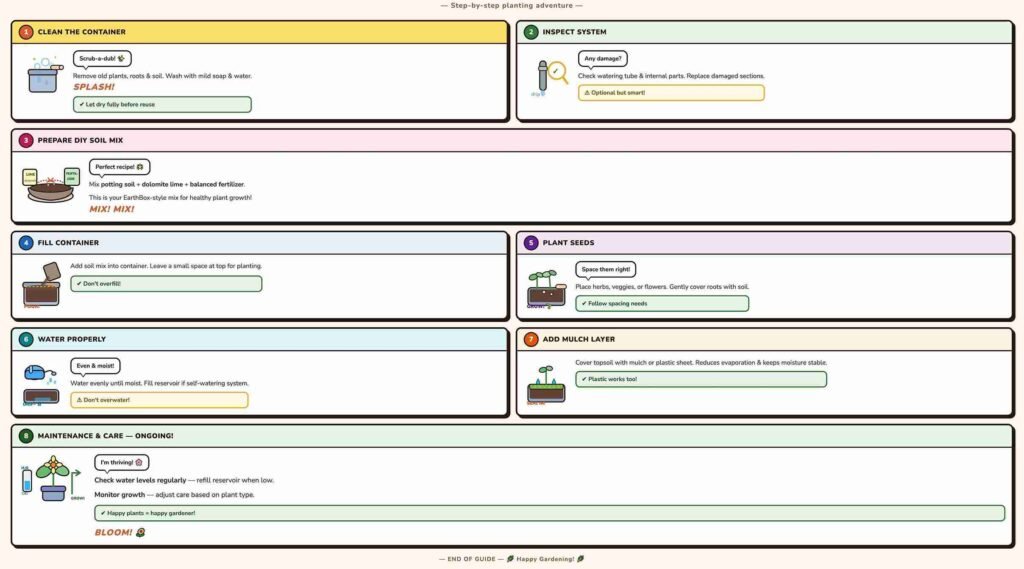
Empty and Clean the Container
Remove old plants, roots, and leftover soil. Wash the container with clean water and mild soap. Let it dry fully before reuse.
Inspect the System (Optional)
Check the watering tube and internal parts. Replace any damaged sections if needed for smooth water flow.
Prepare the DIY Soil Mix
Mix potting soil with dolomite lime and balanced fertilizer. It acts as your EarthBox soil mix recipe alternative and supports healthy plant growth.
Fill the Container
Add the prepared soil mix into the container, leaving a small space at the top for planting.
Plant Seeds or Seedlings
Place herbs, vegetables, or flowers according to spacing needs. Gently cover roots with soil.
Water Properly
Water the soil evenly until moist. Fill the reservoir if your system has a self-watering feature.
Add Mulch Layer
Cover the top soil with mulch or a plastic sheet. This helps reduce evaporation and keeps moisture stable.
Maintenance and Care
Check water levels regularly and refill when needed. Monitor plant growth and adjust care based on plant type.
Why This System Works (Quick Explanation)
This type of self-watering setup works because it maintains consistent moisture in the root zone, improves nutrient delivery, and supports airflow within the soil. These conditions help plants grow more steadily in containers compared to traditional watering methods.
Earthbox Replant Kit Alternative: Quick Overviews
Here’s a table comparing the four alternatives to the Earthbox Replant Kit:
| Alternative System | How It Works | Best For | Key Notes |
|---|---|---|---|
| Lechuza Self-Watering Planters | Built-in reservoir system supplies water gradually to the roots | Indoor and outdoor container gardening | Available in multiple sizes; reduces frequent watering needs |
| City Pickers Patio Garden Kit | Raised bed container with water reservoir and aeration system | Small spaces like balconies and patios | Designed for vegetables, herbs, and compact crops |
| Garden Patch GrowBox | Sub-irrigation system using capillary watering | Tomatoes, vegetables, and flowering plants | Includes support structure for climbing plants |
| DIY Self-Watering System | Custom setup using containers, wicks, and the reservoir method | Budget gardening and flexible setups | Requires basic DIY assembly and monitoring |
Each of these alternatives offers unique benefits, and your choice will depend on your gardening needs, available space, and budget.
Whether you prefer a stylish self-watering planter like Lechuza, a self-contained raised bed like City Pickers, a self-watering system with a capillary mat like Garden Patch GrowBox, or a budget-friendly DIY solution, they all provide convenient ways to grow plants with less frequent manual watering.
Best Fertilizer for EarthBox Alternatives
Choosing the right nutrients is key when using an Earthbox soil mix alternative or any grow box gardening system.
What to Look For
Balanced NPK Ratio
A balanced fertilizer (like 10-10-10 or 7-7-7) works best for most container gardening systems. It supports leafy growth, root strength, and fruit production.
Slow Release vs Liquid Fertilizer
- Slow release fertilizer for planters provides steady feeding over time
- Liquid fertilizers act quickly but require frequent application
For most users, slow-release options are easier to manage in a self watering planter system.
Organic vs Synthetic Fertilizer
- Organic options: compost, worm castings, natural blends
- Synthetic fertilizers: precise nutrient control, faster results
Both can work, but organic fertilizers are often preferred for organic container gardening and long-term soil health.
Best Practice
Use a combination of:
- Slow-release base fertilizer
- Occasional liquid feeding (if needed)
This ensures consistent soil nutrients replenishment without overfeeding.
Pro Gardener Tip
Use coco coir + compost + perlite (60:30:10) for better aeration than peat. This improves root oxygen in hot climates and reduces compaction over time.
4 Best Earthbox Replant Kit Alternative
Here’s a quick overview of each of the four alternatives to the Earthbox Replant Kit:
Alternative 1: Lechuza Self-Watering Planters
Lechuza offers a range of self-watering planters that are stylish and functional. Their planters feature a water reservoir system that automatically supplies water to the plants as needed, reducing the frequency of manual watering.
Lechuza planters come in various sizes and styles, making them suitable for both indoor and outdoor gardening.
Features:
- Stylish and modern design, suitable for indoor and outdoor spaces.
- Self-watering system with a water reservoir and wick, providing plants with water as needed.
- The water-level indicator allows easy monitoring of water levels.
- Various sizes and styles are available to accommodate different plant types and space requirements.
- Made from high-quality materials for durability and longevity.
Suitable for:
- Indoor gardening: Lechuza planters are perfect for adding greenery to homes, offices, and apartments.
- Outdoor gardening: They can be used on patios, balconies, or garden areas.
Additional Notes:
- Lechuza self-watering planters offer convenience for busy gardeners and help prevent overwatering or underwatering.
- The water reservoir allows plants to draw water from the bottom up, promoting healthy root growth.
- Lechuza also provides a range of accessories, like plant liners and sub-irrigation sets, to enhance the gardening experience.
Alternative 2: City Pickers Patio Garden Kit
The City Pickers Patio Garden Kit is a self-contained, self-watering raised bed planter. It includes a water reservoir, aeration fill tubes, and a mulch cover to retain moisture and prevent weed growth.
The kit is ideal for growing vegetables, herbs, and flowers on patios, balconies, or other limited spaces.
Features:
- Self-contained, raised bed planter designed for easy gardening in limited spaces.
- Self-watering system with a water reservoir, aeration fill tubes, and overflow holes to prevent overwatering.
- Mulch cover is included to retain moisture and reduce weed growth.
- Sturdy and durable construction, made from UV-resistant, recycled materials.
- Built-in casters for easy mobility, allowing you to move the planter as needed.
Suitable for:
- Patios, balconies, decks, and other small outdoor spaces.
- Growing vegetables, herbs, and flowers without the need for a traditional garden plot.
Additional Notes:
- The City Pickers Patio Garden Kit simplifies gardening for urban dwellers or those with limited yard space.
- Its self-watering system ensures consistent moisture for healthy plant growth.
- The raised bed design makes it easy to tend to plants without excessive bending or kneeling.
- The kit includes all the essential components for a thriving garden, making it a convenient option for beginners.
Alternative 3: Garden Patch GrowBox as EarthBox Replant Kit Alternative

The Garden Patch GrowBox is a self-watering planter designed for growing vegetables and flowers. It features a water reservoir and a capillary mat system that automatically waters the plants from below.
The GrowBox also includes a staking system to support climbing plants like tomatoes and cucumbers.
Features:
- Self-watering planter with a built-in water reservoir for automatic watering.
- Capillary mat system that draws water up to the plant’s roots as needed.
- The staking system is included for supporting climbing plants like tomatoes and cucumbers.
- Durable construction with a UV-resistant, polyethylene body for outdoor use.
- Available in different sizes to accommodate various plant types and quantities.
Suitable for:
- Growing vegetables, herbs, and flowers in both indoor and outdoor settings.
- Excellent for beginners or those with limited gardening experience.
Additional Notes:
- The Garden Patch GrowBox provides a consistent water supply to plants, minimizing the risk of under or overwatering.
- Its capillary mat system ensures optimal root hydration, promoting healthy plant growth.
- The included staking system makes it ideal for growing vining or climbing plants that require support.
- It offers a user-friendly and low-maintenance solution for successful container gardening.
Alternative 4: DIY Self-Watering System

For a budget-friendly option, you can create your DIY self-watering system using readily available materials. Common DIY setups involve using plastic containers with wicking mechanisms or building a self-watering reservoir with a water bottle or bucket.
This allows you to customize the size and design of your self-watering system to fit your specific gardening needs.
When choosing an alternative to the Earthbox Replant Kit or any gardening product, consider factors like the size of your planting space, the types of plants you want to grow, and the convenience of the self-watering system.
Also, each of these EarthBox refill kit substitutes offers its unique features and benefits, so select the one that aligns best with your gardening preferences.
Features:
- Customizable and adaptable to various container sizes and shapes.
- Budget-friendly, using readily available materials.
- Can be designed to fit specific plant types and watering needs.
- Provides a self-watering solution for containers without built-in systems.
- Requires basic DIY skills and creativity.
Suitable for:
- Gardeners who enjoy DIY projects and want to personalize their watering system.
- Those with unique or unconventional containers that don’t have integrated self-watering features.
Additional Notes:
- The DIY self-watering system can be tailored to suit individual gardening preferences.
- Common DIY setups involve using plastic containers with wicking mechanisms or creating a self-watering reservoir using water bottles or buckets.
- This alternative can be cost-effective and allows you to recycle materials for sustainability.
- Customization options include adjusting the water reservoir size, wicking material, and overall design to fit your specific gardening needs.
Consider These While Choosing the Best Earthbox Replant Kit Alternative
When choosing the best Earthbox Replant Kit alternative or any replanting kit for your container gardening needs, there are several factors to consider. These factors will help ensure that the alternative you choose aligns with your gardening goals and provides the best environment for your plants to thrive.
Here are some essential things to consider:
- Container Size and Type: Consider the size and shape of your existing containers or the ones you plan to use. Make sure the alternative replant kit is suitable for the containers you have or intend to use for your plants.
- Watering System: Check if the alternative replant kit includes a self-watering system or components that allow for efficient and consistent watering of your plants. Self-watering systems reduce the frequency of manual watering and help prevent overwatering or underwatering.
- Plant Type and Space Requirements: Consider the types of plants you want to grow and their specific space requirements. Some alternatives may be better suited for growing vegetables, while others may work better for herbs or flowers. Ensure the replant kit is appropriate for the plants you intend to grow.
- Materials and Durability: Look for high-quality materials that can withstand outdoor elements (if applicable) and provide long-lasting durability. Sturdy construction will ensure the replant kit serves you well for multiple growing seasons.
- Ease of Use and Maintenance: Choose an alternative replant kit that is user-friendly and easy to maintain. Avoid overly complex systems that may become difficult to manage or require frequent adjustments.
- Budget: Consider your budget and compare the cost of the replant kit with its features and benefits. While some kits may have additional functionalities, a more budget-friendly option might still meet your gardening requirements.
- Availability: Ensure that the alternative replant kit is readily available from reliable sources or retailers.
- Warranty and Customer Support: If applicable, consider the warranty or customer support provided by the manufacturer. A good warranty can give you peace of mind and assurance of product quality.
You may also like: How to Use Epsom Salt for Container Plants. So, if you have some spare time, please check this out.
FAQs
Yes, DIY self-watering systems can be effective and budget-friendly alternatives. With proper design and materials, they can provide a consistent water supply to plants and reduce the need for frequent manual watering. DIY systems can be customized to suit your container garden’s unique requirements.
The cheapest alternative is a homemade mix of compost, garden lime, and slow-release fertilizer. It reduces cost while still supporting healthy plant growth in container gardening.
Yes, most Earthbox Replant Kit alternatives are designed to work with various container types, not just Earthbox planters. Whether you have standard pots, raised beds, or other container shapes, you can adapt these alternatives to suit your gardening needs.
No, many Earthbox Replant Kit alternatives are designed to be user-friendly and require no specialized gardening skills. Ready-to-use replant kits and self-watering systems simplify the growing process, making container gardening accessible to both beginners and experienced gardeners alike.
Garden lime, gypsum, or crushed eggshells can sometimes be used as partial dolomite alternatives, depending on soil conditions and calcium needs. However, dolomite remains one of the most common options because it supplies both calcium and magnesium while helping balance pH.
Wrapping Up
The best EarthBox replant kit alternative is a simple DIY mix of quality potting soil, dolomite lime, and balanced slow-release fertilizer. This setup supports stable feeding, healthy roots, and proper pH balance in self-watering planter systems. It works well for vegetable container gardening and keeps growth consistent across seasons.
For a more budget-friendly option, organic compost-based soil mixes can also improve long-term soil structure and moisture retention. It is especially useful in raised beds and container gardening setups.
Note: This guide shares general gardening information and practical growing methods based on research and experience. Product performance may vary by climate, soil conditions, plant type, and individual gardening practices.