Yes, you should remove at least some old soil when repotting plants, especially if the soil is compacted, nutrient-depleted, or causing drainage problems. However, completely removing old soil is not always necessary because some plants are sensitive to root disturbance and transplant shock.
Plants that become root-bound often struggle to absorb water and nutrients efficiently, making repotting and soil refreshing especially important.
In this post, we’ll talk about why repotting matters, when it’s best to remove all or just some of the old soil, and how to do it without stressing your plant. Let’s make sense of it all together.
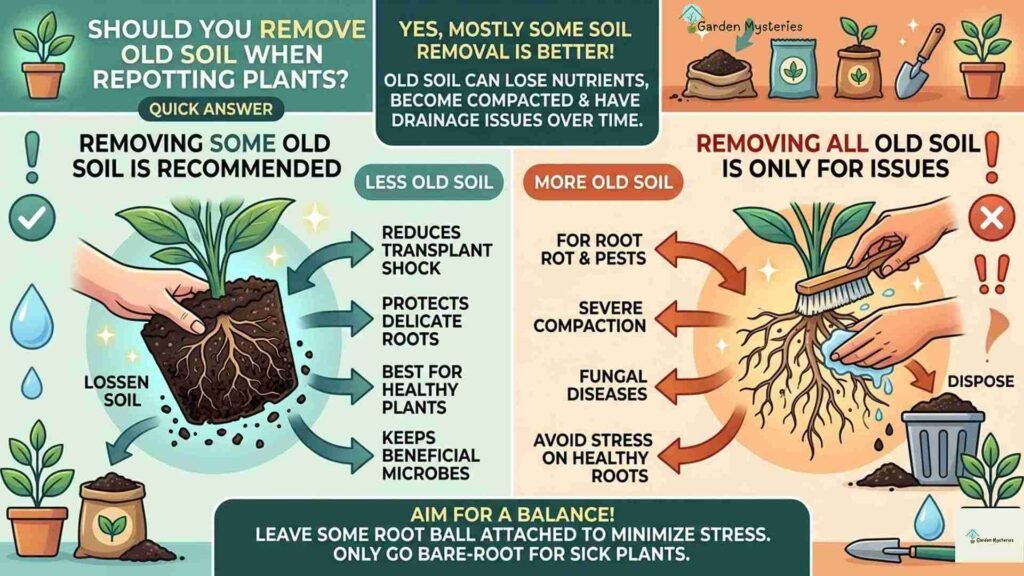
Should You Remove Old Soil When Repotting Plants? Quick Answer
Yes, you should remove at least some old soil when repotting plants. Old potting soil can become compacted, lose nutrients, and develop drainage problems over time. However, completely removing old soil is usually only necessary for root rot, pests, fungal disease, or severely compacted potting mix.
Healthy plants often do better when part of the original soil is left attached to reduce transplant shock and protect delicate feeder roots.
Why Repotting Is Important?
Repotting isn’t just about giving your plant a bigger home. It’s actually a major part of plant care that keeps your leafy buddy happy and thriving. If you’ve ever noticed a plant looking tired or a bit sad, it might not be the lighting or watering; it could just need a refresh underground.
Nutrient Renewal
Soil isn’t just a place for roots to hang out; it’s the main source of nutrients. Over time, those nutrients get used up, especially in pots where there’s no natural replenishment from outdoor elements like compost or mulch. Repotting gives you the chance to introduce fresh, nutrient-rich soil that your plant can feed on.
Room for Roots
As plants grow, so do their roots. If they don’t have enough space, roots can become tangled or “root-bound,” limiting the plant’s ability to absorb water and nutrients. A new pot with a bit more room and a loosened root ball helps the plant grow healthier and fuller.
Better Drainage
Old soil can become compacted, which affects how water flows through the pot. This can lead to soggy conditions or, worse, root rot. A fresh mix improves drainage and allows air to reach the roots more easily.
Should You Remove Old Soil When Repotting? (The Short Answer)
One of the most common repotting questions is: Should you remove old soil when repotting plants? Sometimes yes, sometimes just a little. It really depends on what your plant needs, what condition the soil is in, and why you’re repotting in the first place.
Let’s break it down:
1. If You’re Switching Soil Types
If you’re moving to a different kind of potting mix say, from standard indoor soil to something chunkier for succulents you’ll want to remove as much of the old mix as possible. This helps the new mix work properly and avoids layering issues that mess with drainage.
2. If the Soil Is Tired or Compacted
When soil feels like a rock or stays soggy too long, it’s time to let it go. Removing that old, worn-out mix helps your plant get a better start in its new home.
3. If the Plant Has Root Issues
Any signs of root rot or pests? That’s your cue to clean off the old soil so you can get a clear look at the roots and treat them if needed.
4. If the Plant Is Healthy and You’re Just Upsizing
In that case, you can get away with removing just a little maybe some from the top and sides. It helps make room for fresh soil without disturbing the plant too much.

You should usually remove at least part of the old soil when repotting plants. However, how much soil to remove depends on the plant’s health, soil condition, and whether there are pests, root rot, or drainage issues. Here is a quick table for your convenience.
| Situation | Remove Old Soil? |
|---|---|
| Healthy plant | Partially |
| Root rot | Completely |
| Fungus gnats or pests | Completely |
| Compacted or soggy soil | Mostly |
| Root-bound plant | Partially |
| Succulents and cacti | Minimal disturbance |
| Switching soil mix | Mostly |
| Sensitive tropical plants | Only a little |
When to Remove All Old Soil
You should remove all old soil when it is compacted, waterlogged, pest-infested, or affected by root rot or disease. It is also necessary when switching to a different potting mix for healthier root growth and drainage.
Newly Bought Plants
Store-bought plants often come in dense, moisture-retaining soil that may not suit your home conditions. Removing it lets you inspect the roots and repot with a mix that fits your plant’s needs better.
Switching Potting Mixes
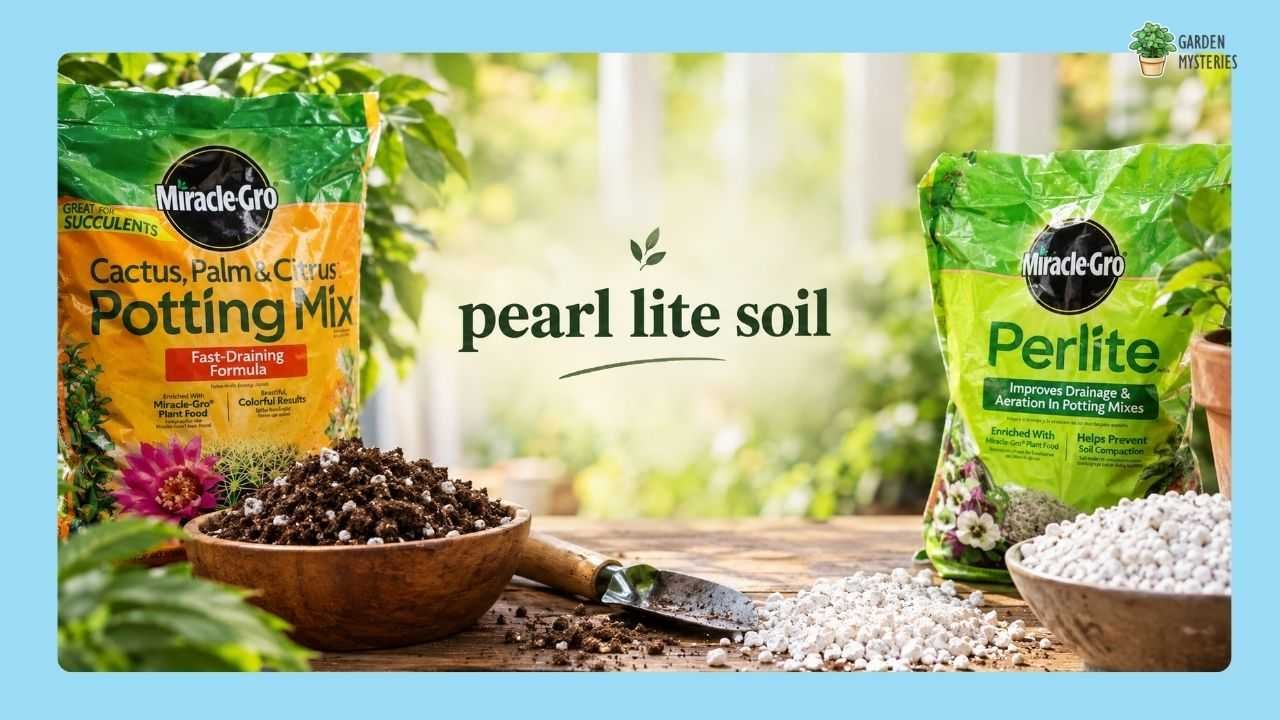
If you’re upgrading to a more appropriate soil blend like adding bark or perlite for better airflow, it’s smart to start with a clean slate. Old and new mixes might not work well together.
Treating Root Rot or Soil Issues
If your plant is suffering from soggy roots, pests, or fungi, removing all the old soil is the safest move. This helps prevent further spread and gives the roots a chance to bounce back in clean soil.
Dealing with Poor Soil Quality
Sometimes the soil just isn’t good, either it’s too dense, too dry, or lacking in nutrients. In those cases, it’s best to toss it and start fresh.
What is the best soil for repotting plants?
The best soil for repotting plants is a fresh, well-draining potting mix that matches the plant’s growth and drainage needs. In most cases, a mix containing compost, perlite, and organic matter works best. It improves airflow, supports healthy root growth, and prevents waterlogging after old soil is removed.
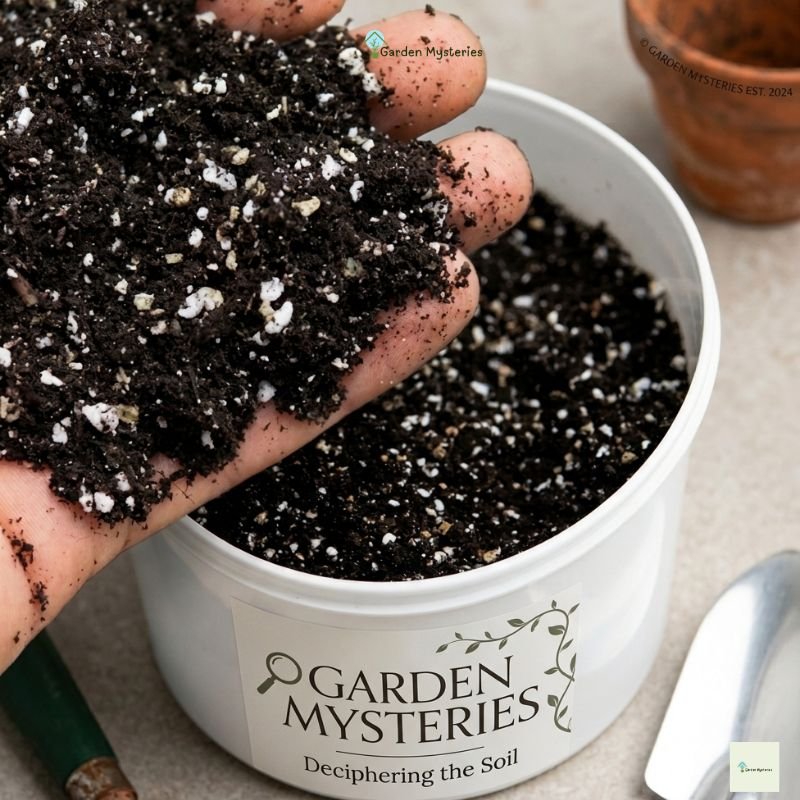
In general, lighter mixes are best for houseplants, while gritty or bark-heavy mixes work better for succulents, orchids, and plants that need fast drainage. For indoor plants, some gardeners prefer ready-made bagged potting mixes like Pots & Planters by MitoGrow, which are designed to provide balanced drainage and aeration.
If you are comparing popular organic potting soils, our guide on Miracle-Gro Organic Soil vs Kellogg Organic Soil explains which mix works best for drainage, moisture retention, houseplants, vegetables, and container gardening.
When to Remove Some Old Soil?
Not every repotting job calls for a full soil reset. Removing too much soil from healthy roots can cause transplant shock, especially in sensitive houseplants like calatheas, ferns, and ficus plants. In fact, sometimes it’s better to leave part of it alone.
Encouraging Growth
If your plant’s simply outgrown its pot, you can keep the core soil intact while removing a bit from the edges. This allows you to place it in a larger pot with extra room to grow.
Refreshing Nutrients
Even if the soil’s not terrible, it might just be a little “tired.” Removing the top 1-2 inches and replacing it with fresh mix can bring back some life without a full repot.
Sticking with the Same Mix
If the soil type is still a good match for your plant, you can keep most of it just add a layer of fresh mix around the root ball to improve structure and nutrients.
Handling Delicate or Dense Roots
For plants with dense or sensitive roots (think ferns or certain tropicals), removing just a bit of soil is safer. Trying to pull it all off could damage the roots more than help.
How to Remove Old Soil Safely?
So, how do you actually go about it? Here are some simple steps for removing old soil without putting your plant through too much stress.
Use the Right Tools
Fingers work great for loosening up soil around the roots. You can also use a small garden knife or chopstick to help separate the soil gently.
Be Gentle
Don’t yank or shake the roots roughly. Especially for delicate plants, slow and gentle is the way to go.
Rinse If Necessary
If the soil is super compacted or if you’re treating root issues, rinsing the roots under lukewarm water can help. Do it over a bowl or sink and let the roots air-dry slightly before repotting.
Support the Plant During the Process
Hold your plant near the base to keep it stable while working on the soil. Try not to leave the roots exposed for too long get them back into fresh soil as soon as you can.

What Happens If You Don’t Remove Old Soil?
Sometimes, not removing old soil is okay but not always ideal.
Risks of Leaving It All In
Over time, soil breaks down and compacts, making it harder for water to drain and roots to breathe. It also loses nutrients and may harbor pests or disease.
When It’s Fine to Leave It
If the soil still drains well, the plant looks healthy, and you’re not switching soil types, leaving most of the old soil can be fine. Just make sure to top it off with something fresh.
Can You Reuse Old Potting Soil?
You can reuse old potting soil if it is free from pests, fungus, mold, or root rot. However, old soil usually loses nutrients and structure over time, so it’s best to refresh it before reusing.
To improve reused potting soil:
- Mix in fresh compost or worm castings
- Add perlite for drainage
- Remove dead roots and debris
- Avoid reusing soil from diseased plants
For healthy plants, mixing old soil with fresh potting mix often works well.
What are the most common repotting mistakes?
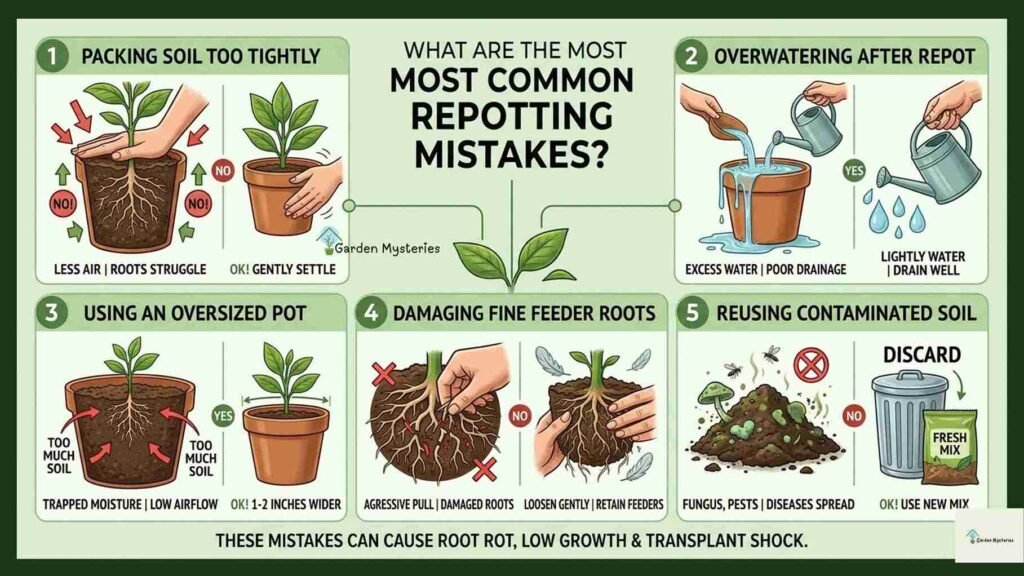
The most common repotting mistakes include packing soil too tightly, overwatering after repotting, using pots that are too large, damaging delicate feeder roots, and reusing contaminated soil. These mistakes can slow root growth, reduce drainage, and increase the risk of transplant shock or root rot.
Packing Soil Too Tightly
Fresh potting soil should stay light and airy around the roots. Pressing the soil down too firmly removes air pockets that roots need for healthy growth. Instead of compacting the mix, gently tap the pot to help the soil settle naturally.
Overwatering After Repotting
Many plants struggle after repotting because the soil stays too wet for too long. Newly disturbed roots absorb water more slowly, especially right after being moved. Water lightly after repotting and allow excess moisture to drain properly.
Using an Oversized Pot
Moving a plant into a pot that is much larger than the root ball can trap excess moisture around the roots. This often leads to soggy soil and poor airflow. In most cases, choosing a pot only 1 to 2 inches wider than the current container works best.
Damaging Fine Feeder Roots
Fine feeder roots help plants absorb water and nutrients. Pulling aggressively on the root ball or removing too much old soil can damage these delicate roots and slow recovery. Loosen roots gently and remove old soil carefully.
Reusing Diseased’ or Pest-Infested Soil
Old potting soil may contain fungus, pests, mold, or harmful bacteria. Reusing contaminated soil can spread problems to healthy plants. If the old mix smells bad, contains fungus gnats, or came from a plant with root rot, it’s safer to discard it and use fresh potting mix.
Final Thoughts
If you’re wondering should you remove old soil when repotting, the short answer is: it depends. Some situations call for a full reset, others just need a quick refresh. What matters most is understanding your plant’s needs and treating the roots with care.
Repotting is more than a chore; it’s a chance to give your plant a clean, fresh start.
FAQs
Most houseplants do well with repotting every 1 to 2 years. Fast growers may need it yearly, while slower ones can go longer without a change.
Washing roots is only recommended when treating root rot, fungal problems, or severe soil compaction. For healthy plants, gently loosening the root ball is usually safer than fully washing away old soil because it reduces root stress and transplant shock.
Absolutely. If the plant is healthy and you’re not changing the soil type, leaving part of the old mix is totally fine.
It’s best to wait a few weeks. Fresh potting mix often contains nutrients already, and giving fertilizer too soon can overwhelm the plant.