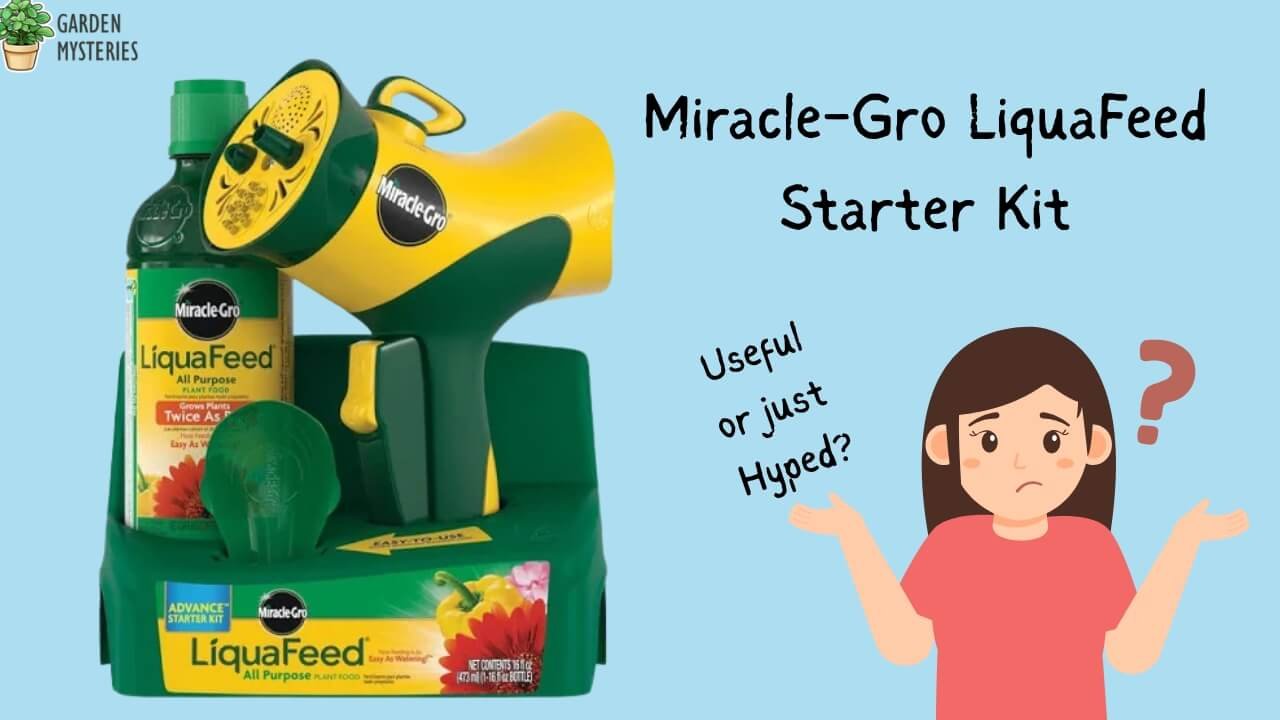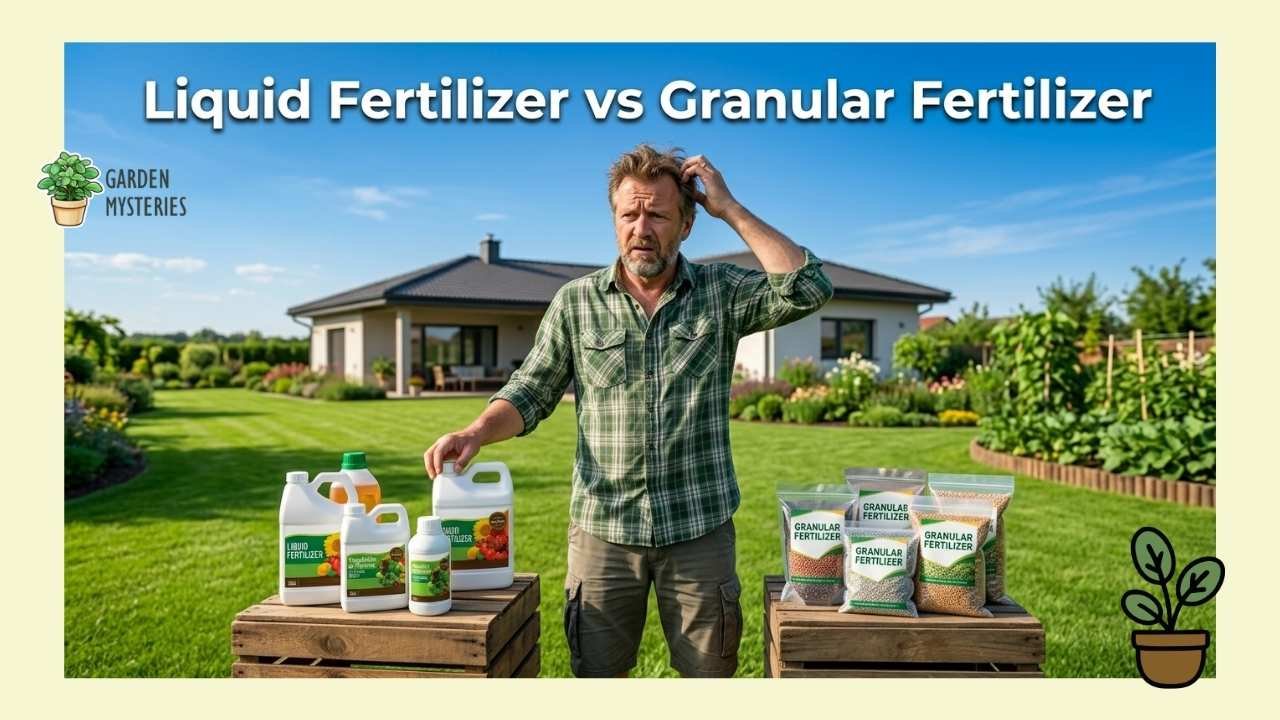
When it comes to growing healthy vegetables, choosing the right fertilizer type makes a significant difference in plant growth, yield, and soil health. Liquid fertilizer vs granular fertilizer is one of the most common decisions home gardeners and vegetable growers face. Also, both options have clear advantages depending on how and when they are used.
Liquid fertilizer works fast, delivering water-soluble nutrients directly to plant roots for quick uptake and visible results. Granular fertilizer releases nutrients slowly over time, feeding plants steadily and supporting long-term soil health.
Once you understand the difference between these two fertilizer types, you can reduce nutrient waste, improve your crop performance, and make smarter planting decisions throughout the growing season.
Liquid vs Granular Fertilizer: Quick Answer
Liquid fertilizer works fast and delivers nutrients immediately, making it ideal for seedlings, containers, tomatoes, and vegetables that need quick growth. Granular fertilizer releases nutrients slowly and supports stronger roots, long-term soil health, and steady plant development. For most vegetable gardens, using both fertilizers together provides the best results.
| Feature | Liquid Fertilizer | Granular Fertilizer |
|---|---|---|
| Nutrient Release | Immediate | Slow Release |
| Best For | Containers, seedlings | Raised beds |
| Application | Every 1-2 weeks | Every 4-8 weeks |
| Root Growth | Moderate | Strong |
| Soil Health | Moderate | Better |
| Cost | Higher | Lower |
What Is Liquid Fertilizer?
Liquid fertilizer is a fast-absorbing plant feed mixed with water that provides nutrients directly to roots and leaves for quicker growth. Because the nutrients are already dissolved, plants can absorb them faster than granular or slow-release fertilizers.
This rapid absorption makes liquid feeding especially useful during active growth stages when vegetables and plants need an immediate nutrient boost.
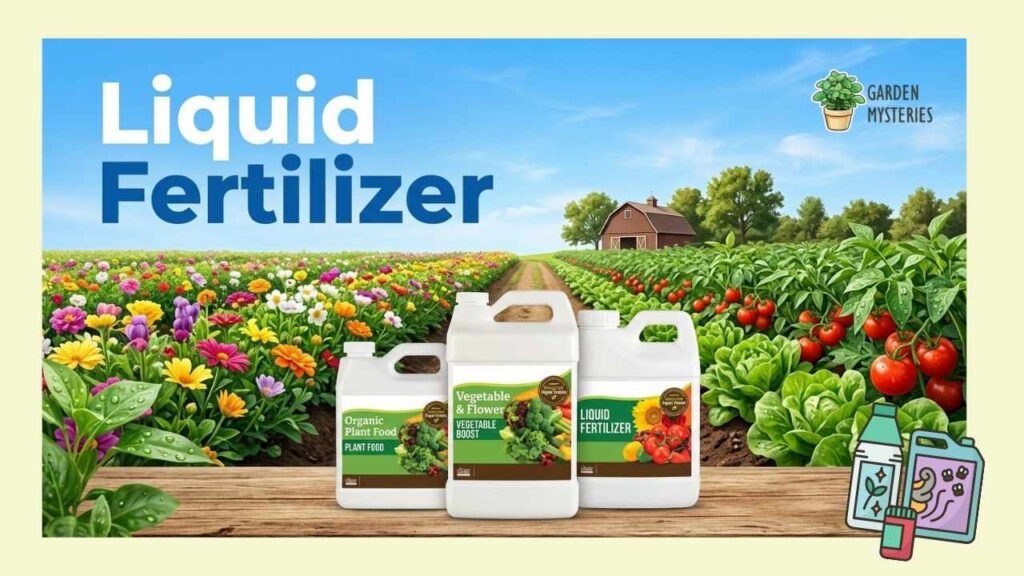
Most liquid fertilizers contain balanced NPK fertilizer ratios and are commonly used for:
- Tomato fertilizer feeding
- Seedlings and transplants
- Container vegetable fertilizer programs
- Fast correction of nutrient deficiencies
- Leafy greens fertilizer needs
- Hydroponic or raised bed gardening
Gardeners often choose liquid fertilizers when plants show yellow leaves, slow growth, or weak foliage because they produce a quicker plant growth response time compared to dry fertilizers.
Notable Benefits
Liquid fertilizer helps vegetables absorb nutrients quickly for faster growth and recovery. It is easy to apply, works well in containers and raised beds, and supports leafy growth, flowering, and fruit production.
- Fast nutrient absorption for rapid plant recovery
- Easy application with watering cans, drip systems, or sprayers
- Excellent for container gardening and raised beds
- Ideal for stressed plants during heat or transplant shock
- Helps support leafy growth, flowering, and fruit production
- Allows precise root zone feeding with less product waste
Downsides to Know
Liquid fertilizer requires frequent applications because nutrients wash away faster than granular fertilizer. Overuse may cause fertilizer burn, root-damage, nutrient leaching, and reduced long-term soil improvement in vegetable gardens.
- Requires more frequent applications than granular fertilizer
- Nutrients may wash away quickly after heavy watering or rain
- Higher risk of soil leaching effect in sandy soils
- Less effective for long-term soil feeding and soil structure improvement
- Overfeeding can damage roots or foliage if improperly diluted
How to Use Liquid Fertilizer
Maximize your garden’s health and yield by following these straightforward steps for effectively applying liquid fertilizer. Consistent, careful feeding provides essential nutrients directly to your plants, encouraging strong growth and abundant flowers or vegetables.
Dilute Product & Time Application (Liquid Fertilizer, Garden Feed)
Following the label instructions, mix the concentrate with water to create the optimal solution. Plan your feeding for the early morning or evening; applying during cooler hours minimizes evaporation and prevents leaf stress, ensuring more efficient nutrient uptake.
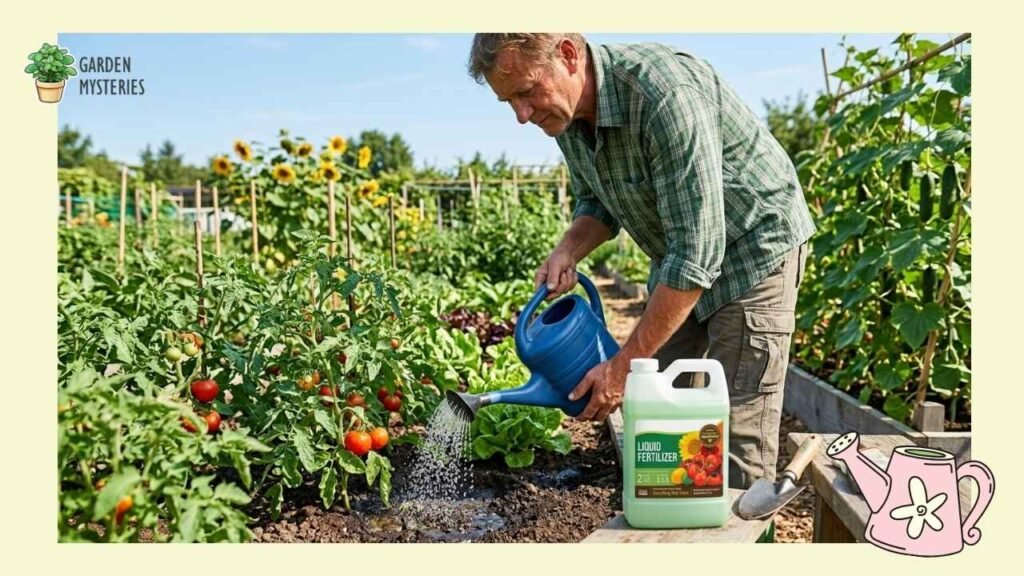
Water Soil (Watering Can, Moisture, Nutrient Transfer)
Just as the illustration suggests, water the surrounding soil lightly before you apply the liquid fertilizer. Pre-moistening the soil, as shown in the image below, ensures a receptive environment, preventing runoff and helping the nutrients easily penetrate and disperse throughout the root zone.
Apply and Monitor (Consistent Schedule, Garden Growth, Nutrient Levels)
Feed your vegetable garden, including heavy feeders like tomatoes and leafy greens, every 1-2 weeks. While consistency is key, avoid over-application. Too much fertilizer can lead to harmful nutrient buildup or weak, unsustainable plant growth.
What Is Granular Fertilizer?
Granular fertilizer is a dry plant fertilizer made from pellets, granules, or slow-release pellets that gradually break down in the soil over time. Unlike liquid fertilizer, granular products release nutrients slowly, making them ideal for steady root development and long-term soil feeding.
Many gardeners use granular fertilizer for:
- Raised bed fertilizer choice
- Large vegetable gardens
- Root crops like carrots, onions, and potatoes
- Long-season feeding programs
- Fruit trees and established plants
- Soil conditioning and nutrient retention
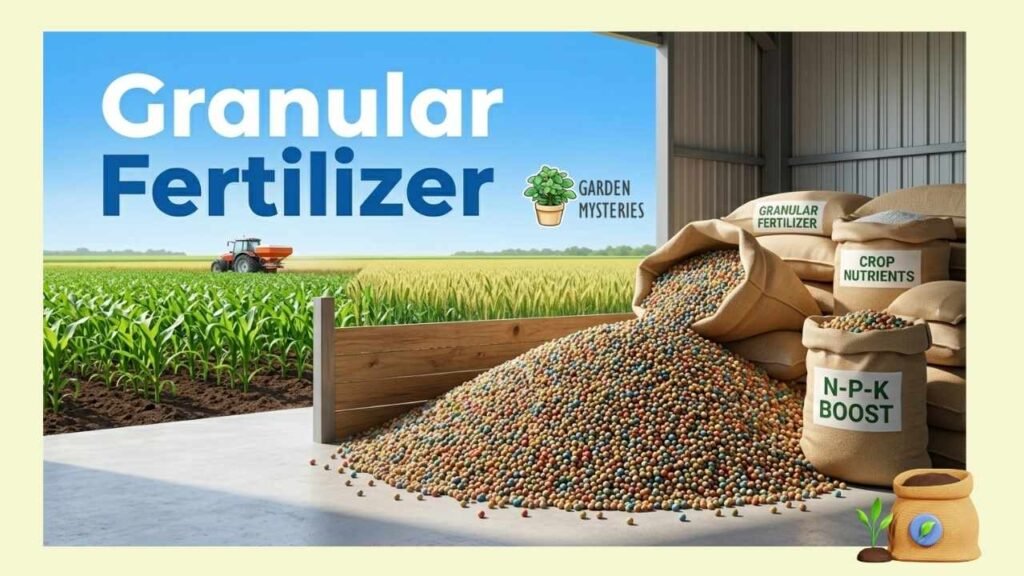
Granular fertilizers may be available as organic fertilizer or synthetic fertilizer, depending on the nutrient source and ingredients. Some compost-based fertilizer blends also improve soil structure, microbial activity, and moisture retention while supplying essential nutrients.
Because nutrients are released gradually, granular fertilizer supports consistent root zone feeding and reduces the need for frequent applications. This makes it a popular option for gardeners looking for lower-maintenance plant care and better long-term fertilizer efficiency.
Core Benefits
Granular fertilizer provides slow, steady nutrition that supports long-term vegetable growth and healthier soil. It requires fewer applications, works well in raised beds and large gardens, and helps reduce nutrient runoff and soil leaching.
- Excellent for long term soil feeding
- Requires fewer fertilizer applications
- Lower maintenance for busy gardeners
- Works well in large gardens and raised beds
- Supports steady nutrient release and root growth
- Improves soil health when using organic fertilizer blends
- Helps reduce rapid nutrient runoff and soil leaching
Possible Downsides
Granular fertilizer releases nutrients slowly, so plants may take longer to respond compared to liquid fertilizer. Overapplication can burn roots, and watering is usually needed to activate nutrients and support proper absorption.
- Slower nutrient availability compared to liquid fertilizer
- Can burn roots if overapplied near plants
- Requires watering to activate nutrient release
- Less effective for correcting immediate nutrient deficiencies
- May take longer to show visible plant growth response time
How to Use Granular Fertilizer
A happy garden requires balanced nutrition for good health and production. Granular fertilizers provide a steady source of essential elements, fostering strong root development and plant vigor. By following a proper application routine, you invest in a productive, beautiful harvest.
- Spread & Mix (Fertilizer Blend, Garden Bed)
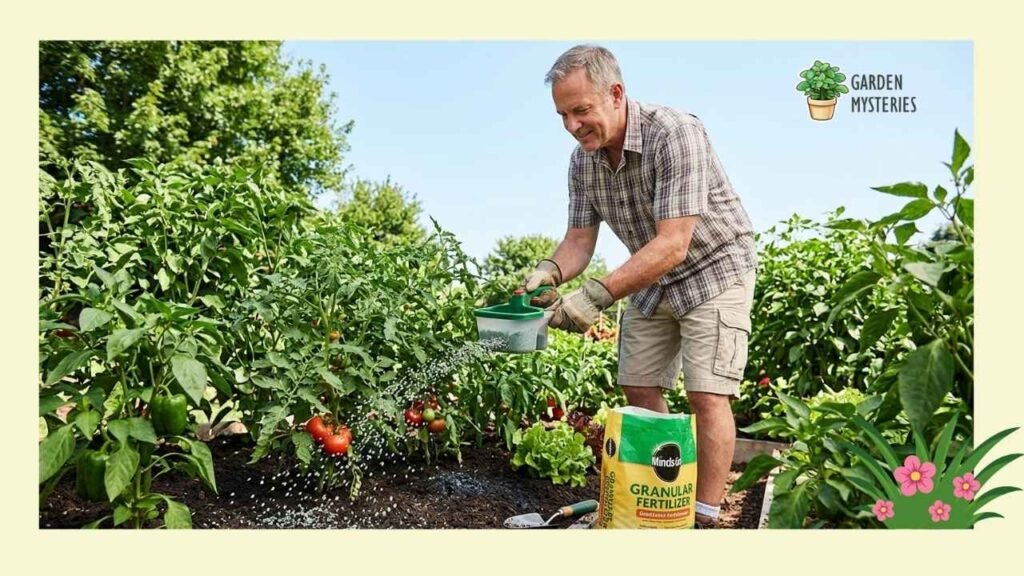
Apply granules evenly around the plant base. Lightly scratch them into the topsoil layer to ensure optimal placement and minimize nutrient runoff.
- Water Deeply (Moisture Level, Root Zone)
Water the area thoroughly immediately after application. This activates the nutrients and moves them into the root zone for easy absorption.
- Schedule & Safety (Slow-Release, Protection)
Reapply every 4 to 8 weeks based on crop needs. Always wear protective gloves during application. Do this like the image below.
Liquid or Granular Fertilizer for Vegetables
Choosing between liquid vs granular fertilizer for vegetables depends on plant type, growth stage, and watering habits. Liquid fertilizer works best for fast nutrient uptake and quick growth, while granular fertilizer provides slow, steady feeding for long-term vegetable development and healthier soil structure.
Best Uses for Liquid Fertilizer
Liquid fertilizer is ideal for fast-growing vegetables, seedlings, and container plants that need quick nutrient absorption. It supports rapid leafy growth, flowering, transplant recovery, and improves fertilizer efficiency during active growing stages.
Tomatoes
Tomatoes benefit from quick feeding during flowering and fruit production. Proper tomato fertilizer feeding helps improve flowering, fruit size, and overall vigor.
Leafy Greens
Lettuce, spinach, kale, and similar crops have high leafy greens fertilizer needs because they grow rapidly and require consistent nitrogen availability.
Container Vegetables
Container plants lose nutrients quickly through watering. Liquid feeding improves fertilizer efficiency and replaces nutrients faster.
Seedlings
Young plants absorb liquid nutrients quickly without waiting for pellets to break down.
Best Uses for Granular Fertilizer
Granular fertilizer works best for root vegetables, raised beds, and large gardens needing slow, long-lasting nutrition. Its steady nutrient release supports balanced growth, stronger roots, and consistent feeding throughout long vegetable growing seasons.
Root Vegetables
Carrots, onions, potatoes, and beets benefit from steady feeding because excessive quick nitrogen can create leafy growth instead of strong roots.
Understanding root vegetables nutrient needs is important for balanced harvests.
Raised Beds
A good raised bed fertilizer choice often includes slow-release nutrients that continue feeding throughout the season.
Large Vegetable Gardens
Granular fertilizers are easier and more cost-effective for wide planting areas.
Long Growing Seasons
Slow-release feeding supports vegetables for weeks or months without constant reapplication.
Which Fertilizer Is Better for Vegetable Gardens?
For most home gardens, the best strategy is actually using both. Granular fertilizer builds the foundation. Liquid fertilizer acts like a seasonal booster.
Use Liquid and Granular Fertilizer Together
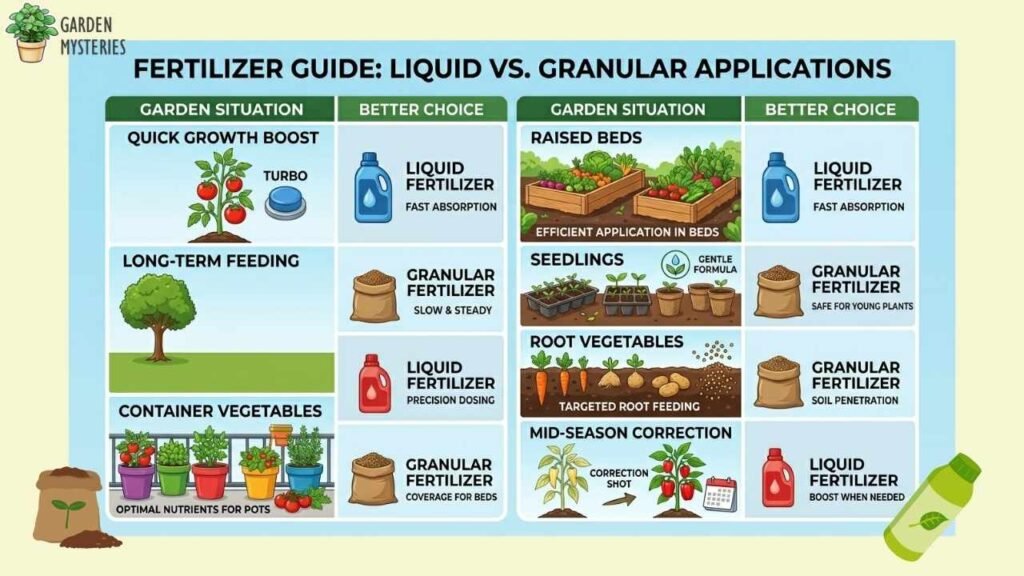
Yes, you can use liquid and granular fertilizer together for vegetables. Granular fertilizer provides slow, steady nutrients, while liquid fertilizer delivers quick feeding during active growth, flowering, and fruit production.
A smart combination strategy chart of using liquid and granular fertilizer:
| Garden Situation | Better Choice |
| Quick growth boost | Liquid |
| Long-term feeding | Granular |
| Container vegetables | Liquid |
| Raised beds | Granular |
| Seedlings | Liquid |
| Root vegetables | Granular |
| Mid-season correction | Liquid |
| Soil improvement | Granular + compost |
This liquid and granular fertilizer combination improves both immediate growth and long-term soil health.
Here are some common questions people have when they try to decide on liquid or granular Fertilizers. Check them out for more insights on these garden choices.
What fertilizer works best for tomatoes?
Tomatoes grow best with balanced feeding that supports both roots and fruit production. Many gardeners combine granular fertilizer for long-term soil feeding with liquid fertilizer during flowering stages. For deeper tomato fertilizer feeding tips, see our guides on the best fertilizer for vegetables and organic fertilizer for vegetables.
Which fertilizer lasts longer?
In the liquid fertilizer vs granular fertilizer debate, granular fertilizer lasts significantly longer because nutrients release slowly over time. Slow-release pellets continue feeding plants for weeks or months, making granular fertilizer vs liquid fertilizer comparisons especially important for raised bed fertilizer choice and large vegetable gardens.
Is liquid fertilizer better than granular fertilizer?
Liquid or granular fertilizer depends on your gardening goals. Liquid fertilizer works faster for containers, leafy greens, and quick nutrient correction, while granular fertilizer supports long-term soil health. For liquid vs granular fertilizer vegetables, many gardeners use both together for stronger growth and better fertilizer efficiency.
When to Use Liquid or Granular Fertilizer
Timing your fertilizer correctly can make the difference between a productive vegetable garden and one that never quite reaches its potential. Here is a simple breakdown to help you choose the right type at the right time.
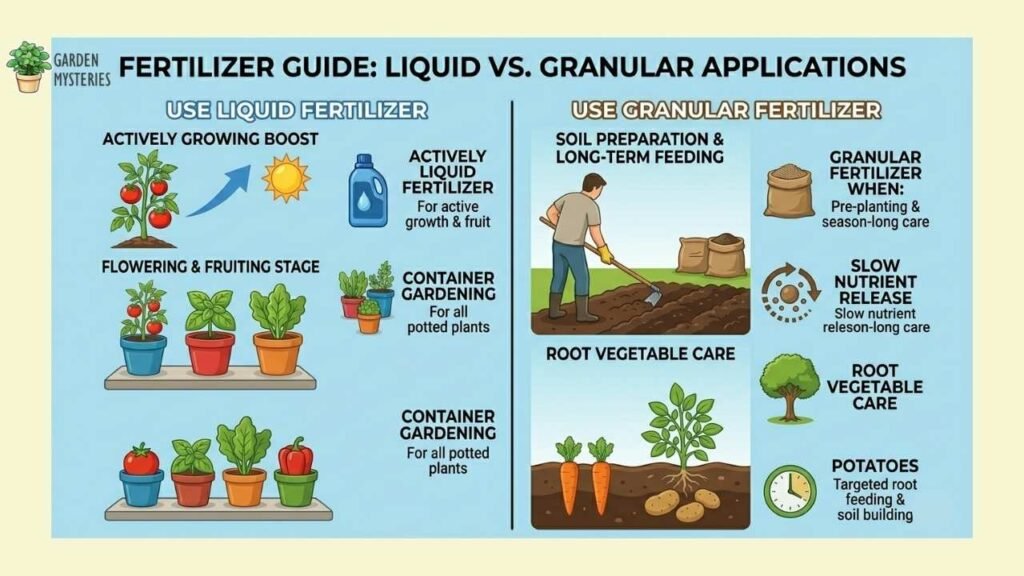
Use Liquid Fertilizer When:
- Plants are actively growing and need an immediate nutrient boost
- Vegetables are in the flowering or fruiting stage, especially tomatoes
- You are growing in containers where slow-release feeding is less effective
- Plants show signs of nutrient deficiency and need fast correction
- You want quick results after transplanting or stress recovery
Use Granular Fertilizer When:
- You are preparing soil before the planting season begins
- Raised beds or in-ground gardens need steady, long-term nutrition
- You are growing root vegetables that benefit from slow, consistent feeding
- You want to build soil fertility without frequent reapplication
- Low-maintenance, seasonal feeding is your preference
How Often to Fertilize Vegetables with Granular & Liquid Fertilizer
Fertilizing frequency depends on the type of fertilizer you use, your vegetable crop, and the current stage of plant growth. Getting the timing right helps you maximize yields, avoid nutrient waste, and protect your plants from fertilizer burn.
How Often to Apply Liquid Fertilizer?
Apply liquid fertilizer every 1 to 2 weeks during active growth stages. Because liquid fertilizer is water-soluble and absorbs quickly, it moves through the soil faster and needs more frequent reapplication to maintain consistent nutrient levels. This makes it especially effective during the flowering and fruiting stage of vegetables like tomatoes, peppers, and cucumbers.
A popular option many home gardeners trust is from FoxFarm. It is widely available online and works well for fast-feeding vegetables through every growth stage.
How Often to Apply Granular Fertilizer?
Apply granular fertilizer every 4 to 8 weeks, depending on the product formulation, soil condition, and rainfall levels in your area. Slow-release granular fertilizers break down gradually, feeding your vegetables steadily over a longer period with far less effort. This makes granular fertilizer a practical choice for busy gardeners who prefer a low-maintenance feeding schedule.
For a reliable granular option, you can try out a fertilizer from Osmocote. It is a well-reviewed product that feeds vegetables for up to six months with a single application. So, it is ideal for raised beds and in-ground gardens alike.
Pro Gardener Tip
Use granular fertilizer before planting to build soil fertility and strong roots. During flowering and fruiting, supplement with liquid fertilizer every one to two weeks for better yields, healthier foliage, and improved vegetable production.
Note: Always follow the label instructions on your fertilizer product. Overfertilizing, regardless of type, can burn plant roots, disrupt soil health, and significantly reduce your vegetable yields.
FAQs
Liquid fertilizer can burn plants if mixed too strongly or applied too often. Always dilute according to label directions and avoid fertilizing dry soil.
A balanced fertilizer with proper NPK levels and organic matter works best for most vegetable gardens.
Yes, both can be used together. Many gardeners use granular fertilizer as a base feed and liquid fertilizer during peak growth stages.
Liquid fertilizer is usually better for container vegetables because nutrients wash out faster with watering.
Granular fertilizer lasts longer because nutrients are released gradually over weeks or months. Liquid fertilizer provides faster results but usually requires reapplication every one to two weeks during active plant growth.
Final Verdict
When it comes to granular vs liquid fertilizer, neither option is universally better, and that is actually good news for your garden. The right choice depends on what your plants need and when they need it.
Liquid fertilizer delivers fast nutrients when your vegetables need a quick boost. Granular fertilizer provides steady, long-term feeding that builds healthier soil over time.
For the best results, use both strategically, granular as your nutritional base at planting time and liquid as your growth boost during flowering and fruiting. Together, they give your vegetable garden the balance of speed and consistency it needs to shine. And, don’t forget to check our blog on the differences between manure and compost.
Disclaimer: This gardening guide is for educational purposes only. Always follow fertilizer label instructions and local agricultural recommendations before application.