MitoGrow Tree and Shrub is a plant biostimulant, not a fertilizer. It is built to support root development and help woody plants bounce back after stress like transplant shock, drought, or heat damage.
A lot of people grab it expecting fertilizer results, and that is where the confusion starts. It works differently than a feed product, and knowing that difference changes how you use it and what you can actually expect.
This review covers what MitoGrow actually does, where it works well, and where it falls short. Some of it impressed me, some of it did not. Keep reading to see if it makes sense for your trees and shrubs.
What Is MitoGrow Tree and Shrub?
MitoGrow Tree and Shrub is a patented biostimulant formulated specifically for woody plants. It is naturally derived and designed to support root growth rather than feed the plant directly the way a fertilizer does.

The formula is built around helping plants absorb nutrients that are already present in the soil. It does not add nitrogen, phosphorus, or potassium in any meaningful amount. Instead, it works on the root system itself.
Most gardeners reach for it during planting or transplanting, since that is when root stress is highest. It comes as a powder or liquid concentrate depending on the product line, and it gets mixed into water before application. One thing worth knowing is that MitoGrow pots and planters use the same formula as in-ground applications, so container growers are not left out.
Unlike traditional fertilizers, MitoGrow works by improving how plants use nutrients already present in the soil.
Is MitoGrow a Fertilizer or a Biostimulant?
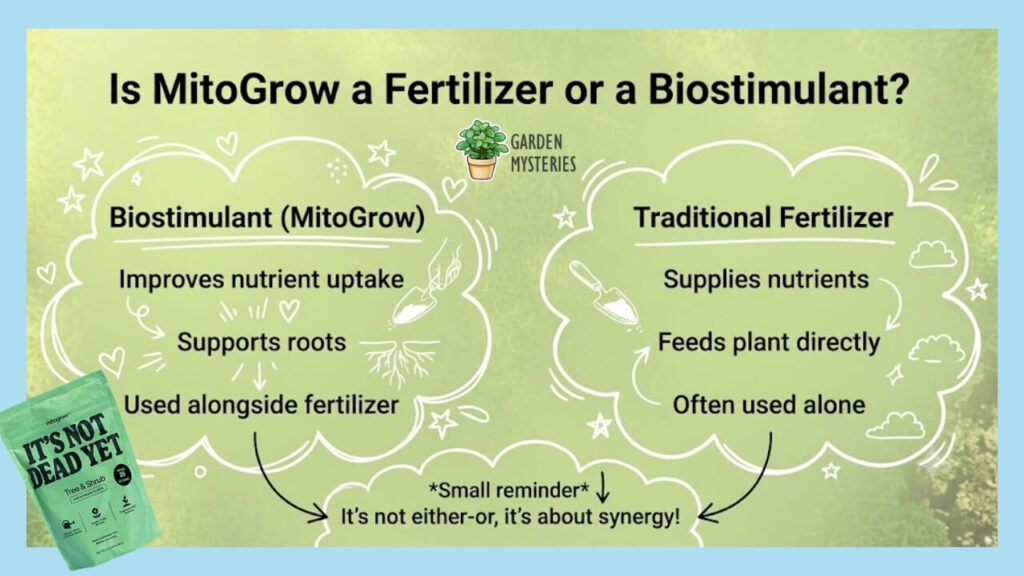
MitoGrow is a biostimulant, not a fertilizer, and the distinction actually matters for how you use it. A fertilizer feeds a plant directly. A biostimulant changes how efficiently the plant uses what is already there.
This confusion shows up constantly in product reviews. People expect quick green growth as they would see with a nitrogen-heavy feed, then get disappointed when that is not what happens here. It is a fair complaint if expectations were never set straight from the start.
The compost or fertilizer debate gets brought up a lot in gardening circles, and biostimulants sit outside that conversation entirely. They are a separate category meant to work alongside one of those two, not instead of either.
| MitoGrow | Traditional Fertilizer |
| Biostimulant | Fertilizer |
| Improves nutrient uptake | Supplies nutrients |
| Supports roots | Feeds plant directly |
| Used alongside fertilizer | Often used alone |
MitoGrow is intended to complement a fertilizer program rather than replace one.
How Does MitoGrow Tree and Shrub Work?
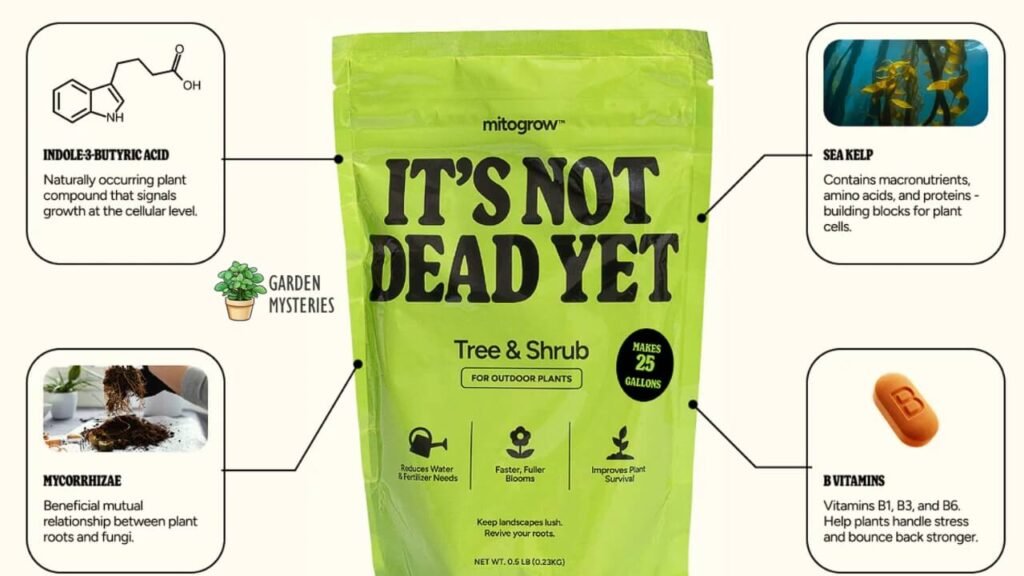
MitoGrow works by combining a handful of root-supporting ingredients that target plant stress at the cellular level. The formula includes IBA, mycorrhizae, and B vitamins, each playing a different role in helping roots establish and recover.
IBA
IBA stands for indole-3-butyric acid, a natural rooting hormone. It triggers new root development, which is especially useful right after planting or transplanting when the root system needs to expand quickly into surrounding soil.
Mycorrhizae
Mycorrhizae are beneficial fungi that form a relationship with plant roots. They extend the root system’s reach into the soil, helping the plant pull in more water and nutrients than the roots could access on their own.
B Vitamins
B vitamins support the plant’s natural stress response. They are not a food source on their own, but they help the plant maintain function during periods when energy demands are higher than normal, like after a move.
Root Stimulation and Stress Recovery
Together, these ingredients are designed to support plants recovering from transplant shock, drought stress, or heat stress. The goal is steadier recovery, not instant green growth, so results tend to show up gradually over a few weeks.
Key Benefits of MitoGrow Tree and Shrub
The main benefit of MitoGrow is that it supports root development during the periods when a tree or shrub is most vulnerable. It is not a quick fix, but it does seem to help plants establish with less setback.
Supports Root Development
The IBA and mycorrhizae combination is designed to help roots grow more efficiently after planting. A stronger root system early on tends to mean a more resilient plant later, which matters most for new installs.
Improves Nutrient Absorption
MitoGrow may help plants make better use of nutrients already in the soil or applied through a separate fertilizer, including products like Miracle Grow Topsoil blends. It is not adding food, just helping the plant use what is there.
Helps Plants Establish Faster
Newly planted trees and shrubs often sit in a holding pattern for weeks while roots adjust to new soil. This product is designed to shorten that adjustment window somewhat, though results vary by species and planting conditions.
Supports Recovery After Transplanting
Transplant shock is common, and MitoGrow is built to ease that transition. It supports the plant’s natural recovery process rather than forcing growth the plant is not ready for yet.
May Improve Resilience During Environmental Stress
During drought or extreme heat, plants that have been treated may show better resilience. This is not a guarantee, and results depend heavily on how severe the stress is and how healthy the plant was beforehand.
How to Use MitoGrow Tree and Shrub
MitoGrow is applied as a liquid drench mixed with water and poured around the root zone of the tree or shrub. The basic process is simple enough for most home gardeners to follow without much trouble.
- Mix according to package directions.
- Apply around the root zone.
- Water thoroughly.
- Repeat during the growing season if recommended on the label.
This is one of the few products where fertilizers for your garden and biostimulants can be used together without conflict. Always follow the product label for exact mixing ratios, since concentration varies between MitoGrow product lines.
When Should You Use MitoGrow?
MitoGrow is most useful during planting, after transplanting, and during periods of environmental stress like drought or heat. It is built around moments when root systems are under pressure and need extra support.
- During planting
- After transplanting
- After drought
- Heat stress
- Recovering shrubs
- Young trees
Established, healthy plants with no signs of stress generally do not need it as urgently, though some growers still apply it as routine maintenance throughout the season.
Pros and Cons of MitoGrow Tree and Shrub
MitoGrow has clear strengths around ease of use and plant safety, but it also comes with real limitations worth knowing before you buy. A balanced look at both sides helps set the right expectations.
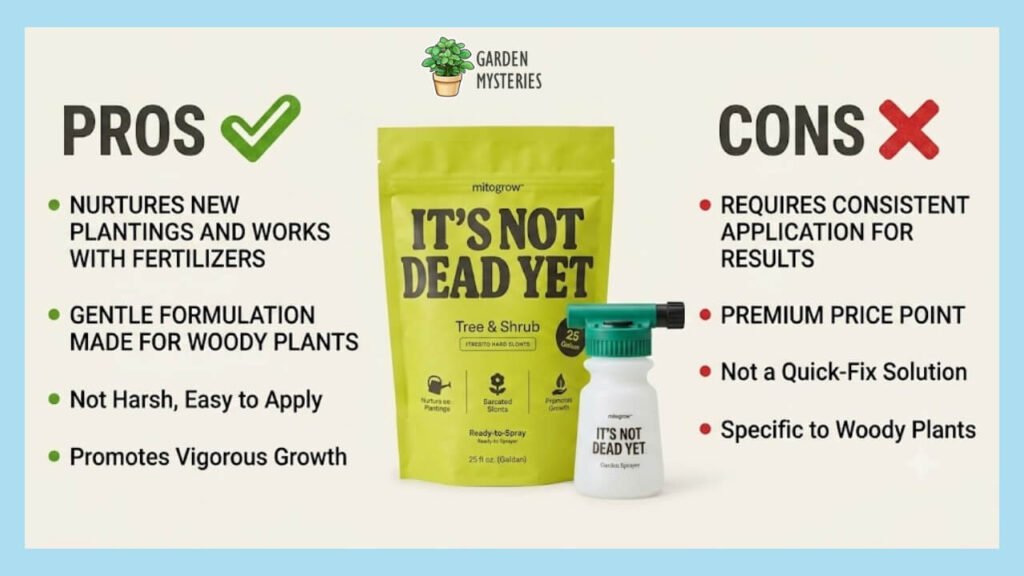
It works well alongside a normal feeding routine, including a raised bed soil mix setup for container-grown trees and shrubs, without causing any conflicts.
Pros
- Easy to mix
- Not harsh
- Works with fertilizers
- Suitable for new plantings
- Made for woody plants
Cons
- Not a fertilizer
- Results vary
- Needs consistent application
- Premium price
Is MitoGrow Tree and Shrub Worth It?
Whether MitoGrow is worth it depends on what you are planting and how much that planting matters to you. For high-value trees and shrubs, the cost is usually small compared to what you would lose if the plant failed to establish.
If you’re planting valuable trees or shrubs, reducing transplant stress is often worth more than the product’s purchase price. A failed transplant costs far more in time and money than a bottle of biostimulant.
However, MitoGrow is best viewed as a supplement to healthy soil, proper watering, and appropriate fertilization rather than a standalone solution. It will not save a plant from poor site conditions or chronic neglect.
FAQs
Is MitoGrow safe for newly planted trees?
Yes, it is formulated specifically for use during planting and transplanting. It works at the root level without the harsh effects some fertilizers can have on fresh root systems.
Can MitoGrow replace fertilizer?
No. MitoGrow is a biostimulant, not a fertilizer. It improves how plants use existing nutrients but does not supply nitrogen, phosphorus, or potassium on its own.
How often should MitoGrow Tree and Shrub be applied?
Application frequency depends on the product label and the plant’s condition. Many growers apply it at planting, then again during the growing season if stress symptoms appear.
Can I use MitoGrow on established shrubs?
Yes, established shrubs can be treated, especially during drought or heat stress. It supports recovery and resilience even outside the typical planting window.
Does MitoGrow help transplant shock?
It is one of its primary intended uses. The IBA and mycorrhizae combination is designed to support root recovery during the stressful weeks right after a move.
End Note
MitoGrow Tree and Shrub is worth considering if you are planting or transplanting valuable trees and shrubs and want extra support during the recovery window. It is not for anyone expecting fertilizer-style growth results.
If your soil and watering routine are already solid, MitoGrow can be a useful add-on. If you are looking for a standalone fix for struggling plants, it works better as part of a bigger care plan than as a solution on its own.
Note: This content is for informational purposes only. Results may vary based on plants, climate, and growing conditions. Always follow product labels, safety guidelines, and seek professional advice when needed.