A dry lawn turns brown fast, and hand watering every patch takes too much time and energy. A best water sprinkler for garden saves that time, but so many shapes, sizes, and price tags fill the market that the right pick gets confusing fast.
So what is the best water sprinkler for garden use this year? Based on real testing, three models stand out: the Melnor XT Oscillating Sprinkler, the Eden 96213 Weighted Essential Oscillating Sprinkler, and the Orbit 58257N Lawn and Garden 3-Arm Metal Sprinkler.
Stick around, because this guide covers five sprinklers in detail, plus tips on picking and using one the right way for your own yard, based on what worked in our own garden.
Key Takeaways
Short on time? Here are the main points from the best water sprinkler for garden, we tested, so you can compare fast before reading the full guide.
- Oscillating sprinklers cover large lawns better than simple circular models.
- Weighted bases keep sprinklers steady during long watering sessions outdoors.
- Impact sprinklers spray farther but need stronger household water pressure.
- Small yards do fine with wheeled or expandable circular sprinklers.
- Coverage numbers depend heavily on your actual home water pressure.
- Adjustable nozzles help you avoid wasting water on paths or beds.
Do You Need A Water Sprinkler?
Yes, if hand watering takes up too much of your day, a best garden sprinkler is worth adding to your yard. A sprinkler is simply a device that connects to your hose and sprays water across a set area automatically.
Some gardeners choose fixed systems with best in ground sprinkler heads, while others prefer a portable model they can move around. Either way, even feeding your soil with liquid fertilizer or granular fertilizer works better once the ground gets steady moisture.
- Large Lawn Areas: A big lawn dries out fast in summer heat, and moving a hose around by hand becomes tiring within days.
- Frequent Travel: If you travel often, a timer-connected sprinkler keeps plants alive without asking a neighbor to water them daily.
- New Seed Beds: Fresh grass seed needs light, even moisture every day, and a sprinkler spreads water more evenly than a hose.
- Hot Climate Zones: In areas with long dry summers, plants and lawns need consistent watering that a manual hose rarely provides on busy days.
- Mixed Garden Beds: Vegetable patches and flower beds often need different watering schedules, and adjustable sprinklers make it easier to manage both zones.
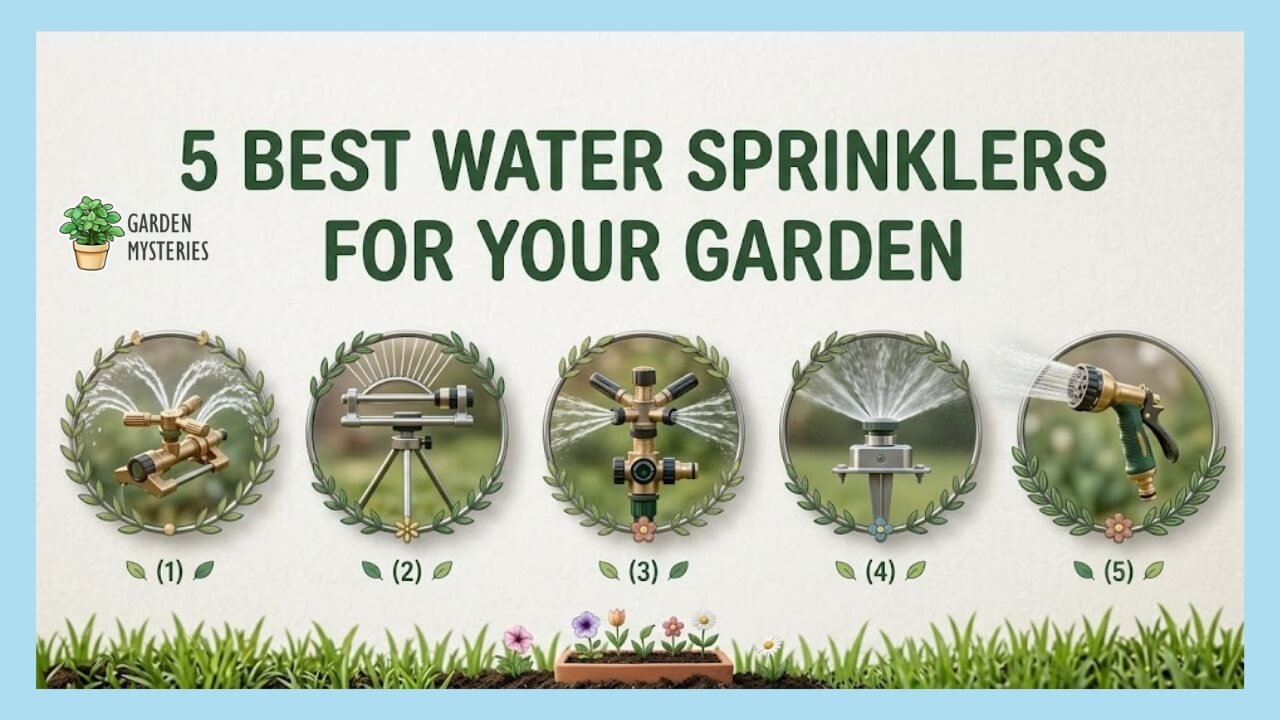
5 Best Water Sprinklers for Your Garden
Here, we will learn about the 5 best water sprinklers for garden use, based on our own testing this season. First, check the quick comparison table below, then read the full review of each model and what worked for us.
| Model | Coverage | Max Pressure | Best For | Base |
| Melnor XT Oscillating Sprinkler | 4,500 sq. ft. | 90 psi | Large lawns | Standard |
| Eden 96213 Weighted Essential Oscillating Sprinkler | 3,600 sq. ft. | 60 psi | Stable, everyday watering | Weighted |
| Orbit 58257N 3-Arm Metal Sprinkler | 24 ft. diameter | – | Small lawns | Wheeled, metal |
| Joeys Garden Sprinkler | Pressure-dependent | 80 psi | Medium lawns | Weighted ABS |
| Meekamar Heavy Duty Pulsating Impact Sprinkler | 4,500 sq. ft. | – | Large open lawns or gardens | Heavy metal |
1. Melnor XT Oscillating Sprinkler
- Coverage: Up to 4,500 sq. ft.
- Maximum pressure: 90 psi
- Best for: Large lawns
- Bad for: Very tiny beds
- Garden type: Lawn, flower beds
- Nozzles: 20 precision
- Adjustment: Width, range, zoom
- Warranty: Limited lifetime
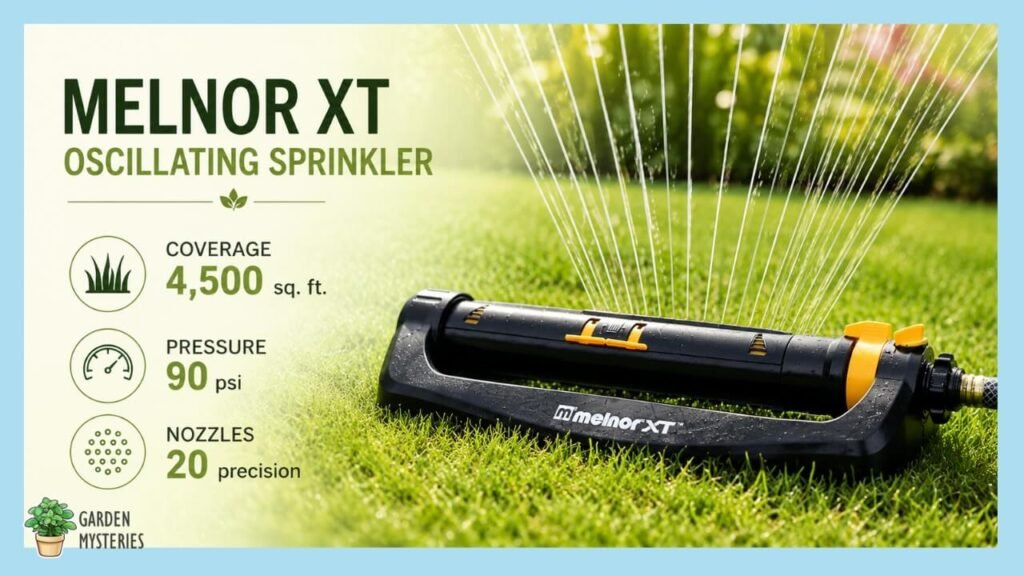
What I like about this Melnor XT Oscillating sprinkler is how much control you get over the watering pattern. The TwinTouch controls let you change both width and range, while the Zoom Control makes it practical for everything from a small patch to a large lawn.
The 20 precision nozzles spread water evenly, and the sprinkler can cover up to 4,500 square feet. I found that especially useful for larger lawns where moving a sprinkler around every few minutes becomes annoying. The watering width indicators are another nice touch.
Its Dirt Resistant Drive is particularly helpful if your water contains some grit. Instead of letting debris easily interfere with the gears, the system is designed to keep the sprinkler moving smoothly. For anyone comparing best in-ground sprinkler heads, this is a different style worth considering.
2. Eden 96213 Weighted Essential Oscillating Sprinkler
- Coverage: Up to 3,600 sq. ft.
- Maximum pressure: 60 psi
- Best for: Stable watering
- Bad for: Very large lawns
- Garden type: Lawns, flower beds
- Nozzles: 16 precision
- Flow rate: 30 GPM
- Base: Weighted
- Warranty: 2 years
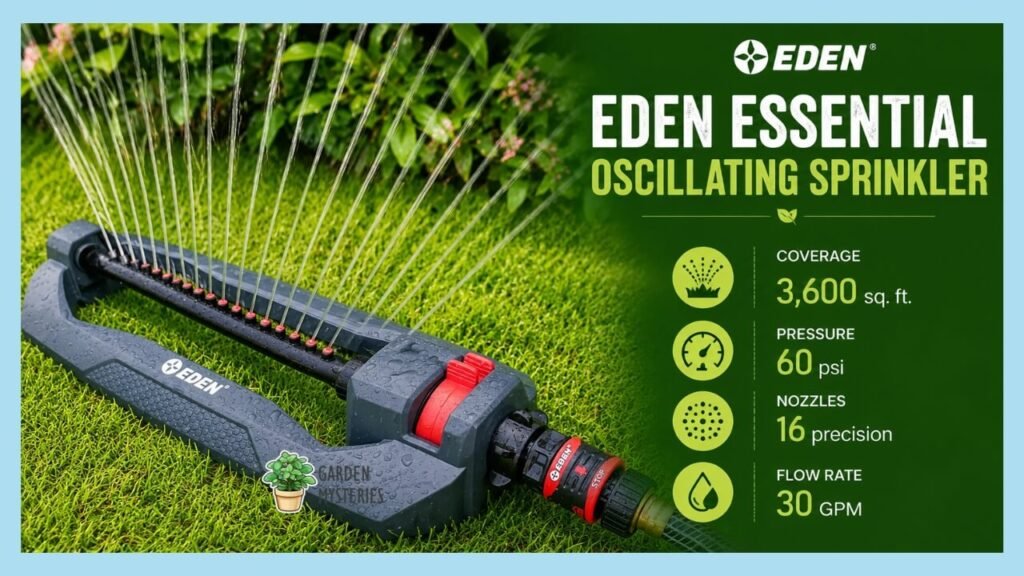
The first thing I noticed about this Eden sprinkler is its weighted base. It stays put while running, which makes it a good choice when you do not want the sprinkler slowly shifting away from the area you actually want to water.
Sixteen precision nozzles cover up to 3,600 square feet, and the sliding tabs make it easy to adjust the watering range. The sealed Turbo Drive also keeps operation relatively smooth and quiet. It feels more suited to controlled everyday watering than simply maximizing distance.
There are several small conveniences here that I would appreciate during regular garden work. The built-in nozzle-cleaning tool helps clear blockages, while the stainless steel filter washers and quick-connect system make hose connections easier. It is also a practical alternative to a gardena lawn sprinkler if you prefer an oscillating design.
3. Orbit 58257N Lawn and Garden 3 Arm Metal Sprinkler
- Coverage: Up to 24 ft. diameter
- Best for: Small lawns and gardens
- Bad for: Large rectangular areas
- Garden type: Lawns, shrubs, flowers
- Spray: Full circle
- Arms: 3 rotating
- Base: Wheeled
- Material: Metal
- Flow: Adjustable
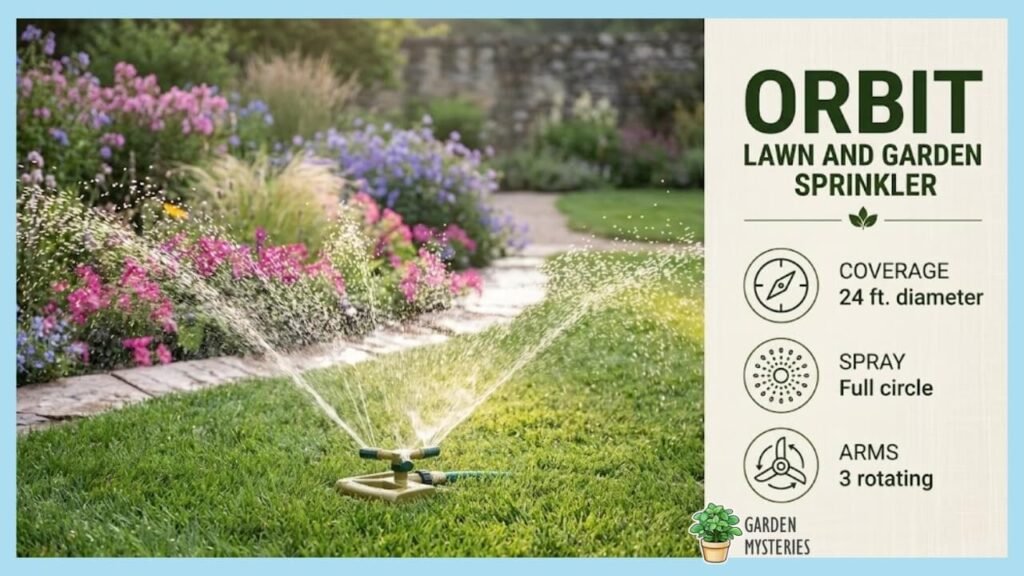
The Orbit garden sprinkler takes a simpler approach than the two oscillating models above. Its three metal arms rotate in a circle, producing a steady stream that works nicely when you need to water an open section of lawn without dealing with complicated settings.
The spray pattern can be adjusted through the nozzles, so you have some control over both water flow and diameter. Coverage reaches about 24 feet in diameter according to the detailed product information, making it better suited to smaller areas than large rectangular lawns.
I also like the wheeled base because repositioning it does not require picking the whole sprinkler up. The metal construction and corrosion-resistant finish should also help with regular outdoor use.
It is a straightforward option for someone who wants a traditional sprinkler rather than a Miracle-Gro LiquaFeed Starter Kit style watering setup.
4. Joeys Garden Sprinkler
- Coverage: Pressure-dependent
- Maximum pressure: 80 psi
- Best for: Medium lawns
- Bad for: Low water pressure
- Garden type: Lawns, yards, gardens
- Spray: 360° rotating
- Arms: 3 adjustable
- Base: Weighted ABS
- Connection: Expandable
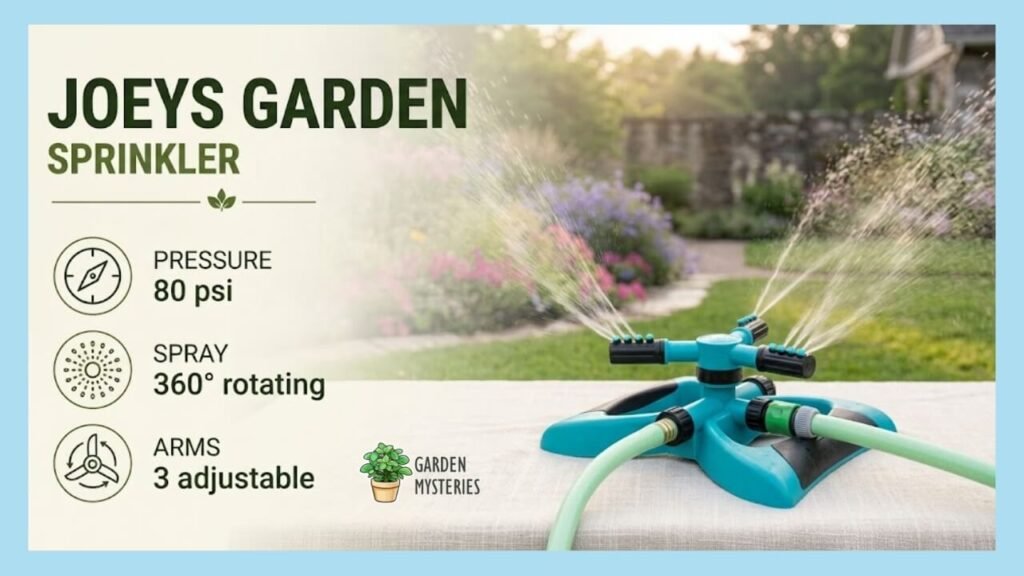
This Joeys garden sprinkler makes sense when you need a simple circular watering setup without moving the sprinkler around constantly. The three arms rotate 360 degrees, and you can adjust their spray angle to suit the section of lawn or garden you are watering.
What stood out to me is the weighted ABS plastic base. On a flat surface, it should stay reasonably steady while running, even though the actual coverage will depend heavily on your household water pressure. You can also connect several units together for wider coverage.
I would choose this one for someone who wants uncomplicated lawn watering and the option to expand later. It connects directly to a standard garden hose and does not need much setup. Just keep in mind that stronger water pressure will generally give you better range.
5. Meekamar Heavy Duty Pulsating Impact Sprinkler
- Coverage: Up to 4,500 sq. ft.
- Best for: Large open lawns or gardens
- Bad for: Very small beds
- Garden type: Lawn, garden, greenhouse
- Spray: 20° to 360°
- Base: Heavy metal
- Adjustment: Radius, distance
- Connection: 3/4 inch hose
- Spray style: Rain-like
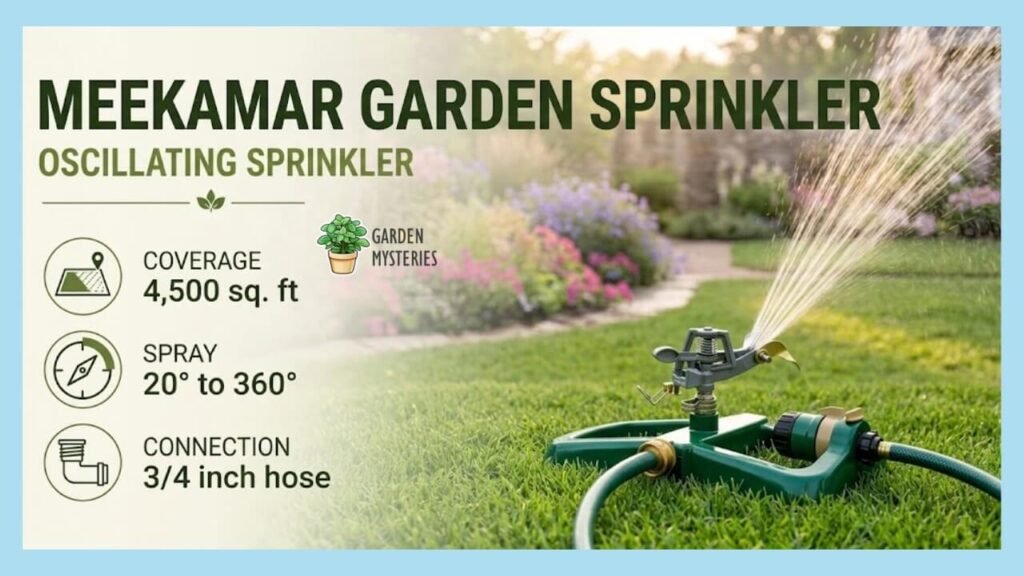
A heavier metal base gives this Meekamar sprinkler a different feel from lightweight plastic models. It is designed to handle stronger water pressure without tipping easily, while the impact head creates a familiar rain-like spray across the lawn.
You can adjust the watering area from a small section to a full 360-degree circle, with coverage reaching up to 4,500 square feet. The deflector shield also lets you reduce the spray distance, which is useful when nearby plants or walkways should stay dry.
The controls make this one quite versatile for different outdoor spaces. You can connect the best water Ssprinkler to a standard 3/4 inch garden hose, change the radius, and even link sprinklers for a larger area. It could also work beyond lawns, including flower beds and greenhouse spaces.
How Do You Choose the Right Water Sprinkler
The right choice for the best water sprinkler for garden depends on your lawn size, soil type, and the water pressure available at your home. Match these three factors first, then compare features like coverage, adjustability, and how the base handles rough or uneven ground.
Measure Your Lawn Size
Before buying anything, walk your yard and estimate the square footage you need to cover. A small city lot rarely needs the same reach as a half-acre property, so match the sprinkler’s range to your actual space.
Check Your Water Pressure
Low household pressure limits how far any sprinkler can throw water, no matter the spec sheet. The Melnor XT performed well even at moderate pressure in our own backyard test, which made it a safer pick for older homes.
Consider In-Ground vs Portable
If you want a permanent setup, look into the best in-ground sprinkler heads that stay buried under the lawn between uses. Portable models cost less upfront and work better for renters or gardens that still change shape yearly.
Look at Spray Pattern Options
Some plants need a gentle mist, while lawns often do better with the best irrigation heads that push water farther and faster. The Eden 96213 uses sliding tabs to adjust range, which gave us more control over where water actually landed.
Match It to Your Plants
Container gardens need lighter, more targeted watering than open lawns, so a full sprinkler may actually overwater them. For pots, we still like hand watering or a soaker line near our MitoGrow Pots and Planters instead of a wide spray.
Tips to Utilize A Water Sprinkler Properly
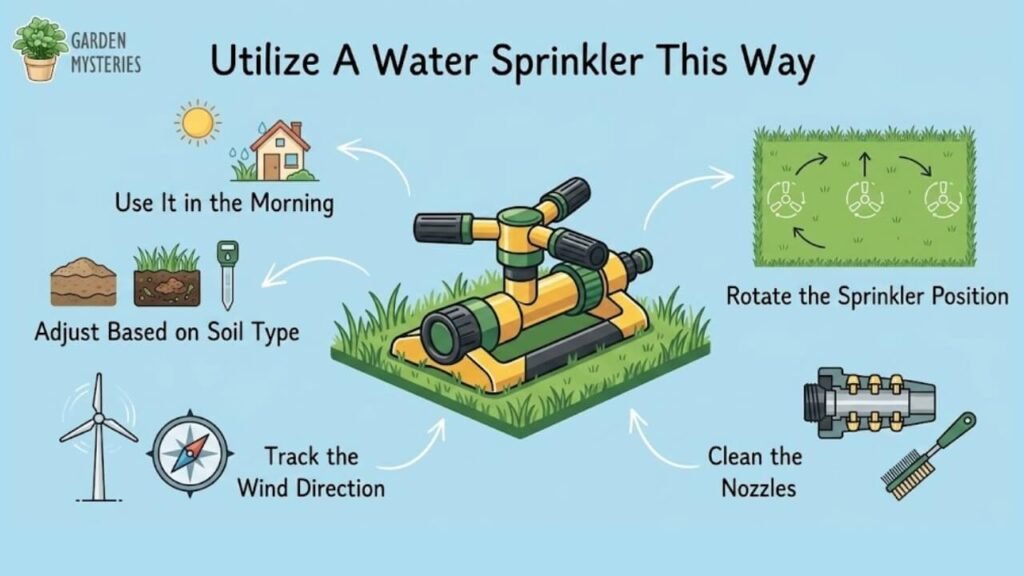
Water early in the morning, check for even coverage, and adjust the spray pattern often to avoid dry patches. These simple habits help any best water sprinkler for garden work more efficiently over time.
Water Early in the Morning
Morning watering lets moisture soak into the soil before the sun gets strong, which cuts down on evaporation loss. We noticed grass stayed greener longer when we ran our sprinkler before eight in the morning instead of midday.
Check Soil Type First
Sandy soil drains fast and needs shorter, more frequent sessions, while clay holds water longer and needs less. A good raised bed soil mix also drains differently than open ground, so watch it closely at first.
Rotate the Sprinkler Position
Leaving a sprinkler in one spot too long can flood some areas while leaving others dry. We moved our Orbit 58257N every twenty minutes across the lawn, and the grass color evened out within two weeks.
Watch the Wind Direction
Windy days push water sideways, so a lot of it ends up on the sidewalk instead of the grass. We now check the forecast and skip watering on days over fifteen miles per hour of wind.
Clean the Nozzles Regularly
Mineral buildup and dirt can clog small nozzle holes over a few months of regular use. We clean ours with an old toothbrush every few weeks, and it keeps the spray pattern even across the whole lawn.
When to Avoid Using A Water Sprinkler Properly
Skip sprinkler use during heavy rain, strong wind, peak afternoon heat, or right after fertilizing, since these conditions waste water or harm plants. Even the best water sprinkler for garden care isn’t right for every moment.
- Heavy Rain Days: There is no reason to run a sprinkler when rain already soaks the lawn, since this just wastes water and money.
- Strong Windy Weather: Wind blows the spray off target, so most of the water lands on paths or driveways instead of plants.
- Midday Sun Hours: Watering under strong afternoon sun causes fast evaporation, and droplets on leaves can sometimes scorch them in bright light.
- Right After Fertilizing: Heavy watering right after applying fertilizer can wash nutrients away before roots have any chance to absorb them.
- Near Young Shrubs: Young shrubs from our MitoGrow Tree and Shrub collection prefer slow, direct watering at the base instead of an overhead spray.
End Note
The best water sprinkler for garden choice comes down to your lawn size, water pressure, and how much control you want over the spray. All five options we tested cover different needs, from tight budgets to large open yards.
Start with your yard’s size and your usual water pressure, then match that to a model above. Whatever you pick, the best water sprinkler for garden care is simply the one that fits your space and your daily routine.
Disclaimer: This gardening information is for general educational purposes. Some pages may contain affiliate links or advertisements, and we may earn a commission from qualifying purchases at no additional cost to you.
Other Blogs: