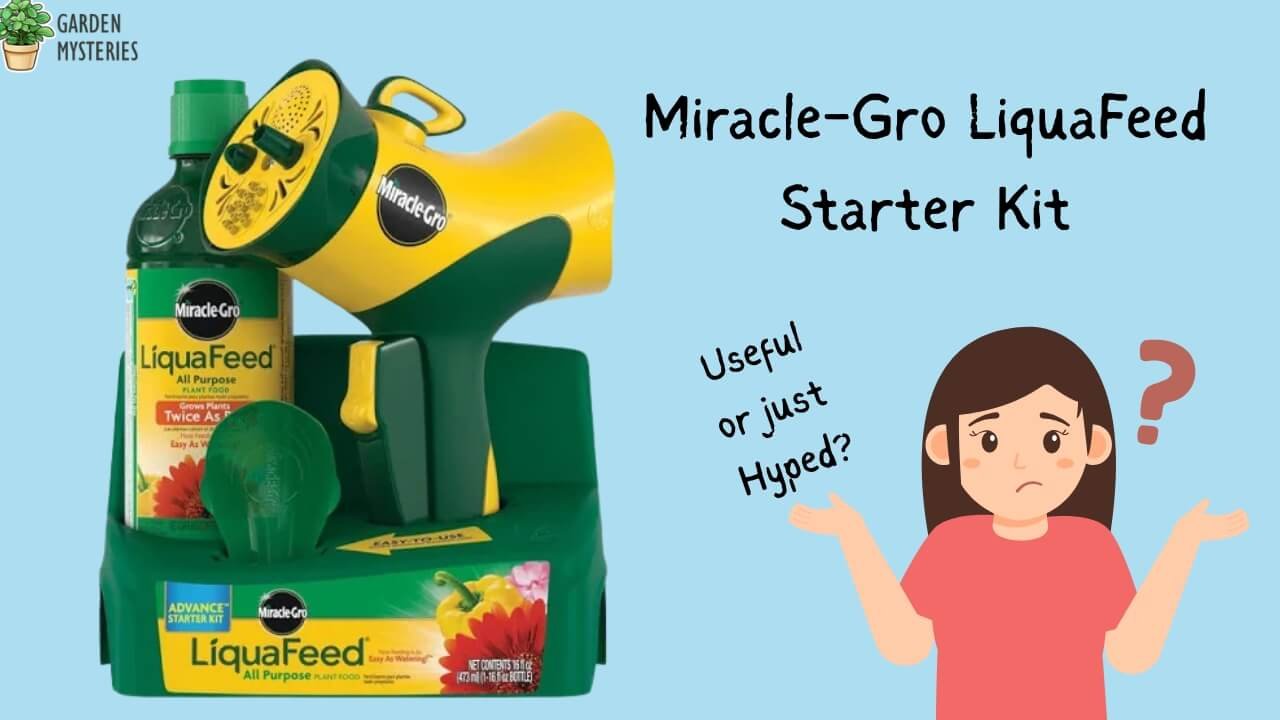
The Miracle-Gro LiquaFeed Starter Kit is a hose-end feeding system that mixes plant food with water while you spray your garden. It comes with a reusable feeder and a 16-ounce bottle of All-Purpose plant food. That means no bucket or stirring spoon.
Many beginner gardeners mix up feeding a plant with improving the soil it sits in. Some assume plant food works the same way as bagged topsoil, but the two do different jobs entirely. Mixing them up leads to disappointing results.
We tried this starter kit on our own containers and garden beds this season. In this guide, we walk through what worked, what felt clumsy, and how to use the kit correctly from day one.
Key Takeaways
- The kit feeds plants through a hose sprayer, not a can
- One 16-ounce bottle covers roughly 400 square feet of garden
- The NPK formula is 12-4-8, suited for all-purpose feeding
- Feeding and watering run through the same nozzle with one dial
- Most gardeners reapply every 7 to 14 days during growth
- Fertilizer feeds the plant, while topsoil improves the ground beneath
What Is the Miracle-Gro LiquaFeed Starter Kit?
The Miracle-Gro LiquaFeed Starter Kit is a two-piece system built for feeding plants through a garden hose instead of a watering can. The Miracle-Gro LiquaFeed kit pairs a reusable feeder with a pre-measured bottle of plant food, so there is no separate mixing step.
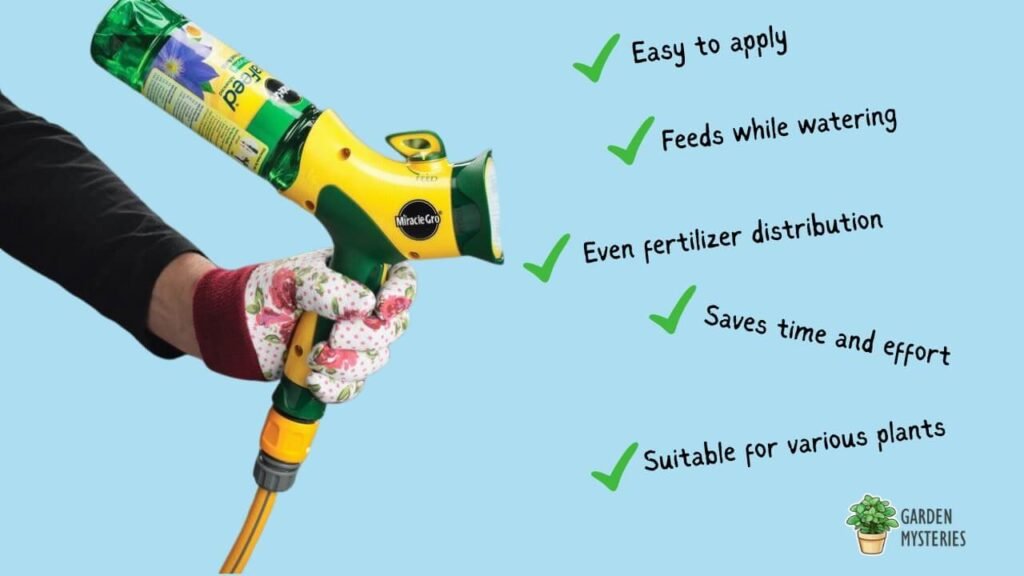
Inside the box sits the feeder head and one 16-ounce bottle of All-Purpose plant food. That formula carries an NPK of 12-4-8, a fairly balanced ratio meant for general use.
Miracle-Gro states the bottle covers up to 400 square feet before it runs dry, though heavy watering can shrink that in practice.
- Two-part system: reusable feeder plus a 16-ounce plant food bottle
- NPK 12-4-8 formula rated for up to 400 square feet of coverage
It helps to know what this kit is not. The Miracle-Gro LiquaFeed system feeds nutrients to roots and leaves. A bagged product like Miracle-Gro topsoil changes the structure of the ground itself. One feeds on a schedule; the other improves texture over time.
How Does the Miracle-Gro LiquaFeed Feeder Work?
The Miracle-Gro LiquaFeed universal feeder connects between your garden hose and the spray wand, right where water first enters the line. As water flows through, it draws plant food from the attached bottle, mixing both together in a single pass.
Attaching the Feeder Bottle
The Miracle-Gro Feeder Bottle twists onto the base of the feeder unit, much like screwing a cap onto a jar. Once it clicks into place, the feeder pulls food from the bottle as water passes through.
The FEED, WATER, and OFF Dial
A dial on top of the Miracle-Gro LiquaFeed Universal Feeder controls three settings. FEED pulls plant food into the water stream, WATER lets plain water pass through untouched, and OFF stops flow between sessions completely.
How the Mixing Happens
Water pressure from the hose pushes through a small tube inside the bottle, pulling out just enough concentrate to blend with the passing water. You never see raw concentrate touch your plants directly, since it dilutes the moment it enters the line.
Why This Beats Manual Mixing
Measuring liquid fertilizer into a can means guessing ratios and stirring by hand every time you feed. The feeder removes that guesswork, since the bottle is already portioned for even dilution.
A Note on Young Plants
Because the mix dilutes instantly rather than sitting concentrated in a can, some gardeners find it gentler for Miracle-Gro on Seedlings and other tender young growth.
How to Use the Miracle-Gro LiquaFeed Starter Kit
Getting the kit running takes only a few steps. The order matters if you want an even feed across your beds and containers.
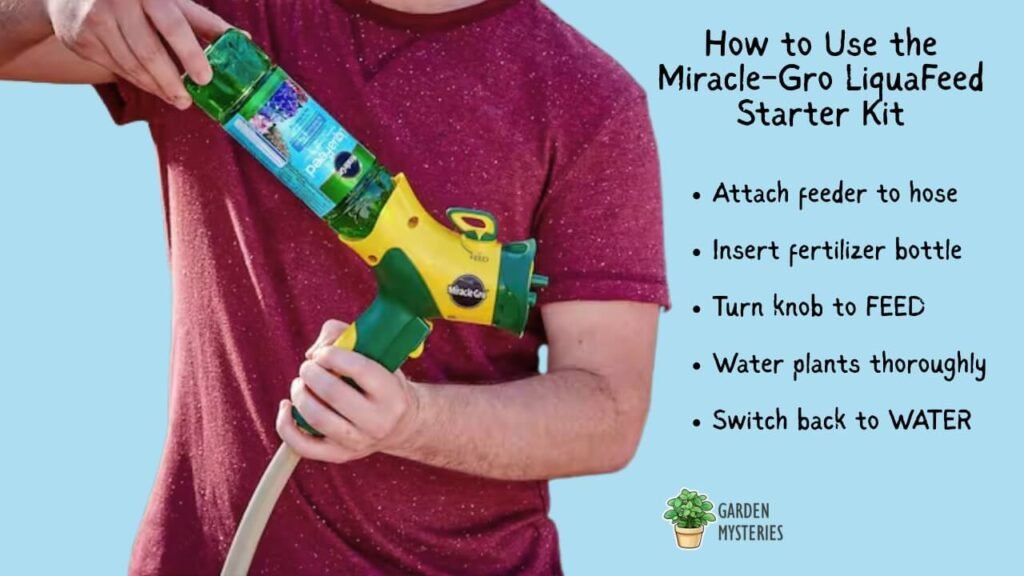
Step 1: Attach the Feeder to Your Hose
Screw the feeder onto the end of your garden hose, then twist the spray wand onto the front of it. Check that both connections feel snug before turning on the water supply.
Step 2: Twist the Bottle Into Place
Attach the plant food bottle to the base of the feeder. This is also where learning how to use Miracle-Gro liquid feed properly matters most. A loose bottle can leak or fail to draw.
Step 3: Set the Dial to FEED
Turn the dial to FEED before you start spraying. This tells the feeder to pull concentrate from the bottle as water passes through the wand.
Step 4: Spray at the Base of Each Plant
Aim the spray at the soil around the base of each plant rather than soaking the leaves. Root-level feeding gets nutrients where they are used fastest.
Step 5: Switch to WATER When Finished
Once you have covered the planned area, turn the dial to WATER. This flushes the line and lets you keep watering without pulling more concentrate from the bottle.
A Word of Caution
Always follow the label rates rather than guessing on your own. Overfeeding can stress plants instead of helping them grow the way you expect.
Miracle-Gro LiquaFeed Mix Ratio, Coverage, and Feeding Schedule
The Miracle-Gro LiquaFeed Starter Kit does not ask you to measure anything by hand. The feeder handles dilution automatically as water flows through it.
The Built-In Mix Ratio
The Miracle-Gro LiquaFeed mix ratio is fixed inside the feeder mechanism, so you are not adjusting concentration the way you might with a manual pump sprayer.
Hose-End Feeding vs Manual Mixing
Some gardeners still prefer mixing plant food into a watering can by hand for small container gardens, where a hose connection feels like overkill for just a few pots.
Coverage From One Bottle
Miracle-Gro states that one 16-ounce bottle covers up to 400 square feet, though actual coverage depends on spray width and how heavily you apply it.
Feeding Frequency
Most labels recommend reapplying every 7 to 14 days during active growth, then tapering off once the season slows down. For raised beds, some gardeners also pair feeding with a quality raised bed soil mix.
| NPK Formula | Bottle Size | Coverage | Feeding Frequency |
| 12-4-8 | 16 oz | Up to 400 sq. ft. | Every 7 to 14 days |
What Plants Can You Use Miracle-Gro LiquaFeed On?
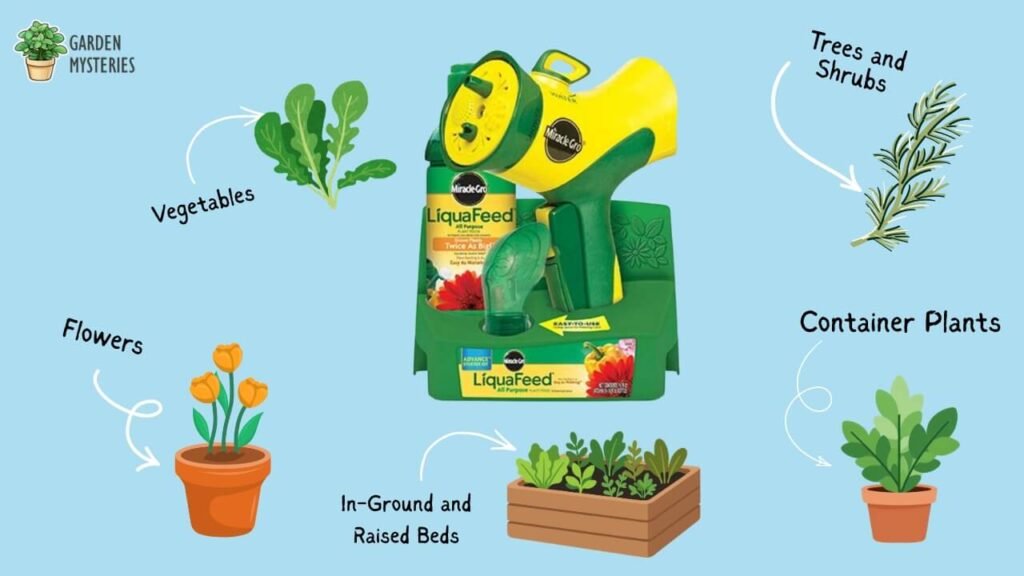
You can use the Miracle-Gro LiquaFeed Starter Kit on most common garden plants. The 12-4-8 formula suits general feeding rather than one specific plant type.
Flowers
Annuals and perennials both respond well to steady feeding through bloom season, especially container flowers that use up nutrients faster than in-ground plantings.
- Feed every 7 to 14 days during active blooming
- Avoid spraying directly onto open flower heads
Vegetables
Leafy greens, tomatoes, and peppers all benefit from steady feeding once they are past the seedling stage and actively putting on growth.
- Aim the spray at soil level, not the leaves
- Reduce frequency once fruit begins to ripen
Trees and Shrubs
Young trees and shrubs can use the same feeder, though larger established trees may need more frequent passes to reach their full root zone.
Container Plants
Pots dry out faster than garden beds, so container plants often need feeding on the shorter end of the 7 to 14 day range.
In-Ground and Raised Beds
Raised beds and in-ground rows can both be fed with the same hose setup, which is convenient for gardeners managing several beds at once.
Feeding is separate from soil health, and the two are easy to mix up. A compost vs potting soil comparison is really about growing medium, not fertilizer.
Liquid feeding only adds nutrients to whatever medium is already there. Some gardeners also weigh Black Kow vs Miracle-Gro when choosing between composted manure and a liquid feed.
Is the Miracle-Gro LiquaFeed Starter Kit Worth It?
The Miracle-Gro LiquaFeed Starter Kit is worth buying for gardeners who want fast, low-effort feeding across a mid-sized garden with several beds.
- Saves time compared with mixing fertilizer in a watering can
- Delivers a consistent, pre-measured dose with each spray pass
- Works well for yards with several containers or garden beds
- Requires an active hose connection, limiting balcony or indoor use
- Refill bottles add an ongoing cost beyond the starter kit itself
- Choosing the right formula still matters for specialty plants
Compared with granular feeds or Sta-Green vs Miracle-Gro debates, the real difference often comes down to NPK ratio and coverage rather than brand loyalty. Gardeners with a hose nearby and several beds to cover tend to get the most value from this kit.
FAQs
Can Miracle-Gro LiquaFeed be used on houseplants?
It is possible, but the hose-end feeder is built for outdoor use. Most gardeners find a manual liquid feed easier and cleaner for potted houseplants kept indoors near a sink.
Can you use Miracle-Gro LiquaFeed in a watering can?
The concentrate is meant to run through the feeder, since it controls dilution automatically. Mixing it by hand in a can risks getting the ratio wrong.
Should you water plants before using LiquaFeed?
Watering dry soil first helps roots absorb nutrients more evenly. Feeding bone-dry soil can sometimes cause uneven uptake compared with slightly moist ground.
Can Miracle-Gro LiquaFeed burn plants if overused?
Applying it more often than the label suggests can stress plants, since excess builds up faster than roots can use it well.
End Note
The Miracle-Gro LiquaFeed Starter Kit turns plant feeding into a quick pass with the garden hose. There is no mixing chore at the sink. Once you understand the FEED and WATER settings, using it becomes second nature within a season.
It will not fix poor soil or replace a proper growing medium on its own. For regular feeding across beds, containers, and borders, it still does the job with less fuss than a can and a measuring spoon.
Note: Some links on this page may be affiliate links or advertisements. If you purchase through a qualifying link, we may receive a commission at no additional cost to you.