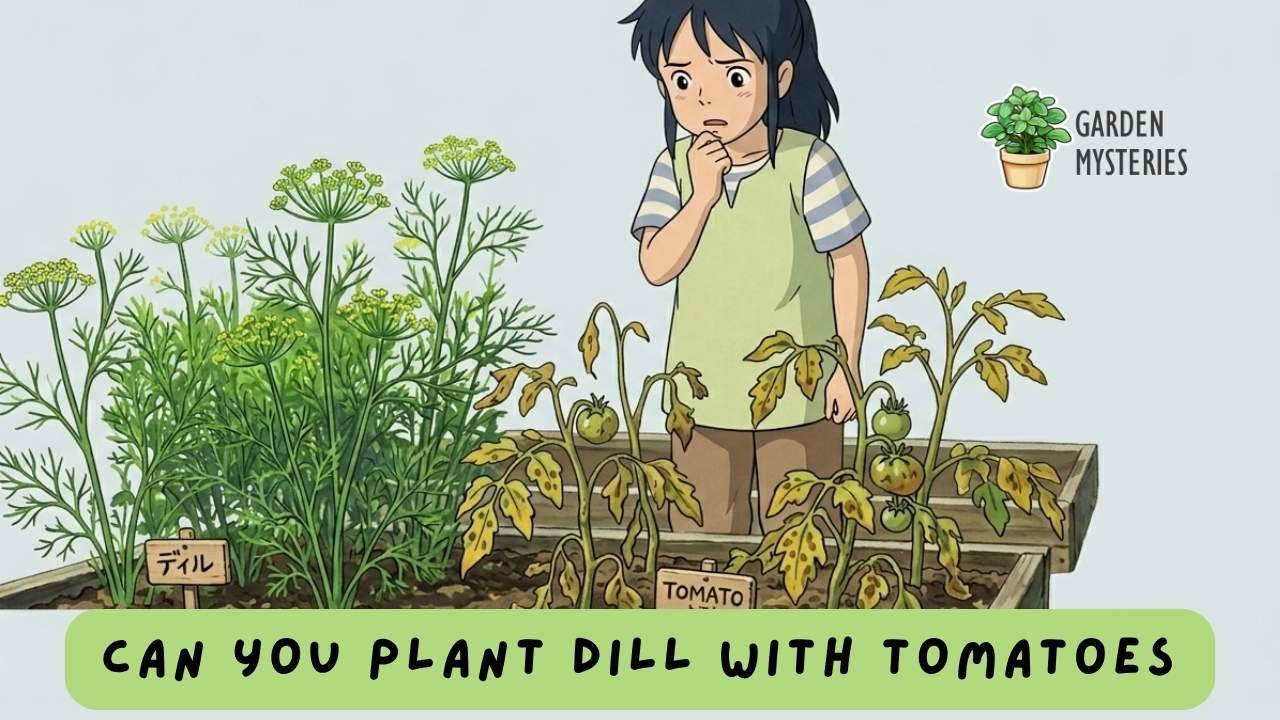
Tomatoes and dill; great combo or garden mess up? Gardeners can’t seem to agree, and honestly, the confusion makes sense. So, can you plant dill with tomatoes? Yes, you can plant dill with tomatoes, but until the dill matures and flowers.
Young dill is actually a great neighbour for tomatoes. It attracts beneficial insects and keeps hornworms away. But once it matures and flowers, it can stunt your tomato plants. Same plant, totally different story depending on timing.
That’s not everything, though. There are a few secrets that can make or break this combination. Let’s cover it all, including the best companion plants for tomatoes, so your garden actually thrives.
Can You Plant Dill With Tomatoes? Benefits, Risks & Timing
Dill and tomatoes can absolutely grow together, but the results depend entirely on one thing: timing. Get it right, and your tomatoes thrive. Get it wrong, and your harvest suffers.
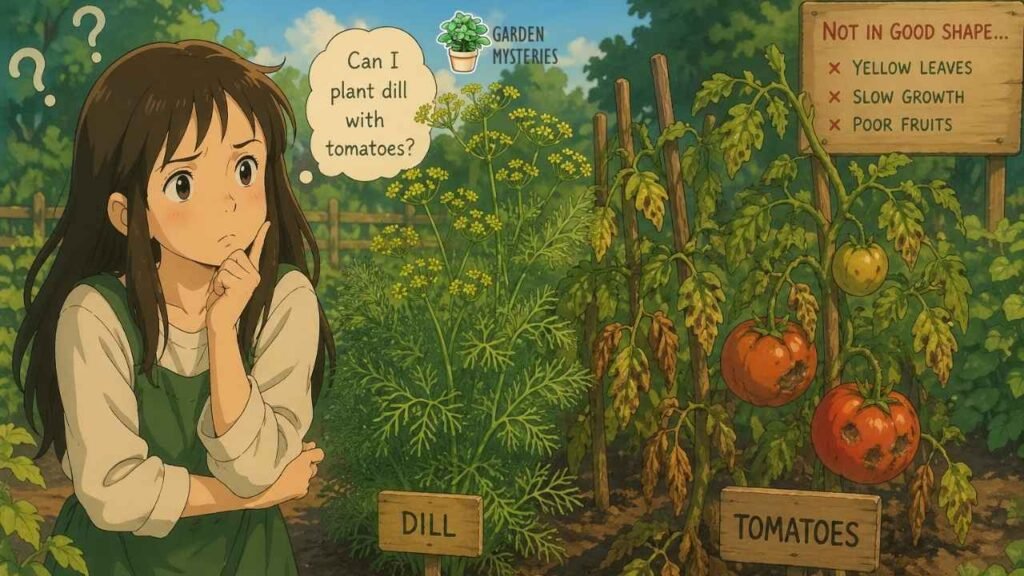
So, does dill grow well with tomatoes? Yes, when it is young. Once the dill matures, the relationship turns problematic. Dill and tomatoes companion planting only works if you manage the growth stages carefully.
Benefits of Young Dill Near Tomatoes
Young dill is genuinely helpful in your tomato garden. It attracts beneficial insects and creates a natural pest barrier that protects your plants early in the season.
- Repels tomato hornworms
- Attracts ladybugs, parasitic wasps, and hoverflies
- Supports pollination
- Draws predatory insects that control aphids
Why Mature Dill Harms Tomatoes
Once dill starts flowering and bolting, it produces allelopathic compounds. These are natural chemicals that suppress the growth of nearby plants, including tomatoes.
Tomatoes growing next to mature dill often show slower growth and reduced yields. The damage is not immediate but builds gradually as the dill matures.
The fix is simple. Pull dill out or prune it aggressively before it flowers. Watch for bolting and act fast.
How to Manage Timing While Planting Tomatoes and Dill Together
Timing is everything with this combination. Plant dill too late or let it grow unchecked, and your tomatoes will pay the price. But get the timing right, and both plants genuinely benefit each other.
The general rule is simple. Plant dill early alongside young tomatoes and remove or prune it hard before it starts to flower. That window is where all the magic happens.
When to Plant Dill Next to Tomatoes
Start dill seeds at the same time you transplant your tomatoes. This keeps both plants in their beneficial young stage together. Sow new dill every two to three weeks for continuous protection.
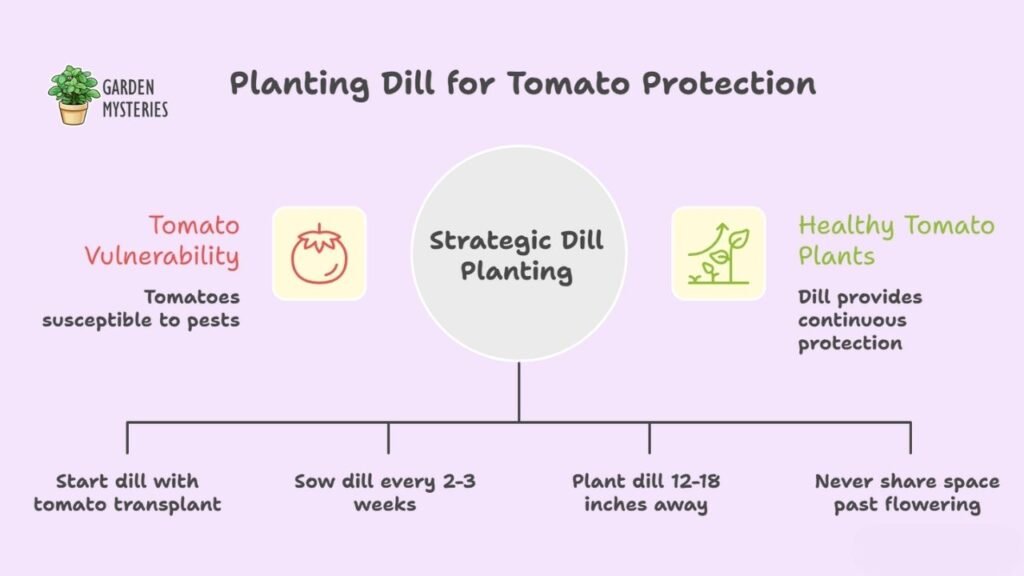
- Plant dill 12 to 18 inches away from tomato plants
- Sow seeds at transplant time for best timing
- Use succession planting to keep fresh young dill available
- Never let dill share space with tomatoes past the flowering stage
When to Remove Dill From Your Tomato Garden
Watch your dill closely once it reaches about 12 inches tall. This is usually when bolting begins. Remove it promptly at this stage.
Prune the dill weekly to extend the beneficial window. Once you spot flower buds forming, pull the plant completely. Do not wait.
Note: This post contains affiliate links. We may earn a small commission if you purchase through our links at no extra cost to you.
Tips for Planting Tomato and Dill Together
Getting this combination right takes a little planning, but it is absolutely worth it. These practical tips will help you avoid the common mistakes and get the best out of both plants in your garden.
Give Them the Right Spacing
Keep dill at least 12 to 18 inches away from your tomato plants. Too close and they compete for light and nutrients. Proper spacing keeps both plants healthy and productive.
Use Succession Planting for Dill
Sow fresh dill seeds every two to three weeks throughout the season. This keeps young dill available consistently and ensures your tomatoes always have a beneficial neighbour nearby.
Prune Dill Before It Bolts
Check your dill weekly and trim it regularly. Pruning delays flowering and extends the beneficial stage significantly. Never let it go to seed while it is still near your tomatoes.
Choose the Right Soil and Fertilizer
Both plants need well-draining, nutrient-rich soil with a slightly acidic pH. Use a balanced organic fertilizer to meet their needs without overfeeding dill.
Recommended products to consider:
- Espoma Garden Tone Organic Fertilizer
- Dr. Earth Tomato Vegetable and Herb Fertilizer
- FoxFarm Ocean Forest Potting Mix
Water Smartly
Tomatoes need deep, consistent watering, while dill prefers drier conditions. Use drip irrigation to deliver water directly to tomato roots without oversaturating your dill.
Don’t forget to learn about compost for tomatoes in raised beds in your free time. It will help you a lot, I presume.
Best Companion Plants for Tomatoes (Beyond Dill)
Dill is just one piece of the puzzle. The best companion plants for tomatoes include basil, carrots, onions, garlic, and marigolds. These plants repel pests, improve growth, and enhance flavor for a productive tomato garden.
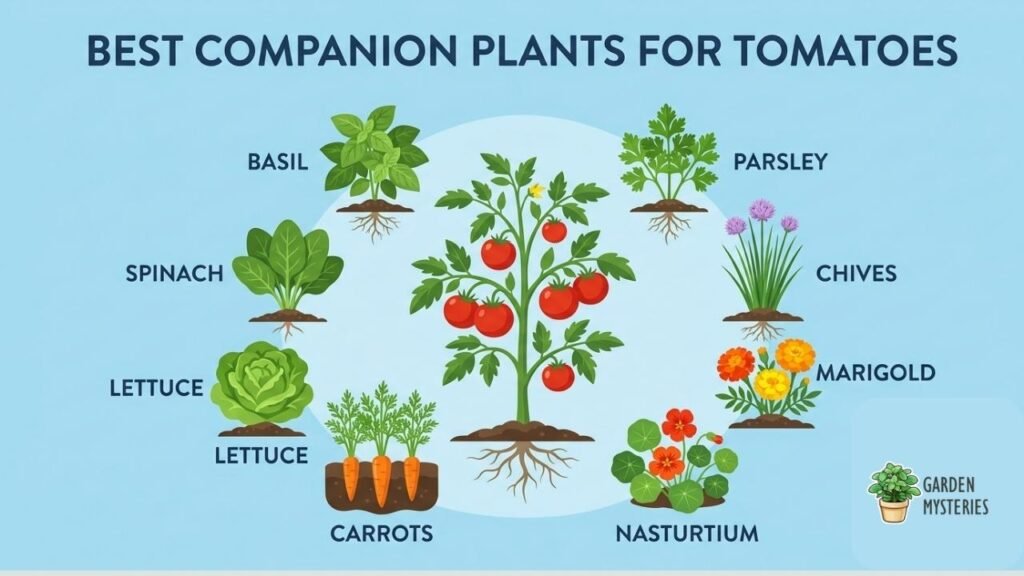
Herbs That Grow Well With Tomatoes
Knowing what to plant with tomatoes starts with herbs. The right herbs create a natural pest barrier while improving the overall health and flavor of your tomato plants throughout the season.
- Basil: Repels aphids, mosquitoes, and tomato hornworms. Also believed to improve tomato flavor when planted nearby
- Parsley: Attracts hoverflies that feed on common tomato pests and supports overall pollination in the garden
- Chives: Deters aphids and spider mites while improving the general vigor of nearby tomato plants
Vegetables That Support Tomato Growth
Choosing the right companion plants for tomatoes extends beyond herbs. Certain vegetables create a surprisingly supportive environment that helps tomatoes grow stronger and healthier.
- Carrots: Loosen the soil around tomato roots, improving water and air penetration deep into the ground
- Lettuce: Acts as a living mulch, keeping soil cool and moist for tomatoes during warmer months
- Spinach: Covers bare soil, reduces weeds, and retains moisture without competing heavily for nutrients
Flowers That Protect Tomatoes
Tomatoes’ companion plants do not always have to be edible. Certain flowers are incredibly powerful at keeping pests away naturally.
- Marigold: Repels nematodes, aphids, and whiteflies. One of the most well-researched protective companion plants for tomatoes
- Nasturtium: Works as a trap crop, drawing aphids away from tomatoes and attracting beneficial predatory insects
What Not to Plant With Tomatoes
Not every plant makes a good neighbour for tomatoes. Knowing what not to plant with tomatoes is just as important as knowing the good companions. Wrong pairings can quietly destroy your entire harvest.
Plants That Compete for Nutrients
Some plants simply want too much from the soil. When grown near tomatoes, they compete aggressively for the same nutrients, leaving your tomatoes struggling to grow properly.
- Corn: Competes heavily for nitrogen and also shares common pests like the corn earworm and tomato fruitworm, doubling your pest problem
- Potatoes: Both are nightshade family members sharing the same blight diseases. Growing them together dramatically increases the risk of spreading infection across both crops
Plants That Harm Tomato Growth
Certain plants go beyond competition and actively damage tomato plants through chemical interference or direct growth suppression.
- Fennel: Releases allelopathic compounds into the soil that inhibit tomato growth and suppress the germination of nearby plants
- Mature dill: Beneficial when young but harmful once it flowers. Mature dill releases the same type of growth-inhibiting chemicals that stunt tomato development
Why These Pairings Fail
Understanding why bad pairings fail helps you make smarter planting decisions every season. Most failures come down to three core problems.
- Disease spread: Shared diseases travel fast between closely related plants, wiping out multiple crops at once
- Root competition: Deep or aggressive root systems steal water and nutrients before tomatoes can access them
- Chemical inhibition: Some plants naturally release compounds into the soil that suppress or slow the growth of neighbouring plants
Dill Companion Plants (What to Plant With Dill)
The dill is one of the most generous herbs in any garden. Dill companion plants benefit from its natural ability to attract beneficial insects, repel common pests, and improve the overall health of surrounding crops.
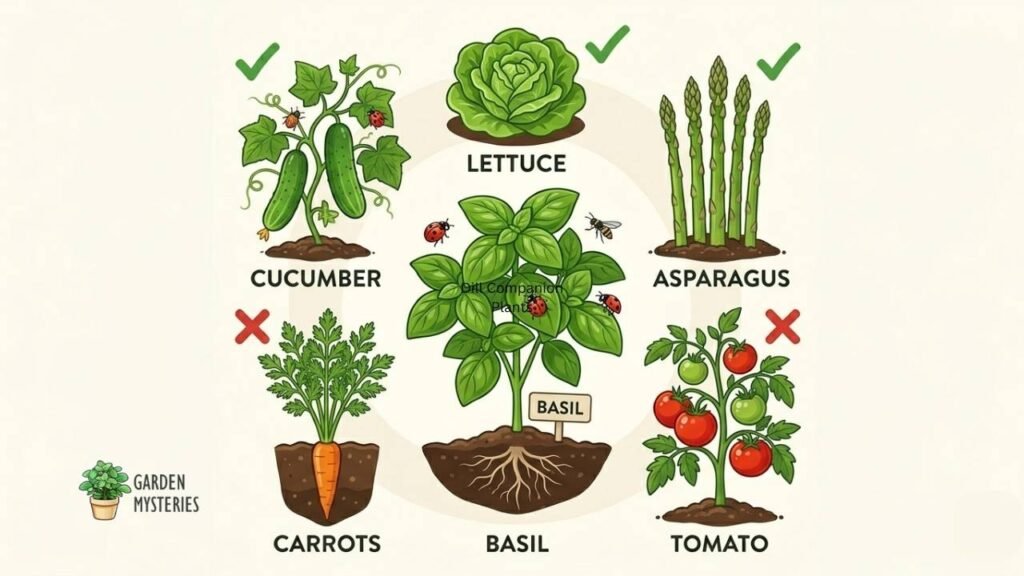
Vegetables That Pair Well With Dill
Knowing what to plant with dill starts with understanding what benefits dill actually offers. The right vegetable neighbours take full advantage of dill’s pest control and pollinator-attracting qualities.
- Cucumber: Dill attracts beneficial insects that prey on cucumber beetles, one of the most damaging pests for cucumber plants
- Onion: Onions and dill share a mutual benefit. Onions repel aphids that trouble dill, while dill attracts predatory insects that protect onion crops
- Lettuce: Dill provides light shade and attracts helpful insects that keep common lettuce pests under control without competing for nutrients
Plants to Avoid Near Dill
Not every plant thrives alongside dill. Some combinations create more problems than benefits and are better kept on opposite sides of the garden.
- Carrots: Dill and carrots belong to the same plant family and can cross-pollinate easily. This produces poor-tasting hybrid plants and weakens both crops
- Tomatoes, when dill is mature: Young dill benefits tomatoes, but mature flowering dill releases allelopathic compounds that suppress tomato growth and reduce yields significantly
Vegetable Companion Planting Chart (Quick Reference)
Companion planting tomatoes and other vegetables becomes much easier with a simple reference guide. Use this quick chart to plan your garden beds, avoid bad pairings, and get the most out of every square foot.
| Vegetable | Best Companions | Plants to Avoid |
| Tomatoes | Basil, marigold, parsley, garlic, carrots | Fennel, corn, potatoes, brassicas |
| Dill | Cucumbers, onions, lettuce, brassicas, asparagus | Carrots, fennel, peppers, mature tomatoes |
| Basil | Tomatoes, peppers, oregano, marigolds | Sage, rosemary |
| Cucumber | Dill, beans, nasturtiums, corn, lettuce | Sage, rosemary, brassicas |
| Carrot | Tomatoes, onions, rosemary, chives, lettuce | Dill, parsnips, potatoes |
| Brassicas | Dill, chamomile, mint, sage, rosemary | Tomatoes, peppers, eggplant, strawberries |
This vegetable companion planting chart covers the most common garden crops, but there is a lot more to companion planting than one table can show. Want the full version you can take straight to your garden?
Download the free printable companion planting chart of vegetables you can grow in a pot and plan your perfect garden bed before you plant a single seed.
[Download the Printable PDF Now]
You can also check out our blog on spring vegetable pairings for more about companion planting.
FAQs: Plant Dill With Tomatoes
Yes, dill repels tomato hornworms. Young dill attracts parasitic wasps and beneficial insects that prey on hornworm eggs and larvae, offering natural protection for your tomato plants.
While planting dill and tomatoes, make sure to keep at least 12 to 18 inches between dill and tomato plants to avoid competition for light and nutrients.
Yes, dill and tomatoes can be planted in the same raised bed. But monitor it closely and remove it before it flowers to prevent it from stunting your tomatoes.
No strong scientific evidence exists, but dill attracts pollinators and beneficial insects that improve overall tomato plant health and productivity.
End Note
So, can you plant dill with tomatoes? Absolutely, but timing is everything. Keep the dill young, prune it regularly, and remove it before it flowers. Do that, and dill and tomatoes companion planting becomes one of the smartest moves in your garden.
Companion planting tomatoes does not have to be complicated. Start simple, observe your plants, and adjust as you go. The more you experiment, the better your garden gets every single season. Have you tried growing dill with tomatoes? Tell us in the comments.
Note: This guide is intended for general information. Gardening outcomes can differ depending on your climate, soil type, and maintenance routine. Adjust techniques to suit your local conditions and practice safe gardening at all times.