Fix Pothos Not Bushy & Boost Leaf Density
Pothos plants are a favorite for indoor gardeners, thanks to their vibrant green leaves and forgiving nature. They can survive in low light and tolerate irregular watering, which makes them perfect for busy plant lovers. Yet, many gardeners face a frustrating problem: their pothos vines grow long but never appear full or bushy.
If your Pothos not bushy, it doesn’t mean you’ve done anything wrong. Sparse growth is often because of environmental factors, pruning habits, or care routines. Understanding these factors and adjusting your plant care can transform thin, leggy vines into dense, cascading greenery that truly livens up your space.
Why Is My Pothos Not Bushy?
If your pothos is not bushy, the most common causes are low light, infrequent pruning, root crowding, inconsistent watering, or nutrient deficiencies. To encourage fuller growth, place the plant in bright indirect light, trim vines above leaf nodes, fertilize during active growth, and repot when roots become crowded.
Understanding Why Your Pothos Not Bushy
Before you try solutions, it’s essential to identify what is limiting your pothos growth. Even healthy plants can appear stringy if one or more factors aren’t optimal.
Light Conditions Matter
Pothos can tolerate low light, but they thrive in bright, indirect sunlight. Insufficient light is one of the most common reasons for sparse growth. When your plant stretches toward a light source, the vines elongate, and the leaves become smaller. Over time, this gives a stringy appearance instead of a bushy one.
On the other hand, too much direct sunlight can scorch leaves and stress the plant, slowing growth. A good rule of thumb is to place your pothos near a window with filtered sunlight. You can also rotate the plant regularly so all parts receive equal light, encouraging even growth.
In my case, moving the plant just a few feet closer to a bright window completely changed its growth. The leaves became larger, and the gaps between them started to shrink naturally.
Pruning for Bushiness
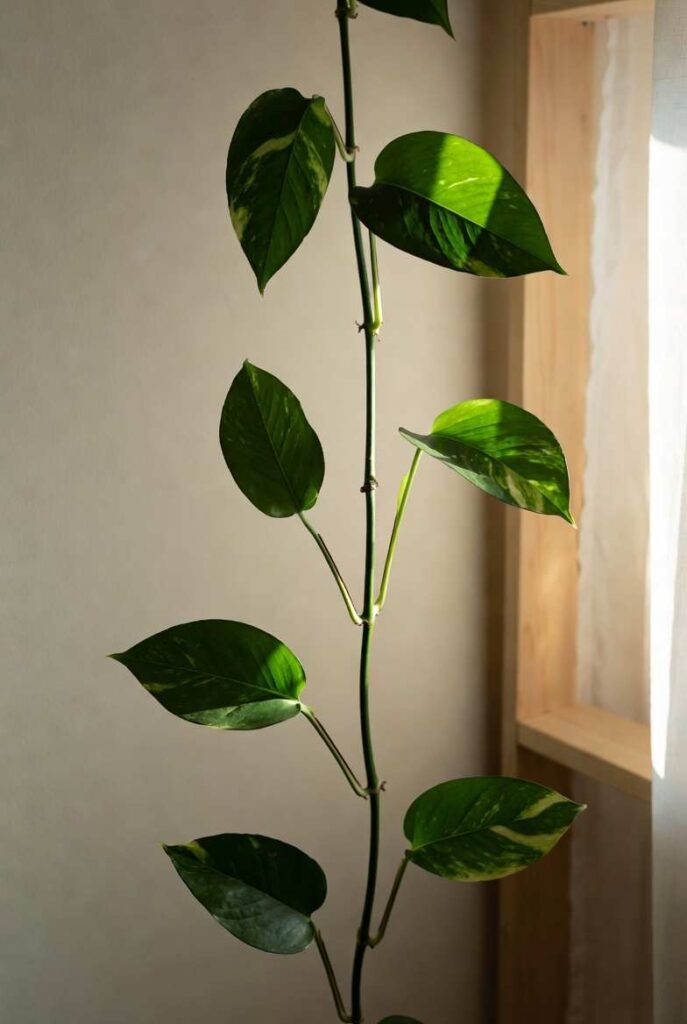
Many gardeners avoid pruning, fearing it will harm the plant. In reality, proper pruning is the key to encouraging lateral growth. When you cut a vine just above a leaf node, your pothos responds by sending out new branches from that point.
When I first started pruning my pothos, I was honestly nervous about cutting healthy vines. But after trimming just a few stems above the nodes, I noticed new shoots appearing within weeks, and that’s when the plant finally started looking fuller instead of stretched out.
Pruning should be done carefully, removing overly long or leggy stems while keeping enough healthy leaves to support growth. Pinching back vine tips is another effective technique. Do this every 6 – 8 weeks during the active growing season, and your plant will reward you with fuller foliage and more vibrant leaves.
Container Size and Soil
A pot that’s too small can restrict root growth, which directly affects foliage density. Pothos roots need space to spread; cramped roots can cause slow growth, smaller leaves, and thin vines. Using a well-draining, nutrient-rich potting mix gives roots the ideal environment to expand and support healthy branches.
Repotting every 12 – 18 months is also helpful. Fresh soil supplies new nutrients and prevents soil compaction. While repotting, gently loosen the roots and trim any dead ones to encourage strong growth. Remember, a happy root system equals a happy, bushy pothos.
Care Tips to Make Your Pothos Bushier
After addressing limiting factors, implementing targeted care practices will encourage lush growth and vibrant foliage.
Watering and Moisture
Watering pothos correctly is important. Overwatering can lead to root rot, while underwatering causes leaves to wilt and vines to stretch. A good method is to let the top inch of soil dry before watering again. Consistent, moderate watering encourages steady growth.
Maintaining proper humidity also supports bushiness. Pothos prefers 40 – 60% humidity. In dry environments, consider using a small humidifier or grouping your plants together to create a mini microclimate. You can also mist the leaves occasionally, but avoid drenching them too frequently.
Fertilization for Fuller Leaves
Nutrient support plays a big role in encouraging bushy growth. During spring and summer, feed your pothos every 4 – 6 weeks with a balanced houseplant fertilizer. Nitrogen promotes leafy growth, while phosphorus and potassium support root and flower development.
However, moderation is key. Over-fertilizing can make vines long but thin, defeating the purpose of a bushy appearance. Observing your plant’s reaction to feeding will help you find the right balance for fuller, healthier foliage.
Encouraging Branching Through Pinching
Pinching is a simple technique that stimulates side shoot development. By gently removing the vine tip just above a leaf node, your pothos shifts energy from vertical growth to lateral branching. Over time, this results in a dense, bushy look.
Propagation is another excellent option. Cutting healthy stem sections and rooting them in water or soil creates new plants. Not only do you get multiple bushy plants, but the parent plant also grows more vigorously because energy is redistributed efficiently.
Environmental Factors Affecting Growth of Pothos
Sometimes, despite proper care, pothos growth remains sparse due to environmental factors. Addressing these subtle issues can significantly improve the pothos not bushier condition.
Temperature and Climate
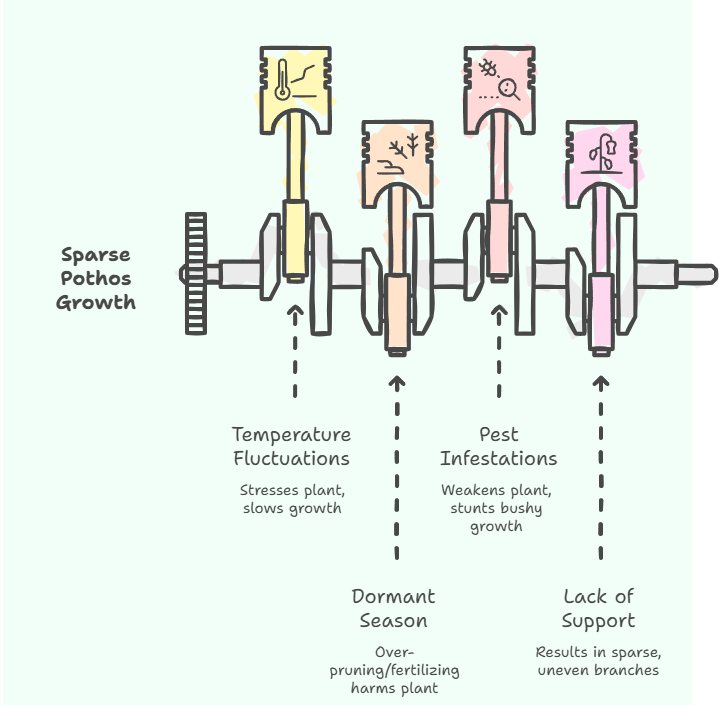
Pothos grows best between 18 – 29°C (65 – 85°F). Cold drafts or sudden temperature changes can stress the plant, leading to slow growth and sparse vines. Avoid placing your plant near doors, air conditioners, or windows with frequent temperature fluctuations.
Seasonal changes also influence growth. During fall and winter, pothos naturally slows down, conserving energy. Over-pruning or over-fertilizing during this dormant period can do more harm than good. Instead, focus on maintaining optimal light, humidity, and temperature, and wait for spring to stimulate vigorous growth.
Managing Common Pothos Pests
Even minor pest-infestations, like spider mites or aphids, can weaken your pothos and stunt bushy growth. Inspect your plant regularly for signs of pests or yellowing leaves. Wipe leaves gently with soapy water or neem oil if needed. Healthy, stress-free plants are more likely to grow dense.
Space and Support
Pothos naturally trails or climbs. Providing trellises, moss poles, or hanging baskets allows the plant to expand naturally. Vines supported to climb can produce larger leaves and fuller growth. Neglecting support often results in sparse, uneven branches.
If you enjoy growing pothos and shaping them into pothos bushier plants, you might also love miniature daffodils. These compact flowers are perfect for containers and add bright seasonal color to small spaces. Explore the best varieties and growing tips here.
My Experience Growing a Fuller Pothos
Over the years, I’ve grown pothos in hanging baskets, shelves, and indoor plant stands. One thing I’ve noticed consistently is that brighter indirect light and regular pruning produce the fastest improvements in leaf density.
A pothos that had developed long, sparse vines began producing several new side shoots within a few weeks after pruning above multiple leaf nodes. Moving the plant closer to a bright window also reduced the spacing between leaves and encouraged larger foliage.
While every indoor environment is different, combining proper lighting, pruning, watering, and feeding usually delivers better results than relying on a single change. If you have free time to spare, read our blog on compost vs manure. You will get many rare tips on soil mix for sure.
Benefits of Growing Pothos at Home
Pothos is one of the most popular indoor plants because it combines attractive foliage with low-maintenance care. Whether placed in a living room, office, bedroom, or balcony garden, pothos offers several practical and decorative benefits.

- Improves Indoor Aesthetics: With its trailing vines and heart-shaped leaves, pothos adds natural beauty to indoor spaces. It works well in hanging baskets, shelves, plant stands, and vertical gardens, creating a fuller and fresher indoor environment.
- Easy for Beginners: Pothos is known for its adaptability and resilience. It tolerates occasional missed waterings, varying light conditions, and common beginner mistakes, making it one of the easiest houseplants to grow.
- Supports Indoor Greenery: A healthy pothos plant can produce long, lush vines that help create a relaxing and refreshing atmosphere indoors. Many homeowners use pothos as part of their indoor plant collections to bring more greenery into living spaces.
- Fast Growing and Easy to Propagate: Unlike many slow-growing houseplants, pothos can grow quickly under favorable conditions. Stem cuttings root easily in water or soil, allowing gardeners to create new plants without purchasing additional ones.
- Versatile Placement Options: Pothos can be grown in containers, hanging planters, wall-mounted displays, or trained to climb moss poles and trellises. This flexibility makes it suitable for apartments, offices, and larger homes alike.
- Low Maintenance Care Requirements: Once established, pothos requires minimal attention. Basic watering, occasional pruning, and adequate light are usually enough to maintain healthy growth and attractive foliage throughout the year.
Signs Your Pothos Is Becoming Bushier
After improving care conditions, watch for these positive signs:
- New shoots emerging from leaf nodes
- Shorter gaps between leaves
- Larger leaf size on new growth
- Multiple stems developing from a single vine
- Faster overall growth during the growing season
- Improved color and leaf density
These indicators show that your pothos is responding well and gradually developing a fuller structure.
FAQs: Pothos Not Bushy
In most cases, yes. Improving light conditions, pruning long vines, fertilizing appropriately, and maintaining healthy roots can help a leggy pothos develop new growth and regain a fuller appearance.
Most pothos plants start producing new growth within 2 to 6 weeks after pruning. Bright indirect light, proper watering, healthy roots, and regular feeding help encourage faster branching and denser foliage.
Yes. Small pots restrict root expansion, limiting leaf and vine growth. Repotting every 12 – 18 months in nutrient-rich soil encourages lush, bushy foliage.
Trim long or leggy vines every 6-8 weeks during the growing season. Pinching tips promotes lateral growth and leads to a fuller, denser plant.
Absolutely! Cutting healthy stems and rooting them creates new plants. It redistributes energy and promotes side shoots on the parent plant, resulting in fuller growth.
Conclusion
Pothos not bushy is often a sign your plant needs slight adjustments, not a failure on your part. By focusing on light, pruning, soil, and environmental factors, you can transform long, leggy vines into thick, cascading greenery.
Implementing these simple tips will encourage dense growth that enhances any indoor space. With patience and consistent care, your pothos can become the lush centerpiece you’ve always wanted, impressing both friends and fellow plant enthusiasts.