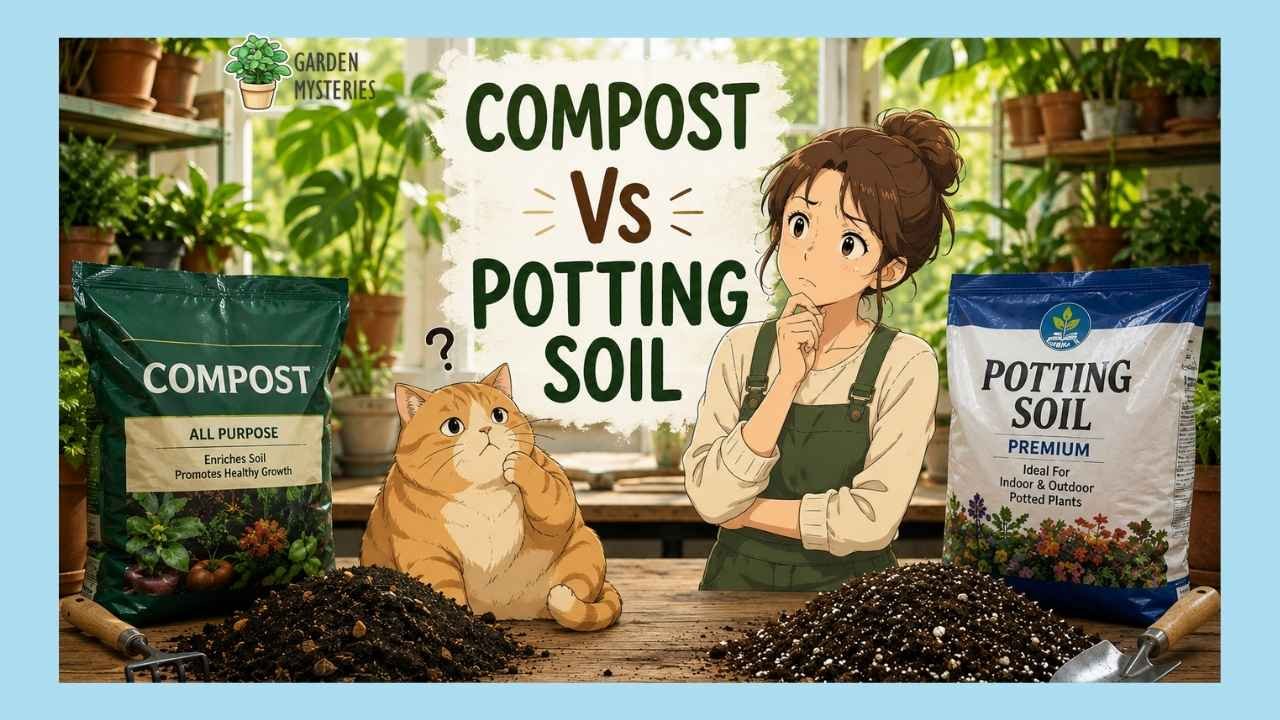
Most beginner gardeners pick up a bag of compost and a bag of potting soil and wonder if they are the same thing. They are confused about compost vs potting soil because these two look similar, both dark and soft. However, they work very differently in your garden.
Compost is made from broken-down food scraps and leaves. Potting soil is a ready-made mix designed for pots and containers. Using the wrong one in the wrong place can slow your plants down or even stop them from growing.
This guide will show you exactly what each one is, how they differ, and when to use each one the right way.
Overview: Compost vs Potting Soil
Compost and potting soil are both used in gardening, but they do completely different jobs. Compost improves the soil you already have. Potting soil is a ready-made mix for pots and containers.
Here is what this guide covers:
- What compost and potting soil actually are
- How they differ in ingredients and purpose
- When to use each one in your garden
- How to mix them together the right way
- The most common mistakes and how to avoid them
Quick Answer: Compost vs Potting Soil
| Compost | Potting Soil |
|---|---|
| Improves existing soil | Used for containers |
| Made from decomposed organic matter | Made from peat, coir, and perlite |
| Adds nutrients | Improves drainage |
| Cannot fully replace potting soil | Can grow plants alone |
What Is Compost?
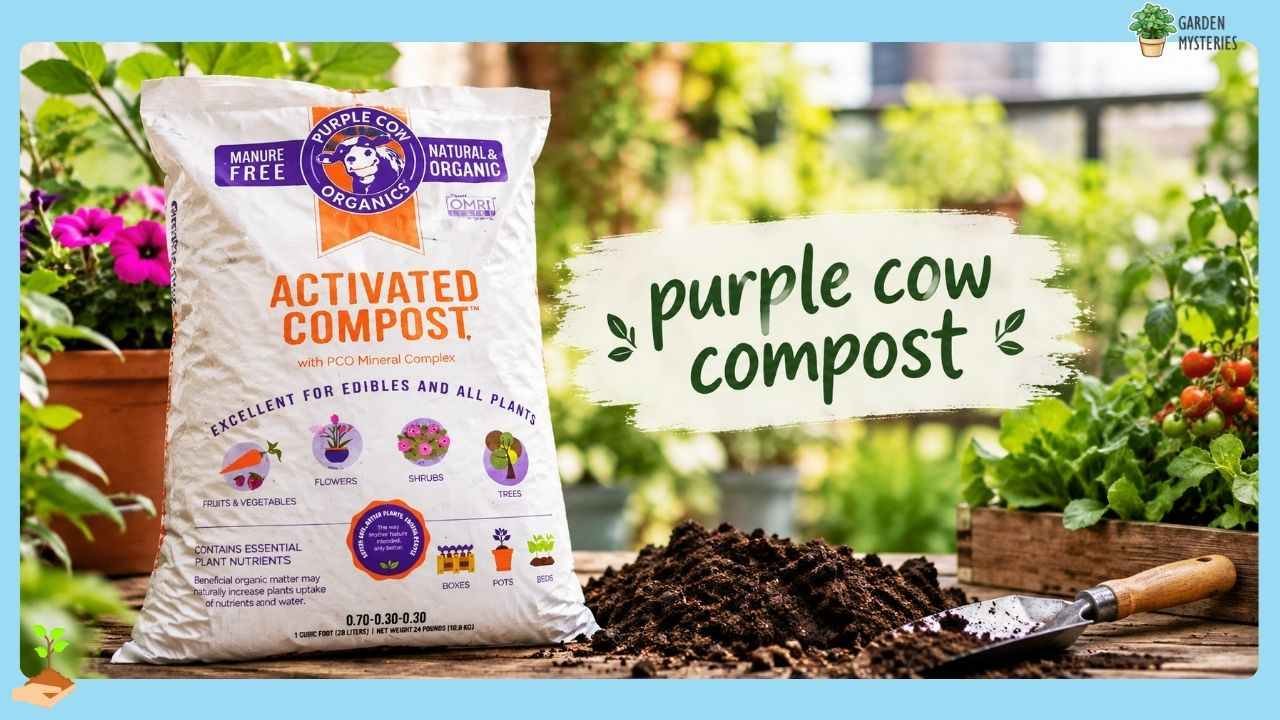
Compost is decomposed organic matter, which means it is made from rotted food scraps, dry leaves, and garden waste broken down over time. It is not a soil replacement. It is a soil booster that makes your existing soil richer and healthier.
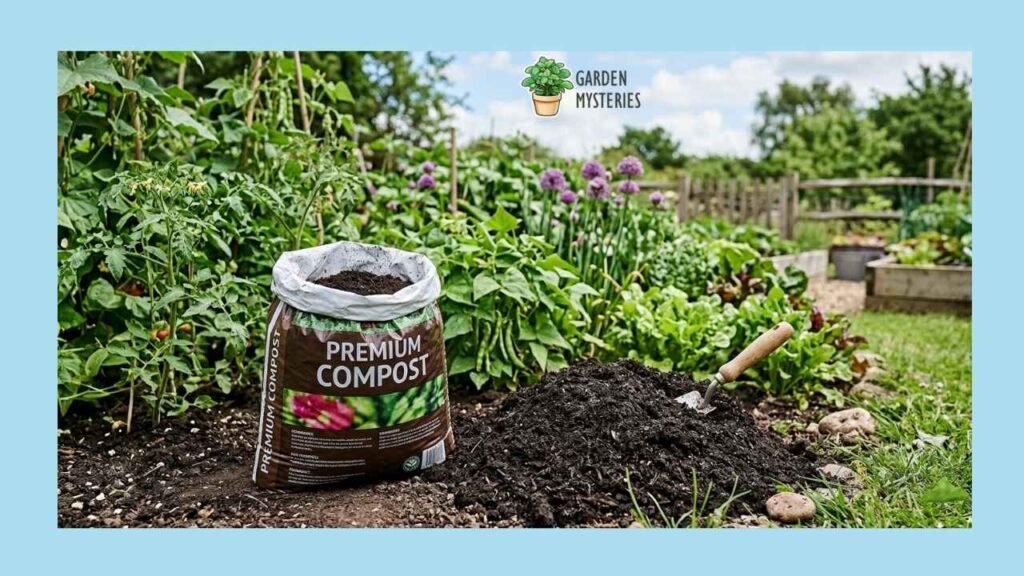
When you add organic compost to garden beds, it feeds the tiny living organisms in the soil. Those organisms then break down nutrients and pass them on to your plant roots. It’s like adding vitamins to food your plants already eat.
A good real-life example is kitchen vegetable peels. You toss them in a compost bin, wait a few months, and they turn into dark, crumbly material that smells like fresh earth. However, compost and manure are different soil amendments, although both add organic matter to the soil.
So, how to use an all-purpose compost? It’s simple: mix two inches of compost into the top layer of your garden bed every spring before planting. Your plants will grow noticeably stronger.
What Is Potting Soil?
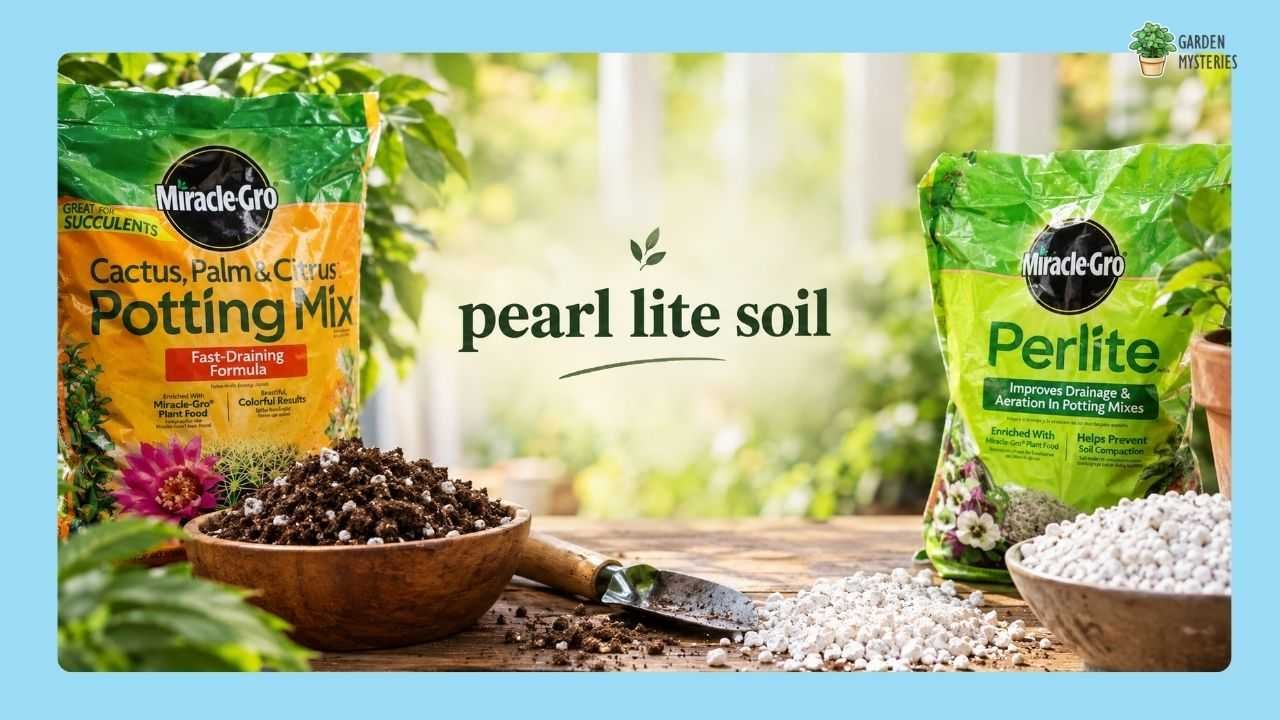
Potting soil is a ready-made growing mix designed specifically for plants in pots, containers, and raised beds. It usually contains peat moss, perlite (small white particles that help drainage), and sometimes a little slow-release fertilizer. It holds moisture well and stays loose so roots can breathe.
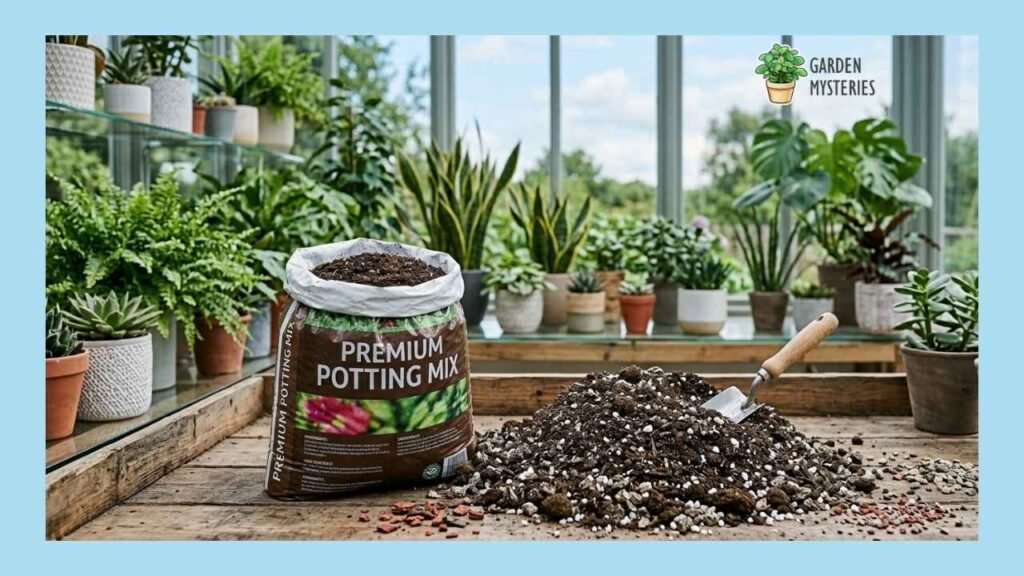
Regular garden soil gets hard and compacted inside a pot. However, a good potting soil is made to stay light and airy, even after many waterings. That is why it works better in containers than regular dirt from your backyard.
You can find different types of potting soil to use. Companies use different ingredients to enrich their products, like in the market, you can find potting soils with sea and earth ingredients, like organic meal, perlite, moss, etc.
A good tip is to check the bag label before buying. Look for perlite or coir (coconut fiber) in the ingredients for better drainage results.
Disclosure: Some links on this page may be affiliate links. If you make a purchase through these links, we may earn a small commission at no extra cost to you.
Potting Soil vs Compost: At a Glance
The biggest difference in compost vs potting soil is their purpose. Compost improves the soil you already have. Potting soil replaces it entirely inside a container. One feeds your garden. The other grows plants on its own.
| Feature | Compost | Potting Soil |
| What it is | Decomposed organic matter | Manufactured growing mix |
| Main ingredients | Food scraps, leaves, and manure | Peat moss, perlite, bark |
| Best used for | Garden beds, lawn topdressing | Pots, containers, raised beds |
| Nutrients | High, natural nutrients | Added starter fertilizer |
| Drainage | Moderate | Excellent |
| Can plants grow in it alone | No, needs other soil | Yes |
| Cost | Low to free (homemade) | Moderate to high |
| Shelf life | Indefinite if stored dry | 1 to 2 years |
Can You Use Compost as Potting Soil?
Compost should not be used alone as potting soil because it holds too much moisture and can compact around roots. For container gardening, compost works best when mixed with potting soil at about 20% to 30% of the total blend. This improves nutrients while keeping proper drainage and airflow.
Compost or Potting Soil: What Actually Makes Them Different?
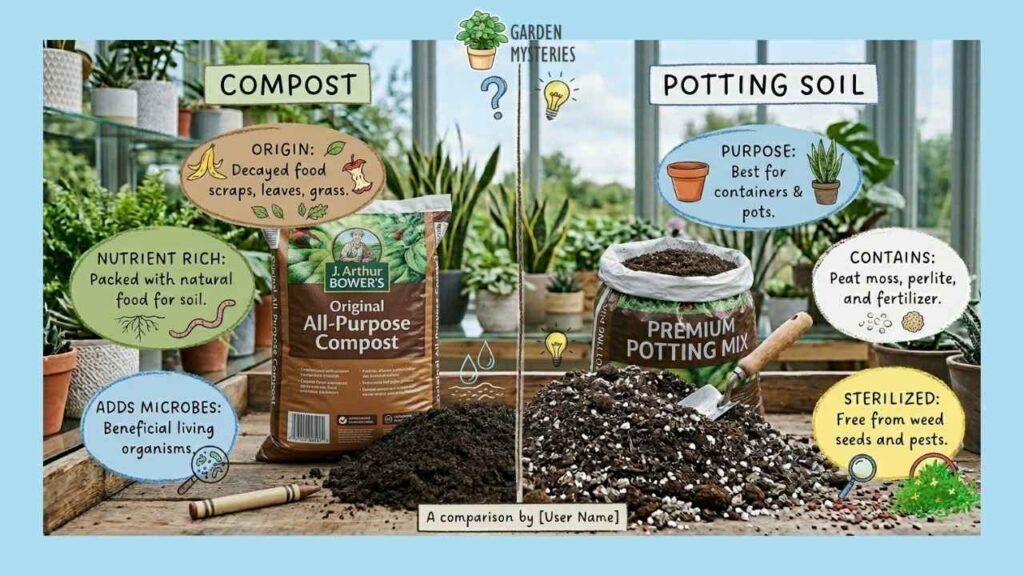
All-purpose potting soil and compost are different in origin, ingredients, and purpose. Compost comes from broken-down organic matter and improves soil. Potting soil is a manufactured mix made to grow plants in containers without any other additions needed.
How Compost Is Made and What It Does to Soil
Horticulture compost forms when organic materials like food scraps, dry leaves, and grass clippings break down over weeks or months. The result is a dark and soft material packed with nutrients that feed your soil and the plants growing in it.
- Compost enriched with manure and organic meal adds beneficial microbes (tiny living organisms) that help break nutrients down for plant roots.
- It improves the texture of heavy clay soil by making it softer and easier to dig.
- Compost holds water longer in sandy soils that dry out too fast.
According to the Oregon State University Extension Service, compost improves soil structure, increases water retention, and supports healthy microbial activity in garden beds.
What Potting Soil Contains and How It Works?
Potting soil is a blended mix of ingredients that work together to support plants growing in confined spaces like pots. It typically contains peat moss, perlite, and sometimes bark or fertilizer to keep plants fed and roots healthy.
- Perlite keeps the mix light and stops water from sitting around the roots.
- Many potting soils include a starter fertilizer that feeds plants for the first few weeks.
- Potting soil is sterilized, which means it is free from weed seeds and harmful organisms.
Can You Use Potting Mix vs Compost the Same Way?
Potting mix and compost cannot be used interchangeably because they serve completely different roles. Using potting soil and compost together, however, gives you the best results for container gardening. A good composite soil for garden containers combines both in the right ratio for strong, healthy plant growth.
When to Use Compost and When to Use Potting Soil
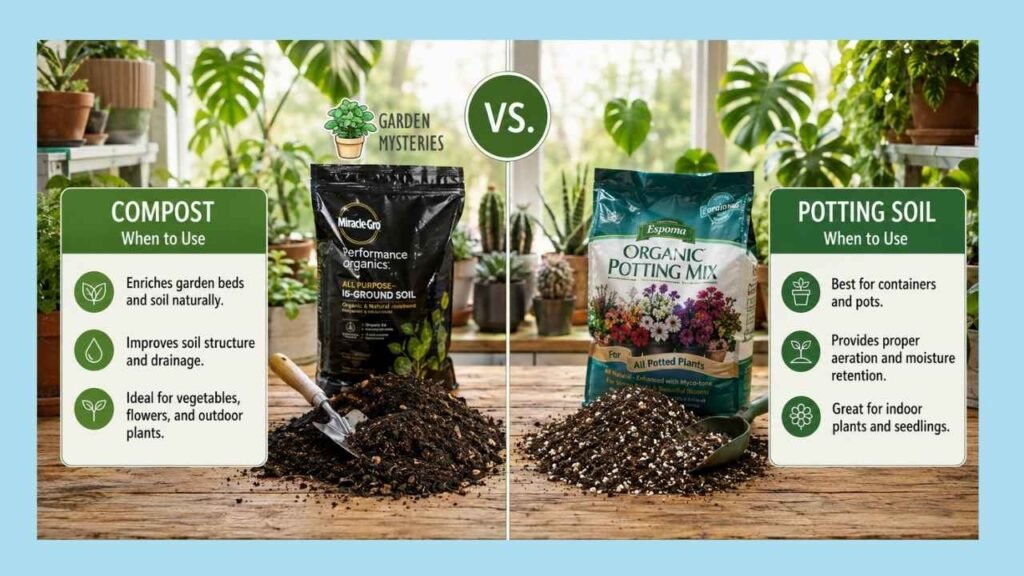
Use compost when you want to improve garden beds, and use potting soil when you are growing plants in containers. Compost for tomato plants can work like magic sometimes, as it can improve soil fertility. The two products solve different problems, and knowing which one to reach for saves you time and money.
The Best Times to Add Compost to Your Garden
Compost works best when you mix it directly into your garden bed before planting season starts. A good compost soil ratio is one part compost to three parts existing garden soil for most vegetables and flowers.
- Add compost in early spring before you plant seeds or seedlings.
- Use it to top-dress your lawn by spreading a thin half-inch layer over the grass.
- Mix it into tired soil at the end of the growing season to restore nutrients.
- Use compost for potting mix by blending it with potting soil for container plants.
When Potting Soil Is the Right Choice
Potting soil is the right choice any time you are filling a pot, planter, or raised bed, especially for vegetables. When you look at potting soil vs compost, potting soil wins for containers because it drains better and holds its structure longer.
- Use potting soil for indoor houseplants that need a clean, lightweight growing medium.
- Fill raised beds with potting soil when you do not have access to garden soil.
- Refresh old pots every one to two years by replacing the compost with fresh potting soil mixed with compost.
How to Mix Compost and Potting Soil the Right Way
The right way to mix compost and potting soil is to combine one part compost with three parts potting soil for containers and raised beds. This simple ratio gives your plants nutrients, good drainage, and healthy root space all at once.
Step 1: Gather Your Materials
Get one bag of potting soil with organic meals and perlite, with enough compost to make up one quarter of your total mix. Lay both bags next to your pot or raised bed before you start. This keeps the process clean and simple.
Step 2: Mix Potting Soil and Compost
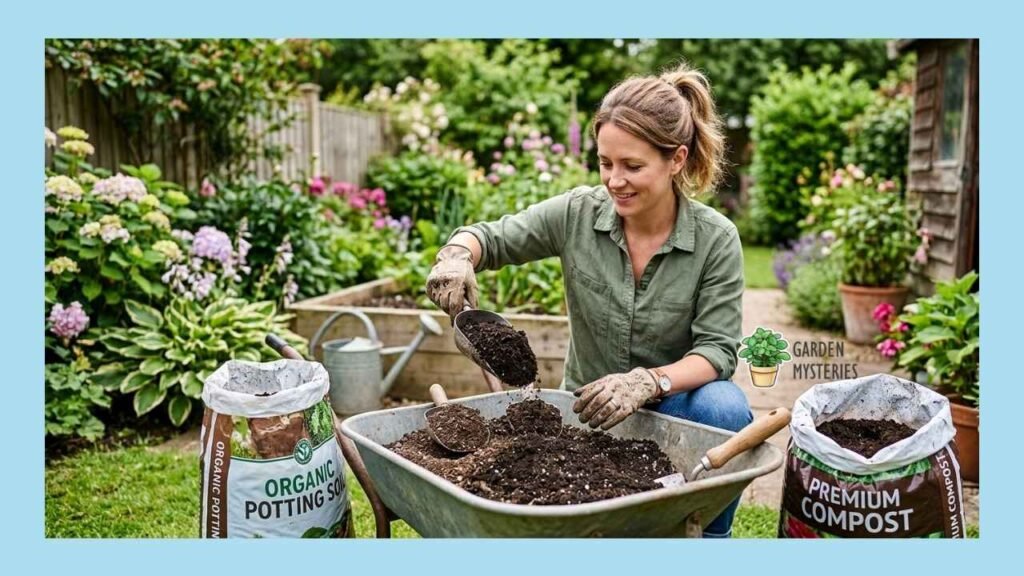
Pour three scoops of potting soil into a bucket or wheelbarrow, then add one scoop of compost. Follow the way shown in the image below to see the right texture you are looking for before filling your pot.
Step 3: Use Both Together
In this step, you need to use compost for the potting mix in the right amount. Do not add more than 25 percent compost to your mix. Too much compost holds excess water and can rot your plant roots faster than you expect.
Step 4: Check Texture
When it comes to texture, potting soil versus compost, you must check it before planting. Squeeze a handful of your mix. It should hold its shape lightly but still crumble apart when you open your hand. If it feels too wet or heavy, add a little more potting soil to balance it out.
Common Mistakes Gardeners Make With Compost and Potting Soil
The most common mistake gardeners make is filling pots with pure compost and wondering why their plants struggle. Compost alone does not drain well enough for containers, and it can suffocate roots when it gets too wet and compact.
- Wrong product in pots: Many gardeners use compost for garden beds inside containers, but compost alone holds too much water and needs to be mixed with potting soil instead.
- Skipping the mix: Using potting mix vs compost separately when you should be combining them means your container plants miss out on both good drainage and natural nutrients.
- Too much compost: Adding more than 25 percent compost to your container mix creates a soggy growing environment that leads to root rot over time.
- Using old potting soil alone: Reusing last year’s potting soil without refreshing it with fresh compost strips your plants of nutrients before they even start growing.
- Wrong soil for raised beds: Using pure potting soil in large raised beds gets expensive fast, and a composite soil for garden beds made from topsoil, compost, and potting mix works much better and costs less.
Also learn: Compost vs Fertilizer.
FAQs
Compost is used in gardening to improve soil quality, add natural nutrients, and help plant roots grow stronger. You mix it into garden beds or spread it on top as a natural, slow-release fertilizer.
Compost is almost always cheaper than potting soil, and homemade compost costs nothing at all. When comparing compost vs potting soil on a budget, compost made from kitchen scraps and dry leaves wins every time.
No. Compost improves soil but does not provide enough drainage or airflow for container plants when used alone. Potting soil is specifically designed for pots and raised beds.
Using garden soil in pots can cause poor drainage, compacted roots, and root rot. Unlike potting mix, garden soil becomes dense in containers and limits aeration. Potting soil with perlite, peat moss, or coco coir keeps roots healthier by improving airflow and moisture retention.
Old potting soil can be reused with compost if refreshed before planting. Adding fresh compost, perlite, or vermiculite improves drainage, moisture retention, and microbial activity. This helps restore nutrients and structure for healthier container plants and raised bed vegetables.
End Note
Compost and potting soil serve different purposes, and using the right one helps plants grow stronger with fewer problems. Compost improves garden soil naturally, while potting soil provides drainage and structure for container plants.
Pick one thing to try this week. Add a scoop of compost to your garden bed, or refresh an old pot with a fresh potting soil and compost mix. For more simple gardening guides, check out our other posts on soil care and container growing.
Note: Gardening methods, soil performance, and plant growth may vary depending on climate, watering habits, sunlight, soil conditions, and local environment. Information is provided for general educational purposes and may not produce identical results in every garden or container setup.