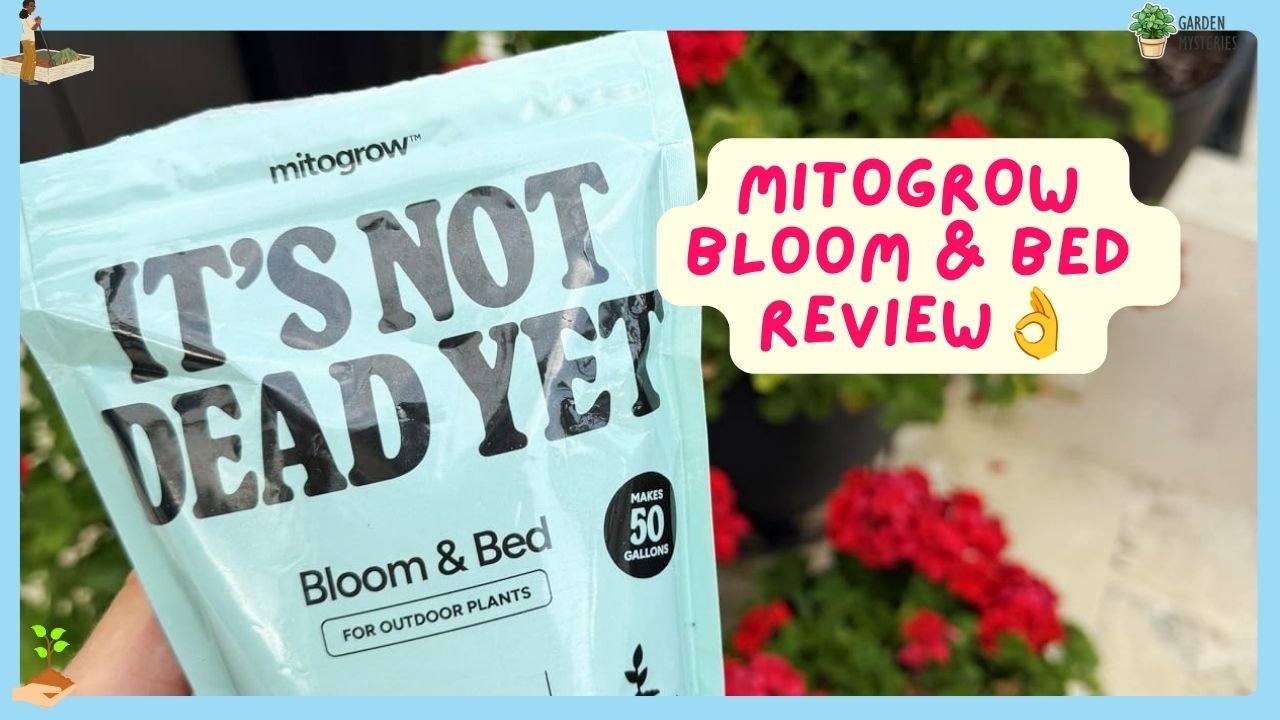
Not long ago, my small yard in Allentown, Pennsylvania, looked worn out. Droopy leaves, faded petals, and a handful of plants that seemed ready to quit. Some looked past help.
Then I tried Mitogrow Bloom & Bed on my flower beds and balcony pots. I did not expect much. A few days later, most of them were back on their feet.
Not every plant made it, and I will tell you which ones didn’t. Here is what the product is, how to use it, and whether it deserves space in your garden. Spoiler: it earned a spot in mine.
What Is Mitogrow Bloom & Bed?
Bloom & Bed is a patented, naturally derived, pet-safe powder from Mitogrow, made for flowers and other soft-stemmed plants, the kind that wilt fast when anything goes wrong.
You stir it into water and pour it around the roots. Mitogrow calls it a plant biostimulant, which simply means it helps plants make better use of what the soil already holds.
In fertilizer terms, it is a 0-0-0 NPK biostimulant, so it carries no nitrogen, phosphorus, or potassium of its own. That means it is not a fertilizer for annuals and perennials; it works beside whatever feed you already use.
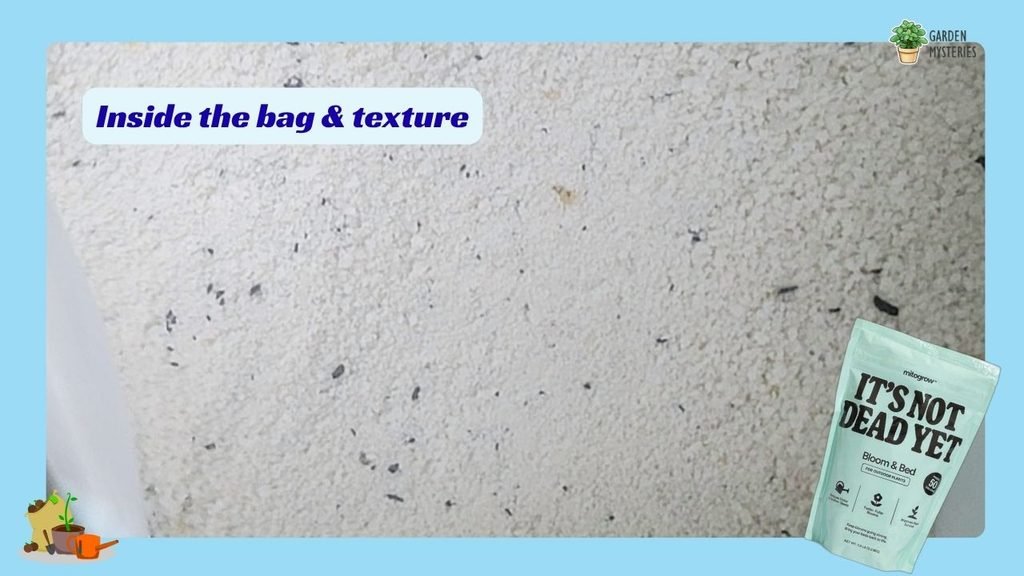
The brand also says it enhances nutrient uptake by 50%, a number I can’t test at home, but the comeback I saw was real. It is easier to picture than it sounds: your plants get better at absorbing what is already there, instead of getting a new meal.
- Easy To Mix: 1 to 2 tablespoons per gallon of water.
- Works With Your Fertilizer: keep your usual routine.
- Hard to Overdo: the brand says plants can’t overdose on it.
- One Bag, 50 Gallons: enough to treat plenty of beds.
Note: Some links may earn Garden Mysteries a small commission if you make a purchase. It costs you nothing extra and helps us keep sharing honest gardening advice and helpful discoveries.
What Is Inside Mitogrow Bloom & Bed?
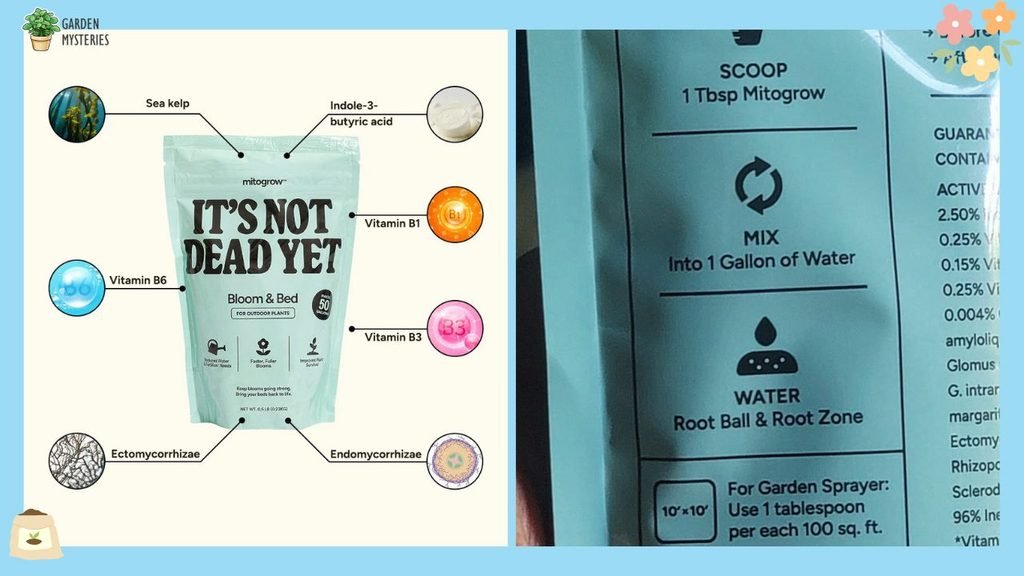
The ingredient list reads like a chemistry quiz, so here it is in plain words. 96% of the powder is inert material that carries the active parts, listed below.
| Ingredient | Amount | What It Does For Plants |
| Indole-3-Butyric Acid | 2.50% | Rooting hormone that encourages new roots |
| Vitamins B1, B3, B6 | 0.15% to 0.25% | Commonly used to ease stress and transplant shock |
| Cytokinin (Kinetin) | 0.004% | Plant hormone that supports new shoots and leaves |
| Bacillus amyloliquefaciens | 1.1 × 10⁷ CFU/g | Friendly bacteria that live around roots |
| Mycorrhizal fungi | Several species | Fungi that help roots reach more water and nutrients |
The label also says it contains non-plant food ingredients, which is a legal way of saying it is not a fertilizer. Put simply, you are giving plants root helpers, stress helpers, and friendly microbes in one scoop. That also explains why it sits beside your regular feeding instead of replacing it.
How To Use Mitogrow Bloom & Bed
The routine is short: mix, pour, and repeat when your plants need it. Here is how it works in each spot, with examples you can copy.
Mixing ratio per gallon
Mitogrow lists 1 to 2 tablespoons per gallon of water, depending on the plant. A simple rule: 1 tablespoon for small, delicate plants and 2 for bigger, thirstier ones. A 2-gallon watering can needs 2 to 4 tablespoons, so keep a measuring spoon next to the can.
One bag covers 50 gallons of mixed solution, which stretches a long way. The brand says plants can’t overdose, so a slightly heavy spoon is not a worry.
When to apply it
Add it when planting, transplanting, or simply maintaining what you already have. Example: moving a seedling from a tray to a bed? Drench the hole before it goes in. For a struggling plant, do not wait.
Every week of delay leaves less root to rescue. Mitogrow’s own timeline promises stronger roots in weeks 1 to 2 and clearly visible, more resilient growth by weeks 3 to 6.
Using it in yard beds
Pour the mix on the soil around each plant, never over the petals. Beds hold water longer, so one drench goes a long way. Tired beds do better when the soil has body, so work in compost or potting soil first, such as Miracle-Gro Organic Soil or Kellogg Organic Soil, and then water in the mix.


Using it on balcony plants
Pots drain fast, so the mix reaches roots quickly and also leaves quickly. Water dry pots lightly first, since parched soil can let the mix run straight through. Check the soil often and repeat the drench when plants start to droop.
If your plants live mostly inside, Mitogrow Pots and Planters for Indoor and outdoor containers is the matching product from the same brand. Same spoon, same ratio works for pots.
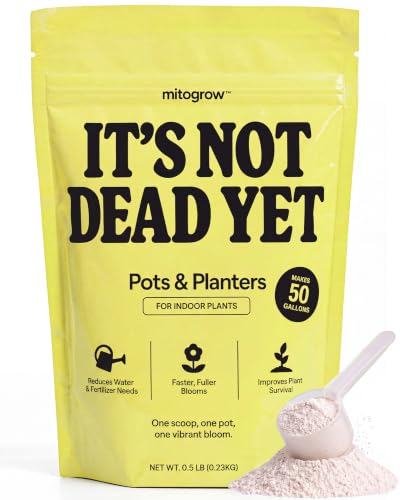
- PATENTED BIOSTIMULANT FORMULA: Works at the cellular level to enhance nutrient efficiency without adding more fertilizer…
- FAST ESTABLISHMENT FOR NEW PLANTINGS: Contains 2.50% Indole-3-Butyric Acid and beneficial mycorrhizae fungi to help cont…
- COMPREHENSIVE VITAMIN COMPLEX: Fortified with Vitamin B1, B3, and B6 plus cytokinin to support plant metabolism, strengt…
My Experience With Bloom & Bed In Allentown
I am not a lab, so this is a yard-and-balcony review, nothing fancier. Fair warning: this is one gardener’s experience, so your results will depend on your plants and soil. I used it on non-woody flowers in my small Allentown yard and on a few balcony plants.
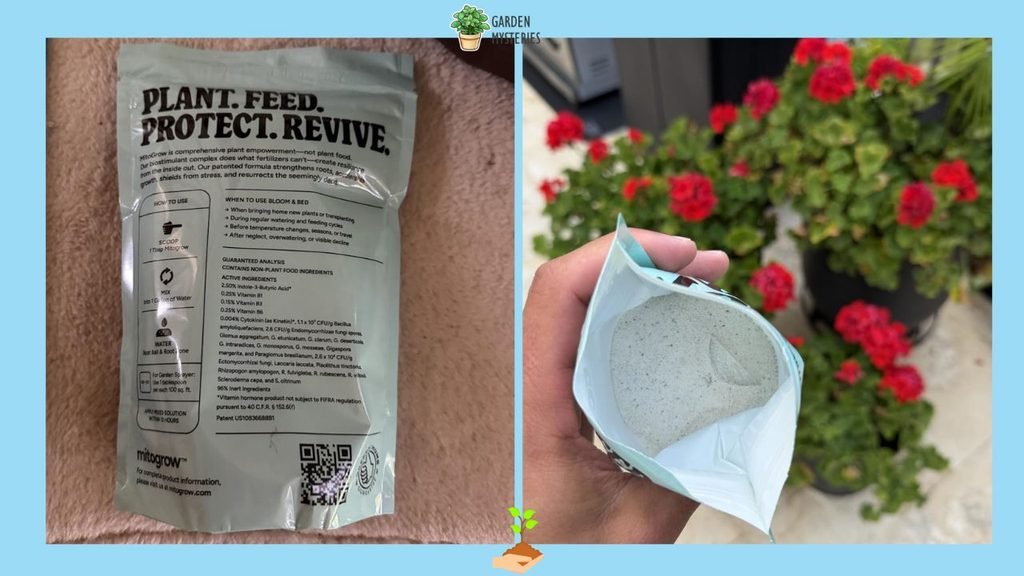
Here is the honest version of how it went.
The state of my plants before
Several flowers had droopy stems and dull leaves. Some were close to the end, and I had mentally written them off. I was ready to rip them out and start over, which is the usual fate of plants in that shape. If you have a bed like that right now, you know the feeling.
First week after application
A few days after the first drench, I noticed the change. Leaves that had been hanging lifted, color came back, and most of the plants that were about to die looked alive again. I did not need a chart or a measuring tape.
The difference was easy to see. That is faster than I expected from anything that comes in a pouch.
The weeks after
A quick perk-up means little if plants slip back a week later. Mitogrow says visible improvement shows up within 1 to 4 weeks, depending on the species, size, and condition of the plant.
Mine came back on the early side of that range. I will keep watching them through the next growth cycle before I call it a permanent fix.
The small plants I couldn’t save
Three or four of my smallest plants did not make it. They were so weak by the time I started that there was little left to work with. Bloom & Bed supports roots and eases stress, but it cannot rebuild a plant that is already past the point of return.
My advice: treat a plant at the first sign of trouble, not after it has been drooping for weeks.
Yard beds vs balcony pots
I used the same mix in both places, and both groups responded. Yard beds hold moisture longer, and balcony pots dry out faster, so expect to check your pots more often.
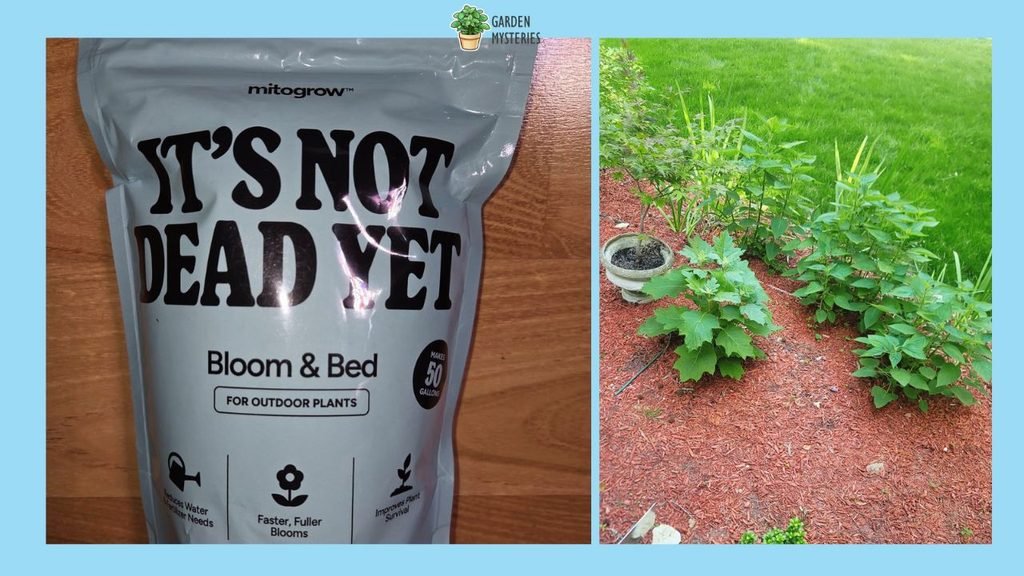
Thin, shallow soil in containers leaves less buffer when a plant is stressed, which is why container plants are often the first to show trouble.
Who Should Use Mitogrow Bloom & Bed?
It suits you if any of these sounds familiar:
- Tired Flower Beds: annuals or perennials that look worn out, and no clue why.
- New Transplants: seedlings and moved plants that need help settling in.
- Pet Households: the brand calls it pet-safe.
- Fertilizer Fans: you can keep your current feed.
Skip it if your garden is mostly trees or shrubs. That job belongs to the Tree & Shrub version, so look for a Mitogrow Tree and Shrub Review before buying.
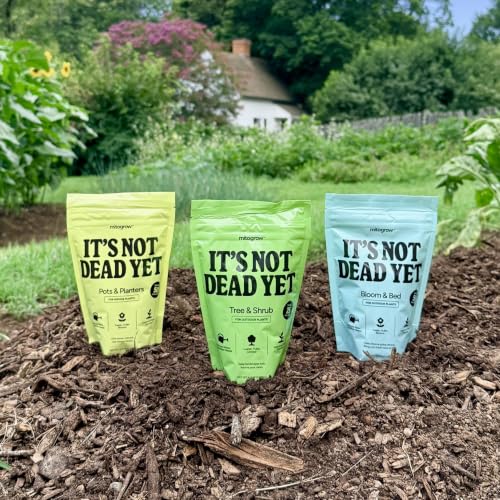
- Protection from inevitable stress
- Improves plant survival
- Works with your favorite fertilizer
Mostly indoor? An Indoor Plant Fertilizer Finder will point you to a closer match.
Where To Buy Mitogrow Bloom & Bed
Mitogrow’s own site lists one bag for $39, or $33.15 with Subscribe & Save, which takes 15% off monthly or quarterly orders. Shipping is free in the US, and you can pause or cancel anytime.
Subscribing only makes sense if you plan to treat beds on a regular schedule; a single bag is enough to test it. Tractor Supply sells it online for $49.99, and Soil911 carries it as well.
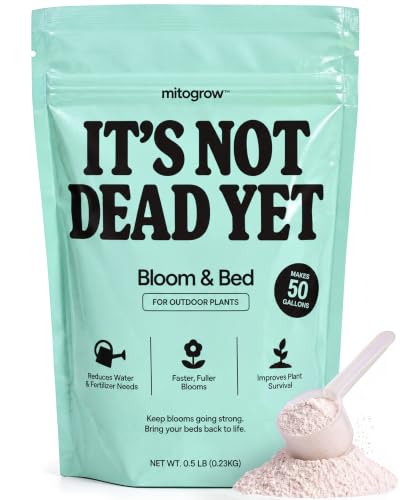
- PATENTED BIOSTIMULANT FORMULA: Works at the cellular level to enhance nutrient efficiency without adding more fertilizer…
- FAST ESTABLISHMENT: Contains Indole-3-Butyric Acid, B vitamins, and beneficial mycorrhizae fungi that accelerate root de…
- STRESS RECOVERY SUPPORT: Apply after heat waves, drought, or heavy rain to help flowers and bedding plants bounce back a…
In person? Fifth Season Gardening Co. in Carrboro stocks it. Prices change, so check before you buy.
Is Mitogrow Bloom & Bed Worth Trying?
For me, yes. It pulled most of my struggling flowers back from the edge with just a watering can and a spoon, and the few it could not save were already too far gone.
Start early, keep your expectations realistic, and pair it with good soil. Give it a few weeks, and your own beds will tell you whether it earns a place in your routine. If they do, the $39 bag is a small bet.
A Note About Affiliate Links: Some links may earn Garden Mysteries a small commission if you make a purchase. It costs you nothing extra and helps us keep sharing honest gardening advice and helpful discoveries.