A plant can have healthy leaves and strong stems yet still produce fewer flowers or fruits than you expected. That does not always mean it needs more fertilizer. Light, watering, temperature, pruning, pollination, and the nutrients already present in the soil can all affect flowering and fruit production.
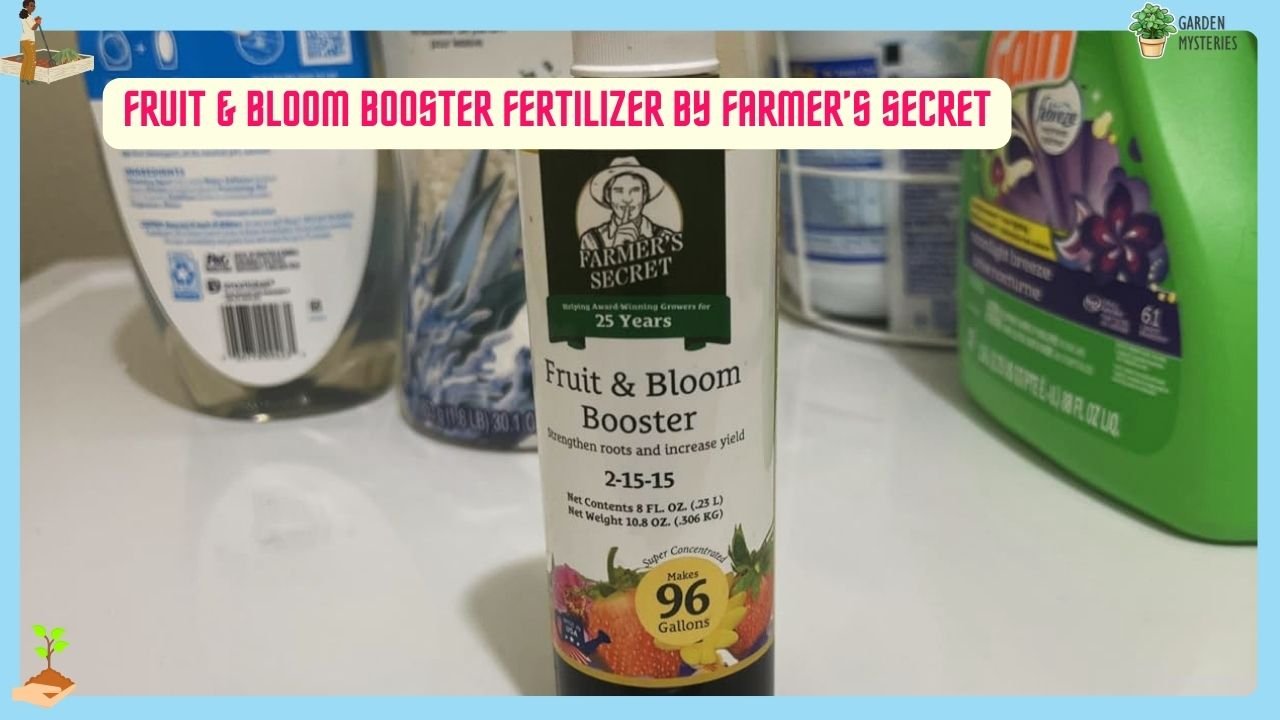
That is where a fruit & bloom booster fertilizer can have a place. Farmer’s Secret Fruit & Bloom Booster is a concentrated liquid fertilizer marketed for flowering and fruiting plants. It is designed to provide nutrients during a stage when gardeners are paying closer attention to buds, flowers, and developing fruit.
I have learned through years of growing plants that adding fertilizer is not automatically the answer to every disappointing plant. I prefer to look at the growing conditions first, then decide whether feeding makes sense. That is the approach I would take with this product too.
Note: This article may contain affiliate links. We may earn a commission from qualifying purchases at no extra cost to you. Opinions reflect our research and personal gardening experience.
What Is Farmer’s Secret Fruit & Bloom Booster?
Farmer’s Secret Fruit & Bloom Booster is a concentrated liquid fertilizer intended for plants that are flowering or producing fruit. The product is marketed for use on a range of flowers, vegetables, and fruiting plants.
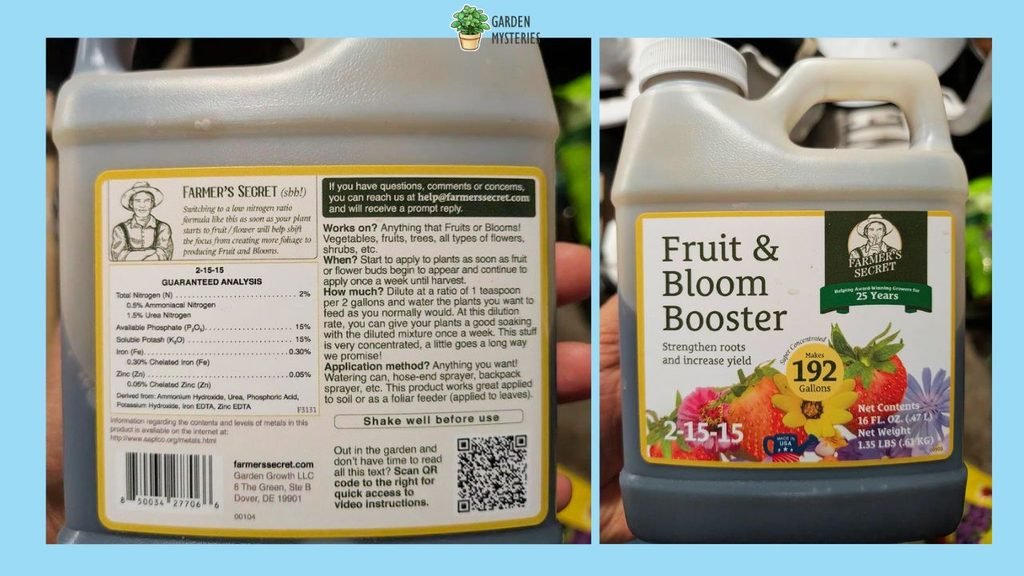
The company describes its fertilizer as a high-phosphorus and high-potassium formula intended to support flowering, fruit production, and root development. However, I would not treat those nutrients as a magic switch for flowers. Plants still need balanced nutrition and suitable growing conditions.
Farmer’s Secret also says its products are developed with agronomists and tested in laboratory and outdoor settings. Those are manufacturer claims, so I would separate them from observations made in my own garden.
One useful point about a concentrated fertilizer is that a small bottle can make a surprisingly large amount of diluted solution. That can make liquid products practical for home gardeners who do not need large quantities of ready-to-use fertilizer.
Fruit and Bloom Fertilizer: Which Plants Can Use It?
Farmer’s Secret lists plants such as citrus, avocado, raspberries, cantaloupe, roses, and petunias among the plants for which it recommends the product. Also, it can fit the general needs of flowering vegetables like tomatoes and peppers when used according to the label.
The timing is more important than simply looking at a plant name. A tomato seedling that is still concentrating on leaf and root growth does not necessarily need the same feeding approach as an established plant covered with flower buds.
This is something I keep in mind with my own gardening. I have grown plants in containers and on a balcony for years. So, I have found it more useful to watch the plant’s stage of growth than to feed simply because a calendar says it is time.
Flowering and fruiting plants also have different nutritional needs from leafy crops. Lettuce, spinach, kale, and similar vegetables are grown mainly for their leaves, so a bloom-focused fertilizer is not automatically the best choice for them.
Another factor is the soil itself. A garden that has received compost or other fertilizers regularly may already contain plenty of certain nutrients. Adding more without knowing what is present can make the feeding plan less precise.
Fruit Tree Booster or Fruit & Bloom Booster?
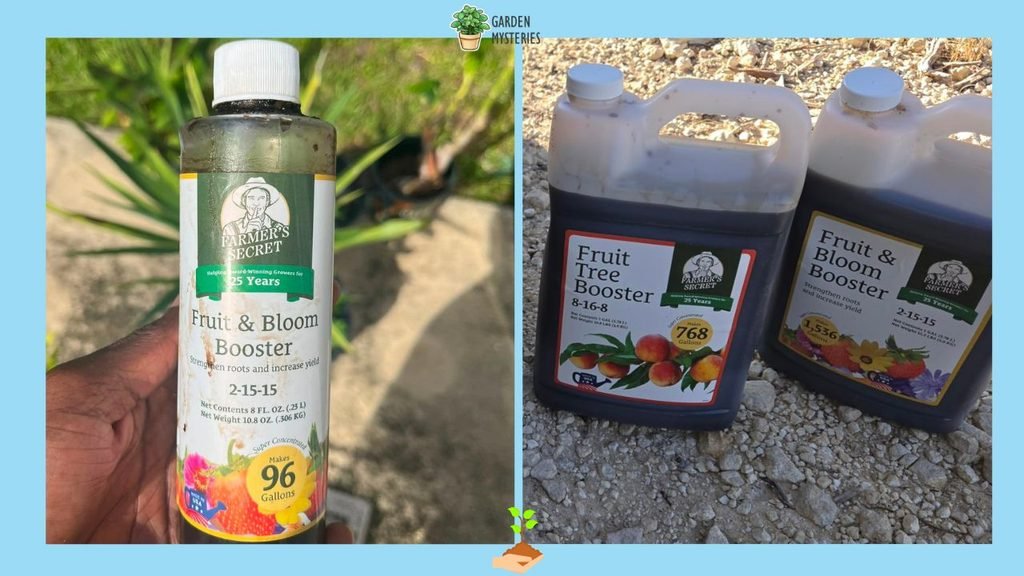
Farmer’s Secret sells separate fertilizers for different gardening situations, so choosing the bottle should start with the plants you actually grow.
For a Mixed Garden
The Fruit & Bloom Booster makes the most sense as the more general option if your garden contains flowering plants, vegetables, and fruiting plants.
That broader use can be convenient for a home gardener who has several types of plants instead of a dedicated orchard. Still, the product label should always be checked for the specific plant and application instructions.
For Fruit trees
Farmer’s Secret also markets a separate Fruit Tree Booster for fruit trees. If most of your garden consists of trees such as apple, peach, or banana, a product specifically marketed for that purpose may be easier to evaluate.

- Let our professionally formulated plant food help your fruit tree grow healthy, strong AND abundantly producing
- Specifically formulated for optimal performance during early growth cycle (after dormancy until fruit starts to bud) whe…
- Super, super concentrated – A little goes a LONG way
I would not assume that the separate products have identical nutrient ratios or application rates. Even when two bottles come from the same company, their instructions can be different.
For Citrus
The company also sells a Citrus Tree Booster for plants such as lemons, limes, and oranges. The Fruit & Bloom Booster is also marketed for citrus, so this is one situation where comparing the individual labels becomes especially useful.
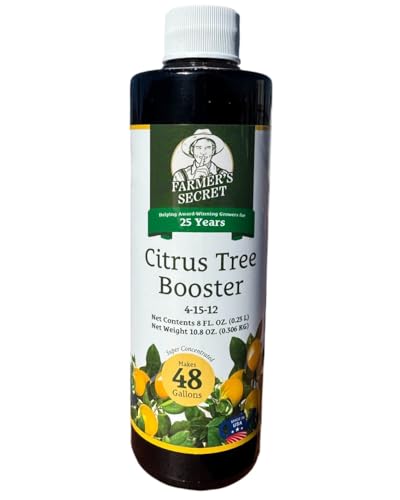
- Let our professionally formulated plant food help your citrus tree grow healthy, strong AND abundantly producing
- Super, super concentrated – A little goes a LONG way
- Dilute one teaspoon of product into one gallon of water and apply weekly along the drip line. For trees in their first s…
The main lesson is simple: choose according to the plant and the label rather than assuming every “booster” works the same way.
How to Mix and Apply Farmer’s Secret Fruit & Bloom Booster
The listed mixing rate is 1 teaspoon of fertilizer per 2 gallons of water. That works out to approximately 2.5 teaspoons for a 5-gallon container.
Because the amount is small, I would measure it rather than estimate by eye. A measuring spoon or small measuring device makes the process much easier, especially when preparing only a few gallons.
Mix the measured fertilizer into the water thoroughly. The product can be used as a soil application and is also listed for foliar feeding and irrigation systems.
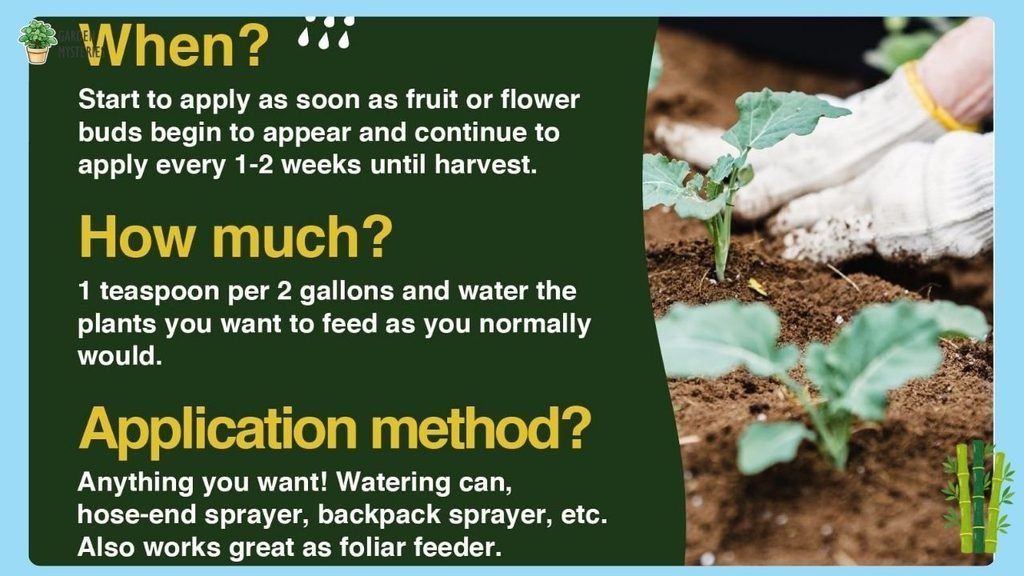
For a home garden, I would start with the label directions rather than making a strong mix because a plant appears to need more. Moreover, a concentrated fertilizer is meant to be diluted, and changing the rate removes one useful point of control from your feeding routine.
If the growing medium is extremely dry, I also prefer addressing the watering situation before feeding. A plant under obvious water stress is not a good candidate for experimenting with stronger fertilizer.
How Often Should You Feed?
The product listing recommends repeating applications every 2 to 4 weeks. The appropriate interval can depend on the plant, growing conditions, container size, and the other fertilizer sources already being used.
For that reason, I would not automatically feed every plant at the shortest interval. If a container plant is already receiving compost, slow-release fertilizer, or another liquid feed, that needs to be considered as part of the overall feeding schedule.
Watch the plant between applications. New growth, flower production, leaf appearance, and the condition of the growing medium can all provide useful clues.
If you are applying it as a foliar feed, follow the label carefully and avoid treating plants during harsh heat or intense direct sunlight. A cooler part of the day is generally easier on plants during foliar applications.
When Should You Skip It?
A bloom-focused fertilizer is not something I would automatically use on every plant in the garden.
Seedlings still establishing their first leaves and roots may have different nutritional priorities. Leafy vegetables also have a different harvest goal from tomatoes, peppers, flowers, or fruit trees.
I would also be cautious when a bed has received substantial compost or fertilizer already. A soil test can provide a much better starting point than guessing which nutrient is missing.
The product listing says a 16-ounce bottle can make approximately 190 gallons of solution, while a 32-ounce bottle can make approximately 380 gallons at the listed dilution rate. Actual value will depend on the current purchase price and how much you use.
What Do Gardeners Say About It?
Farmer’s Secret Fruit & Bloom Booster has received generally positive customer feedback on its product listings. Also, with buyers commonly mentioning flowering, plant appearance, easy mixing, and the concentrated formula.
Those reviews can be useful for spotting recurring experiences, but I would not treat customer ratings as proof that the fertilizer will produce the same result in every garden.
This is where I prefer to keep product reviews grounded. My own gardening experience has taught me that two plants receiving the same product can still behave differently because their light, containers, soil, watering, temperature, and previous feeding history are different.
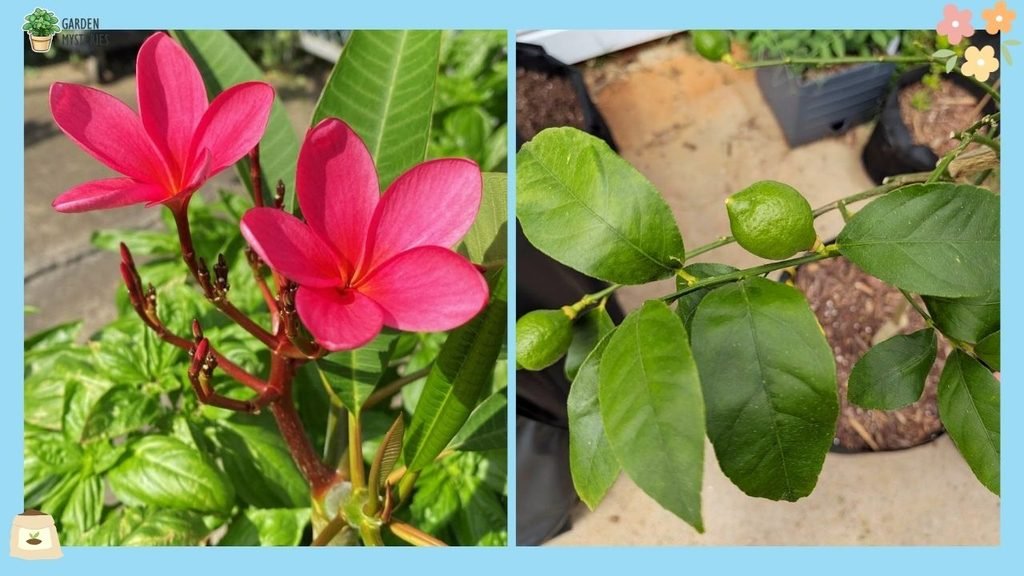
I have also seen this with my balcony plants. After using Back to the Roots 100% Organic Perlite during May and June, my plants later produced flowers, and I harvested lemons. That is a real observation from my garden, but I would not claim the perlite caused those results because I did not conduct a controlled comparison.

- Produce abundant and vibrant fruit and blooms! This product works by strengthening your plant’s roots to increase nutrie…
- Use on all flower / fruit / vegetable producing plants (we’ve seen amazing results with citrus trees, avocados, raspberr…
- Super, super concentrated – A little goes a LONG way (we recommend you dilute at a rate of 1 teaspoon per 2 gallons of w…
I would use the same standard with Farmer’s Secret. Look at the product information, follow the label, and then judge what you actually observe rather than expecting the bottle to guarantee a particular number of flowers or fruits.
Can I combine it with other fertilizer? Count what you’re already giving. If you work in compost or a slow-release feed, you may need less. Check out our blog on Fertilizers for Annuals & Perennials if you have free time.
Quick Answers: Fruit & Bloom Booster Fertilizer
Can I use it on vegetables I plan to eat?
The product is marketed for fruit and vegetable plants. Follow the current label instructions carefully, including application directions and any harvest-related precautions.
Is soil or foliar application better?
The product is listed for both soil and foliar applications. For a first use, soil application may be simpler because it avoids having to manage leaf coverage and spraying conditions.
How often should I use it?
The listed interval is every 2 to 4 weeks. I would stay within the label directions and consider the plant’s condition and other fertilizer sources before choosing the shortest interval.
Will it make a plant produce more fruit?
There is no good reason to promise that. Fertilizer can supply nutrients, but fruit production also depends on factors such as light, temperature, water, pollination, plant variety, and general plant health.
The Bottom Line
Farmer’s Secret Fruit & Bloom Booster is a concentrated liquid fertilizer designed for flowering and fruiting plants. Its appeal is fairly simple: a small amount of product can make a large volume of diluted solution, and the company markets it for many common garden plants.
I would not use it as a shortcut for diagnosing a struggling plant, though. Poor light, inconsistent watering, unsuitable soil, temperature stress, or an existing nutrient imbalance can all be involved.
For my own gardening approach, I would first look at the plant and its growing conditions, then consider whether additional feeding is actually needed. If it is, I would follow the product label, keep the dilution measured, and watch the plant over several applications.
That makes a fruit & bloom booster fertilizer a useful gardening tool to consider, rather than a guaranteed solution for every plant that is slow to flower or fruit.
Disclosure: Some links in this article are affiliate links, including Amazon links. If you make a qualifying purchase, we may earn a small commission at no extra cost to you. Our opinions are based on our own research and gardening experience.
Other Blogs: