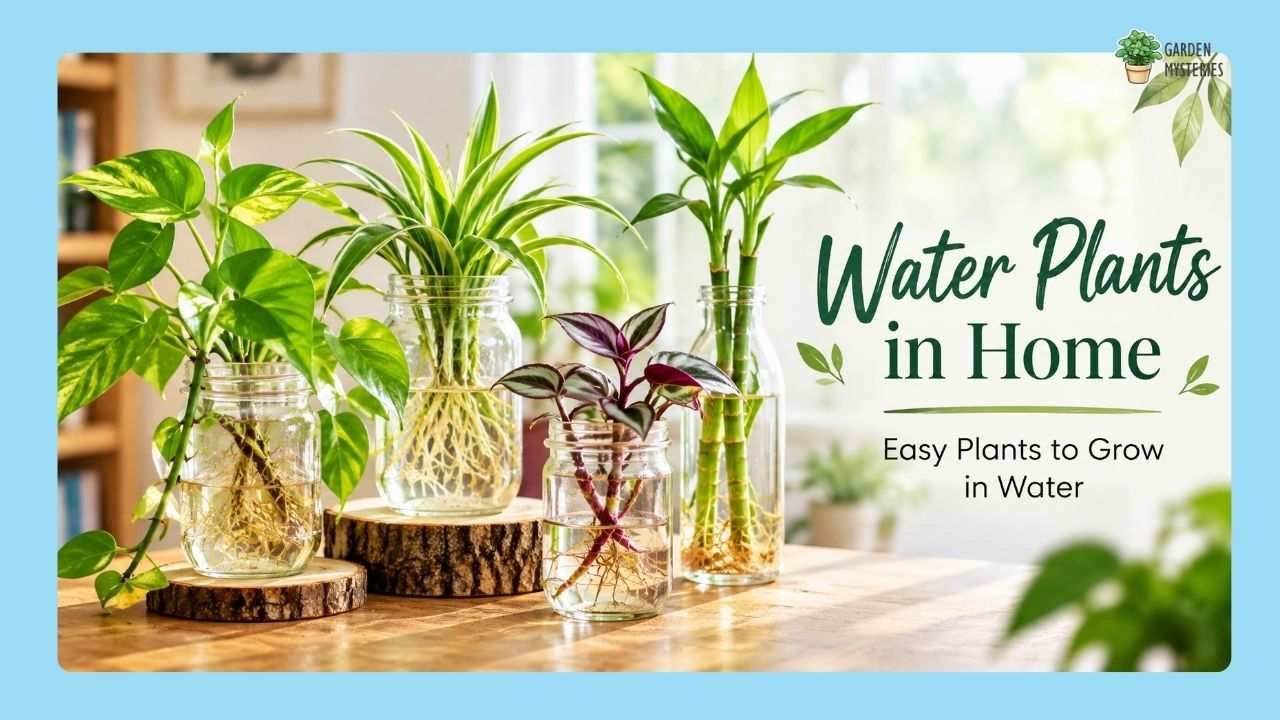
Want more greenery without filling your home with bags of potting soil? Water plants in home spaces can create a clean and attractive display on shelves, desks, windowsills, and tables.
Some houseplants can grow in water for long periods. Others root easily in water but grow better after you move them into soil. Knowing this difference can help you avoid root problems and keep your plants healthy.
Growing plants in water also gives you a close look at developing roots. A simple glass jar can become both a propagation station and a decorative plant display.
What Does It Mean to Grow Plants in Water?
There are two common ways to grow houseplants in water.
The first is water propagation. You place a cutting in water until it develops roots. After that, you can move the rooted cutting into potting soil.
The second is growing a plant in water for a longer period. This requires more attention because established plants still need light, oxygen around their roots, and nutrients.
A plant that can produce roots in water does not necessarily mean it can live in water permanently. This distinction is important when choosing water plants in home settings.
Best Water Plants for Growing at Home
If you want to grow water plants in home spaces, you have several options for propagation and indoor displays. Some plants root quickly from stem cuttings, while others can tolerate longer periods in water. The important difference is that rooting a plant in water does not always mean it should stay in water permanently.
The plants below include both easy water-propagation choices and plants suited to longer-term water growing. Check the care notes for each plant before choosing your method.
Pothos
Pothos (Epipremnum aureum) is one of the easiest houseplants to propagate in water. A healthy stem cutting with a suitable node can develop roots in a jar or glass.
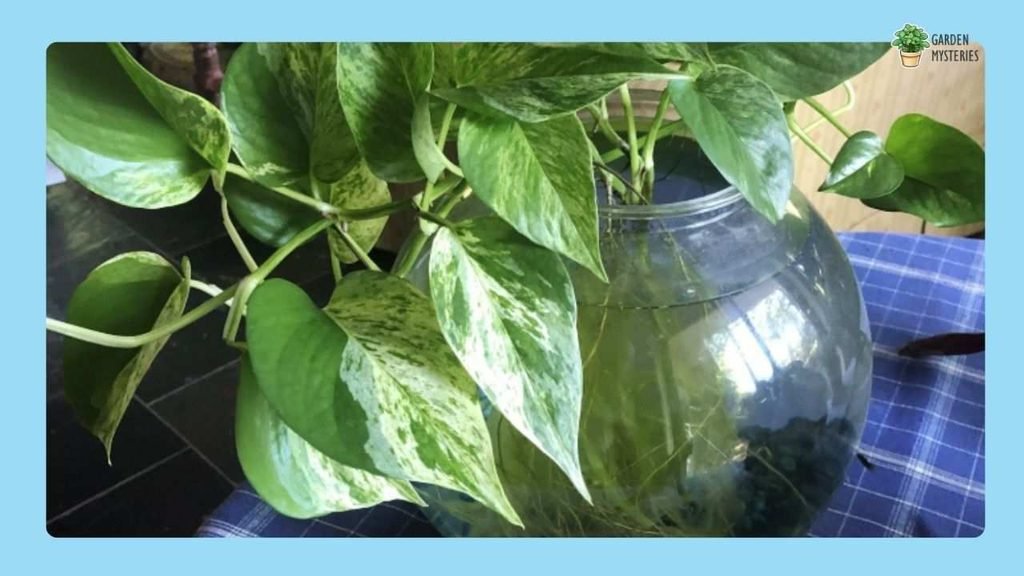
Its trailing growth also makes it attractive for shelves and hanging displays.
Keep the leaves above the water and place the container somewhere with bright, indirect light.
Heartleaf Philodendron
Heartleaf philodendron (Philodendron hederaceum) is another popular choice for water propagation.
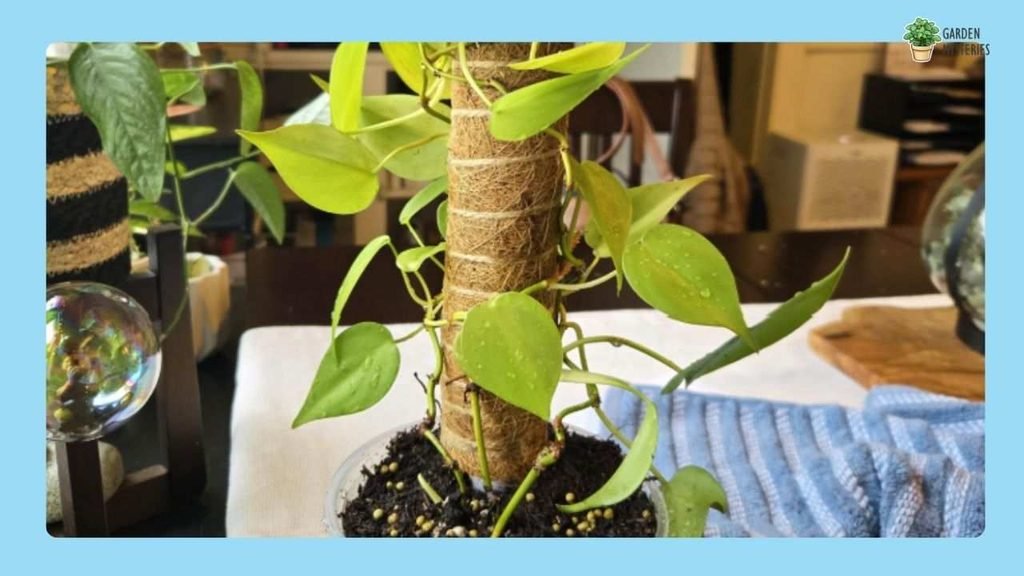
Its flexible stems make it easy to take cuttings. Once roots develop, you can either transfer the cutting to soil or continue experimenting with water culture under suitable conditions.
Avoid placing submerged leaves below the waterline because they can decay.
Spider Plant
Spider plants (Chlorophytum comosum) produce small plantlets that can be rooted in water.
This makes them particularly fun for beginners. You can place a young plantlet in a small glass and watch the roots develop.
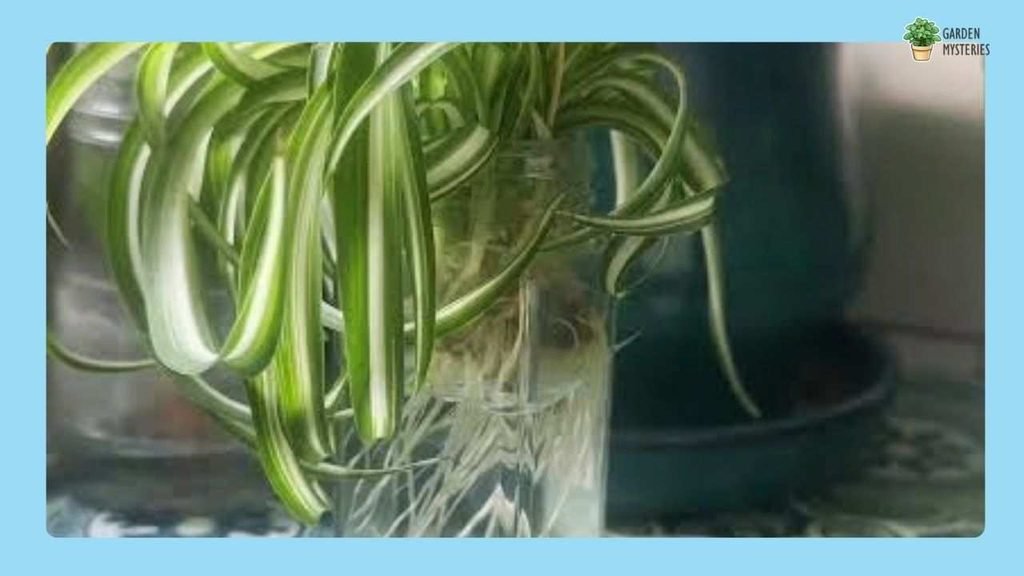
The RHS notes that spider plants can be propagated using their plantlets, which can be rooted before being potted into compost.
Chinese Money Plant
The Chinese money plant (Pilea peperomioides) is known for its round, coin-like leaves and compact shape.
Healthy offsets can be separated from the parent plant and established separately. Suitable plant material can also be rooted in water.
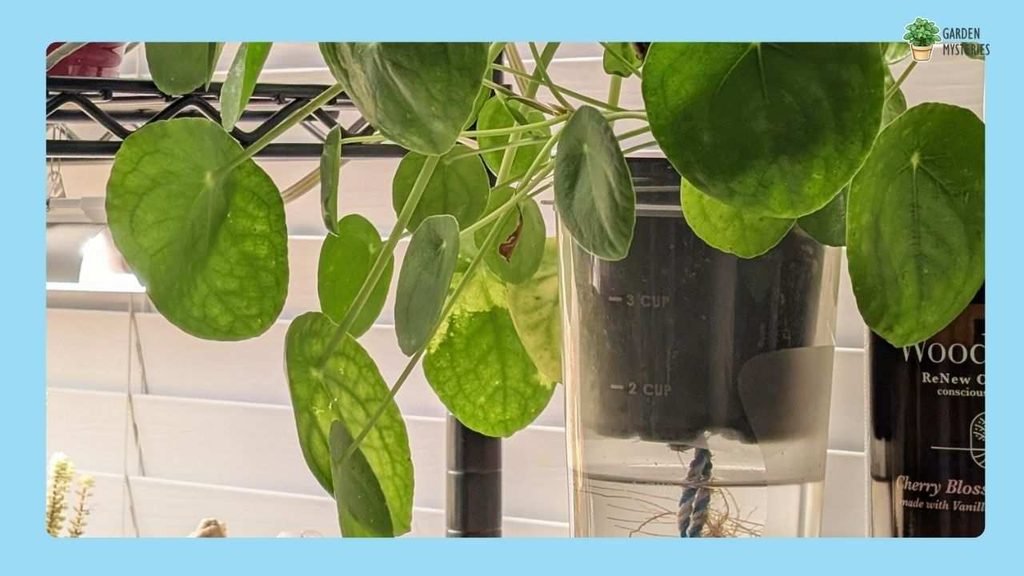
Once the roots are established, moving the young plant into a suitable, well-draining potting mix is often a practical choice.
Lucky Bamboo
Lucky bamboo (Dracaena sanderiana) is one of the best-known indoor plants associated with water growing.
It is commonly displayed in glass containers with its roots submerged. Keep the foliage above the water and provide suitable indirect light.
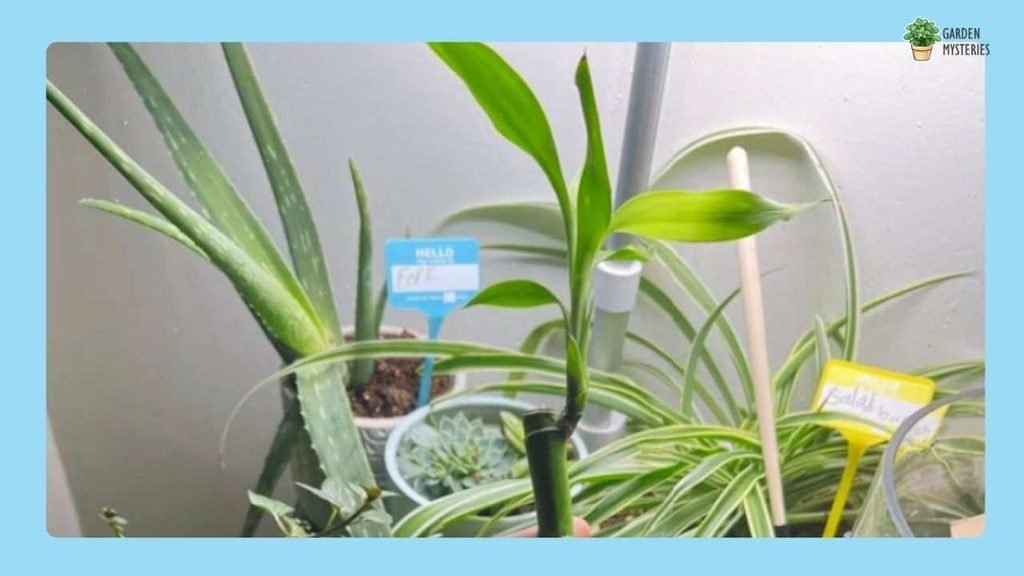
Clean water and a clean container are important for keeping the display looking healthy.
Tradescantia
Tradescantia is valued for its colorful foliage and trailing stems. Stem cuttings can root readily in water, making the plant useful for simple propagation projects.
A clear glass container can also highlight the developing roots.
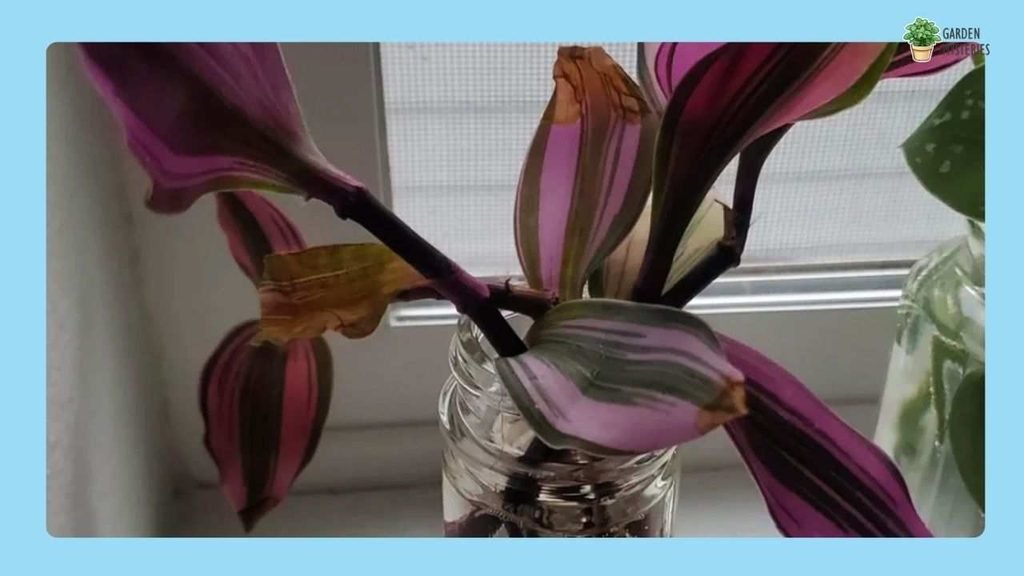
Once the cutting has formed a healthy root system, you can decide whether to continue with water culture or move it to soil.
Coleus
Coleus (Plectranthus scutellarioides) is another easy plant to propagate from stem cuttings.
Its colorful foliage can add variety to a windowsill display. Place a healthy cutting in clean water and keep it in bright, indirect light.
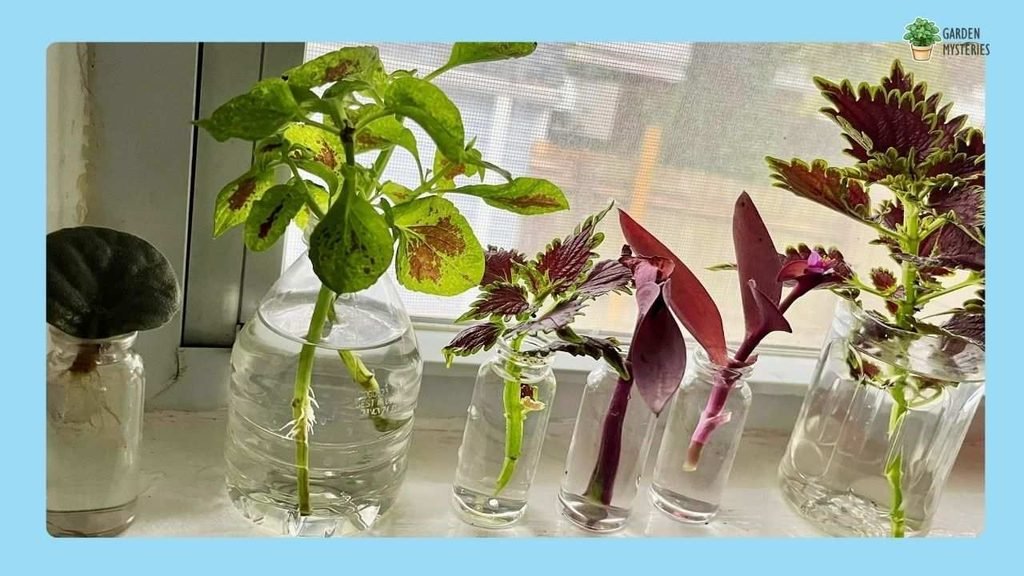
Coleus is generally better suited to being moved into a growing medium after rooting rather than being treated as a permanent water-grown plant.
Arrowhead Plant
The arrowhead plant (Syngonium podophyllum) has attractive arrow-shaped leaves and can be propagated using stem cuttings.
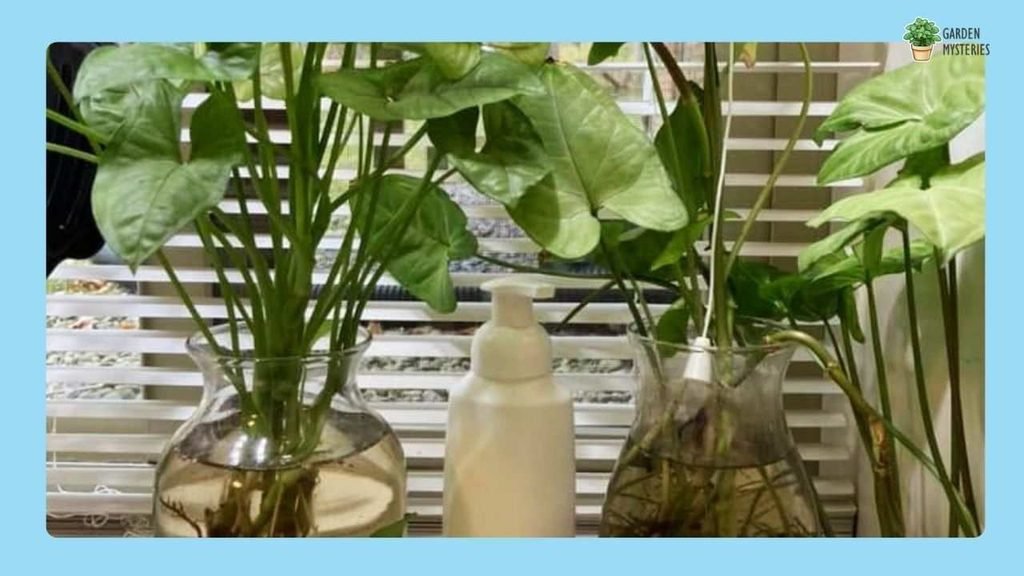
A cutting with a suitable node can develop roots in water. Once the roots are established, transplanting it into an appropriate potting mix can support continued growth.
Keep the water level high enough to cover the appropriate part of the stem without submerging the foliage.
English Ivy
English ivy (Hedera helix) can also be propagated from suitable stem cuttings.
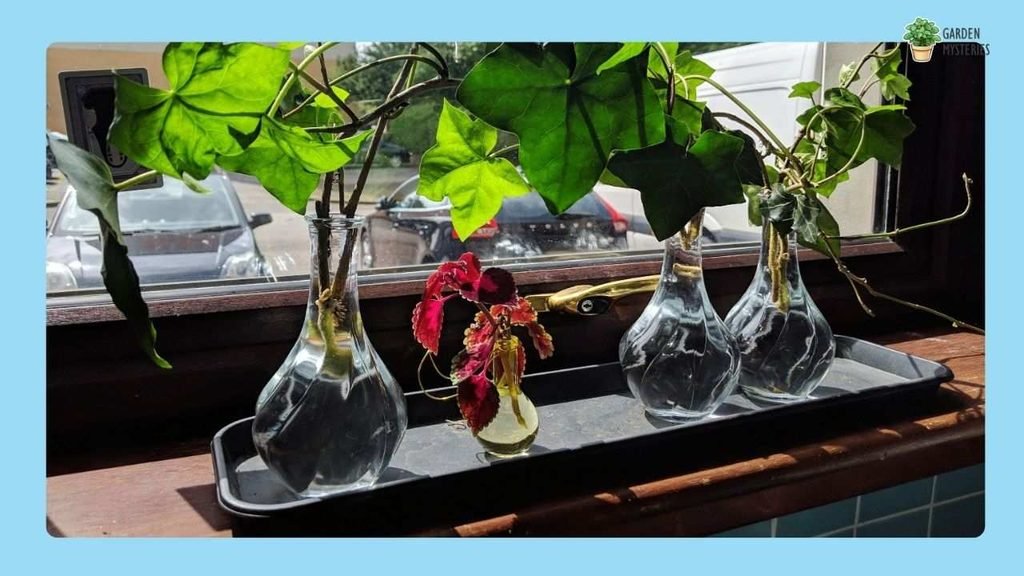
Choose healthy growth and place the cutting in a clean container of water. Bright, indirect light can support root development.
Ivy is mainly a propagation candidate rather than a plant that should automatically be kept in water forever.
Monstera
Monstera cuttings are popular among houseplant growers because their large leaves make an impressive display.
A cutting needs a suitable node to produce roots. Simply placing a piece of leaf in water will not create a new plant.
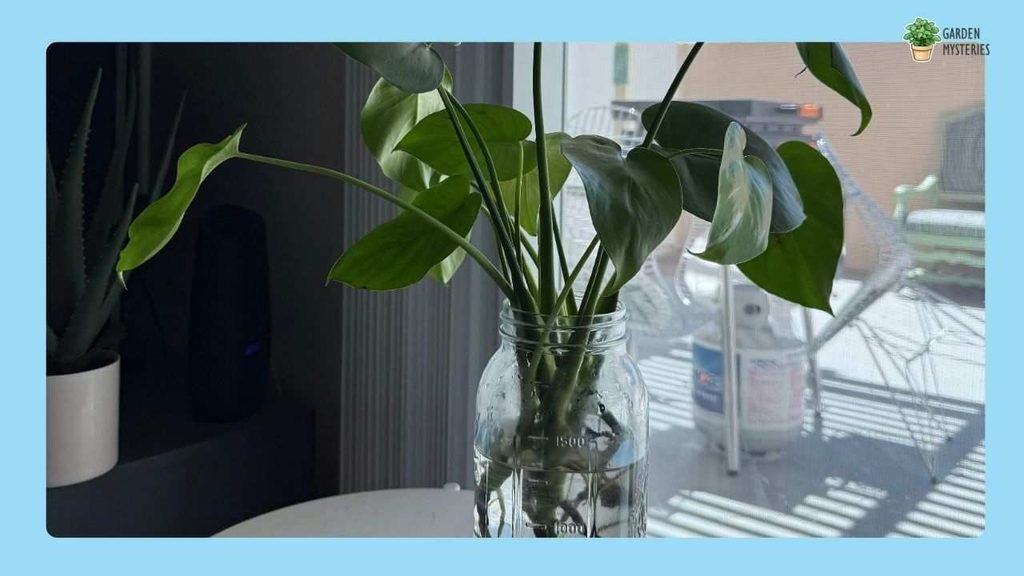
Once roots become established, you can transfer the cutting to a suitable growing medium.
Nerve Plant
Nerve plant (Fittonia) has small leaves with striking veins. Suitable stem cuttings can be rooted in water.
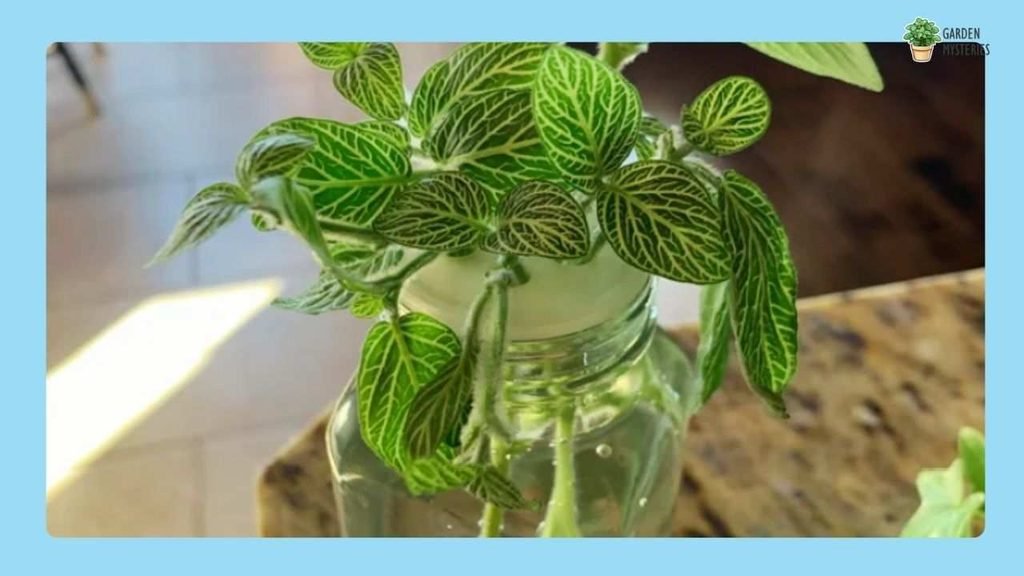
Because of its compact size, it can work well in a small glass container during propagation.
You should keep the cutting in a warm and bright location without exposing it to harsh direct sunlight.
Begonia
Some begonias can be propagated using suitable cuttings, although the best method depends on the type of begonia.
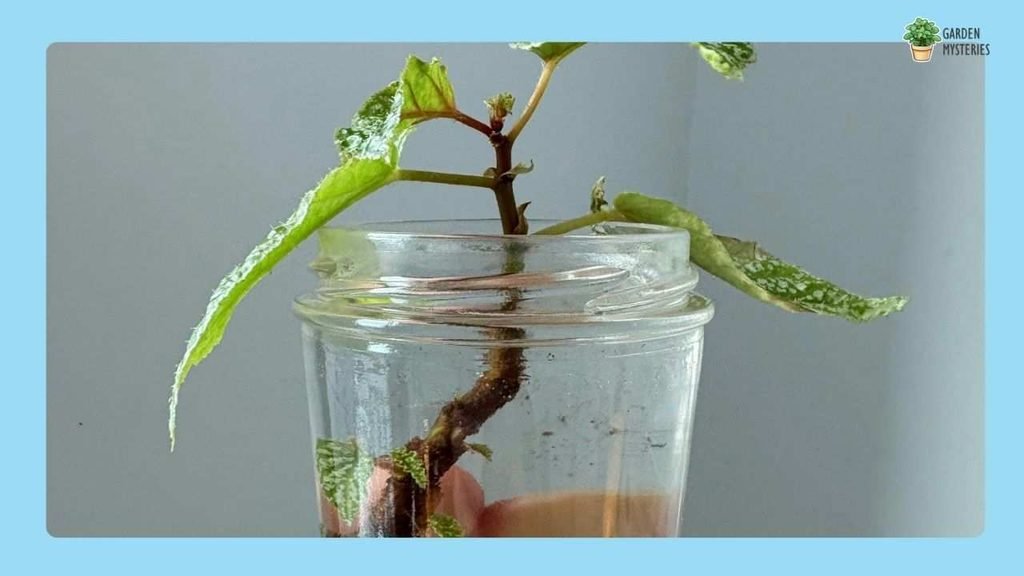
For water propagation, start with healthy plant material and remove any leaves that would sit underwater.
Once roots develop, moving the plant into an appropriate growing medium can provide better long-term support.
Jade Plant
Jade plant (Crassula ovata) can be propagated from suitable leaf or stem material. However, it is not a good choice for permanent water culture.
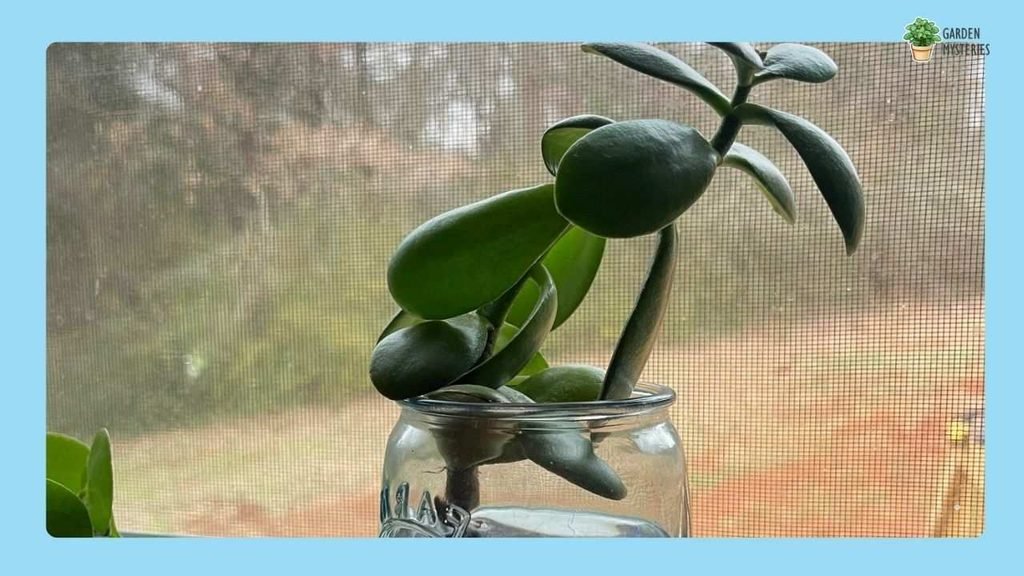
As a succulent, jade plant is adapted to conditions where excess water drains away. After propagation, a gritty, well-draining growing medium is usually more appropriate.
Umbrella Plant
Umbrella plant, also called dwarf umbrella tree (Heptapleurum arboricola), can be propagated from suitable stem cuttings.
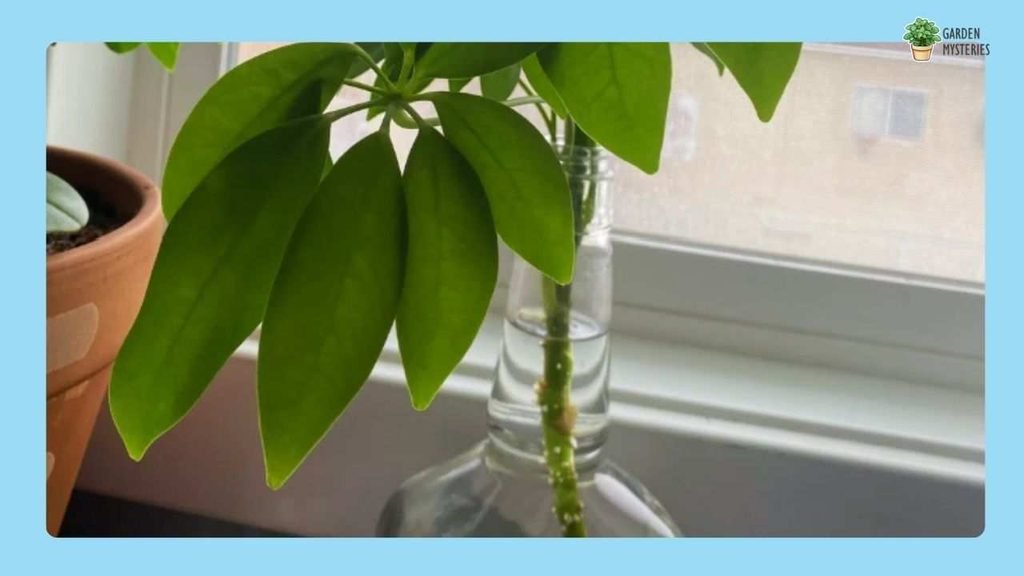
Water can help roots develop before the young plant is moved into potting mix.
This condition makes it another useful option if your goal is to watch roots form rather than grow the mature plant permanently in water.
How to Grow Water Plants in Home Containers
Start with healthy plant material. For stem cuttings, choose a section with at least one suitable node.
For stem cuttings, look for a healthy section with at least one node. A node is the point on the stem where leaves, buds, or roots can develop. Place the node in water while keeping the leaves above the surface. A leaf without the appropriate stem section will not normally produce a complete new plant.
Remove leaves that would remain underwater. Submerged foliage can break down and make the water dirty.
Place the cutting in a clean glass or jar. Keep the foliage above the water while the appropriate part of the stem remains submerged.
Give the container bright, indirect light. Strong direct sunlight can heat the water and stress some plants.
Check the water regularly. If it becomes cloudy, smells unpleasant, or contains debris, clean the container and replace the water.
Where Should You Place Water Plants?
A bright windowsill can be a good location, but intense sunlight through glass may be too strong for some plants.
Moreover, a nearby shelf, desk, or plant stand can provide a better balance of light and decoration.
Avoid putting a plant in a dark corner just because the jar looks attractive there. Plants still need light for photosynthesis.
You can create attractive water plants in home displays on:
- Kitchen windowsills
- Desks
- Bookshelves
- Plant stands
- Dining tables
- Bright bathroom shelves
- Bedroom cabinets
Do Plants Growing in Water Need Fertilizer?
A newly rooted cutting does not have the same nutritional needs as an established plant being grown permanently in water.
During propagation, the cutting uses stored resources while developing roots. Long-term water culture is different. Established plants eventually need access to essential nutrients.
If you grow a plant in water for an extended period, use a suitable fertilizer according to its label instructions. Avoid adding large amounts to a small container.
More fertilizer does not mean faster or healthier growth.
When Should You Move a Water-Rooted Plant to Soil?
If you are using water only for propagation, wait until the cutting has developed a healthy root system and shows signs of active growth before potting it.
Do not move a cutting into a large pot simply because you can see a few tiny roots. Give it enough root development to handle the transition, then use a suitable container and growing medium for the plant.
Some plants can remain in water longer, but many common houseplants are ultimately easier to manage in an appropriate potting mix.
Common Problems With Water-Grown Plants
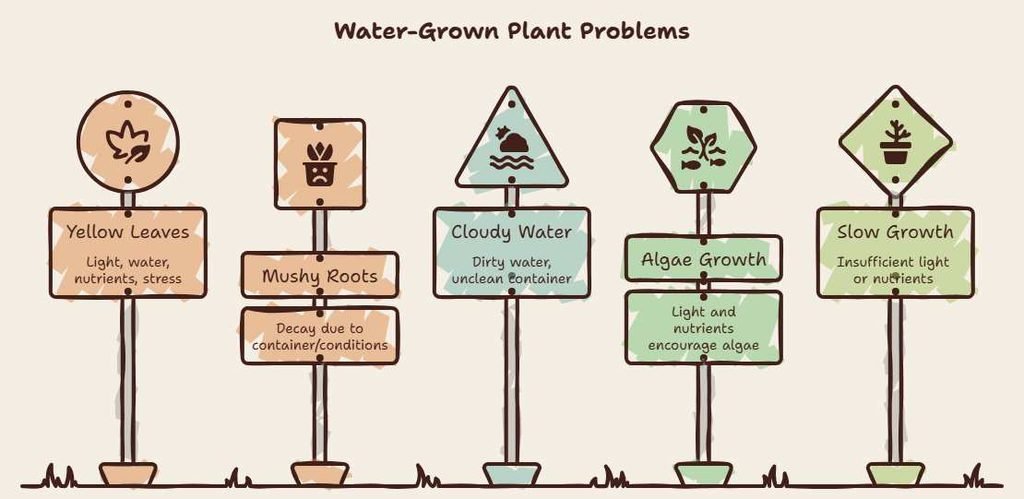
- Yellow leaves: Poor light, unsuitable water conditions, nutrient problems, or general stress can cause yellowing.
- Mushy roots: Soft, dark, or foul-smelling roots can indicate decay. Check the container and growing conditions.
- Cloudy water: Replace dirty water and clean the container.
- Algae: Bright light combined with nutrients in the water can encourage algae. Cleaning the container and adjusting its location can help.
- Slow growth: Check whether the plant receives enough light and whether an established water-grown plant has access to suitable nutrients.
Can Plants Live in Water Forever?
Some plants can tolerate long-term water growing, but you should not assume that every houseplant that roots in water can live there permanently.
This is why it is important not to confuse plants that root in water with plants that naturally grow in water.
Aquatic plants have adaptations that allow them to live in aquatic environments. Typical houseplants usually do not have the same adaptations.
For most common houseplants, water is an excellent propagation tool, but soil or another suitable growing medium may be better for long-term growth.
Final Thoughts
Growing water plants in home spaces can be an easy way to add greenery without immediately reaching for a bag of soil.
Pothos, philodendron, spider plant, Tradescantia, lucky bamboo, coleus, and several other houseplants can work well for water propagation. Some are also suitable for longer-term water culture with the right care.
Use clean containers, provide suitable light, keep leaves above the water, and watch the roots closely. The best results come from matching the growing method to the plant rather than assuming every houseplant can live in water permanently.
Disclaimer: Plant growth can vary by species and conditions. Always adjust water, light, and care based on your plant’s specific needs.
Other Blogs: