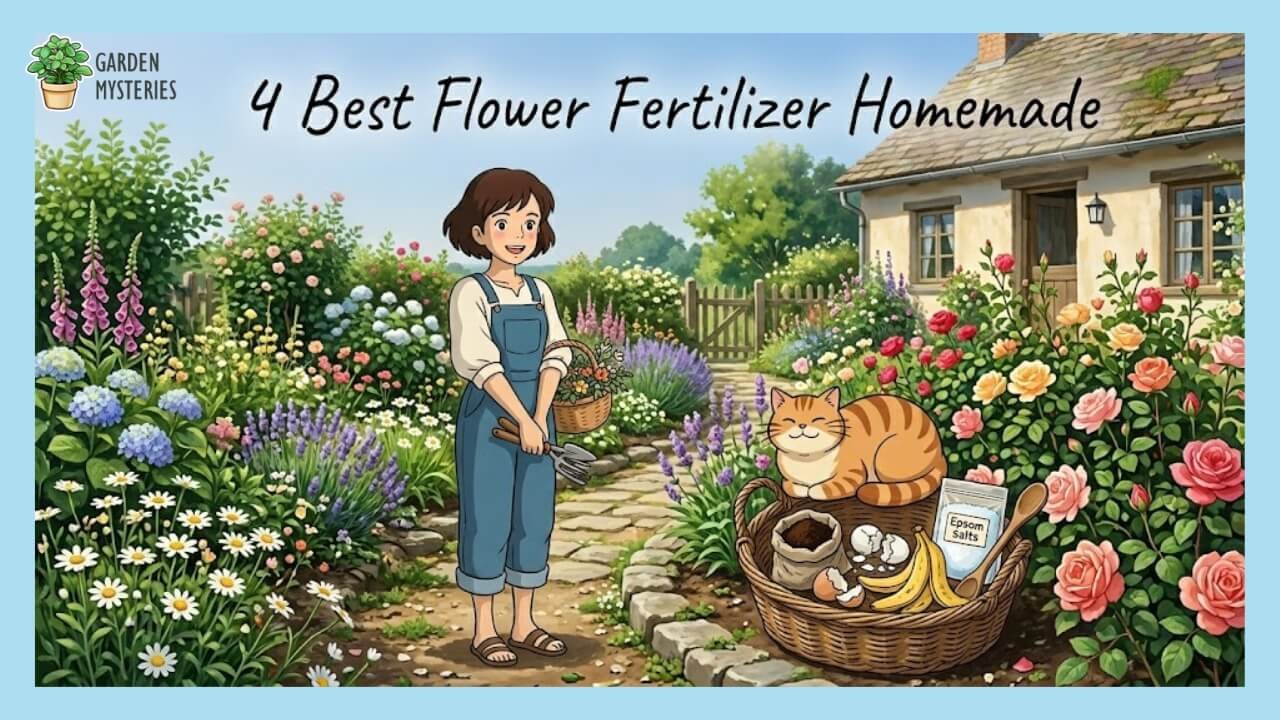
You can make flower fertilizer homemade using things like banana peels, coffee grounds, eggshells, and Epsom salt. And the good news is, most of them support pretty well, even sometimes, better than the store-bought fertilizers.
These kitchen scraps give your flowers the food they need to grow and bloom well. The best homemade fertilizer for flowering plants depends on what your flowers are missing, but most gardens benefit from a mix of these simple options.
However, you must know the right way to make it and choose it. Keep reading to find out which one suits your garden best.
Best Homemade Fertilizer for Flowers (Quick Answer)
The best flower-fertilizer homemade depends on plant needs. Banana peel tea is best for blooming flowers because of its potassium content; coffee grounds improve soil nitrogen; eggshell water strengthens roots with calcium, and Epsom salt enhances flower color and growth. These natural fertilizers work best when used in small and balanced amounts.
Key Takeaways
- Banana peels are rich in potassium, which helps flowers bloom.
- Coffee grounds add nitrogen but work best when composted first.
- Eggshells provide calcium to help plants build strong roots and leaves.
- Epsom salt adds magnesium and sulfur, especially good for roses.
- Too much of any homemade fertilizer can harm your plants.
- Always dilute liquid fertilizers before using them on flowers.
Should You Really Use Homemade Fertilizer for Your Flowers?
Yes, homemade food for plants can work well, but it works best when you know what your flowers actually need. These are not magic fixes. They are gentle, slow-acting supplements that support your flowers over time.
Store-bought fertilizers are made with exact amounts of nutrients. Homemade ones are less precise. That does not make them bad. It just means you need to use them carefully and not overdo it.
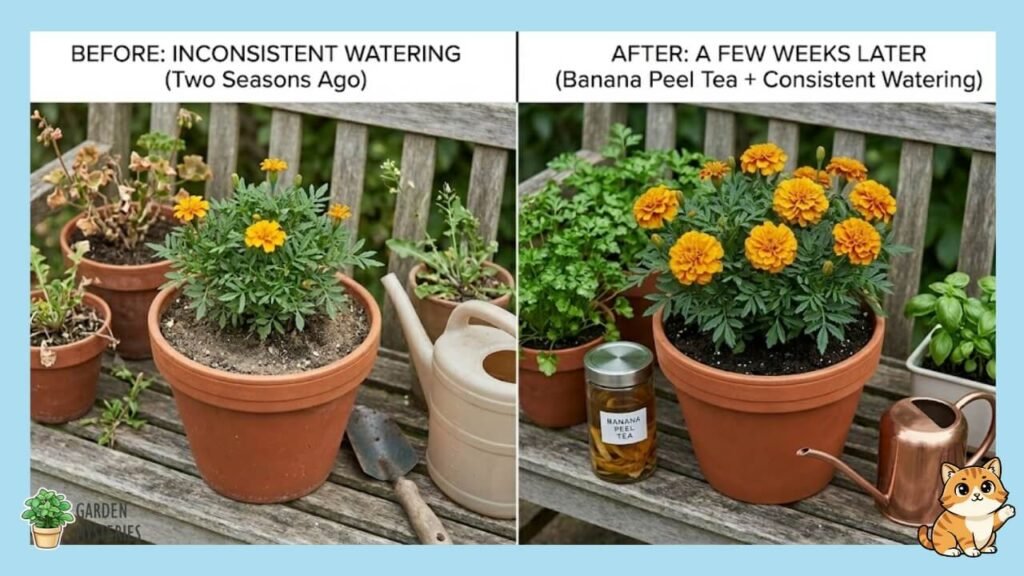
I started using banana peel tea on my potted marigolds a couple of seasons ago. The blooms did look fuller after a few weeks, but I was also watering more regularly then. So honestly, it is hard to say one thing did it all.
The real benefit of homemade fertilizers is that they reduce waste and cost nothing extra. No matter if you are using compost or potting soil, as long as you use them in the right amounts, they are safe for most flowers and will not burn your soil.
4 Simple Flower Fertilizer Homemade Ideas That Actually Work
Making flower fertilizer homemade does not need special tools or skills. These four options use things most people already have at home, and each one feeds your flowers in a different way.
Method 1: Banana Peel Tea
Banana peel tea is a liquid diy plant fertilizer made by soaking banana peels in water. It gives flowers a dose of potassium, which supports strong roots and better blooms. According to gardening sources, banana peels contain about 42 percent potassium. Roses, hibiscus, and marigolds tend to respond well to it.
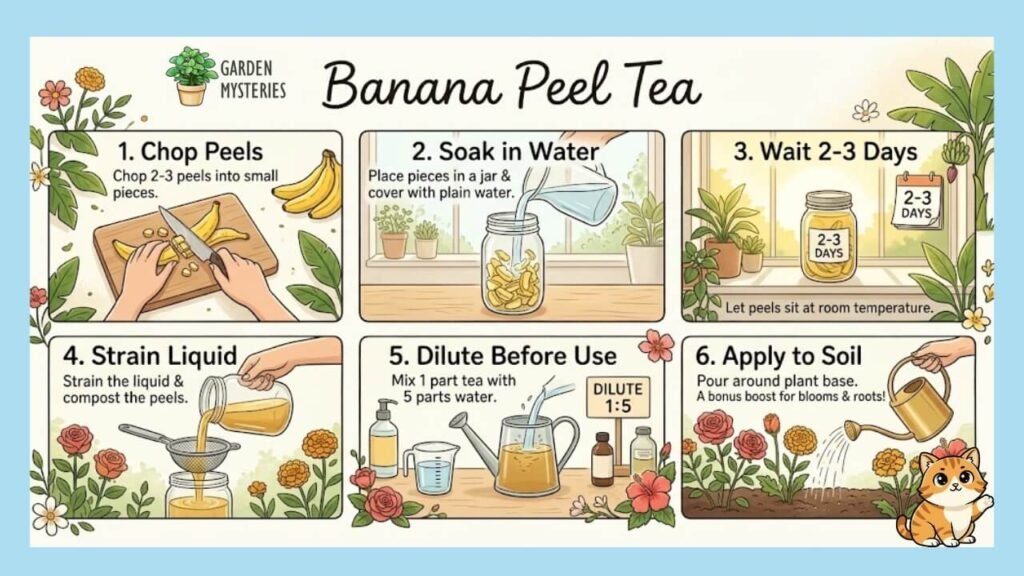
How to make and use it:
- Cut the peels: Chop two or three peels into small pieces before soaking.
- Soak in water: Place the pieces in a jar and cover with plain water.
- Wait two to three days: Let the peels sit at room temperature.
- Strain the liquid: Remove the peels and compost them.
- Dilute before use: Mix one part tea with five parts water before pouring on the soil.
Use banana peel tea no more than once every two weeks. It does not contain nitrogen or phosphorus, so it should not replace a full feeding routine. Think of it as a bonus boost, not a complete meal for your flowers.
Method 2: Coffee Grounds
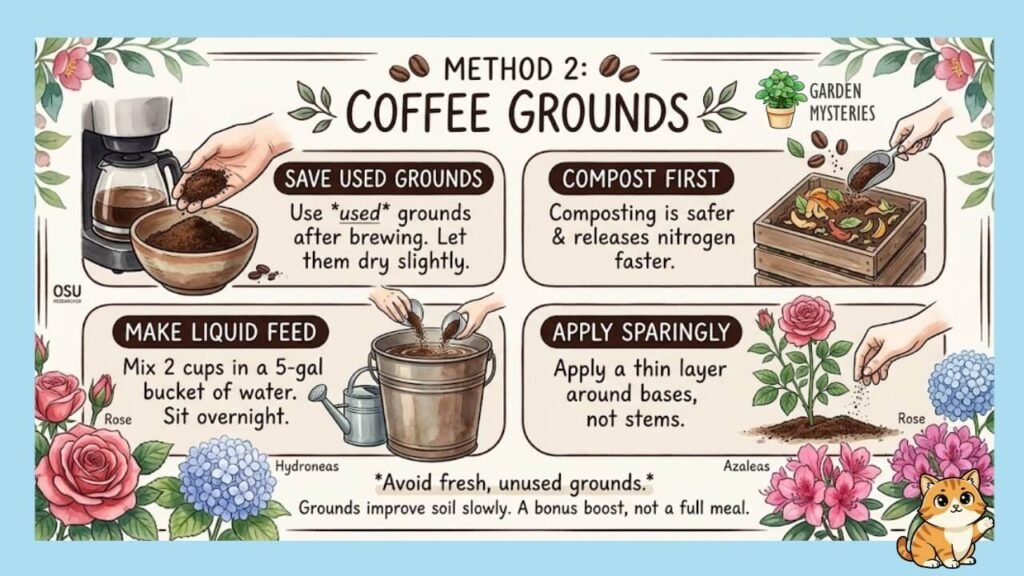
Used coffee grounds are a gentle homemade fertilizer for flowers, especially those that prefer slightly acidic soil. They contain around 1 to 2 percent nitrogen and can slowly improve soil over time. Roses, azaleas, hydrangeas, and rhododendrons are known to do well with coffee grounds added nearby.
How to make and use it:
- Save used grounds: Collect grounds after brewing and let them dry slightly.
- Compost first if possible: Composting releases nitrogen faster and more safely.
- Make a liquid version: Mix two cups of used grounds in a five-gallon bucket of water. Let it sit overnight, then use it as a liquid feed.
- Apply sparingly: Sprinkle a thin layer around plant bases, not directly on stems.
- Do not overload: Coffee grounds should not cover more than 20 to 35 percent of a compost pile.
One thing worth knowing: Oregon State University researchers point out that fresh, unused coffee grounds can actually slow plant growth. Always use spent grounds, and mix them with other materials when possible. Straight grounds on soil can sometimes tie up nitrogen instead of releasing it.
You can also use topsoil in your pot to get a flower bloom faster with this natural diy flower fertilizer.
Method 3: Eggshell Water
Eggshell water is a calcium-rich homemade fertilizer for potted plants and garden beds. Calcium helps flowers build strong cell walls and grow healthy new roots and leaves. Each eggshell holds about 2.2 grams of calcium carbonate, plus small amounts of magnesium, phosphorus, and potassium.
How to make and use it:
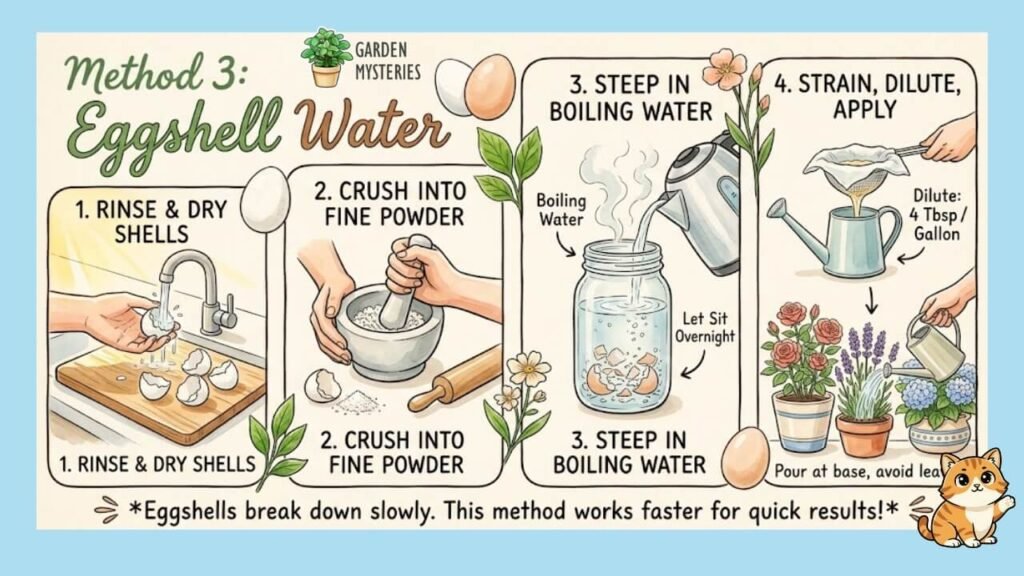
- Rinse and dry the shells: Clean shells prevent bad smells.
- Crush into fine powder: Use a mortar and pestle or a rolling pin. Finer powder releases calcium faster.
- Steep in boiling water: Add crushed shells to boiling water and let them sit overnight.
- Strain and dilute: Use four tablespoons of the liquid per gallon of water before applying.
- Pour at the base of plants: Avoid getting it on leaves.
Keep in mind that eggshells break down slowly in soil. It can take months before the calcium becomes fully available to roots. For quicker results, the liquid steep method works better than simply scattering crushed shells around.
Method 4: Epsom Salt Mix
Epsom salt is a diy flower fertilizer that provides magnesium and sulfur, two minerals that flowers need for good color and strong growth. It is not a complete fertilizer, but it works well as a supplement, especially for roses and other blooming plants.
We have found out that Epsom salt is a fast-acting source of magnesium, particularly helpful in alkaline soils.
How to make and use it:
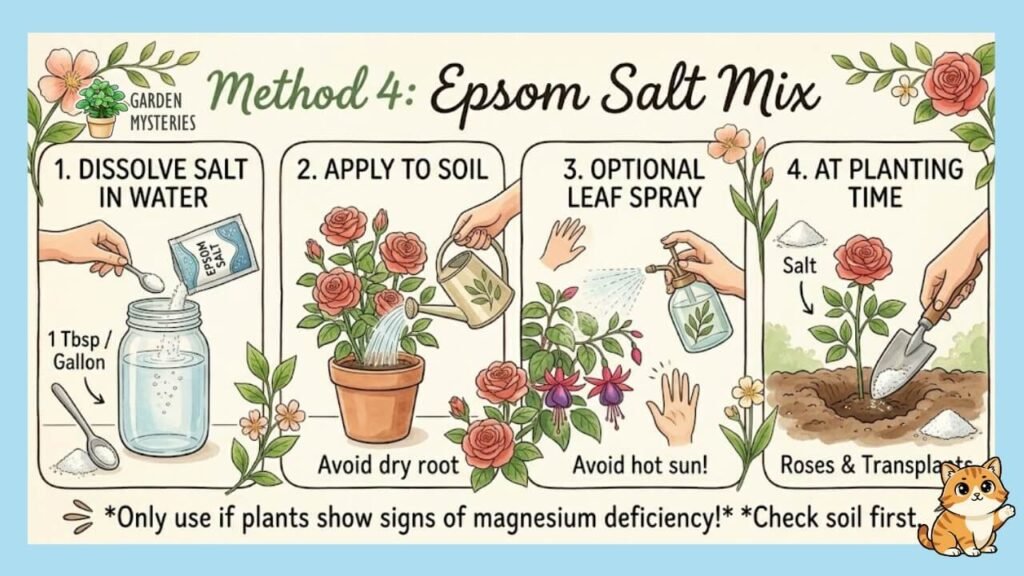
- Mix with water: Dissolve one tablespoon of Epsom salt in one gallon of water.
- Apply to soil: Pour the solution around the base of the plant, not on dry roots.
- Spray on leaves: You can spray the diluted mix on leaves, but avoid hot sunny days to prevent burning.
- At planting time: Add one tablespoon directly into the planting hole for roses and transplants.
- Repeat carefully: Apply every four to six weeks during the growing season.
Only use Epsom salt if your plant actually shows signs of magnesium deficiency. These signs include yellowing leaves with green veins, slow growth, or fewer blooms. Using it on already healthy soil can cause nutrient imbalances over time.
Flower Fertilizer Homemade Comparison
Homemade fertilizers differ mainly in the nutrients they provide. Banana peel tea supports flowering, coffee grounds improve soil fertility, eggshell water strengthens plant structure, and Epsom salt enhances color and magnesium levels. Each serves a different role in plant health rather than acting as a complete fertilizer.
Which Homemade Fertilizer Works Best for Different Flower Plants?
Not all flowers need the same nutrients. Some bloom better with extra potassium, while others prefer nitrogen-rich soil or added magnesium. Choosing the right homemade fertilizer helps flowers grow healthier and bloom longer.
| Flower Plant | Best Homemade Fertilizer | Why It Works |
| Rose | Epsom salt mix + banana peel tea | Roses benefit from magnesium for deeper leaf color and potassium for stronger blooms. |
| Marigold | Banana peel tea | Extra potassium supports continuous flowering and healthy root growth. |
| Hydrangea | Used coffee grounds | Slight acidity and nitrogen help hydrangeas grow fuller leaves and stronger stems. |
| Hibiscus | Banana peel tea + eggshell water | Hibiscus needs potassium for blooms and calcium for healthy growth. |
| Azalea | Coffee grounds | Azaleas prefer slightly acidic soil conditions. |
| Petunia | Banana peel tea | Supports heavy blooming during the growing season. |
| Orchid | Diluted eggshell water | Gentle calcium support works better than heavy feeding. |
| Sunflower | Coffee grounds compost | Nitrogen helps support strong stem and leaf development. |
| Jasmine | Banana peel tea | Potassium encourages healthy flowering and fragrance production. |
| Geranium | Epsom salt mix | Magnesium supports greener foliage and more vibrant blooms. |
The best homemade fertilizer for flowering plants always depends on the plant’s growth stage, soil condition, and nutrient needs. Start with small amounts, observe how your flowers respond over a few weeks, and adjust your feeding routine gradually instead of overfeeding all at once.
Mistakes to Avoid When Using Homemade Fertilizer for Flowers
Even the best homemade fertilizer for flowering plants can cause real damage if you use it the wrong way. Timing, amounts, and preparation all matter just as much as the ingredient itself.
Using Too Much Flower Fertilizer Homemade at Once
More fertilizer does not mean more flowers. Overfeeding stresses the roots and prevents plants from absorbing water as they should. Start with a small amount, watch how your plant responds over two weeks, and increase slowly only if needed.
Skipping the Dilution Step
Every liquid fertilizer you make at home needs to be diluted before use. Applying it at full strength can burn the roots quickly, especially with homemade fertilizer for potted plants. The soil volume in a pot is small, so concentrated liquid has nowhere to go and just sits against the roots.
Using Fresh Coffee Grounds Directly – Flower Fertilizer Homemade
Fresh, unbrewed coffee grounds are very different from used ones. They are far more acidic and contain residual caffeine that can slow down plant growth or stop seeds from sprouting.
Always use spent grounds that have already been brewed, and where possible, compost them for a few weeks before adding them to your flower bed.
Replacing a Full Feeding Routine
None of these homemade options gives your flowers everything they need on their own. Banana peels have no nitrogen. Eggshells have no potassium.
Coffee grounds are low in phosphorus. Using just one ingredient and calling it done will leave gaps in your plant’s diet. These work best as gentle add-ons to a broader soil care routine.
Burying Whole Banana Peels Near Roots
A lot of gardeners toss whole peels straight into the soil, thinking it will break down quickly. It does not. Whole peels decompose slowly, sit wet against the roots, and attract fruit flies and other pests within days.
Always chop the peels into small pieces first, and keep them a few inches away from the base of the plant.
Also, I saw one of my friends using vinegar in the compost, thinking it would help get rid of insects and weeds. That’s also a mistake, as vinegar can make the compost too acidic, which can destroy the chance of blooming flowers on different plants.
How Often Should You Feed Your Flowers?
How often you feed your flowers depends on the type of plant and the fertilizer you are using. Homemade food for plants works best when given in small, steady amounts rather than one large dose.
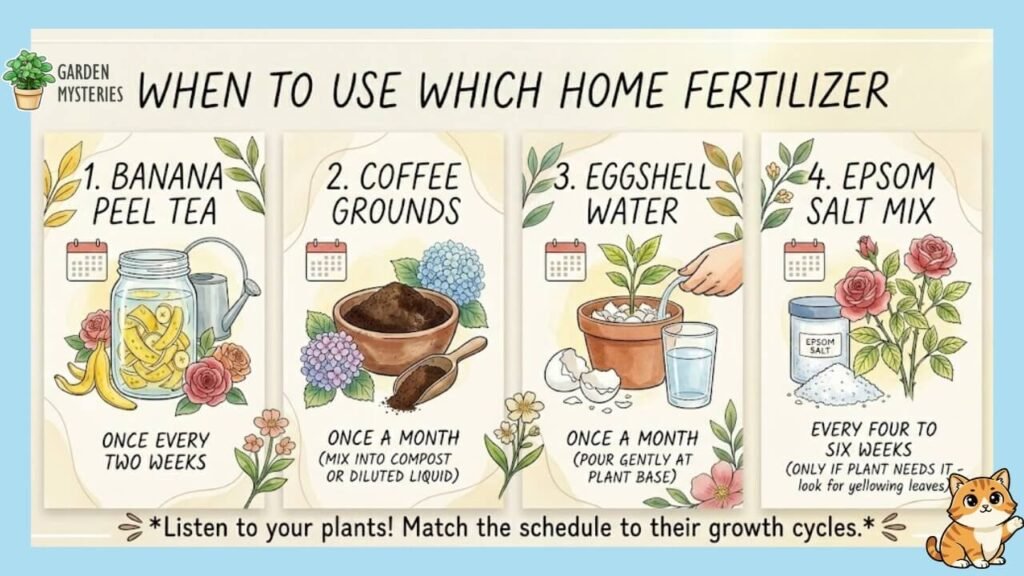
As a general guide, here is how often to use each option:
- Banana peel tea: Once every two weeks during the growing season.
- Coffee grounds: Once a month, mixed into compost or as diluted liquid.
- Eggshell water: Once a month, pour gently at the base of plants.
- Epsom salt mix: Every four to six weeks, only if the plant needs it.
Flowers in pots may need feeding a little more often than those in open ground. Potted soil loses nutrients faster because water washes through it more quickly. In this case, I always use natural organic mulch to get the best result.
Watch your plants for clues. Yellowing leaves, slow growth, or fewer blooms often signal that something is missing. But always rule out watering issues first before reaching for fertilizer.
FAQs
You can use both on the same plant, but apply them separately. Mixing them together may create an unbalanced solution that is hard to control.
Most flowers benefit from these options, but some are sensitive. Always research your specific flower type before applying any diy flower fertilizer for the first time.
Most flowers are not actively growing in winter, so they do not need feeding. Wait until new growth appears in spring before starting any feeding routine.
Yes, diluted eggshell water can be used on indoor flowers. Pour it slowly at the base and make sure the pot has good drainage to avoid waterlogging the roots.
Look for new growth, deeper leaf color, and more buds forming over four to six weeks. Results are gradual with homemade options, so patience is important.
End Note
Flower fertilizer homemade options like banana peel tea, coffee grounds, eggshell water, and Epsom salt are simple and effective ways to support plant growth.
Each one provides different nutrients, so the best results come from using them in balance rather than relying on a single option. When used correctly, they can improve flowering, soil health, and overall plant strength over time.