
Rosemary leaves turning yellow mostly because of overwatering, poor drainage, or weak sunlight. The plant grows naturally in dry, sunny Mediterranean weather, so wet soil or too much shade stresses it fast. Once you spot the cause early, the fix is usually simple.
I get why this feels confusing at first. Rosemary looks like a tough, low-maintenance herb, so yellow leaves catch you off guard. The plant usually gives clear signs about what is wrong. You just need to know which sign to look for.
In this guide, I am sharing what actually worked when my own rosemary leaves turning yellow, along with the exact steps I used to fix it. Keep reading to match your rosemary to the right reason and the right fix.
Key Takeaways
- Overwatering and poor drainage cause most rosemary yellowing problems.
- Rosemary needs six to eight hours of direct sun daily.
- Heavy, wet soil suffocates roots and turns leaves pale.
- Light, occasional feeding fixes most nitrogen-related yellowing issues.
- Root-bound plants need repotting into a slightly bigger container.
- Brown, woody stems mean more damage than simple yellow leaves.
Note: Some links in this guide are affiliate links. If you make a purchase, we may earn a commission at no additional cost to you. This helps support our content while keeping it free.
6 Reasons Why Rosemary Leaves Turning Yellow
Rosemary turns yellow for a handful of common reasons, and most of them trace back to water, light, or soil. Here are the six causes I run into most often with my own plants.
Overwatering and Poor Drainage
Overwatering is the most common reason behind the yellow leaves rosemary owners deal with. Rosemary roots rot fast in soil that stays wet, since the plant is built for dry, rocky ground. Well, this is the reason my honeysuckle plant leaves turned yellow last year.

However, once roots start to rot, they stop pulling up nutrients properly, and leaves fade to yellow. I learned this after watering my rosemary on the same schedule as my basil. Cutting back and letting the soil dry out between waterings brought the green color back within a few weeks.
Not Enough Sunlight
Weak sunlight is a close second reason for rosemary going yellow on you. Rosemary needs strong, direct sun to use up water quickly and stay healthy. When it sits in partial shade, the soil holds moisture for far longer than it should.
That extra moisture around the roots slows growth and leads straight back to the overwatering problem. Moving the pot to a brighter spot, even a few feet over, often makes a visible difference within a week or two.
Wrong Soil or Potting Mix
Heavy, dense soil is often the hidden reason rosemary struggles even with correct watering. Garden soil and standard potting mixes like FoxFarm Happy Frog, Espoma Organic Potting Soil, and Burpee Organic Potting Soil Mix hold onto water much longer than rosemary roots can handle.
That trapped moisture suffocates the roots the same way overwatering does, just more slowly.
A cactus or succulent-style mix, or a mix cut with sand and perlite, drains fast enough to keep roots from sitting wet. I switched my potted rosemary to this kind of mix, and the yellowing stopped.
However, I recently potted my lavender in castus soil, and the result was unbelievable. You should check it out if you have lavender plants at your home.
Nutrient Deficiency
Does rosemary need fertilizer? Not much, but a nutrient gap can still show up as yellow leaves. Rosemary growing in root-bound pots or nutrient-poor soil can pale and yellow over time.
Yellowing that starts specifically on the lower, older leaves often points to a nitrogen shortage. A light, diluted, balanced fertilizer applied sparingly in spring usually corrects this without overfeeding a plant that actually prefers lean soil.
Root-Bound or Overcrowded Pot
A root-bound rosemary plant is one that has outgrown its container. The roots wind around the inside of the pot and lose access to fresh soil and nutrients.

This crowding limits how much the plant can absorb, even if you are watering and feeding it correctly. Checking the roots when you repot and moving up to a slightly larger container gives the plant room to recover properly.
Natural Aging or Old Growth Shedding
Sometimes yellowing is not a problem at all. Rosemary naturally sheds a few older leaves throughout the year as part of normal growth, especially lower on the stem.
If the rest of the plant looks full, green, and is still producing new growth, occasional yellow leaves lower down are probably nothing to worry about.
What to Do If Your Rosemary Is Turning Yellow
Once you have an idea of the cause behind your rosemary leaves turning yellow, the next step is fixing it in the right order. I usually start with watering, since it is the easiest thing to check and correct.
Check Your Watering Routine
The first fix is always watering, since it is behind most cases of yellow leaves. Push a finger about two inches into the soil before you water again.
If it still feels damp, wait.
Rosemary would rather go a little dry than sit in soggy soil, so this simple check prevents most overwatering mistakes before they start.
Fix the Soil or Switch Containers
Improving drainage is the next fix, and it starts with what the roots are actually sitting in. A raised bed soil mix designed for herbs drains far better than regular garden soil, if your rosemary is outdoors.

For containers, compost or potting soil each work differently. Compost holds more moisture and nutrients, while a lighter potting soil mix drains faster, which usually suits rosemary better in pots.
Move It to Better Light
Better light placement is a quick fix that often shows results fast. Find a spot that gets six to eight hours of direct sun each day, whether that is a south-facing window indoors or an open patch outdoors.
If you cannot get that much light, at least move the plant away from deep shade and closer to a bright edge.
Feed It the Right Way
Feeding correctly means understanding your options first. Liquid fertilizer vs granular fertilizer comes down to speed and frequency. Liquid feeds act faster but need reapplying more often, while granular fertilizer releases nutrients more slowly over a longer stretch.
Either works for rosemary, as long as you dilute it and apply it sparingly, since this herb does not need heavy feeding to stay green.
Mulch and Protect the Roots
A layer of mulch helps regulate both moisture and temperature around the roots. Natural organic mulch keeps soil from drying out too fast in full sun, while still letting excess water drain through instead of pooling. Keep the mulch layer a couple of inches thick and pulled slightly away from the base of the stem.
Is Your Rosemary Turning Yellow or Is It Brown?
Yellow leaves usually mean the plant is stressed but still recovering, often from water, light, or soil issues. Brown leaves are a step further along, and often point to more advanced damage or dying growth. The stems themselves can tell you a lot here too.
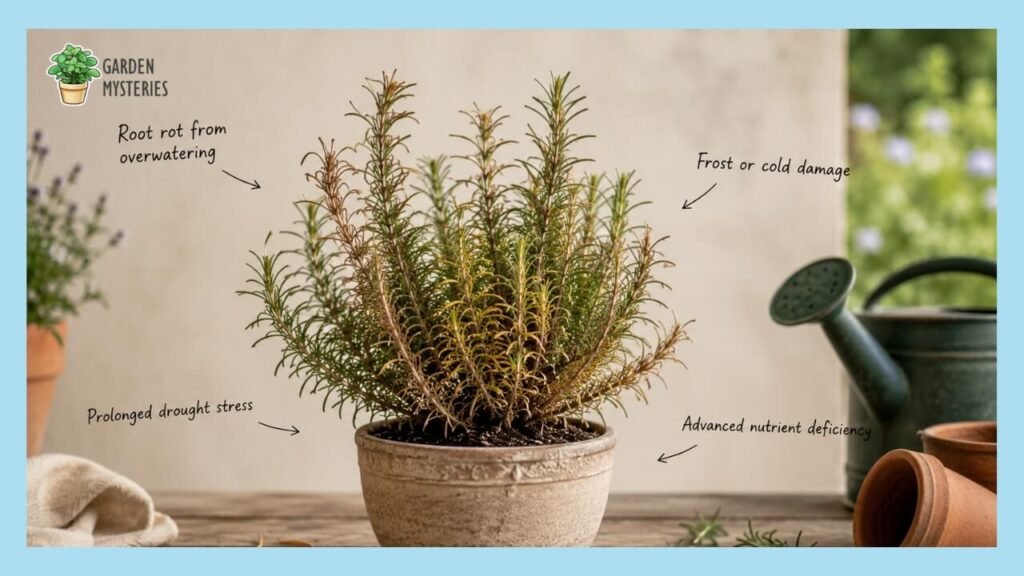
If the stems still feel flexible and green underneath, the plant is likely still alive and fixable. Woody, brittle stems that snap instead of bend usually mean that section has died back completely. Compost or potting soil problems that caused rosemary yellowing earlier can, left unfixed, progress into this stage.
If your rosemary has turned brown, here is what to do next:
- Prune back dead, brittle stems to healthy green growth
- Check the roots for rot and trim away any mushy sections
- Take cuttings from healthy stems to propagate a backup plant
- Cut back watering further while the plant recovers
FAQs: Rosemary Leaves Turning Yellow
What does overwatered rosemary look like?
Overwatered rosemary often has yellowing leaves, a mushy base near the soil line, and a musty smell from the roots. Growth usually slows down too, and leaves may drop even when they still look partly green.
Should I cut off yellow leaves?
Yes, you can trim off yellow leaves once you have addressed the cause. Removing them lets the plant focus energy on new, healthy growth instead of leaves that will not recover anyway.
How do I bring my rosemary back to life?
Fix the drainage and watering first, move it to more sun, and hold off on fertilizer until you see new growth. Most rosemary plants recover within a few weeks once the root cause is corrected.
Does rosemary need fertilizer to stay green?
Not really. Rosemary is a low-feeding plant that prefers lean soil. A light, diluted feeding once in spring is usually enough, and overfeeding can cause more problems than it solves.
Can yellow rosemary turn green again?
Yes, in most cases. If the roots are still healthy and you correct the watering, light, or soil issue, new growth typically comes in green again within a few weeks.
End Note
Rosemary leaves turning yellow almost always comes back to water, light, or soil, and most cases are fixable once you catch the pattern. Even something as simple as switching to the right mulch can protect the roots without inviting the kind of moisture and pest issues, including how to get rid of cockroaches in yard mulch beds, that come from the wrong material or a layer piled too thick.
Go check your rosemary’s soil, light, and drainage today. A small adjustment now usually saves the plant before yellowing turns into something harder to reverse.
Disclaimer: This guide provides general gardening information and may not suit every situation. Always verify product instructions and adapt recommendations to your climate, soil, and plant needs.