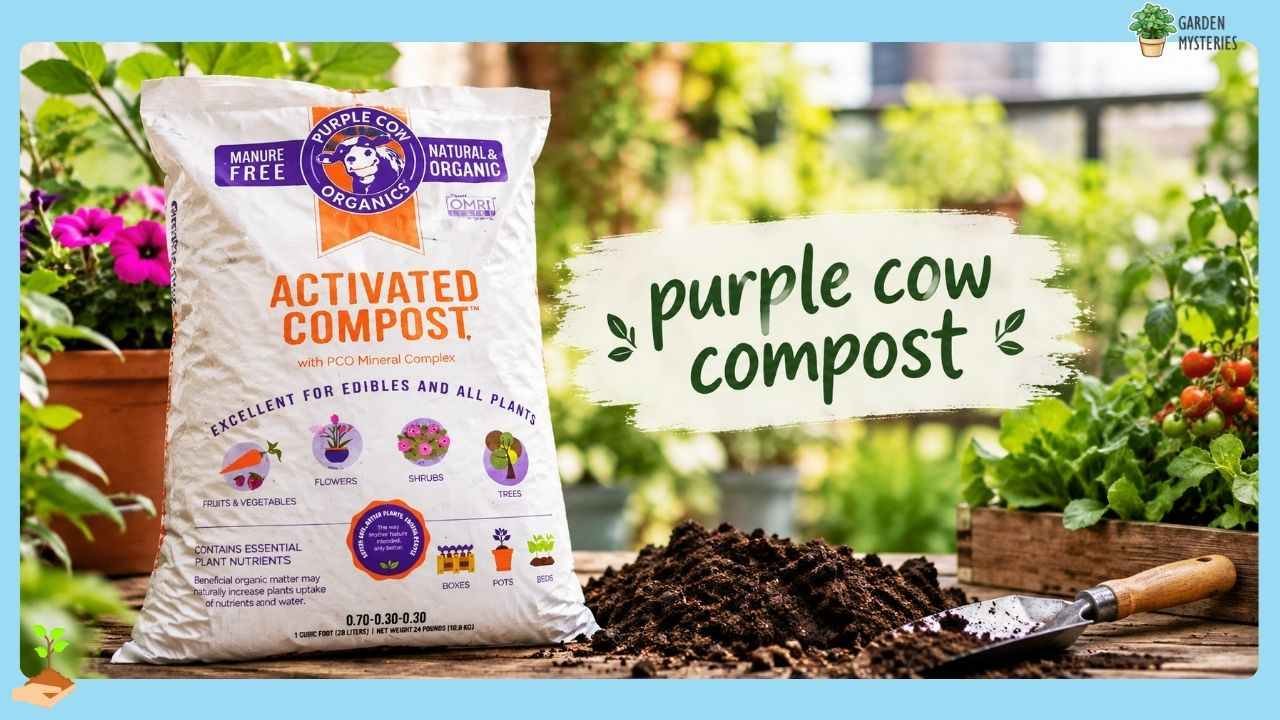
Purple Cow compost is a plant-based compost amendment made from recycled plant material and an added nutrient blend. Purple Cow Organics says its Activated Compost can replenish existing soil, add organic matter, and become part of a homemade growing medium.
I bought a bag and used it in July on my balcony potted plants and in my backyard vegetable garden. I used it with a Scotts soil mix in some containers and mixed it with older soil from the yard for the vegetables.
Well, I wanted to see how it fit into the soil I was already using. This was not a controlled experiment, so my observations should be treated as personal garden experience rather than proof of a guaranteed result.
Key Takeaways
- Purple Cow compost is an aerobic, plant-based compost made from recycled plant material.
- It contains leaf compost, worm castings, and several added nutrient ingredients.
- Purple Cow recommends mixing it with existing soil or potting mix.
- I used it with Scotts soil mix for my balcony plants.
- I also mixed it with older yard soil for vegetables.
- My experience was positive, but results can vary between gardens.
Disclosure: I purchased and used the Purple Cow Activated Compost discussed here. This review reflects my gardening experience and does not guarantee results. Some links may be affiliate links, and we may earn a commission from qualifying purchases at no extra cost.
What Is Purple Cow Compost?
Purple Cow Activated Compost is an aerobic, plant-based compost made from local recycled plant material with an added nutrient blend. Purple Cow Organics describes it as its flagship product and recommends it for vegetables, trees, flowers, shrubs, lawns, and other garden uses.
The ingredient information supplied by the company lists compost made from leaves and worm castings. It also lists kelp meal, bone meal, rock phosphate, and volcanic ash as derived ingredients.
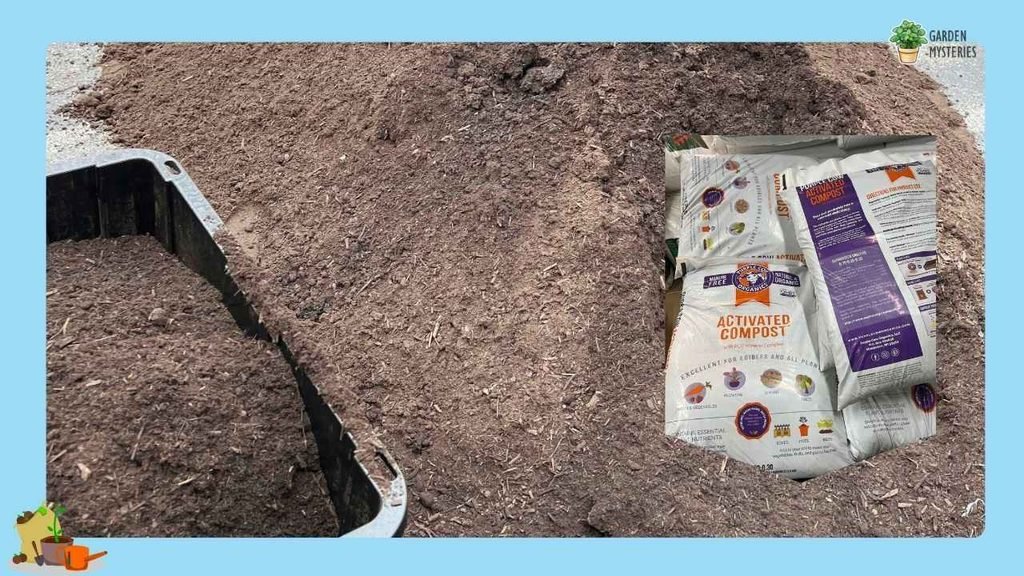
The product is also OMRI Listed for Organics Use and carries an STA Certified Compost designation. Those certifications are useful details for gardeners who pay attention to how compost products are produced and evaluated.
What interested me most was that the company does not present the compost as something that must replace all existing soil. Instead, it can be used to replenish soil, build organic matter and biological value, or become one component of a homemade growing medium.
How I Used Purple Cow Compost in July
I mixed the compost into existing growing media rather than using it as the only material in my pots and garden beds. That was the approach I took because I already had usable soil available.
For my balcony plants, I worked the compost into the Scotts soil mix I was already using. I wanted to keep the existing structure of the container medium while adding the compost as an amendment.
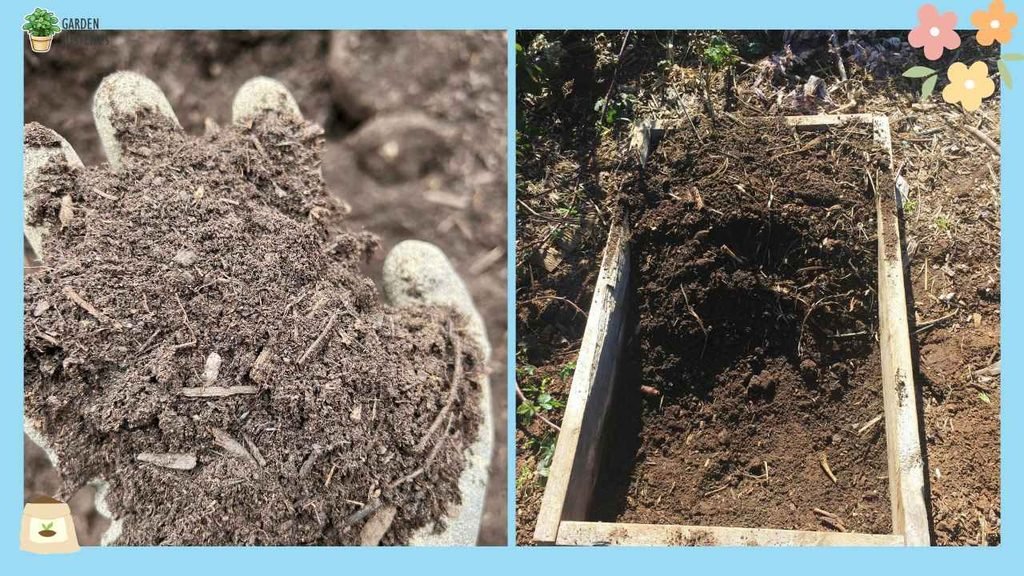
I used it differently in my backyard vegetable garden. There, I mixed it with older soil from the yard rather than removing everything and starting with a completely new growing medium.
Purple Cow’s own recommendation for containers is two parts potting mix to one part Activated Compost. For general planting, the company recommends two parts topsoil with one part Activated Compost.
I did not measure every application with laboratory precision. My goal was practical garden use, and I paid attention to how easily it mixed with the existing soil and how the plants developed afterward.
What I Noticed After Using It
The most noticeable thing for me was how easily the compost fitted into both types of growing media I already had. I could incorporate it without rebuilding my containers or replacing the old garden soil.
The balcony application was convenient because the Scotts soil mix was already in place. Adding compost meant I could amend the existing medium instead of disturbing the plants more than necessary.
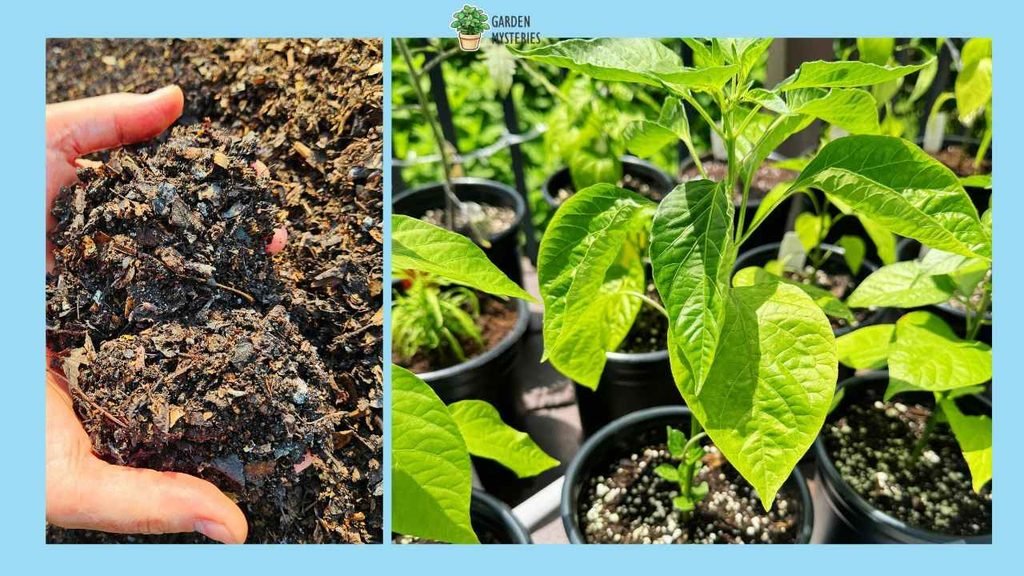
The backyard application was slightly different because the starting soil came from the yard. Mixing the compost into that older soil gave me a simple way to add an organic amendment without treating the compost as the entire growing medium.
I continued my normal watering and plant care after applying it. My balcony garden later had flowering plants, and I also harvested lemons, but I would not say the compost alone produced those results.
There were too many other variables involved, including sunlight, watering, plant condition, weather, and the soil that was already present. I think that distinction makes a garden review more useful, not less.
Purple Cow Compost vs. Potting Soil
Purple Cow compost is an amendment, while potting mix is designed to serve as the main growing medium for container plants. That difference matters when deciding how to use the product.
This is where Compost vs Potting Soil becomes important. Compost can be incorporated into a growing medium, but that does not mean every compost product should replace a properly formulated potting mix.
The manufacturer’s recommendation supports this distinction. For containers, Purple Cow suggests mixing two parts potting mix with one part Activated Compost.
That matched the way I used mine. I already had Scotts soil mix in my containers, so I added the compost instead of replacing the entire medium.
Gardeners comparing products may also search for Black Kow vs Earthgro Compost. I would look at the individual ingredients, intended uses, and application instructions before deciding between different compost products.
The same applies when researching Black Kow disadvantages. A limitation that matters in one garden may not matter in another, so the actual product label deserves more attention than a simple brand comparison.
What I Like About Purple Cow Compost
For my garden, the biggest advantage was being able to use the compost with soil I already had. I did not need to treat it as a complete replacement for my existing growing media.
I also liked having clear application guidance from the manufacturer. Purple Cow says five 1-cubic-foot bags can cover an 8 × 4-foot garden bed at approximately a 2-inch depth.
For general planting, its recommendation is two bags of topsoil with one bag of Activated Compost. For containers, the stated ratio is two parts potting mix to one part compost.
Those instructions make the product easier to plan around, especially when you are working with a known bed or container size.
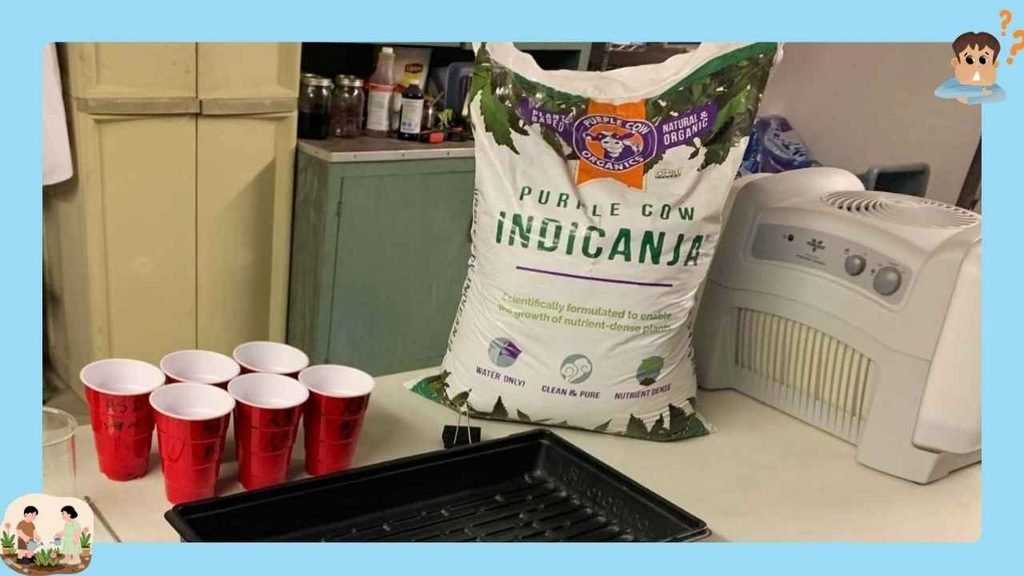
One limitation is that Purple Cow sells several different growing products. Its purple cow raised bed mix, seed starter mix, IndiCanja, and other products are not interchangeable with Activated Compost simply because they come from the same company.
If you are looking for black kow alternatives, I would compare the formulation and intended use of each product rather than assuming one compost is automatically better.
Frequently Asked Questions
Is Purple Cow compost good for gardens?
Purple Cow Activated Compost is designed to replenish existing soil and add organic matter and biological value. I used it in both containers and a backyard vegetable garden, with different existing soils in each situation.
What is Purple Cow Activated Compost made from?
The supplied product information lists leaf compost and worm castings, with kelp meal, bone meal, rock phosphate, and volcanic ash as derived ingredients. It is described as an aerobic, plant-based compost.
Can you use Purple Cow compost in pots?
Yes. Purple Cow recommends mixing two parts potting mix with one part Activated Compost for containers. That is broadly consistent with how I used mine alongside the Scotts soil mix already in my balcony pots.
Can it be mixed with garden soil?
Yes. Purple Cow recommends blending two parts topsoil with one part Activated Compost for general planting. I used mine with older soil from my backyard garden.
Is Purple Cow compost the same as potting soil?
No. Activated Compost is intended to be used as an amendment or part of a growing medium. Purple Cow specifically recommends combining it with potting mix for container use.
Final Thoughts
Purple Cow compost made sense for my garden because I could work it into soil I already had instead of replacing everything. I used it with Scotts soil mix for balcony plants and with older yard soil in my vegetable garden.
My experience has been positive, but I would not present it as a guarantee for every garden. Soil condition, plant type, watering, light, climate, and existing growing media can all influence what happens afterward.
For me, the most sensible way to view this product is as a compost amendment with specific mixing recommendations. If your garden already has usable soil, that makes it a practical option to consider.
Note: This article may contain Amazon and other affiliate links. We may earn a commission from qualifying purchases at no extra cost to you. Opinions reflect our research and personal gardening experience.
More Posts: