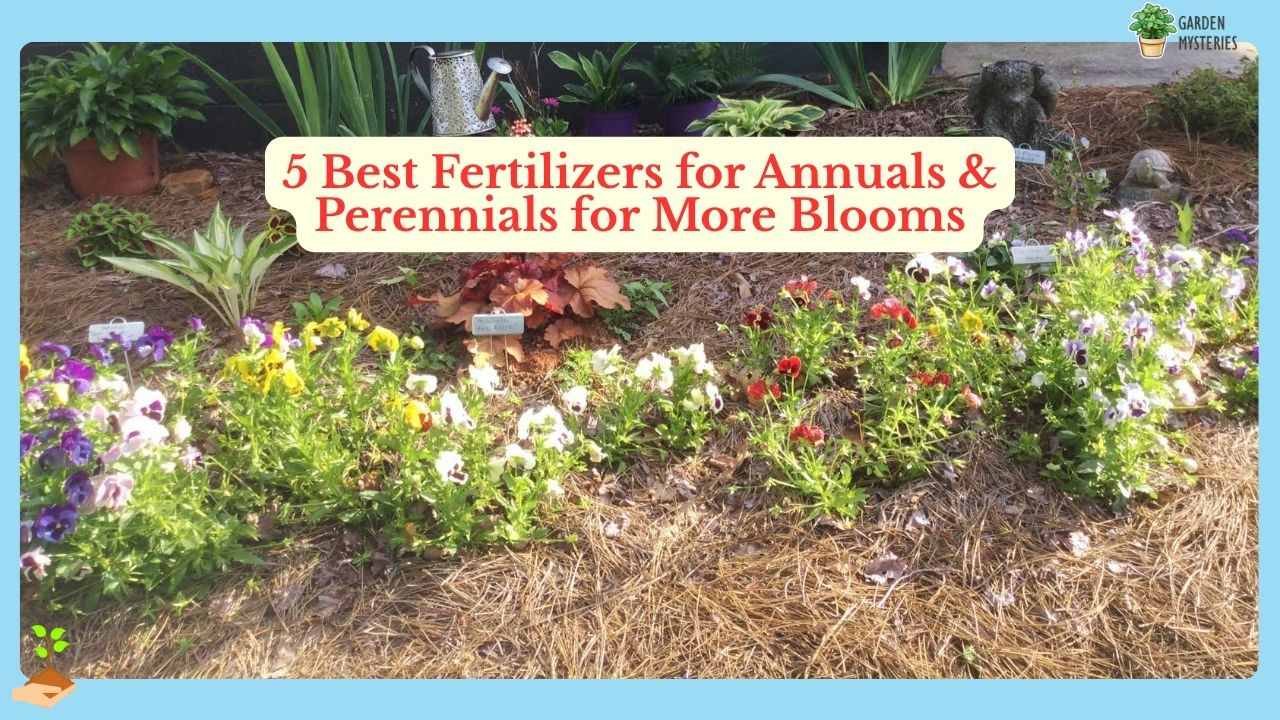
Annuals and perennials need proper nutrition to grow healthy roots, produce colorful flowers, and maintain lush foliage. However, choosing the wrong fertilizer can waste money, encourage leafy growth instead of blooms, or damage delicate roots.
Finding the best fertilizer for annuals and perennials starts with understanding what your plants really need. Osmocote Smart-Release Plant Food Plus is a convenient choice for gardeners who prefer long-lasting feeding, while Miracle-Gro Bloom Booster Flower Food suits those looking for a water-soluble option for flowering plants.
Both offer practical ways to support your garden when used according to their labels.
Whether you grow flowers in pots, hanging baskets, or garden beds, you deserve beautiful blooms without unnecessary effort or expense. Read on to find the right feeding approach for your garden.
Disclosure: This article may contain affiliate links. We may earn a commission from qualifying purchases at no extra cost to you. Opinions reflect our research and gardening experience.
What Is the Difference Between Fertilizing Annuals and Perennials?
Annuals complete their life cycle in one growing season, so they often benefit from regular nutrition to support rapid growth and repeated flowering. The right feeding schedule helps them produce more blooms while maintaining healthy foliage throughout their shorter lives.
Perennials return year after year, so their feeding needs depend on the species, soil conditions, and growing season. Many benefit from balanced nutrition and healthy soil rather than frequent heavy feeding. Adding natural organic mulch can also help retain moisture and improve soil quality over time.
| Feature | Annuals | Perennials |
| Life cycle | Complete their life cycle in one season | Return for multiple growing seasons |
| Main goal | Support continuous growth and flowering | Maintain healthy roots and seasonal blooms |
| Feeding needs | May need more frequent feeding during active growth | Often need less frequent, well-timed feeding |
| Fertilizing schedule | Depends on the plant and fertilizer label | Often focused on active growth in spring or early summer |
| Soil preparation | Use suitable garden soil or quality potting mix | Improve soil with compost or potting soil where appropriate |
| Main precaution | Avoid overfeeding, which can harm roots or encourage excess foliage | Avoid excessive nitrogen, which may encourage leaves over flowers or affect winter hardiness in some plants |
5 Best Fertilizers for Annuals and Perennials
The best fertilizer for annuals and perennials depends on how often you want to feed your plants, your gardening preferences, and your blooming goals. These five options offer convenient ways to nourish flowers in pots, hanging baskets, and garden beds.
1. Best Slow-Release: Osmocote Smart-Release Plant Food Plus
If you want healthy flowers without remembering to fertilize every week, Osmocote Smart-Release Plant Food Plus is a convenient choice. Its 15-9-12 NPK ratio and 11 essential nutrients support steady growth for annuals and perennials.
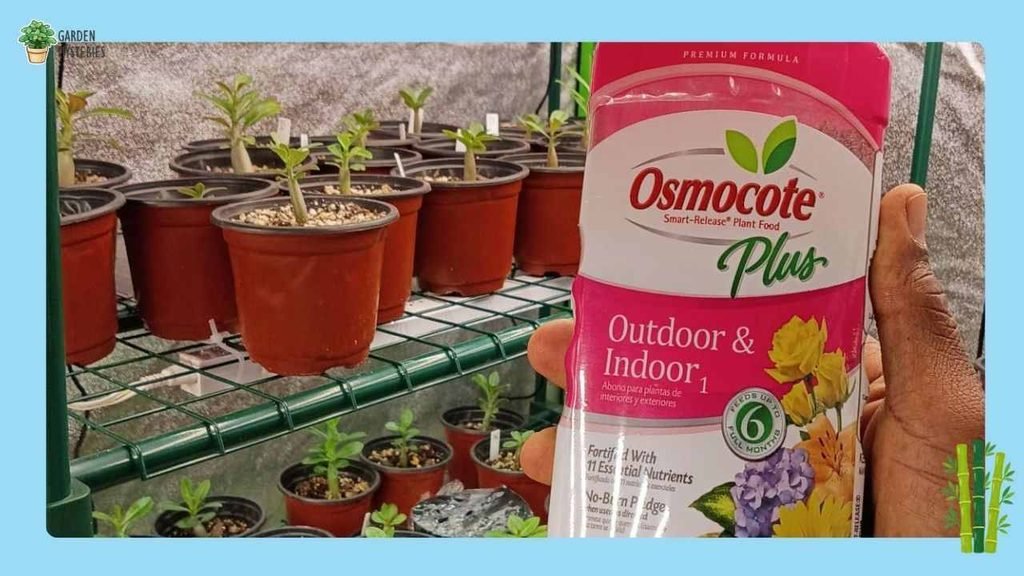
Its coated granules release nutrients gradually according to soil temperature, feeding plants for up to six months when used as directed. This makes it useful for busy gardeners who want consistent nourishment with less frequent feeding.
- Best for: Containers, hanging baskets, and garden beds.
- Main benefit: Long-lasting feeding with minimal effort.
- Keep in mind: Follow the label’s application rates to avoid overfeeding.
2. Best Water-Soluble: Miracle-Gro Bloom Booster Flower Food
Want to feed flowering plants without waiting for granular fertilizer to break down? Miracle-Gro Bloom Booster has a 10-52-10 NPK ratio and dissolves in water, making it convenient for regular feeding during the growing season.
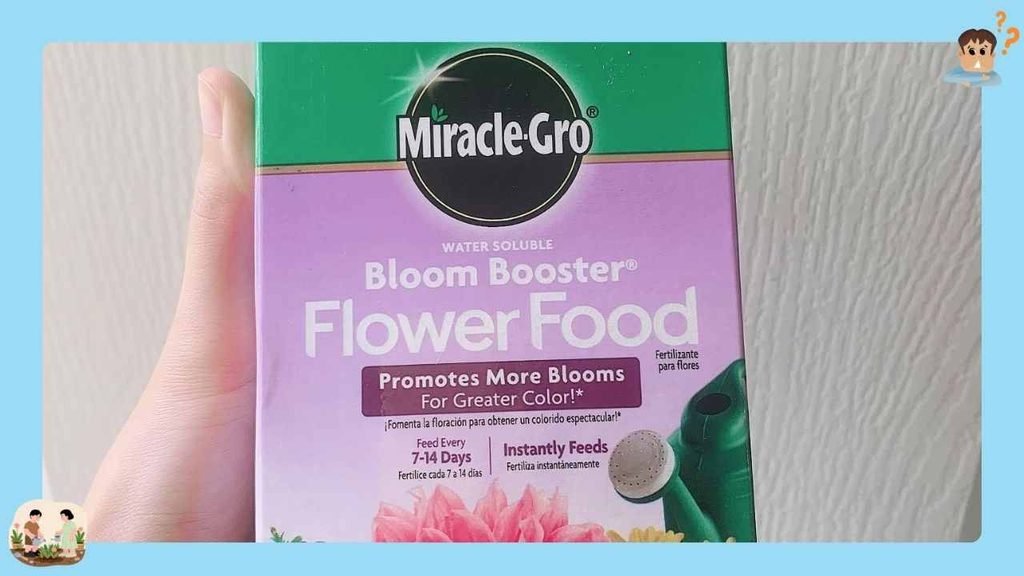
Its high phosphorus content supports important plant processes, including root development and flowering. However, more phosphorus does not automatically mean more blooms, so use it when appropriate for your plants and soil.
- Best for: Established annuals and flowering perennials.
- Main benefit: Easy-to-mix fertilizer for routine feeding.
- Keep in mind: Follow the label’s dilution and feeding schedule.
3. Best Organic Granular: Espoma Organic Flower-Tone
Prefer an organic option for your flower beds? Espoma Organic Flower-Tone has a 3-4-5 NPK ratio and provides nutrients gradually. Its relatively low nutrient concentration suits gardeners who prefer steady feeding over frequent applications of concentrated fertilizer.
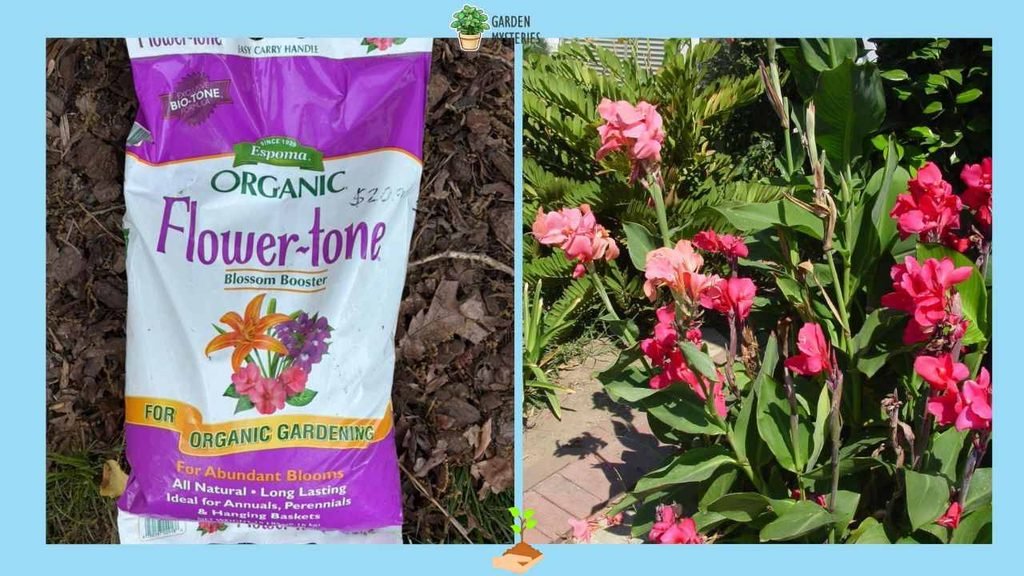
The formula includes organic ingredients and beneficial microbes. It can complement a soil-care routine for perennial beds and potted annuals, although results depend on existing soil conditions and plant needs.
- Best for: Perennial beds and flowering containers.
- Main benefit: Gradual feeding alongside organic soil care.
- Keep in mind: Organic fertilizers still require proper application and watering.
4. Best Organic Blend: Down To Earth Rose & Flower Mix
For gardeners who want to nourish both flowers and the soil, Down To Earth Rose & Flower Mix is worth considering. Depending on the formulation, its NPK ratio may be 4-4-4 or 4-8-4, so check the package before buying.
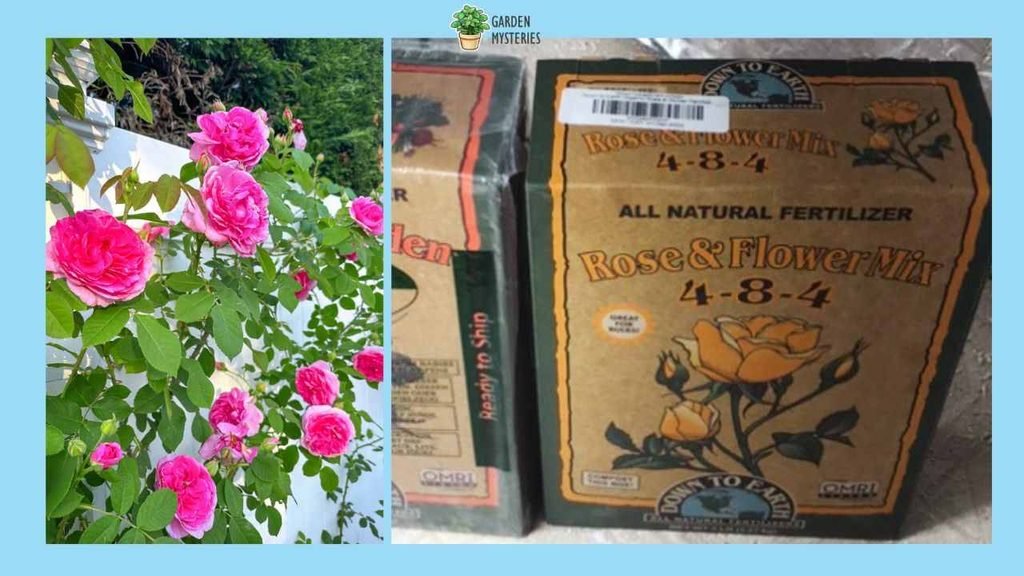
Ingredients such as bone meal, kelp meal, and other organic materials provide nutrients as they break down. This can suit established perennial borders, bulbs, and new transplants when applied according to the label.
- Best for: In-ground flower beds and transplanting.
- Main benefit: Organic nutrient sources for ongoing soil care.
- Keep in mind: Nutrient availability is slower than with many water-soluble fertilizers.
5. Best Liquid Concentrate: FoxFarm Big Bloom Liquid Plant Food
Need a liquid fertilizer for container flowers? FoxFarm Big Bloom has a low 0-0.5-0.7 NPK ratio and uses ingredients such as earthworm castings and Norwegian kelp. Its gentle nutrient profile may suit gardeners looking for a supplementary feed.
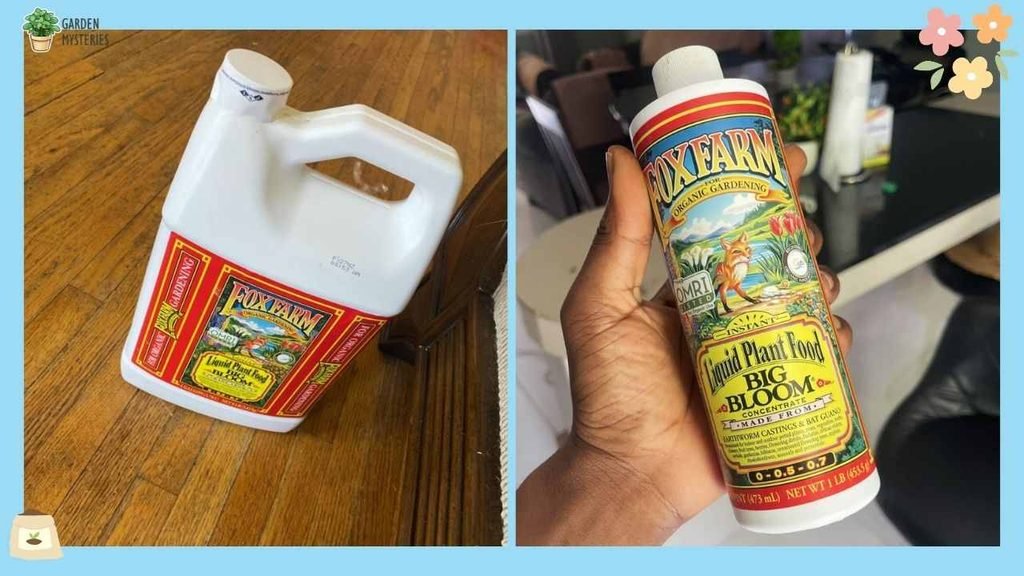
It is especially useful when you want a liquid product that fits into a regular watering routine. However, it is not a complete substitute for every plant’s nutritional needs, so consider your soil and other feeding practices.
- Best for: Potted annuals and flowering perennials.
- Main benefit: A low-strength liquid feed for routine plant care.
- Keep in mind: Dilute and apply as directed; no fertilizer is entirely free from the risk of plant damage when misused.
How Can You Tell If Your Flowers Need Fertilizer or Not?
Your flowers can show clear signs when they lack essential nutrients, but not every problem means they need fertilizer. Check their leaves, growth, and blooming patterns before adding more nutrients to the soil.
- Yellowing Leaves: Older leaves turning yellow may indicate a nitrogen deficiency, although watering problems can cause similar symptoms.
- Slow Growth: Plants growing unusually slowly may lack nutrients, sunlight, or suitable growing conditions.
- Fewer Flowers: Healthy foliage but fewer blooms may indicate excess nitrogen, insufficient sunlight, or unsuitable growing conditions.
- Pale or Small Leaves: Leaves that look unusually small or pale can signal nutrient deficiencies or root problems.
- Weak Stems: Thin, weak growth may result from insufficient light, poor nutrition, or overcrowded planting.
- Poor Soil Quality: Compacted or depleted soil may benefit from improvement. Mixing topsoil with compost can help improve soil structure and nutrient availability when appropriate.
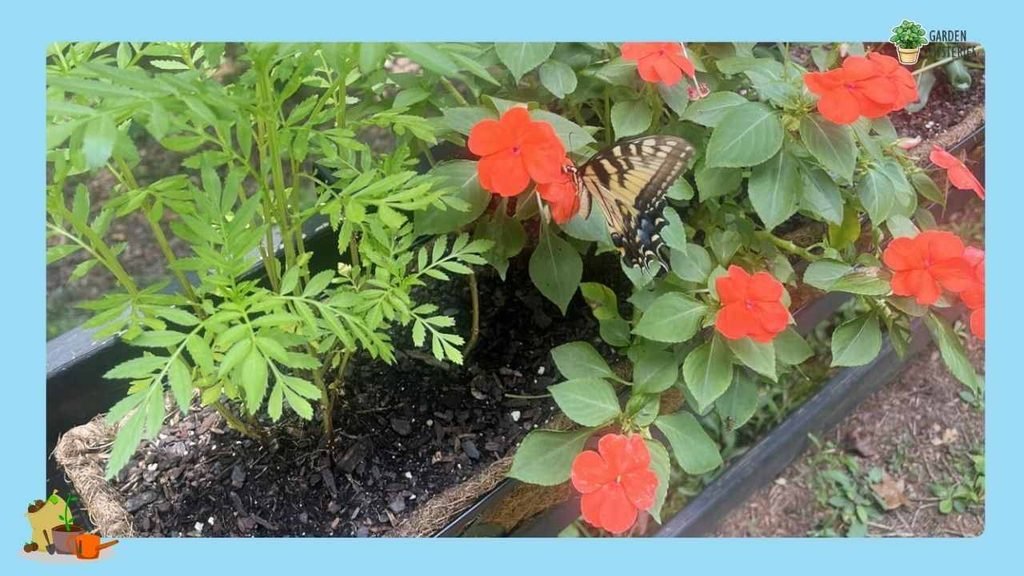
Before feeding your plants, check their watering routine, sunlight exposure, and drainage. Adding fertilizer when the actual problem is overwatering or poor light will not solve it. If symptoms persist, consider a soil test to identify nutrient deficiencies before applying extra fertilizer.
When and How Often Should You Fertilize Annuals and Perennials?
The right feeding schedule depends on your flowers, soil, growing conditions, and fertilizer type. Annuals often need more regular feeding during active growth, while established perennials may need fewer applications. Always check the product label before setting a routine.
When Should You Fertilize Annual Flowers?
Start feeding annuals when they are established and actively growing, following the fertilizer’s directions. Some potting mixes already contain nutrients, so newly planted flowers may not need immediate feeding.
During the growing season, water-soluble fertilizers may require applications every one to two weeks, depending on the product. Slow-release granules can feed plants for several months, reducing the need for frequent applications.
When Should You Fertilize Perennial Flowers?
Many established perennials benefit from feeding in early spring as new growth appears. However, some varieties grow well in fertile soil without regular fertilizer. Check the needs of each plant before applying nutrients.
Avoid heavy feeding late in the growing season, especially for perennials that need time to prepare for winter dormancy. Excessive late-season growth can leave some plants more vulnerable to cold damage.
How Often Should You Apply Different Types of Fertilizer?
Different formulas release nutrients at different rates, so avoid using one schedule for every product.
- Slow-release granular fertilizer: Apply according to the label, which may provide nutrients for several months.
- Water-soluble fertilizer: Mix with water and reapply at the recommended intervals.
- Organic granular fertilizer: Follow the label because nutrient release depends on the ingredients and soil conditions.
- Liquid concentrate: Measure and dilute carefully to prevent excessive nutrient exposure.
Quick Downloadable file you can save for later use:
Should You Fertilize Flowers Before or After Watering?
Watering before applying fertilizer can help prevent root stress when the soil is dry. For water-soluble products, follow the label’s instructions for mixing and application. Some products should be applied to moist soil, while others have specific watering directions.
Do not fertilize wilted plants simply because they look unhealthy. Check whether they need water first, and allow plants stressed by heat or drought to recover before feeding.
Using compost or fertilizer appropriately can support healthy growth, but neither can replace suitable watering, sunlight, and drainage.
How Should You Apply Flower Fertilizer Safely for Healthy Growth?
Applying fertilizer correctly helps your flowers absorb nutrients without damaging their roots or leaves. A few simple precautions can prevent wasted fertilizer, weak growth, and disappointing blooms while keeping your annuals and perennials healthy throughout the growing season.
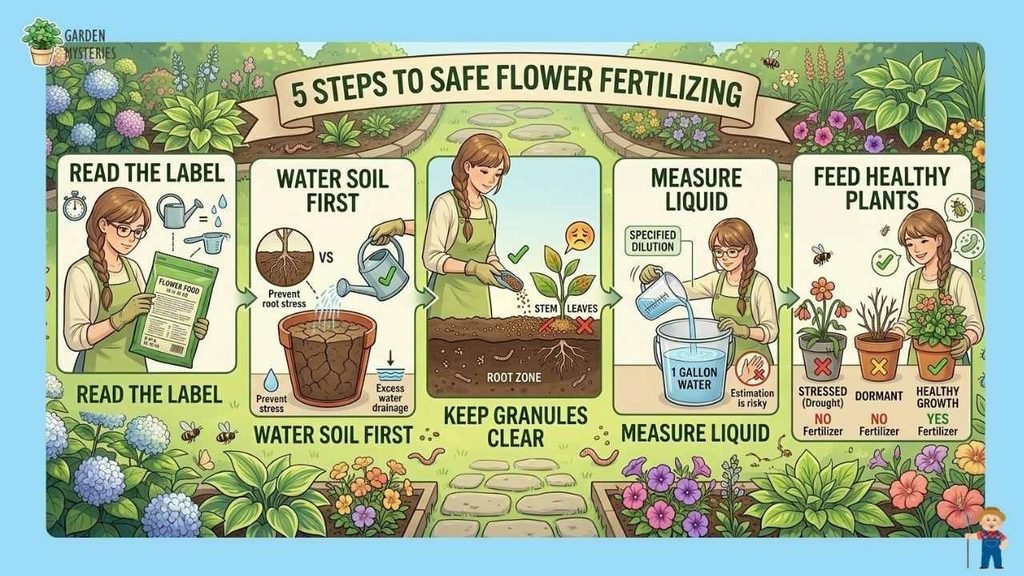
Read the Fertilizer Label Before Applying
Check the recommended amount, dilution instructions, and application frequency before feeding your plants. Different formulas have different strengths, so never assume that using more fertilizer will produce more flowers.
Water Dry Soil Before Fertilizing
Dry soil can increase the risk of root damage from some fertilizers. If the soil is dry, water it first and allow excess water to drain before applying fertilizer according to the product instructions.
Keep Granules Away From Stems and Leaves
Spread granular fertilizer evenly around the root zone rather than piling it against stems or directly onto foliage. Follow the label’s placement instructions, then water if recommended to help nutrients reach the soil.
Measure Liquid Fertilizers Carefully
Always dilute liquid concentrates using the specified amount of water. A stronger mixture does not guarantee better flowering and may damage roots. Use a measuring tool instead of estimating the quantity by eye.
Avoid Fertilizing Stressed or Dormant Plants
Wait until plants recover from severe heat, drought, or waterlogging before feeding them. Most dormant perennials also need little or no fertilizer until active growth resumes. Healthy growing conditions should come first.
Choose Additional Soil Amendments Carefully
Organic amendments can complement a regular feeding routine when your plants need them. For example, neem cake fertilizer may provide nutrients and other soil benefits, but its composition varies. Even the best homemade flower fertilizer should be used according to its ingredients and your plants’ needs.
End Note
Finding the best fertilizer for annuals and perennials becomes easier when you understand your flowers’ needs, choose a suitable formula, and follow a sensible feeding schedule. Slow-release, water-soluble, and organic options each offer different benefits for your garden.
Start by checking your soil and plants before adding nutrients. With proper application, careful watering, and a little attention to seasonal growth, you can enjoy healthier foliage and beautiful blooms without overfeeding or wasting money.
Note: This article may contain Amazon and other affiliate links. We may earn a commission from qualifying purchases at no extra cost to you. Opinions reflect our research and personal gardening experience.