Espoma Compost vs Dr Earth Compost, both are good organic composts, but they are made from different ingredients and carry different certifications. That makes the gardeners to be in real confusion.
Espoma Land and Sea Compost is best known for its crab and lobster meal. On the contrary, Dr Earth Natural Choice Compost uses plant-based ingredients like alfalfa, kelp, and fishbone meal.
Well, neither is “better” in every situation. The right one depends on your soil and what you are planting. Keep reading to see how they compare.
Key Takeaways
Here are the most important facts about Espoma Compost vs Dr Earth Compost before you make a decision.
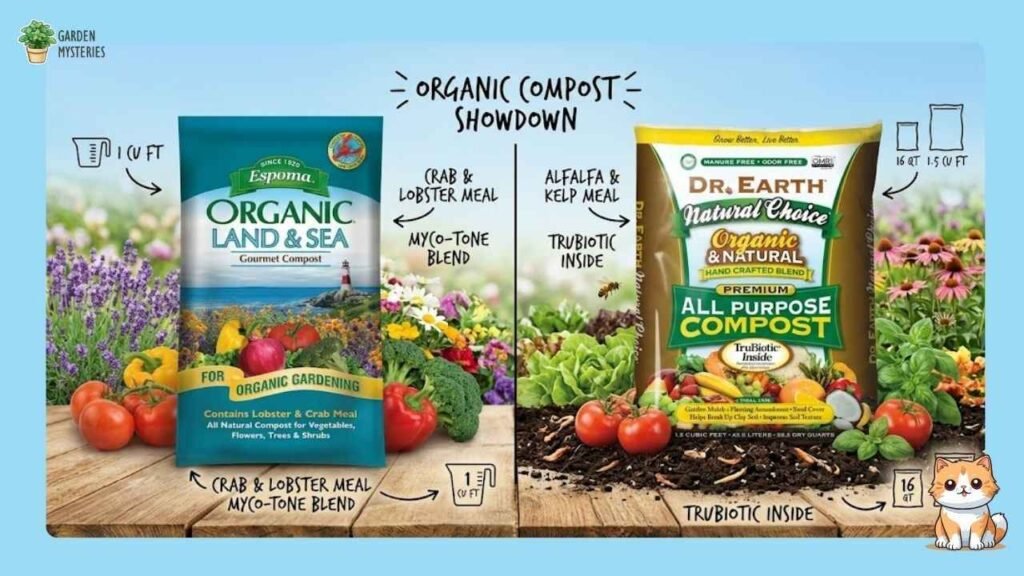
- Espoma Land and Sea Compost comes in a 1 cubic foot bag only. Dr Earth Natural Choice Compost comes in 16 qt and 1.5 cubic foot bags.
- Dr Earth uses alfalfa, kelp, fishbone meal, and feather meal. Espoma uses crab meal and lobster meal as its main special ingredients.
- Both are 100% organic and free of synthetic chemicals and manure.
- Both are safe for people and pets.
- Price range: Espoma is roughly $9 to $14 per bag. Dr Earth is $12.99 to $14.99 per bag.
What is Espoma Compost?
Espoma Land and Sea Compost is a soil mix made from ingredients on land and from the sea. It comes from The Espoma Company, a family business started in 1929 in Millville, New Jersey. The brand has been making organic garden products for almost 100 years.
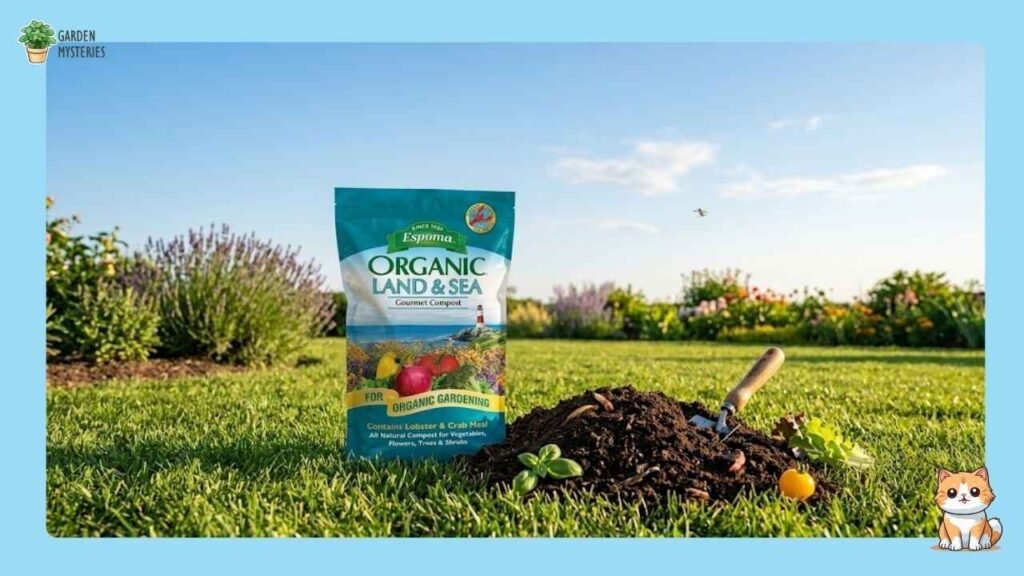
The “land” part includes aged forest products, sphagnum peat moss, and humus. The “sea” part includes crab meal and lobster meal. These shellfish ingredients are what make this product different from most composts at a garden center.
Espoma also adds Myco-tone, their own blend of root-helping fungi. These fungi attach to plant roots and help them absorb water and nutrients. This is useful when putting new plants into fresh raised bed soil mix.
This Espoma Organic Compost is meant to be mixed into garden soil before planting. It works for flowers, vegetables, trees, and shrubs. It only comes in a 1 cubic foot bag.
What is Dr Earth Compost?
Dr Earth Natural Choice Compost is a soil conditioner made from plant-based and food-based ingredients. The brand was started in California by Milo Shammas, who officially founded the company in 1992. It is based in Winters, California.
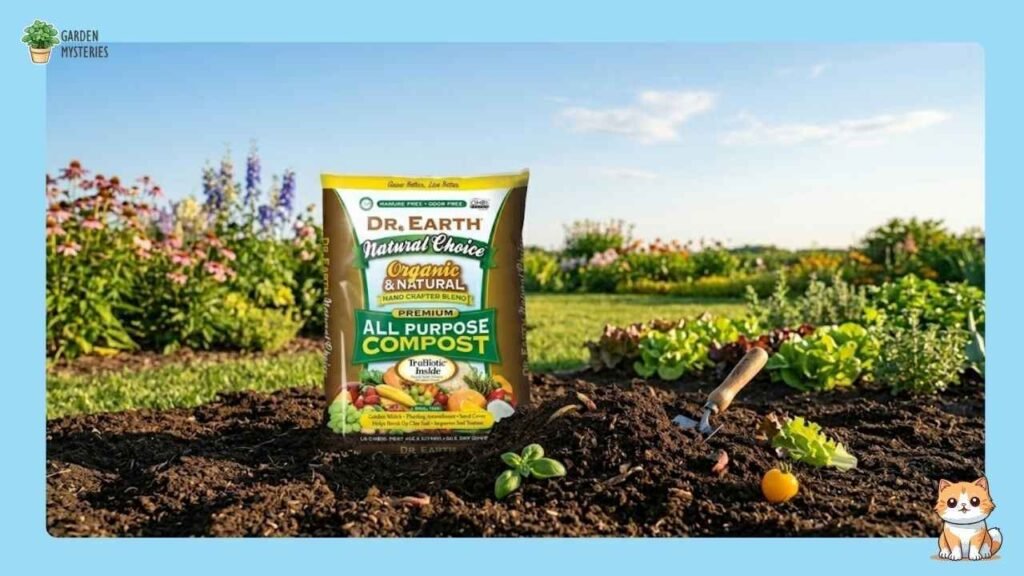
The Dr Earth organic compost is manure-free and odor-free. Many garden composts use chicken manure, which can smell strong. Dr Earth specifically says their product has no GMO chicken manure and no sewage sludge.
This brand uses a helpful microbe blend called TruBiotic. This works in the soil to break down nutrients slowly and release them to plant roots over time. Plants get fed in a natural, steady way.
This Dr Earth all purpose compost works for trees, shrubs, flowers, vegetables, and lawn overseeding. It comes in two sizes, which makes it easier to buy just the right amount.
Espoma Compost vs Dr Earth Compost: Comparison
These two composts have a lot in common, but the differences matter when picking one for your garden. Both are organic, both have helpful fungi, and both are safe for edible gardens.
| Feature | Espoma Land and Sea | Dr Earth Natural Choice |
| Available sizes | 1 cu ft | 16 qt or 1.5 cu ft |
| Key ingredients | Crab meal, lobster meal, peat moss, humus, aged forest products | Composted green waste, alfalfa, kelp, fishbone meal, bone meal, feather meal |
| Mycorrhizae | 9 species | 18 strains |
| Beneficial microbes | Part of Myco-tone blend | 5 strains (TruBiotic) |
| OMRI certified | Not confirmed on the brand site | Yes |
| Manure-free | Yes | Yes |
| Odor | Mild | Mild, described as odor-free |
| Country of origin | USA (New Jersey) | USA (California) |
| Price range | ~$9 to $14 | $12.99 to $14.99 |
Ingredients: Two Very Different Recipes
The ingredients in these two composts are quite different. Espoma builds its mix around shellfish. The crab and lobster meals in land and sea compost espoma bring natural nutrients from the ocean. The base also uses aged forest products and peat moss to improve soil structure.
Dr Earth takes a different route. The ingredient list includes alfalfa meal for nitrogen, kelp meal from the ocean, fishbone meal for phosphorus, and feather meal for slow-release feeding. Composted green waste forms the base. In my experience, composts with diverse plant-based ingredients tend to break down into very rich, dark soil over one growing season.
Fungi and Microbes: Both Have Them, But Different Counts
Both products add helpful fungi to the mix. These are called mycorrhizae (say it: my-cor-RY-zee). They grow on plant roots and help the roots reach more water and nutrients. It’s like a root helper that comes built into the compost.
Espoma lists 9 fungal species, and Dr Earth lists 18 strains of mycorrhizae, and 5 strains of beneficial microbes through TruBiotic. More strains do not always mean better results, since soil conditions vary. But Dr Earth does offer a wider variety.
These fungal species work best when you mix topsoil with compost.
Certifications: A Real Difference
This is one area where the two products clearly differ. Dr Earth Natural Choice Compost carries OMRI, CCOF, and NOP certifications. OMRI (Organic Materials Review Institute) is an independent group that checks whether a product is safe for certified organic gardening.
Espoma describes their product as “100% Natural and Organic Approved,” but does not show an OMRI listing on their product page. If you grow certified organic food, this matters. Check both brand websites before deciding, since certifications can change.
Bag Size: Dr Earth Gives You More Options
Espoma only comes in a 1 cubic foot bag. Dr Earth comes in a 16-quart bag and a 1.5 cubic foot bag. If you have a small raised bed or just a few containers, the 16 qt Dr Earth bag may be all you need. It also costs less up front.
When to Use Dr Earth Compost vs Espoma Compost
Dr Earth compost and Espoma compost both go into the soil before you plant. But some gardening situations call for one over the other. Here’s when you should choose them specifically:
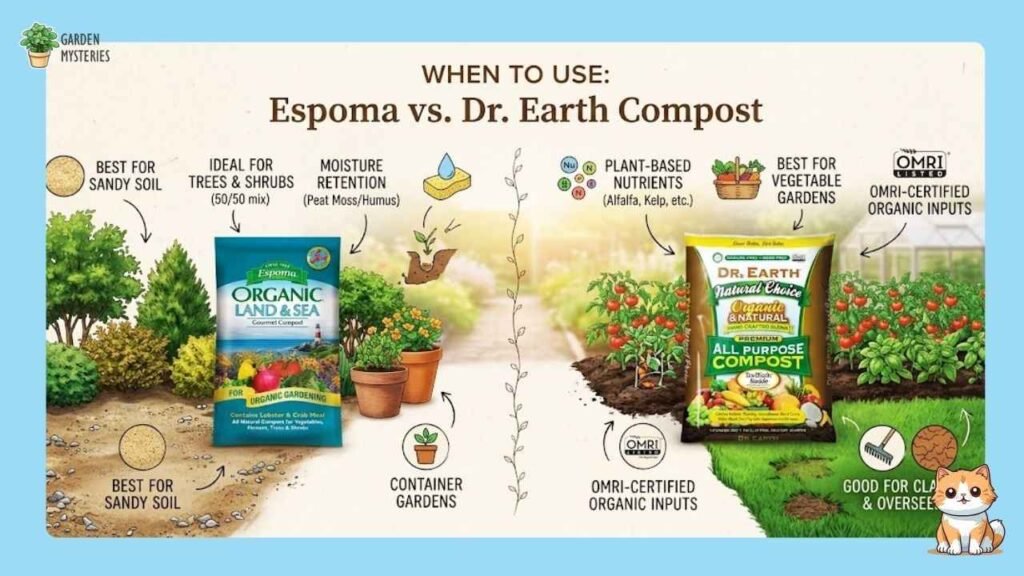
When Espoma Land and Sea Compost Works Well
Espoma is a good fit when you are planting in an area with very poor or sandy soil. The aged forest products and peat moss in this compost help hold moisture and improve soil texture. These are things sandy soil really needs.
- Good for planting trees and shrubs, where you mix it 50/50 with your native soil to fill the hole
- Suitable for new garden beds where you want to work compost or manure into the soil to a depth of 4 to 6 inches
- Good for container gardens where moisture retention matters
- A useful choice if your plants are slow to root in after transplanting
When Dr Earth Natural Choice Compost Works Well
Dr Earth compost is a good fit when you want a wide range of plant-based nutrients. The mix of alfalfa, kelp, fishbone, and feather meal covers a lot of nutritional ground. It is also the better choice if you need OMRI-certified organic inputs.
- Perfect for vegetable and food gardens where organic certification matters to you
- Good for bare root plantings, which need gentle nutrient support
- Good for overseeding a patchy lawn, since the bag size is manageable
- A useful choice for clay soil, since the product label says it helps break up clay
Reality Check from Users’ Opinions
People who garden regularly have plenty to say about both of these products. Here is what you generally hear from those who have tried them.
What People Say About Dr Earth Natural Choice Compost
Most users praise Dr Earth for being clean and odor-free. This matters a lot for backyard gardeners, especially in neighborhoods. Gardeners who grow food often say they trust Dr Earth because of its certifications.
Many note that Dr Earth nutrients work slowly, which is actually the point of compost. Vegetables planted in soil amended with Dr Earth tend to do well over a full season, based on what users report. Some feel the bags are a bit pricey for the volume they get.
What People Say About Espoma Land and Sea Compost
Espoma has a loyal following, partly because the brand has been around so long. Gardeners who have used espoma vs dr earth compost side by side often say their plants root in faster with Espoma. The shellfish ingredients seem to make a real difference for new plantings.
I have heard from several older gardeners that Espoma is what their parents used, which says something about how long this product has been trusted. A few users mention a mild “ocean-y” smell when the bag first opens. Most say it fades quickly once mixed into the soil.
Can You Use Dr Earth Compost and Espoma Compost Together?
Yes, you can use Dr Earth and Espoma compost together. There is no known issue with mixing the two in your garden soil. Both are organic and safe.
One approach is to use one as a base amendment and add the other when transplanting. Some gardeners work Dr Earth compost into the whole bed first, then add a small scoop of Espoma Land and Sea directly into each planting hole. This way, the roots get a boost of the shellfish nutrients right where they need it.
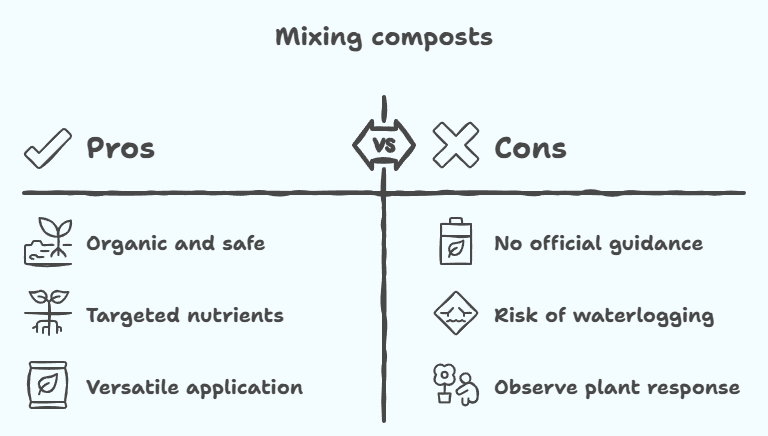
That said, there is no official guidance from either brand on using both together. Adding too much compost or potting soil at once can cause problems, like waterlogged soil that does not drain well. Try one first and see how your plants respond.
Which Compost Should You Choose?
You can choose Espoma compost if you want better moisture retention, stronger transplant rooting, or a shellfish-based compost blend for trees and shrubs.
Choose Dr Earth compost if you prefer OMRI-certified organic inputs, plant-based ingredients, or compost for vegetable gardens and edible crops.
Both composts improve soil naturally, but the better option depends on your garden type and growing goals. Dr. Earth also makes organic all-purpose fertilizers for new gardeners. You can check them out in your free time.
FAQs: Espoma Compost vs Dr Earth Compost
Yes. Espoma Land and Sea Compost is labeled safe for vegetables. Mix 2 to 3 inches into your garden bed before planting and water well.
Dr Earth compost is often preferred for tomatoes because it contains plant-based nutrients and organic certifications suitable for edible gardens. Espoma compost works well for improving soil texture and root development.
A general guide is 2 to 3 inches mixed into the top 4 to 6 inches of soil. One 1.5 cubic foot Dr Earth bag usually covers a 4×4 raised bed.
Dr Earth Natural Choice Compost is described as odor-free and manure-free. Most users report little to no strong smell, which helps in smaller garden spaces.
Not fully. Both are soil conditioners, not fertilizers. They improve soil and support root health. You may still need an organic fertilizer during the growing season.
Both brands say their products are safe for people and pets. Still, keep pets from eating large amounts of any soil product, as it can upset their stomach.
End Note
When it comes to Espoma Compost vs Dr Earth Compost, there is no single winner. Espoma Land and Sea brings a shellfish-based blend that helps with rooting and moisture.
Dr Earth Natural Choice offers a plant-based mix with strong organic certifications. Both are solid products from brands with long histories in organic gardening.
Pick Espoma if you want that classic shellfish boost for trees or shrubs. Pick Dr Earth if you grow food and care about certified organic inputs. Try one this season and the other next year to see what your garden responds to best.
Note: This article is for informational purposes only. Gardening results may vary by soil, climate, and use. We may use affiliate links and earn commissions at no extra cost.