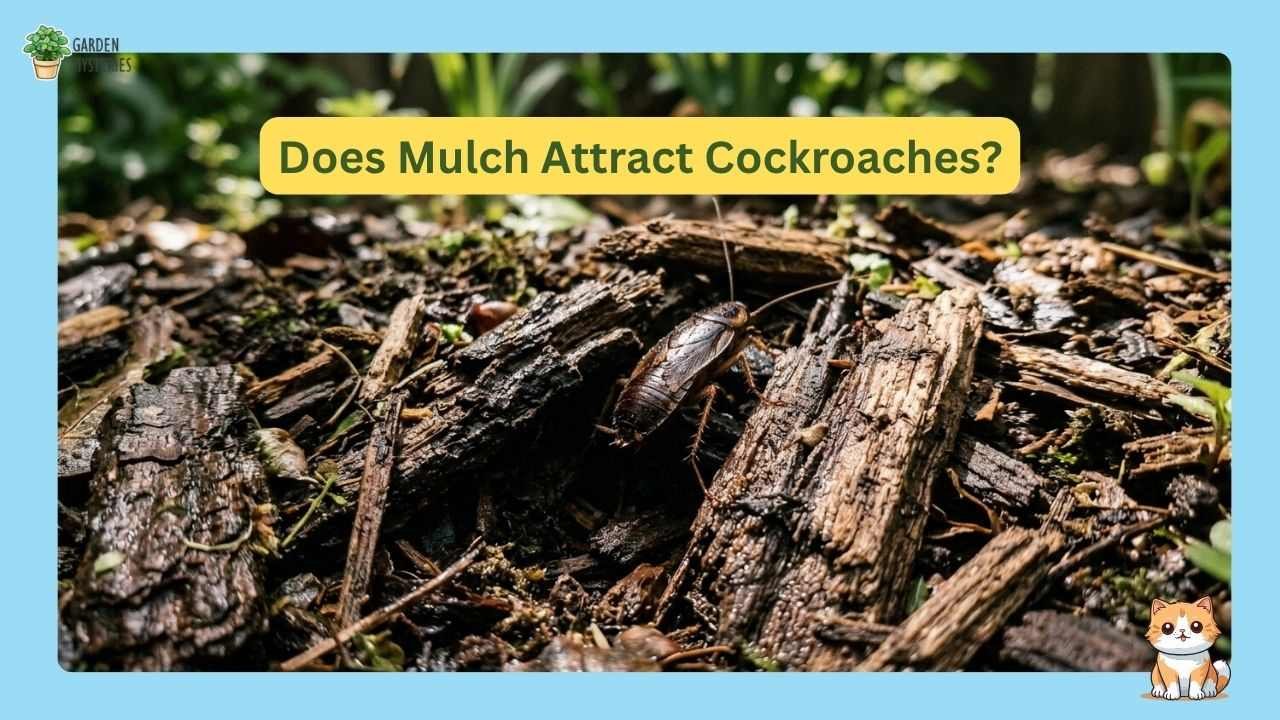
Yes, mulch does attract cockroaches. It gives them exactly what they need to settle in: moisture, darkness, and a warm spot to hide. Mulch does not feed them, but it creates a shelter that roaches find very comfortable. That is the short answer.
Many gardeners notice more bugs after mulching and wonder if they made a mistake. The truth is, not all mulch is equally risky. The type you choose and how you apply it can make a big difference in how many pests show up.
This blog will cover why mulch draws roaches, which types are the worst, and what you can do about it. Keep reading, and you will have a clear plan before your next mulching day.
Key Takeaways – Does Mulch Attract Cockroaches
- Mulch attracts cockroaches by offering moisture, shelter, and darkness
- Wood chips and bark mulch carry the highest pest risk overall
- Cedar wood mulch contains natural oils that help push insects away
- Piling mulch against your home’s foundation invites roaches inside fast
- Keep mulch depth at 2 to 3 inches to reduce moisture buildup significantly
- Inorganic mulch like gravel or rubber is the safest choice for pest control
Why Mulch Attracts Cockroaches in the First Place
Mulch attracts cockroaches because it checks all three boxes roaches look for: moisture, darkness, and shelter. It does not actually feed them, but it gives them a cozy place to nest. That alone is enough to bring them in.
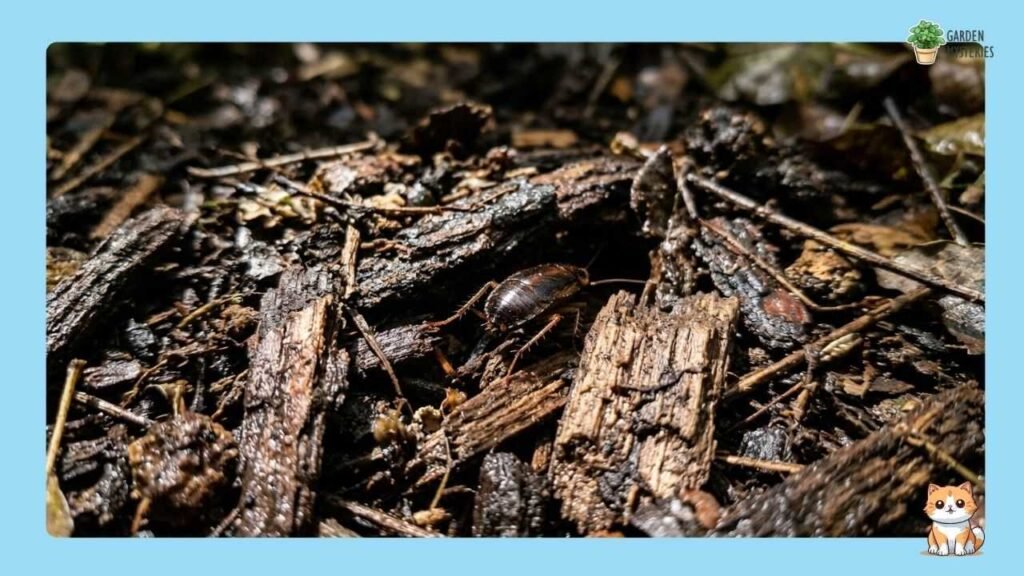
I have seen this firsthand in my own garden beds. After adding a fresh layer of wood chips, I started noticing roaches around the edges of my beds within a week. It took me a while to connect the dots. But once I did, it made complete sense.
The Moisture Problem
Roaches need water to survive. Mulch holds moisture in the soil beneath it, and that wet layer becomes a magnet for them. The deeper and thicker the mulch, the more moisture it traps, and the more appealing it gets.
Why Do Wood Chips Attract Bugs More Than Other Types?
Do wood chips attract bugs more than, say, straw or rubber mulch? Yes, they do. Wood chips break down slowly over time. As they decay, they hold more moisture and create small gaps where roaches can hide without being disturbed.
Back to the Roots mulch and similar organic wood products are popular in garden beds, but they share this same drawback. They work well for the soil, but they can also work well for pests.
Bark Mulch Has the Same Issue
Bark mulch behaves similarly. Whether brown or black, bark mulch holds moisture well and tends to clump together over time. That creates a thick, dark, damp environment that roaches find hard to resist.
Does mulch attract insects beyond just roaches? Absolutely. Ants, earwigs, and millipedes are common visitors too.
Which Types of Mulch Attract the Most Bugs?
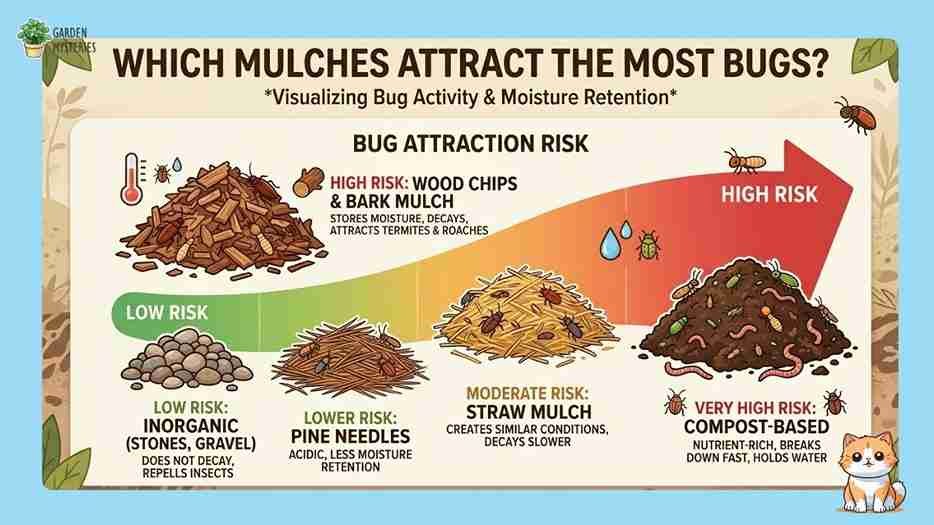
Not all mulch types carry the same pest risk. Organic options like wood chips and bark mulch tend to attract the most bugs because they hold moisture and decay over time. That decay is what roaches and other insects really love.
I have tested a few different types in my beds over the years. The difference in bug activity was noticeable enough that I started being more careful about which product I grabbed at the store.
Wood Chips and Bark Mulch
Do wood chips attract bugs? Yes, more than most other options. Bark mulch, whether brown or black, is in the same category. Both retain moisture well and provide the kind of dark, compact environment where insects love to nest. Over time, the decay gives off organic matter that roaches and other bugs find attractive.
Does Wood Mulch Attract Termites Too?
Does wood mulch attract termites? It can, yes. Termites and roaches are both drawn to decaying wood, so if your yard already has a termite risk, adding organic natural mulch can make that worse.
This is worth knowing before you choose a product. Back to the Roots mulch is a well-known organic option, and while it is good for the soil, it can carry this same risk if applied too thickly near wooden structures.
Compost-Based and Straw Mulch
Compost-based mulch is another high-risk option. It is nutrient-rich and wonderful for plants, but it breaks down fast and holds a lot of moisture. Straw mulch is slightly better but still organic, so it creates similar conditions.
Cedar Mulch and Other Safer Alternatives
Cedar wood mulch is one of the safest natural mulch options because it contains oils that naturally push insects away. It does not eliminate the risk completely, but it does make your beds less inviting to pests. That is a meaningful difference.
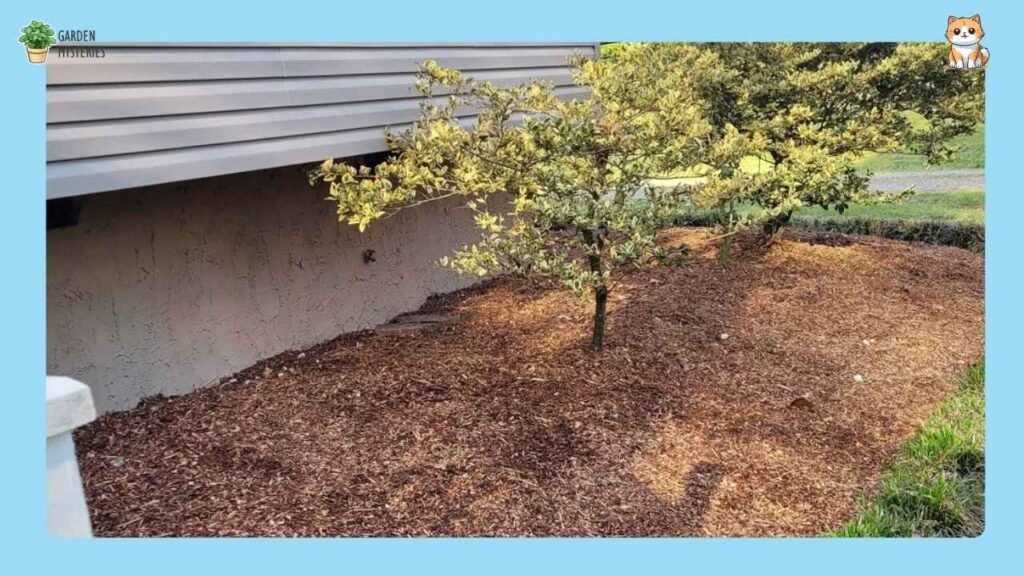
I switched part of my garden to cedar a couple of seasons back. The change in bug activity around those beds was real. I still see occasional insects, but nothing like what I used to find in my wood chip beds.
Why Cedar Works
Cedar contains natural aromatic oils. These oils do not kill bugs, but they irritate them enough that roaches and many other insects avoid nesting in it. Does mulch attract insects the same way when it is cedar? Not nearly as much. Fresh cedar is the most effective. The repellent effect does fade as the wood weathers, so refreshing it yearly helps.
Inorganic Options for Maximum Protection
If you want the strongest pest barrier, inorganic mulch is the way to go. Gravel, river rock, and rubber mulch do not hold moisture, do not decay, and give roaches nothing to work with. These are great choices near your home’s foundation or in areas where you have had pest problems before. They are not ideal for feeding the soil, but they get the pest control job done.
Mulching Mistakes That Make the Roach Problem Worse
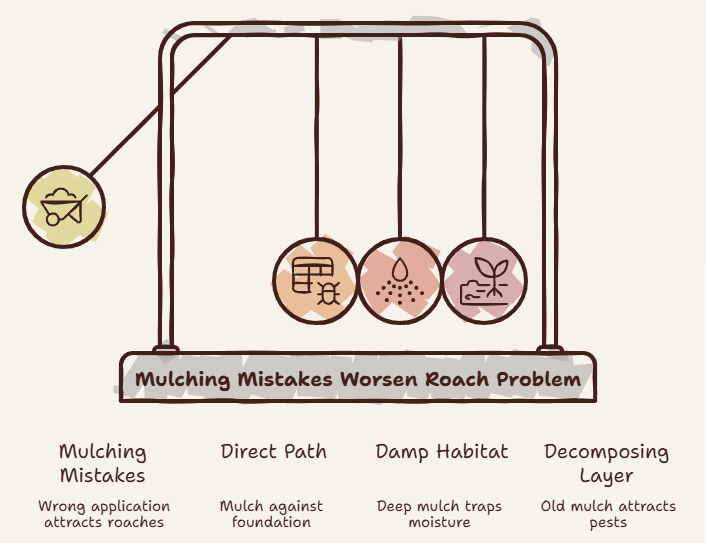
Mulch attracts cockroaches most when it is applied the wrong way. Piling it too thick, placing it too close to your home, or leaving it in place for years without refreshing it, these habits all turn your garden into a roach haven. Getting the basics right cuts the risk by a lot.
I made most of these mistakes early on. Once I fixed them, the difference was obvious. Fewer roaches, fewer ants on the palm trees near my beds, and fewer rolly pollies in my garden showing up in places they had no business being.
Mulching Too Close to Your Foundation
This is the most common and most dangerous mistake. Piling mulch right against your home’s siding or foundation gives roaches a direct path inside. The recommendation is to leave a gap of 6 to 12 inches between your mulch and the base of your house. Do wood chips attract bugs into your home this way? Yes, they can. That dry zone makes a real difference.
Going Too Deep
Keep mulch at 2 to 3 inches. Anything deeper traps too much moisture. A thick layer becomes a damp, dark habitat that roaches and other pests love. I used to pile it on thinking more was better for my plants. It was not better for the pests’ situation.
Leaving Old Mulch in Place
Old mulch that has been sitting for two or three years starts to break down heavily. That decomposing layer is exactly what roaches want. It also attracts roly-polies in your garden and ants on palm trees in the area. Rake out the old layer and add fresh mulch at least once a year to avoid this buildup.
How to Get Rid of Cockroaches in Your Yard
The fastest way to start getting rid of cockroaches in your yard is to change how your mulch is managed. Most roach problems around garden beds are habit problems, not product problems. Fix the setup, and the pest numbers usually drop on their own.
That said, if the infestation is already heavy, you may need a few extra steps. I will cover both the prevention fixes and the more aggressive options below.
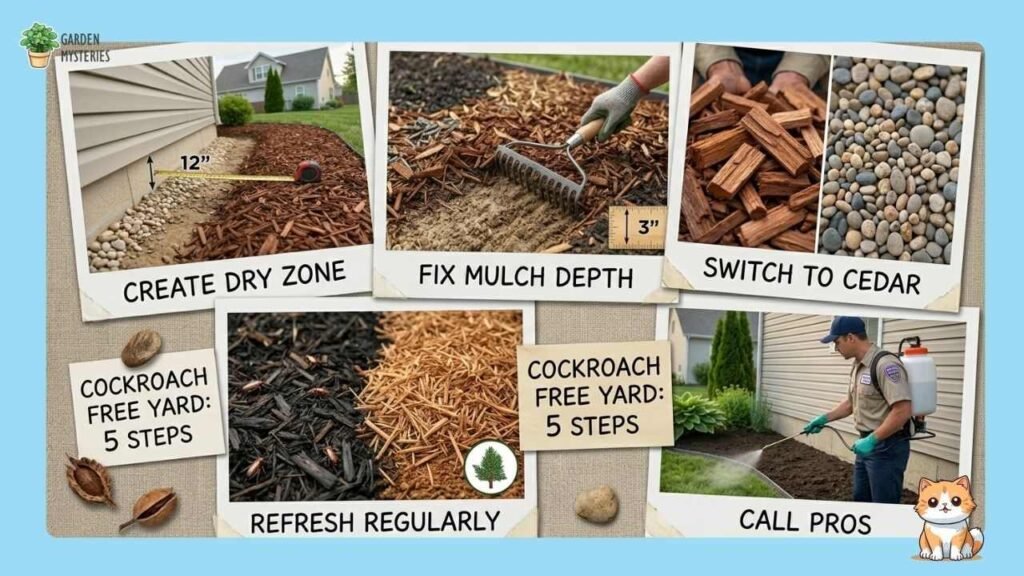
Step 1: Create a Dry Zone
Pull all mulch back from your home’s foundation by at least 6 to 12 inches. This one step removes the bridge between your garden beds and your house. It is also smart if you are concerned about does wood mulch attract termites, since that dry barrier helps with both problems.
Step 2: Fix Your Depth
Rake your beds down to 2 to 3 inches of mulch. No more. This reduces the moisture that builds up underneath and makes the environment far less hospitable for roaches.
Step 3: Switch to Cedar or Inorganic Mulch
If roaches are a recurring issue, try cedar wood mulch in your beds. The natural oils help deter insects over time. For beds close to your home or near known problem areas, consider switching to gravel or rubber mulch entirely.
Step 4: Refresh Mulch Regularly
Old, decaying mulch is roach-friendly mulch. Replace your wood-based mulch at least once a year. This removes the decomposing layer that pests nest in and gives your beds a fresh, less inviting surface.
Step 5: Call in Professional Help
If you have tried the above steps and still see heavy roach activity, a professional barrier treatment around your home may be necessary. Companies like Orkin or Terminix offer perimeter treatments that can help break the cycle, especially when combined with better mulching habits.
FAQs
Does wood chip mulch attract cockroaches more than other types?
Yes. Wood chips hold moisture and break down over time, which creates the dark, damp conditions roaches prefer for nesting. Other types like gravel or rubber mulch carry much lower pest risk.
Is cedar mulch really effective at repelling insects?
Cedar wood mulch does help. The natural oils in cedar irritate many insects, including roaches, and make the area less appealing. The effect fades as the wood weathers, so refreshing it annually keeps it working.
How deep should mulch be to avoid attracting bugs?
Keep mulch at 2 to 3 inches deep. Deeper layers trap too much moisture, which is exactly what roaches and other insects are drawn to.
Can mulch attract both cockroaches and termites at the same time?
It can. Both are drawn to decaying wood and moisture. Does wood mulch attract termites? Yes, especially near wooden structures. If both pests are a concern, inorganic mulch is the safest option.
What is the best mulch to use if you have a roach problem?
Cedar wood mulch is the best natural choice. Inorganic options like gravel or rubber mulch are even more effective because they hold no moisture and give pests nothing to nest in.
End Note
Yes, mulch does attract cockroaches, but it does not have to. The problem almost always comes down to two things: what type of mulch you use and how you apply it. Get those two things right, and your garden beds can stay pest-friendly for plants without becoming a home for roaches.
Take a few minutes today to check your mulch depth, look at how close it sits to your foundation, and think about whether cedar or inorganic options make sense for your yard. Small changes in how to get rid of cockroaches in your yard often start with the garden, and this is one of the easiest fixes you can make.
Note: This content is for informational purposes only. Results may vary based on plants, climate, and growing conditions. Always follow product labels, safety guidelines, and seek professional advice when needed.