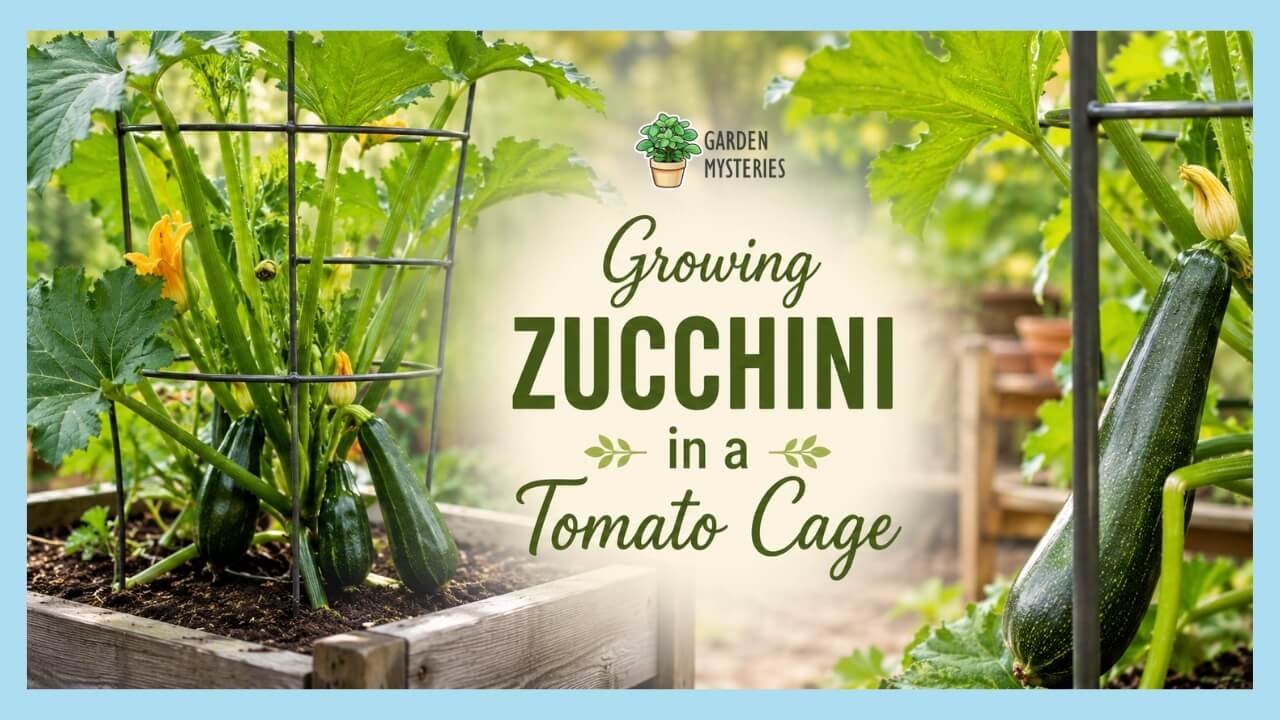
Yes, growing zucchini in a tomato cage is one of the easiest ways to save garden space, boost airflow, and keep fruit off the damp soil. We tried it last summer after our raised bed ran out of room, and it changed how we grow squash.
Many gardeners still wonder if a tomato cage is strong enough for a full-grown zucchini plant. Some worry the thick stems will snap, or that yields will drop once the plant is forced to grow upward instead of sprawling.
Below, we cover when this method works best, how to set up the cage correctly, how to train the plant as it grows, mistakes to avoid, and whether sprawling is sometimes the smarter choice.
Key Takeaways
- A sturdy cage keeps zucchini fruit clean and off wet soil
- Vertical growing improves airflow and lowers mildew risk
- Install cages early to avoid damaging young roots
- Weak or thin wire cages often collapse under fruit weight
- Pruning lower leaves helps you spot pests sooner
- Not every variety or garden suits vertical growing
Why Growing Zucchini in a Tomato Cage Works Better Than Letting It Sprawl
Growing zucchini in a tomato cage works well because it fights the plant’s natural habit of sprawling into a wide, tangled bush. Left alone, zucchini leaves spread out low and heavy, and the fruit often sits right on the dirt.
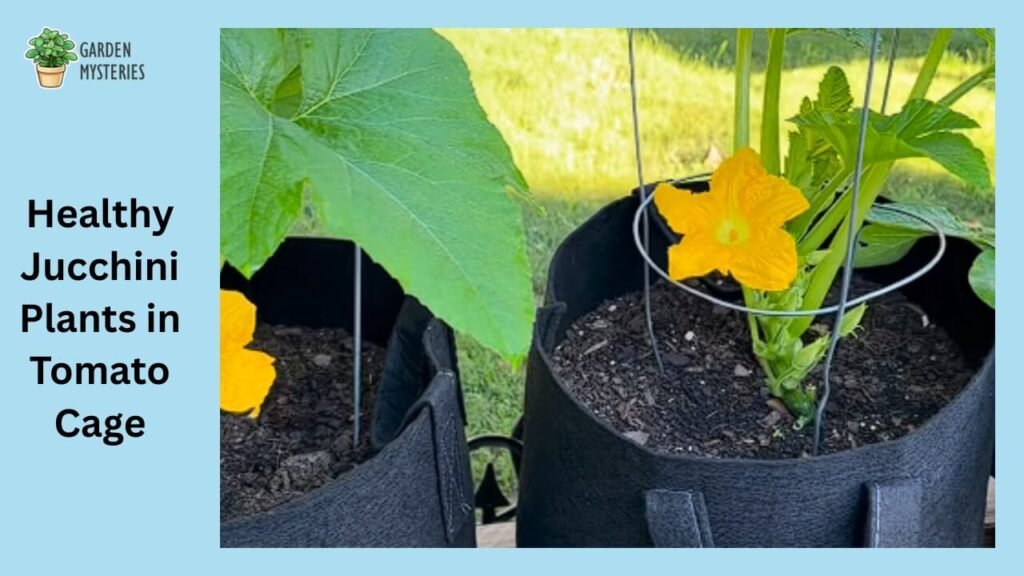
That contact with soil causes problems. Fruit resting on wet ground rots faster, attracts slugs, and picks up dirt and fungal spores. A cage lifts the plant, so fruit hangs in open air instead.
Vertical support also improves circulation around the leaves, which lowers the risk of powdery mildew. It makes fruit easier to spot at harvest time too, since nothing hides under a mat of leaves. Gardens stay tidier and use less ground space overall.
Cages are not perfect for every setup, though. Very large heirloom varieties or gardens in constant strong wind may do better with a heavier stake or a T-post instead.
We also noticed our soil dried out faster once the plant was upright, so we added a bit more compost or manure at the base to hold moisture during hot stretches.
| Facts | Ground Growing | Tomato Cage Growing |
| Airflow | Poor, leaves overlap | Much better |
| Fruit cleanliness | Fruit touches soil | Fruit stays lifted |
| Harvesting | Hard to spot fruit | Easy to see and reach |
| Disease risk | Higher, especially mildew | Lower with open airflow |
| Space required | Wide spread | Compact footprint |
Choosing the Right Tomato Cage Before You Plant Zucchini
Choosing the right cage matters more than most new gardeners expect. A flimsy cone-shaped wire cage might hold a small tomato plant, but zucchini grows heavier and bushier fast, and a weak cage will bend or tip over by midsummer.
Pick a Cage That Can Handle Mature Plants
Look for heavy-duty steel cages rather than thin wire cones. Square cages tend to hold up better than round ones since the flat panels resist bending under weight. A height of around 4 to 5 feet gives the plant enough room to climb.
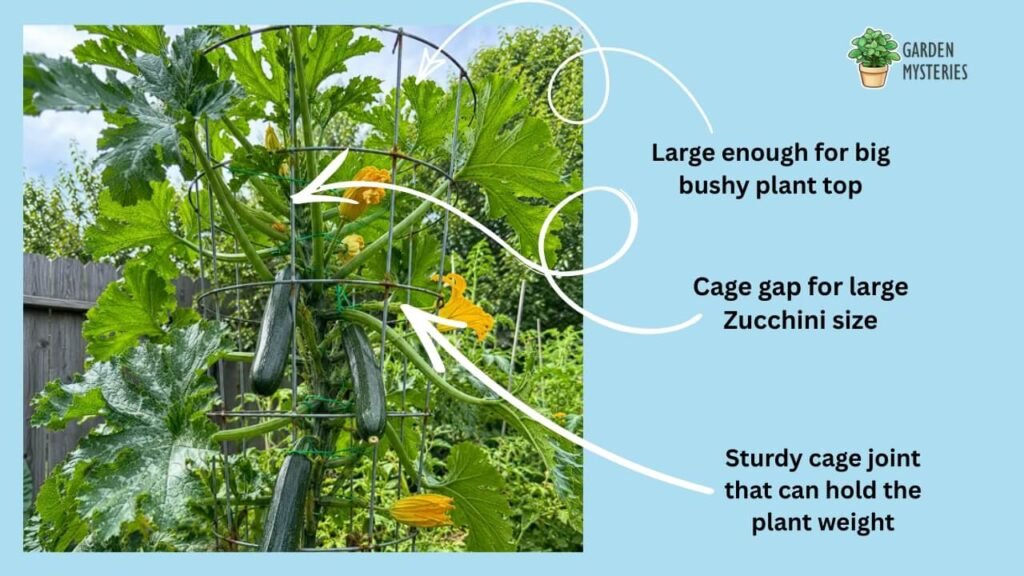
Thicker wire gauge matters too. The thin wire flexes and sags once the fruit starts forming. Wide openings between the rungs also help, since you will need space to reach in and harvest without damaging leaves.
Install the Cage at the Right Time
Set the cage in place right after transplanting, or as soon as seedlings emerge from direct-sown seed. Waiting too long means pushing the cage legs through an established root system, which can stunt the plant.
Push the legs deep into the soil so wind cannot tip the cage once it is full of leaves. In looser or sandy soil, tying the cage to a wooden stake or T-post adds extra stability.
Build Healthy Roots First
Good soil matters just as much as good support. A loose, well-draining mix, such as a raised bed soil mix, gives roots room to spread before the plant has to carry the weight of a full cage.
Compost or manure worked into the top few inches before planting feeds the plant slowly. We used a couple of inches of aged compost mixed into the bed and did not need to fertilize again for several weeks.
How to Train and Maintain Zucchini Inside the Cage
Once the cage is set and the plant is growing, the real work is guiding it upward without damaging the stem. We found this step took more patience than we expected the first year.
Guide the Plant Upward
As new leaves reach the cage rungs, gently tuck them through the openings instead of tying anything tightly. Zucchini stems are thick and somewhat brittle, so a tight tie can cut into the stem as it thickens.
Let the plant lean into the cage naturally rather than forcing it into a perfectly straight line. The rungs will support developing fruit on their own once the plant fills in.
Prune for Better Airflow
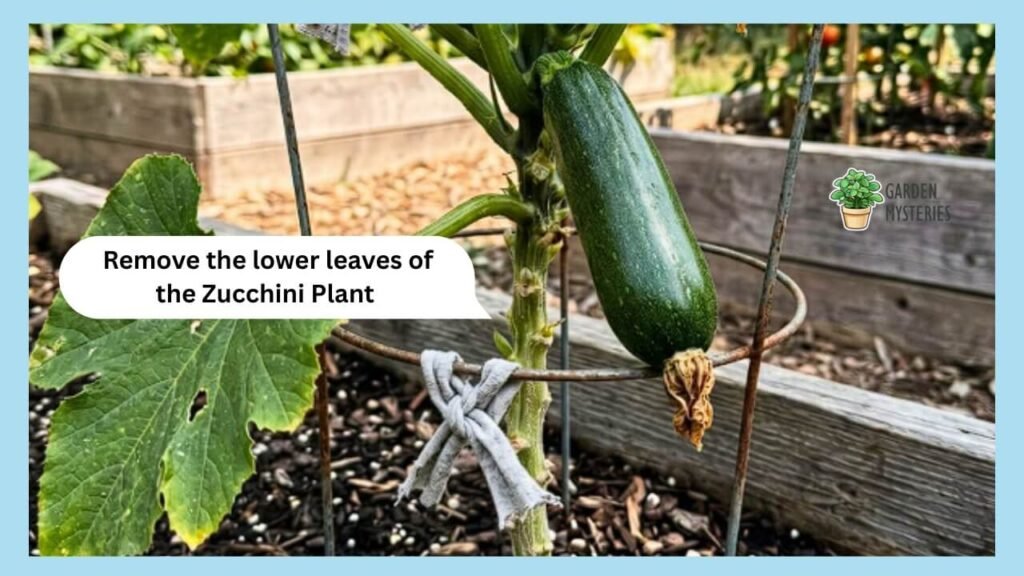
Remove lower leaves once they yellow or start touching the soil. This keeps airflow moving through the base of the plant and makes it easier to check for squash bugs and vine borer damage early, before an infestation spreads.
Watering and Feeding
Water at soil level rather than overhead, since wet leaves late in the day encourage mildew. A feeding every few weeks with a balanced fertilizer keeps growth steady.
If you are growing in containers, compost vs potting soil is worth thinking through. Potting soil drains faster and dries out sooner, so container plants often need more frequent watering than the same variety grown in ground soil mixed with compost.
Watch for Companion Planting Issues
We ran into a similar spacing problem when we tried to plant dill with tomatoes nearby. Tall dill shaded out the lower tomato leaves, much like an overgrown zucchini cage can shade whatever is planted too close beside it.
Monitor Fruit Weight
Check the cage rungs every few days once fruit starts forming. A single oversized zucchini can bend a rung or pull a whole section of stem down if left unsupported for too long.
Common Problems When Using a Tomato Cage
Many gardeners ask, can you grow zucchini vertically without running into trouble? The answer is yes, but only if a few common mistakes are avoided along the way.
Weak Cages Collapse
Thin cones sold for small tomato starts often cannot handle a mature zucchini plant. The fix is simple: buy a heavy-gauge cage rated for larger vegetables from the start, rather than replacing a cheap one mid-season.
Heavy Fruits Pull Stems Down
Zucchini can grow large fast, and a single fruit left too long adds real weight to a thin stem. Harvest fruit while it is still small and tender, both for better flavor and to reduce strain on the plant.
Poor Airflow Despite Using a Cage
Sometimes leaves grow so dense that a cage does not help much on its own. Thinning out a few of the oldest, largest leaves opens up airflow again without hurting the plant’s overall growth.
Leaves Burn Against Hot Metal
On sunny days, metal cages can heat up enough to scorch leaves pressed directly against the wire. Gently guiding leaves away from direct contact with the metal prevents this kind of damage.
Wind Damage
A full, leafy zucchini plant catches wind like a small sail. Staking the cage to the ground with a T-post or heavy stake keeps it from tipping over during a storm.
Is a Tomato Cage the Best Support for Every Zucchini Plant?
A tomato cage is a strong option for many gardens, but it is not automatically the best choice for every zucchini plant. Stakes, trellises, and tomato spirals each suit different situations depending on how much space you have to work with.
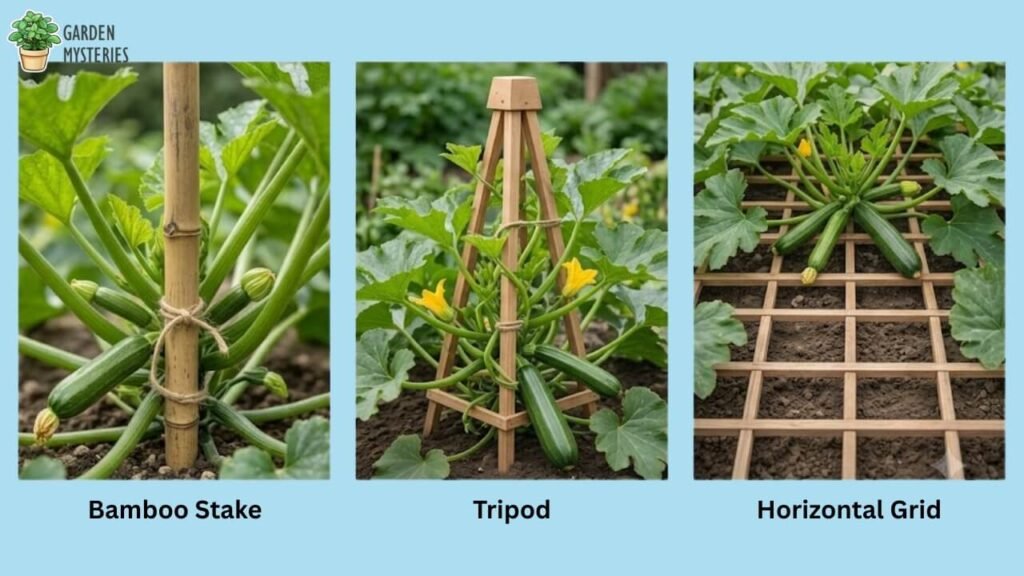
A single stake works fine for gardeners who don’t mind tying the main stem now and then. Trellises suit vining-type squash better than most bush zucchini, since vining plants actually climb rather than lean. Tomato spirals sit somewhere in the middle, though they usually hold less total weight than a wide cage.
- Compact bush varieties tend to do best with cage support
- Vining or sprawling types often need a taller trellis instead
- Small yards and raised beds benefit most from a cage’s compact footprint
- Containers can work too, as long as the cage is anchored firmly
Soil quality still plays a role no matter which support you choose. We noticed a real difference once we switched to a richer mix, much like how picking the best compost for tomatoes changes how heavily a tomato plant fruits each season.
If you like growing a few vegetables together in the same bed, it’s worth experimenting a little. One year we tried growing cherub tomato seeds in a row next to our caged zucchini, and the same compost boost seemed to help both plants along.
FAQs: Growing Zucchini in a Tomato Cage
Does growing zucchini vertically reduce fruit production?
Not usually. Most gardeners see similar or slightly better yields, since improved airflow and fewer disease problems often outweigh any stress from vertical training.
How tall should a tomato cage be for zucchini?
A cage around 4 to 5 feet tall usually gives a bush variety enough room to grow upward for most of the season without outgrowing the support.
Can one tomato cage support more than one zucchini plant?
It is possible with a very large cage, but most gardeners get better results giving each plant its own cage, since zucchini needs more room than tomatoes to spread its leaves.
Should I tie zucchini stems to the cage?
Loose tucking through the rungs usually works better than tying. Tight ties can cut into the thick stem as it grows and swells over the season.
How often should I harvest vertically grown zucchini?
Checking every day or two during peak season helps catch fruit while it is small, which also reduces the weight the cage and stems need to support.
End Note
Growing zucchini in a tomato cage can turn a sprawling, space-hungry plant into a tidy, productive one. Success comes down more to cage strength, early installation, and steady maintenance than to the support method itself.
If your garden space is limited, this method is worth trying, as long as you regularly check the plant for pests and stem stress. Most bush zucchini varieties do well in a sturdy cage when given consistent care through the season.
Disclaimer: We may earn a small commission from qualifying purchases made through affiliate links. This comes at no extra cost to you and helps us maintain free and independent gardening content.